
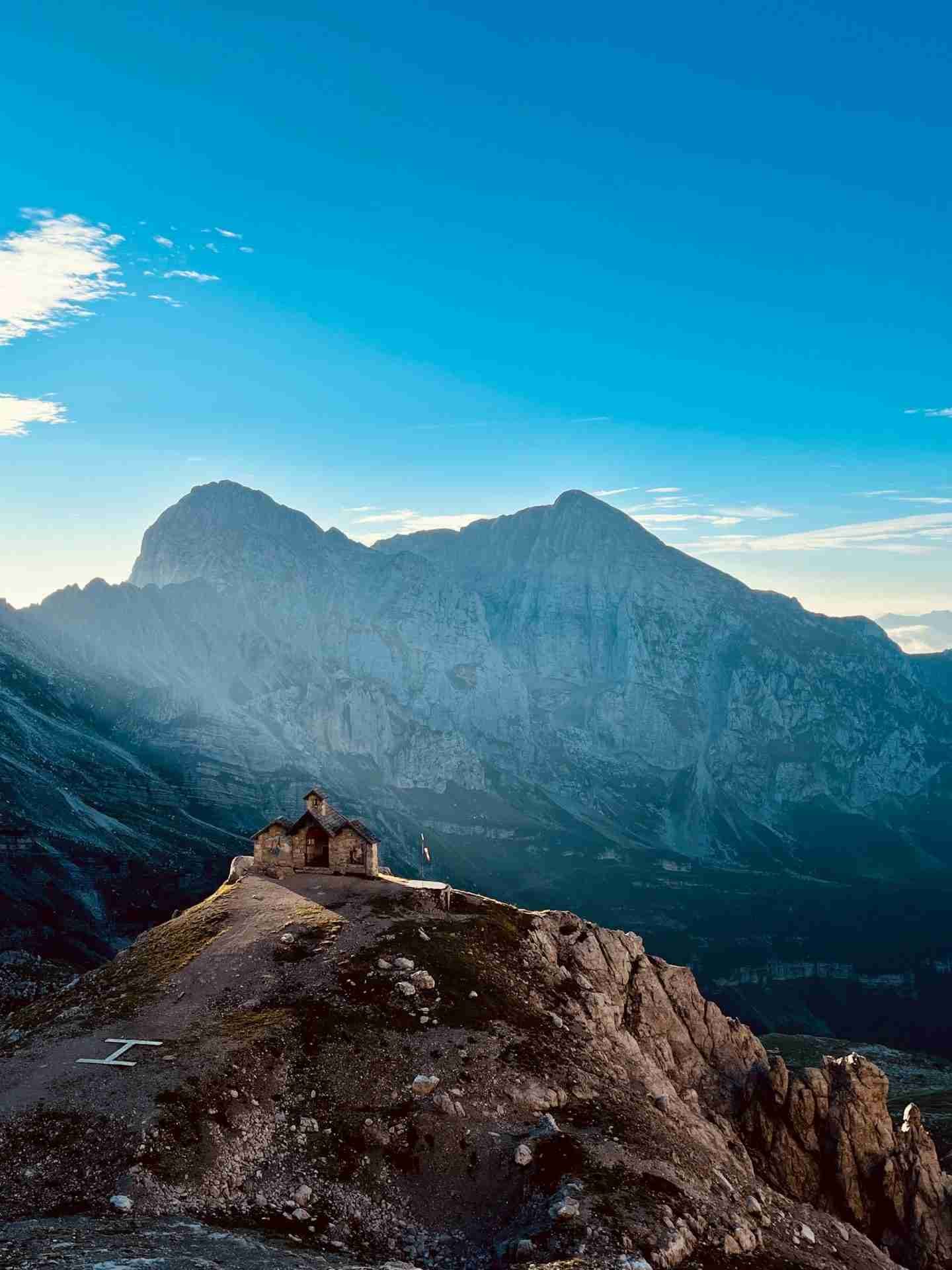
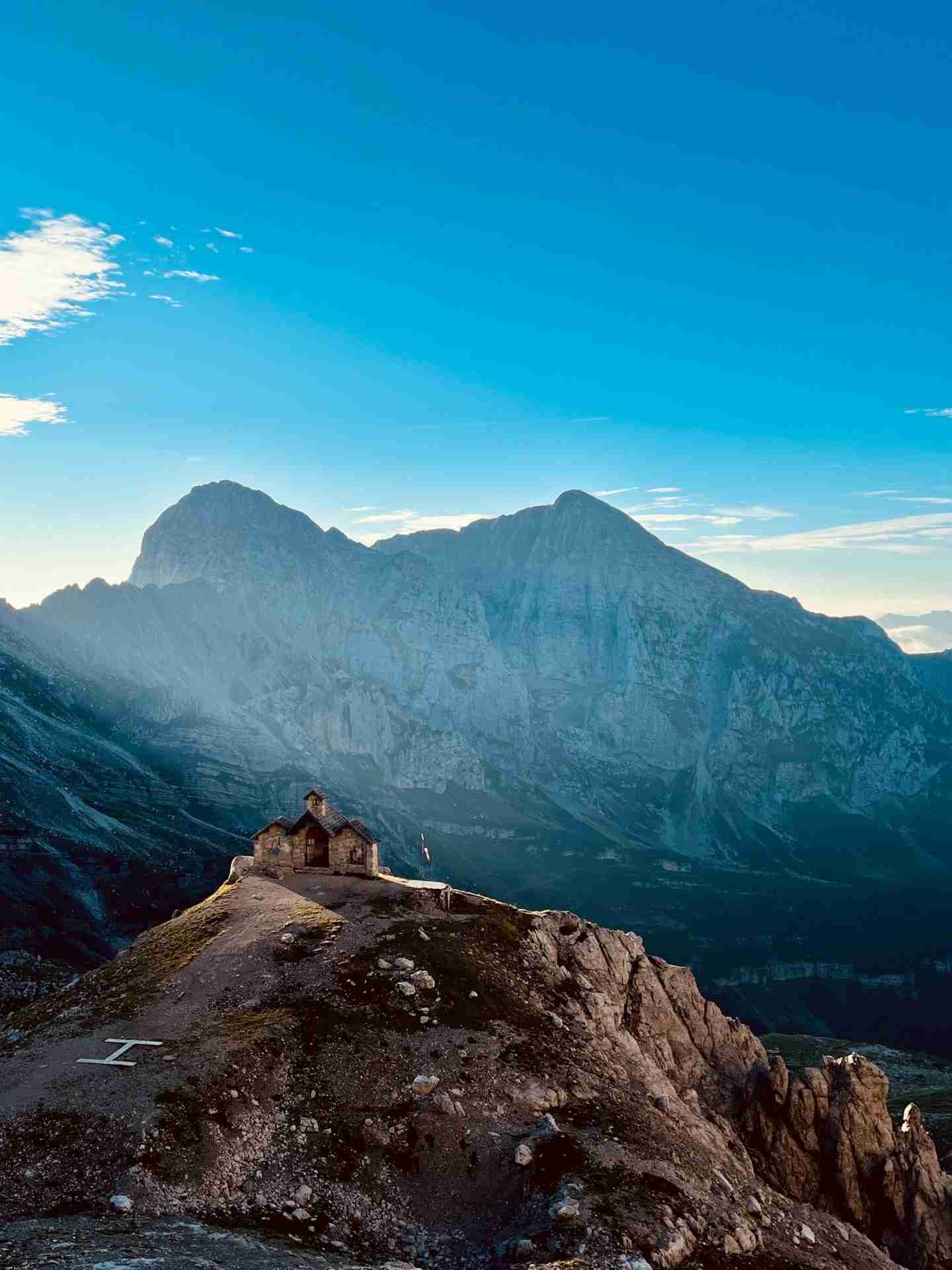
Cappella della Madonna del Capriolo sits in a dramatic alpine setting near Rifugio Silvio Agostini, surrounded by the steep limestone walls of the Brenta Dolomites. Small and understated, the chapel stands against a backdrop of jagged peaks and open alpine terrain, creating a striking contrast between human scale and mountain scale. Its simple stone construction and modest proportions make it feel grounded and purposeful rather than decorative. The surrounding landscape is rugged and exposed, with rocky slopes, sparse alpine vegetation, and sweeping views in multiple directions. For photographers, this location is less about architectural detail and more about placement. The chapel acts as an anchor within a vast, high altitude environment, giving you a focal point in an otherwise expansive mountain scene.
Best Photography Opportunities
• Chapel With Brenta Peaks Behind
The strongest compositions position the chapel in the foreground with the dramatic Brenta towers rising clearly behind it. Rather than standing directly in front, shift slightly to one side so the chapel roof line separates cleanly from the ridge line beyond. This prevents the structure from blending into the background and maintains a strong silhouette. A moderate focal length keeps proportions natural while still emphasizing the immense vertical relief of the limestone walls. Early morning or late afternoon light works particularly well because angled light defines both the chapel's stone texture and the mountain's layered surfaces. Paying attention to cloud movement is essential, as drifting clouds can either soften the peaks or create powerful contrast behind the simple structure.
• Wide Composition Showing Scale
Stepping farther back allows the chapel to become a small but intentional element within the broader alpine basin. In this approach, the landscape becomes the dominant subject, and the chapel provides context and human scale. Careful horizon placement is important to avoid compressing the sky or making the mountains feel cropped. Including rocky foreground terrain adds depth and reinforces the rugged character of the setting. This composition works especially well when light is even across the basin, allowing subtle tonal shifts in the limestone to remain visible. The result feels expansive and grounded rather than dramatic for its own sake.
• Rock and Alpine Meadow Framing
Using foreground elements such as scattered rocks or seasonal alpine grasses can strengthen depth and create a visual pathway toward the chapel. A slightly lower shooting position enhances the transition from foreground texture to midground structure and finally to background cliffs. During summer, patches of alpine flowers can introduce color contrast without overpowering the stone architecture. Overcast conditions often enhance these details by reducing harsh highlight and shadow. This approach builds layered compositions that feel intentional rather than simply documenting the location. It also allows you to slow down and refine placement instead of relying on dramatic scale alone.
• Moody Weather and Clouds
Mountain weather in the Brenta Dolomites shifts quickly, and that variability can become a compositional advantage. Low clouds moving across the peaks create separation and atmospheric layering behind the chapel. Waiting for moments when light briefly touches either the chapel or a section of cliff can produce images with strong contrast and visual focus. A tripod is useful in these situations, as exposure conditions change rapidly. Mist drifting through the basin adds dimension without overwhelming the structure. These conditions often produce the most dynamic and memorable results.
• Sunrise and Late Light Silhouettes
At certain angles, the chapel can be framed as a silhouette against a glowing sky during sunrise or late afternoon. Because the structure has a simple and recognizable outline, it reads clearly even without visible detail. Positioning carefully to separate the cross and roofline from distant ridges maintains clarity in the silhouette. A tripod allows precise control during the transition from pre dawn to first light. As color spreads across the sky, the limestone faces of the Brenta peaks gradually gain definition. This sequence provides multiple opportunities within a short window of time, rewarding those who remain patient.
Best Time to Visit
Summer and early autumn offer the most reliable access to the chapel and surrounding trails. Snow can linger well into late spring at this elevation, and winter access may require advanced alpine preparation. Sunrise is often the most productive time to shoot, as light gradually defines the peaks and reduces the risk of harsh contrast. Morning air is typically clearer, improving visibility across distant ridges.
Late afternoon can bring warm tones to the limestone cliffs, especially when the sun strikes from a lower angle. Midday light at altitude can be intense and flatten detail, particularly under clear skies. Passing cloud can soften contrast and create more balanced exposure across both chapel and peaks. Because this is a high alpine environment, checking weather forecasts carefully is essential. Conditions can change quickly, and wind exposure increases near ridgelines.
How to Get There
Cappella della Madonna del Capriolo is located near Rifugio Silvio Agostini in the Brenta Dolomites of Trentino. Access requires a mountain hike from trailheads in the Val d'Ambiez area, involving notable elevation gain and alpine terrain. The route is well marked but physically demanding, making preparation important.
Many photographers choose to stay overnight at Rifugio Silvio Agostini to position themselves for early morning or late afternoon light. The refuge operates seasonally and requires advance booking. There is no separate fee to photograph the chapel exterior, though accommodation and hut stays involve payment. Proper mountain footwear, awareness of trail conditions, and weather preparation are essential.
Recommended Photography Gear
A versatile standard zoom lens is ideal for balancing chapel foreground with dramatic mountain background. A short telephoto lens is particularly effective for compressing the Brenta peaks behind the structure and isolating sections of cliff face. A lightweight but sturdy tripod is strongly recommended for sunrise, sunset, and shifting weather conditions.
Because the location requires hiking at altitude, managing weight is critical. Carrying only essential lenses reduces fatigue on steep terrain. A polarizer can help manage glare on bright limestone surfaces and deepen sky contrast when conditions allow. Weather protection for both camera equipment and personal gear is necessary due to sudden alpine changes. Stable hiking footwear and layered clothing are as important as camera equipment in this setting.
Nearby Photography Locations
The surrounding peaks offer dramatic ridge lines and vertical limestone formations. They provide expansive compositions that complement the chapel's intimate scale.
The valley below offers forested terrain and river scenes that contrast with the exposed alpine basin above. It provides additional variety within the same hiking region.
This glacial lake offers calm water reflections of the Brenta group. It creates broader landscape opportunities with a completely different compositional structure.
An alpine town that serves as a gateway to multiple hiking routes and viewpoints. It expands photographic possibilities within the Dolomites.
A high mountain pass offering sweeping ridge views and elevated perspectives of the Brenta range. It provides alternative angles and dramatic terrain.
Comments
Loading comments…