
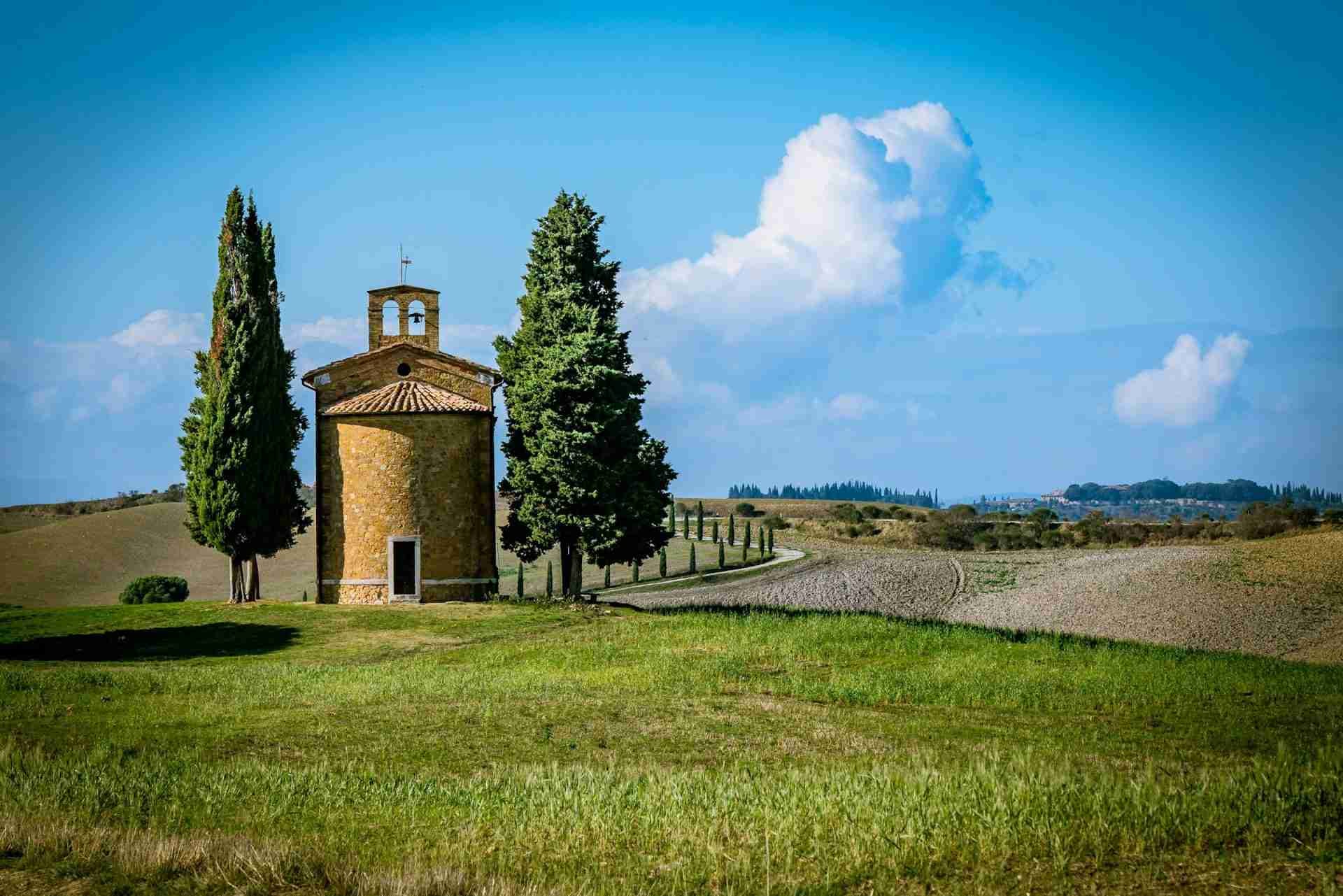
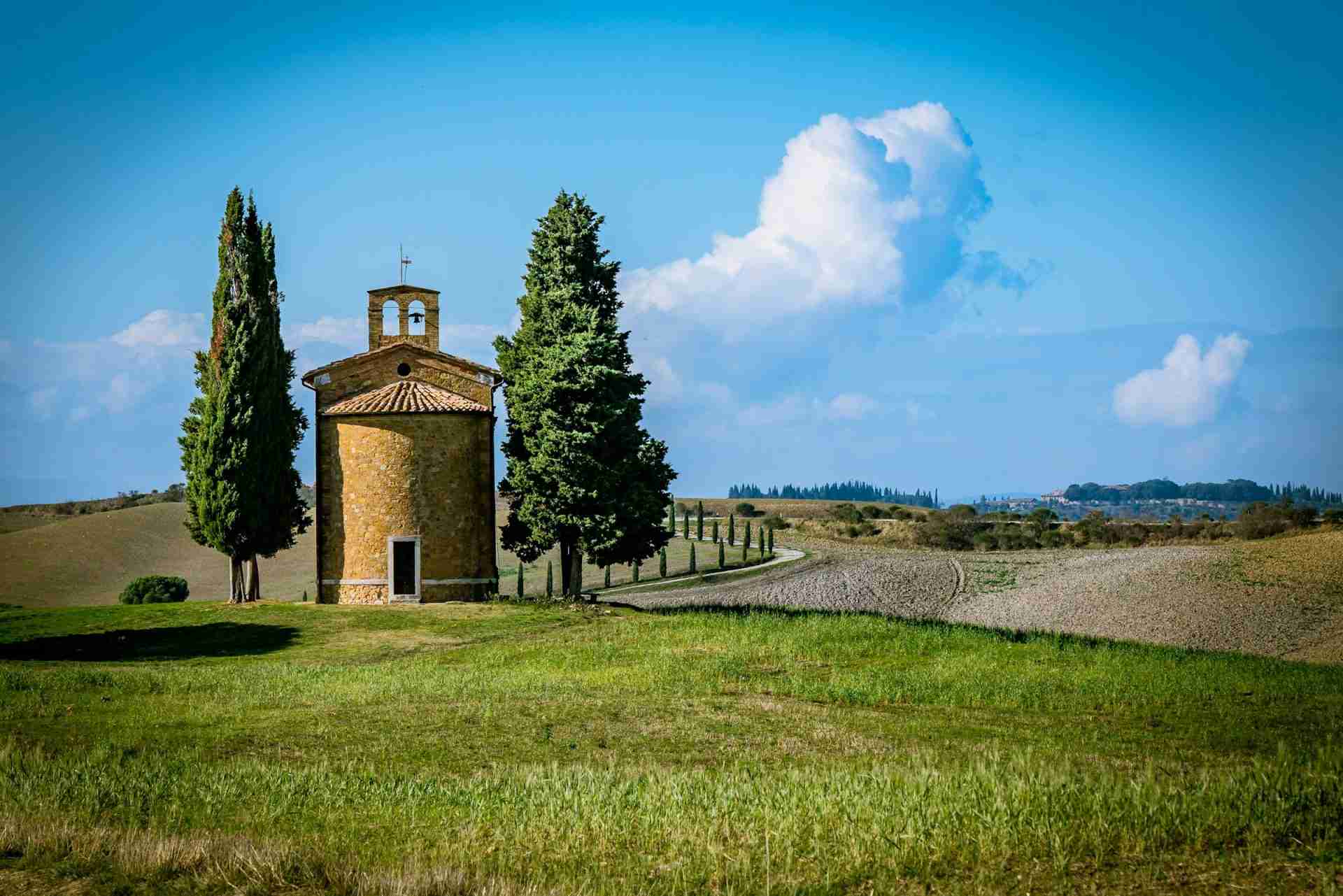
Set alone among gently rolling hills just outside San Quirico d'Orcia, the Cappella della Madonna di Vitaleta is one of the most photographed chapels in Tuscany. This small 16th century structure, flanked by slender cypress trees and backed by the peaceful landscape of the Val d'Orcia, offers a masterclass in minimalist composition and soft natural light. Its proportions are calm and balanced. Its setting feels timeless. And for photographers drawn to quiet geometry, tonal range, and the character of rural Italy, this location offers the kind of scene that appears unchanged no matter how many times it is captured.
Best Photography Opportunities
• Classic Telephoto Compression from the Adjacent Ridge
One of the most effective views of the chapel is found along the dirt road to the east, where the landscape folds in smooth layers. From here, a telephoto lens in the 135 to 200mm range compresses distance and creates a gentle rhythm between the chapel, the trees, and the surrounding hills. This angle highlights the symmetry of the structure and the placement of the cypress trees without needing to fill the frame. Morning light works well for this composition, especially in spring or autumn when the air is cool and mist hangs low in the valley.
• Wide Landscape Compositions
Approaching the chapel via the footpath or field from the south allows for a wider composition that includes the texture of the grass and the road leading up to the building. A wide lens in the 16 to 35mm range lets you capture the surrounding space while keeping the chapel small and dignified in the frame. At sunrise, the façade glows softly as the first light breaks over the eastern horizon. Sunset can be equally rich, especially when the western sky takes on pastel tones and the side light sculpts the folds of the terrain.
• Minimalist Framing with Sky or Field
The simplicity of the chapel's setting makes it ideal for quiet compositions where space dominates. Try positioning the building low in the frame, letting the sky fill two thirds of the image, or placing it off center within a large field. These minimalist studies work especially well in overcast weather or light fog, when detail fades and mood becomes central. A short telephoto lens, such as an 85mm or 105mm, allows for subtle compression while keeping the softness of the landscape intact.
• Close Studies of Texture and Detail
Though the chapel is small, its stone façade, wooden doors, and decorative pediment are rich in texture. Use a 50mm or short telephoto lens to isolate these elements and create contrast between the manmade surfaces and the natural setting. The chapel is often closed, so focus on exterior detail. Late afternoon light rakes across the stonework and brings out warm tones in the surface. Even on cloudy days, the muted contrast adds depth and avoids harsh shadows.
• Human Scale and Seasonal Activity
Including a lone figure walking along the field path or a group of visitors in the distance can help convey the peaceful scale of the location. These images work best when the human element is small and placed with care. During spring, wildflowers sometimes dot the foreground, while in summer, dry golden grass creates a textural foreground to offset the green cypress trees. These seasonal touches help differentiate repeat visits and lend narrative to the scene.
Best Time to Visit
The chapel is at its most photogenic in spring and early autumn when the light is soft and the landscape is either lush or beginning to turn. Mornings offer the best light for the eastern facing façade, with calm wind and low traffic on the nearby road. Sunrise also brings a greater chance of mist in the lower valleys, which can soften the distant hills and give the chapel added prominence. Sunset shifts the light to the side and is especially useful for silhouetted or minimalist compositions. Summer brings harsher midday contrast and more visitors, while winter can feel stark but peaceful, especially under overcast skies.
How to Get There
Cappella della Madonna di Vitaleta is located just off the SP146 road between San Quirico d'Orcia and Pienza in the Val d'Orcia region of Tuscany. A small gravel road branches off toward the chapel and leads directly to a parking area near the site. The road is unpaved but drivable in good weather, and the route is well signposted. There is no fee to access the chapel and no gates or barriers restricting entry to the grounds. The area is surrounded by farmland, so it is important to stay on the access road and designated paths. Photographers can set up near the chapel or explore short trails nearby for varied compositions without needing to hike in from a distance.
Recommended Photography Gear
A versatile kit works best here. A mid to long telephoto lens in the 100 to 200mm range is essential for the classic compressed view across the fields. A wide zoom, such as a 16 to 35mm or 24 to 70mm, is perfect for environmental compositions and for capturing the full chapel in context. A tripod is recommended for low light shooting, particularly at dawn or dusk. A circular polarizer can help deepen blue skies and manage glare in the midday sun, though it is less essential during golden hour. If visiting during morning mist, bring a lens cloth to manage condensation and be ready to adjust exposure quickly as the light changes.
Nearby Photography Locations
The historic town nearby offers stone alleys, small churches, and textured street scenes that contrast well with the open landscape around the chapel. Early morning and late afternoon light creates excellent shadow and highlight separation on the town's worn walls.
This famous ring of cypress trees on a nearby hill is a favorite among photographers. It works well with a long lens from a distance or up close in soft side light. The best time to shoot here is at sunrise when light flows across the field.
• Pienza
Just a few kilometers away, Pienza offers Renaissance-era architecture and expansive views over the Val d'Orcia. The town's outer walls provide a panoramic shooting position for layered hill compositions, especially at golden hour.
• Podere Belvedere
One of the most photogenic rural villas in Tuscany, this farmhouse sits atop a hill with curving rows of trees and plowed fields. It is best captured at sunrise with a long lens to compress the surrounding hills and isolate the light on the villa.
This village built around a steaming thermal pool is rich in texture, reflection, and detail. It is excellent for detail shots and stonework studies, and is especially atmospheric on cool mornings when steam drifts across the piazza.
Comments
Loading comments…