
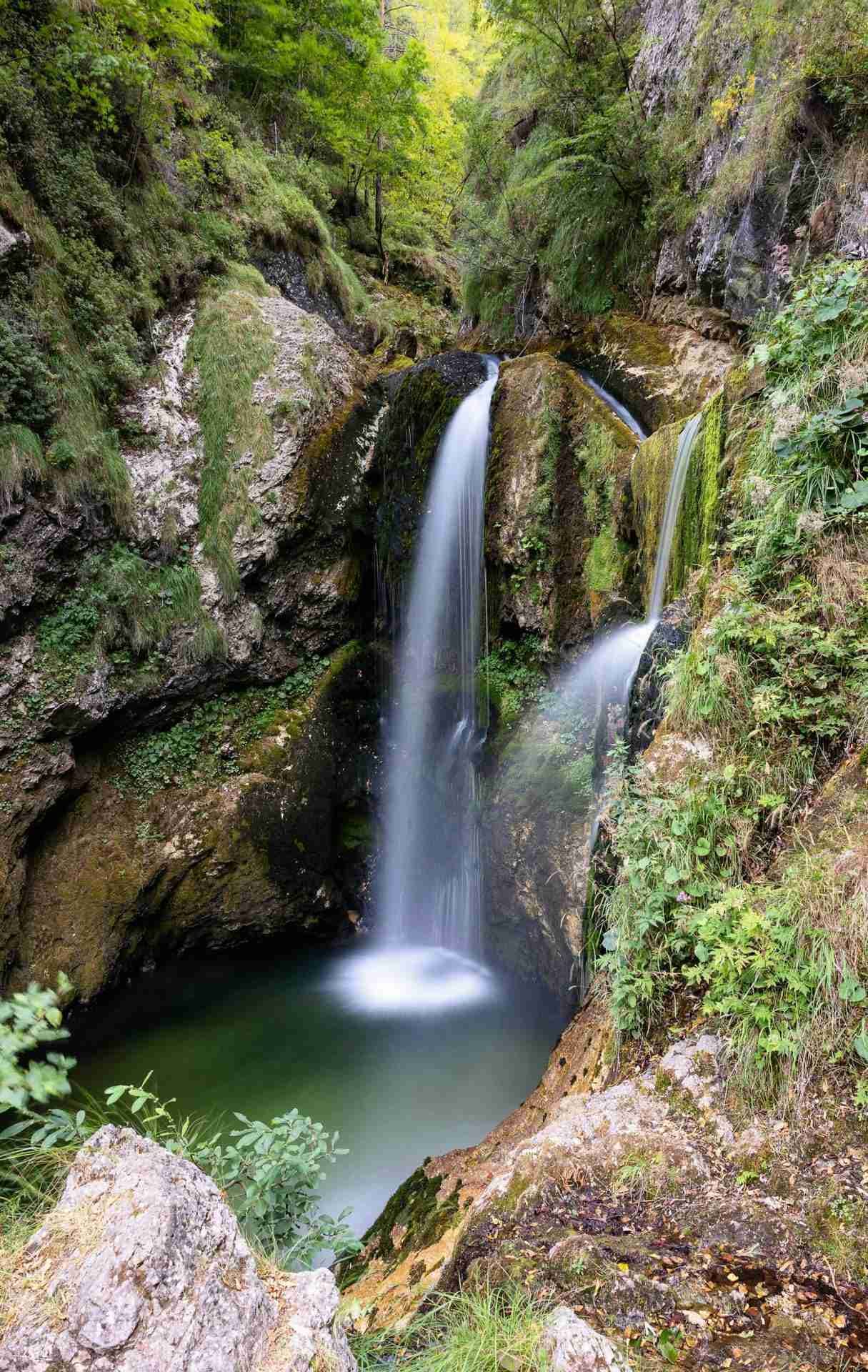
Cascata della Civetta sits just above the village of Lastebasse in northern Italy, tucked into a quiet pocket of forest that remains largely overlooked by the broader photography community. The waterfall spills from a tall rock shelf into a narrow, shaded gorge lined with moss and roots, with a thin stream continuing through a rocky channel below. While modest in scale, the location offers a surprising variety of photographic material. Forest light moves across leaves and rock, water flows clean and reflective after rain, and the silence of the surrounding trees adds to the sense of focus and stillness. This is not a place for dramatic scale, but rather for slow working, careful composition, and fine detail. With easy access from the village below and consistent conditions throughout the warmer months, it is well suited for photographers who enjoy solitude, shifting natural texture, and the simple structure of light over water.
Best Photography Opportunities
• The Full Drop of Cascata della Civetta
The best view of the waterfall is found just below the main drop, where the rock face rises sharply from the surrounding forest floor. From this position, the full length of the fall can be seen in one vertical frame, with overhanging trees and wet boulders adding structure to the foreground. The verticality of the gorge walls makes a wide angle lens a strong choice here, especially if you want to include surrounding elements like moss, roots, or shallow pools at the base. Light is often filtered and indirect due to the slope and tree cover, which allows for longer exposures throughout much of the day. After spring rain, the flow is stronger and surface detail in the rock becomes more visible. In summer, the water slows and reveals more texture in the rock face, which opens up different compositional choices.
• The Pool and Stream Below the Falls
Directly beneath the waterfall, a shallow pool collects and narrows into a gentle stream that winds downhill toward the village. This area offers subtle but rewarding compositions. Smooth stones, exposed roots, and small water plants appear in and around the streambed, and the light that filters through the canopy often forms soft patches across the surface. A polarizing filter helps manage reflection and brings out color in the water and stone. Using a mid-range focal length allows you to isolate parts of the stream and arrange layers of light, motion, and surface detail. This is a particularly strong area for quiet, vertical compositions with a slow shutter, especially during calm, overcast mornings.
• Along the Approach Trail from Via Giaconi
The short walk from the road into the forest is one of the most photogenic parts of the experience. From Via Giaconi, a footpath branches away from the houses and curves gradually up through beech and pine. Early in the morning, light cuts across the slope at an angle, creating warm highlights on the trunks and a subtle contrast with the forest floor. There are several points where the trail rises gently and offers a low view down toward the stream, framed by overhanging branches. These scenes benefit from a 24 to 70 millimeter lens and a flexible approach, allowing you to respond to light as it shifts through the trees. Mist or recent rain deepens the mood and reduces contrast, making for excellent monochrome or texture-focused shots.
• Rock Walls and Vertical Texture at the Fall Site
The rock formation behind the waterfall offers rich opportunities for photographing natural texture. Sedimentary layers, cracks, and mosses line the wall behind and to the sides of the fall, creating a vertical plane of repeating patterns. In diffuse light, these surfaces hold tone well, and detail shots with a short telephoto lens work especially well when isolated. These compositions allow you to capture something more abstract and less reliant on water movement or wide framing. The color palette is limited but rewarding—deep greens, soft browns, and grey tones that work well in both color and black and white.
• Framing Through the Forest
As you approach the waterfall or explore the nearby slope, there are several chances to shoot through tree trunks, with the fall partially visible in the distance. These are more interpretive scenes, requiring you to look carefully for balance between background motion and foreground shape. Shooting through forest at a wider aperture allows for a separation of layers that brings the fall into focus while keeping nearby trunks or branches softly rendered. These compositions often work best in still air and soft light, and a tripod is useful for exact framing and maintaining low ISO.
Best Time to Visit
Cascata della Civetta is best visited from April through early November, when the trail is clear and water continues to flow. In late spring, snowmelt and rainfall combine to create the strongest water movement, and the surrounding forest is fresh with new leaf growth and high contrast between wet stone and bright foliage. This is also the best time for long exposure work, as overcast conditions are common and help reduce harsh highlights.
Summer brings slower flow but more even conditions and drier footing along the stream. Morning is the best time to visit during the summer months, when sun angles are low and the forest holds cooler air. Light moving through the trees creates patterns on the forest floor and adds structure to detail compositions. Late afternoon can also work, though the light fades quickly due to the surrounding slopes.
Autumn introduces warm tone into the landscape, especially in the upper parts of the trail. The waterfall continues to run, though more gently, and leaves gather along the stream and lower rocks, creating new foreground elements. Fog and low clouds are common in the mornings, which can enhance the forest setting and soften shadow transitions.
The site is almost entirely shaded, which means you can shoot here throughout the day without dealing with blown highlights or harsh backlight. Overcast days are the most consistent for shooting both wide scenes and close detail, while post-rain conditions offer the best combination of saturation and air clarity.
How to Get There
Cascata della Civetta is located on the northern edge of the small village of Lastebasse in the Veneto region of northern Italy. The most direct access is from the intersection of Via Giaconi and SP350, just north of the village church. From this point, a short paved path branches away from the road and leads toward a cemetery. Just before reaching the cemetery, a visible dirt trail breaks off into the forest to the left. Follow this footpath for approximately five to ten minutes, staying along the contour of the slope. The trail is narrow but straightforward, with some uneven ground as you reach the falls.
The route is short and suitable for any photographer carrying a backpack or tripod, though proper footwear is still important due to wet soil and forest debris. Parking is available along the roadside on Via Giaconi or near the church, but space is limited. There is no fee to access the waterfall, and the site is not monitored or maintained, so be prepared to carry out anything you bring in. Mobile reception is limited near the falls, and there are no facilities, so plan your visit accordingly.
Recommended Photography Gear
A wide angle lens in the 16 to 24 millimeter range is ideal for capturing the full drop of the waterfall from the narrow viewing area at the base. This focal length also allows you to frame through the forest or include layered foregrounds of stream, boulder, and foliage. A mid-range zoom from 24 to 70 millimeters is useful along the trail and for working with forest light and medium-distance compositions. A 70 to 200 millimeter lens is helpful for isolating detail in the rock face or shooting abstract compositions of bark, water texture, or moss patterns.
A tripod is essential for long exposures and for stabilizing your camera in soft forest light. A polarizing filter will help reduce glare on wet rock and bring out tone in the foliage and stream. A six or ten stop neutral density filter allows for extended shutter times even in brighter conditions, especially when water flow is strong. Lens cloths are necessary due to moisture in the air near the fall, and a rain cover for your bag is a good precaution even in clear weather.
If you plan to shoot low to the ground or close to the stream, bring a waterproof ground mat or a compact kneeling pad. Extra batteries are helpful, as cooler shaded environments can reduce battery life, especially during long exposures or bracketed shots.
Nearby Photography Locations
Located near Arsiero, this larger waterfall offers a more powerful flow and is framed by taller vertical cliffs. The surrounding terrain is more open, making it a good counterpart to Civetta, with better options for wide compositions under dramatic skies.
• Monte Cimone di Tonezza
This ridge and viewpoint south of Lastebasse provides open views across the upper Veneto region and the southern edge of the Dolomites. Early morning and late afternoon are ideal for long lens landscapes and light on ridgelines.
The historic trail of tunnels and military paths on Monte Pasubio offers strong structural compositions, dramatic high-elevation light, and shadow movement through carved rock. This location works well in low sun and fog conditions.
East of Borgo Valsugana, this open forested valley blends art installations with natural landscape. It is a good choice for more interpretive photography, especially in spring and autumn when light filters cleanly through the canopy.
A small alpine lake with calm reflections and a surrounding forest that changes character across the seasons. Mist, light movement on the water, and soft evening color make it an excellent location for calm, layered compositions.
Cascata della Civetta is a compact but highly rewarding spot for landscape photographers who enjoy quiet woodland environments and natural motion. While the waterfall itself is modest, the consistent lighting, layered texture, and easy access make it a place worth returning to in different conditions. Whether you're working with full landscapes or seeking subtle detail, the trail and forest around Lastebasse offer a quiet and steady setting to build a thoughtful body of work.
Comments
Loading comments…