
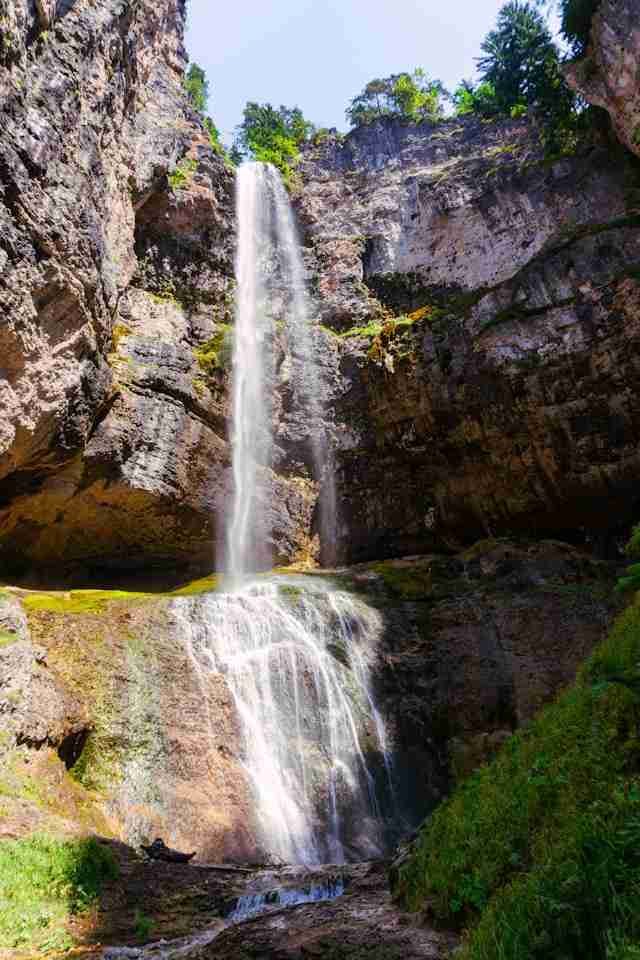
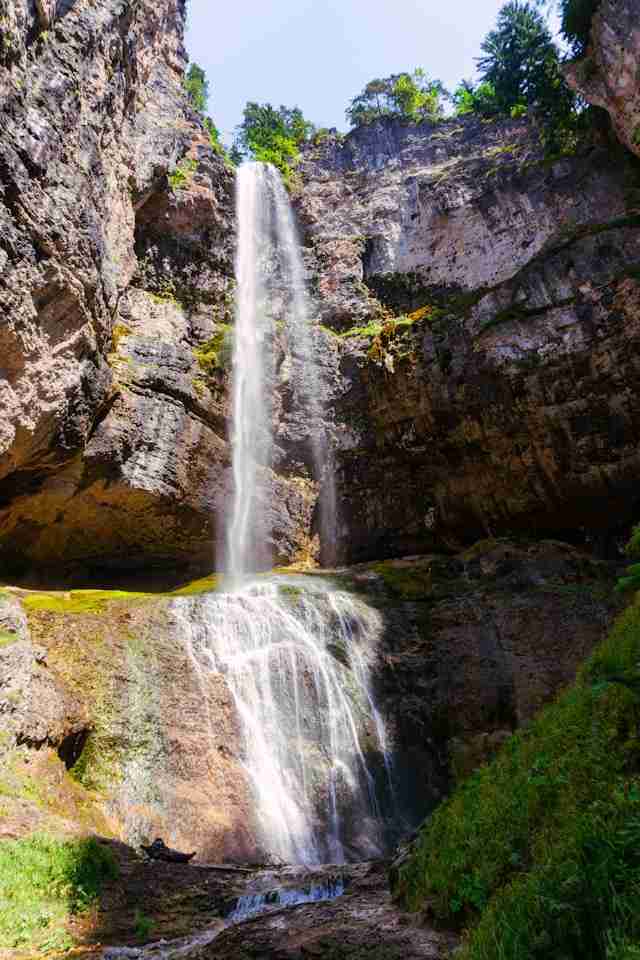
Tucked into a quiet forested gorge near the village of Tret in South Tyrol, Cascata di Tret offers a striking vertical drop surrounded by steep stone walls and alpine vegetation. The waterfall plunges nearly 50 meters into a shaded pool, framed by moss-covered cliffs and tall conifers that create strong directional light and deep shadows. Unlike many roadside waterfalls in the region, this one feels hidden and enclosed, which gives it a more focused and intimate quality for photographers working with long exposures and natural contrast. The sound of water echoing through the canyon and the filtered light between tree branches create an atmosphere that invites slower, deliberate shooting. It is a place where the combination of vertical geometry, textured rock, and soft forest light gives you multiple visual layers to work with in a single composition.
Best Photography Opportunities
• Frontal Long Exposures of the Main Drop
From the foot of the trail, the waterfall presents a clear vertical fall against a rough rock wall that catches both water and light. This is an ideal spot for slow shutter speeds, allowing the cascade to turn into a soft white ribbon against the darker stone. Using a tripod and a neutral density filter makes it easy to manage exposure without losing detail in the surrounding rock. Keep the foreground tight to avoid overexposing the pool, and adjust position to include branches or rocks for added depth. The balanced composition here relies on symmetry and texture rather than scale, so careful framing pays off.
• Side Angles with Framed Vegetation
As you move around the base of the waterfall, there are narrow paths and ledges that allow for oblique angles. These views are stronger when framed by the nearby vegetation, especially the low branches and ferns that grow along the slope. A wide-angle lens helps exaggerate the perspective of the cliff walls while keeping the waterfall centered within the frame. Side lighting during late morning or early afternoon can cast strong contrast across the rocks, which works well in both color and black-and-white. Positioning tree limbs or moss in the foreground can also soften the transition into the brighter central subject.
• Top-Down View from the Cliff Above
The trail continues past the base and ascends to a vantage point above the falls, offering a top-down perspective that reveals the drop and pool from directly overhead. This position is ideal for a longer lens to flatten the scene and highlight the structure of the water's path. Use a polarizer to cut glare from the surface of the pool and reveal the depth of the water below. The surrounding forest canopy can be included to add contrast and natural framing to the shot. Be cautious when setting up at the edge, as space is limited and footing can be unstable on wet ground.
• Textures and Detail in the Rock Wall
One of the most distinctive features of Cascata di Tret is the vertical rock face behind the water. The surface includes deep grooves, moss patches, and layered sediment that reveal geological texture up close. A midrange zoom lens works best for isolating these patterns without including too much of the waterfall. These shots are strongest on overcast days or during the shaded hours when diffused light removes glare and enhances detail. Shooting handheld gives flexibility in positioning, especially when working around roots and rocks near the base.
• Forest Trail and Filtered Light Scenes
The short trail to the falls offers its own photographic material, with filtered light through the canopy creating dappled patterns across the forest floor. In the early morning or late afternoon, the light angle gives strong shadows and soft highlights on tree trunks, roots, and moss-covered rocks. A fast prime lens or a stabilized zoom allows you to shoot handheld and respond quickly to shifting light. Look for natural frames or pathways that lead the eye toward the sound of the water. These transitional scenes help set the tone for a full visual narrative of the location.
Best Time to Visit
Cascata di Tret is best visited from late spring through early autumn, when water levels are stable and the forest is lush and accessible. May through early July brings the strongest flow, as snowmelt from the surrounding highlands feeds the falls and creates consistent water volume. During this time, the surrounding forest is fully leafed out, which helps soften light and add vibrancy to the scene. August and September often offer more controlled light and slightly lower water levels, which can help reveal more of the rock detail behind the cascade.
Light enters the gorge gradually, so early to mid-morning is best for even exposure and avoiding harsh sunlight on the upper rocks. Cloudy days are ideal for soft, diffused light that prevents blown highlights in the water and adds mood to the surrounding cliff walls. Autumn offers strong contrast as the leaves change color, though by late October, water levels may drop and some sections of trail can become slippery. Winter access is limited and not recommended for photography due to ice and trail conditions, though partial views may be possible from above if roads remain open.
How to Get There
Cascata di Tret is located near the hamlet of Tret, which is part of the municipality of Fondo in South Tyrol, Italy. From Bolzano or Merano, take the SS42 road into the Val di Non, then follow signs toward Fondo and Tret. In the village of Tret, there is a small parking area near the trailhead marked with signs for the waterfall. The hike to the falls is about 20 to 30 minutes on a well-worn forest trail with moderate incline and some uneven footing near the base.
There are no access fees or permits required to visit the falls, and the trail is open year-round, although winter conditions may make it unsafe. The area near the base of the waterfall can be slippery due to mist and moss, so non-slip hiking shoes are strongly recommended. A tripod can be used safely at several locations near the bottom, but care should be taken on wet rock surfaces. The trail is popular with locals, but rarely crowded, especially during early morning hours. There are no facilities at the site, so plan accordingly.
Recommended Photography Gear
To get the most out of Cascata di Tret, bring a flexible kit that can handle varied lighting, close quarters, and uneven terrain. A wide-angle lens in the 16 to 35 millimeter range is essential for capturing the full height of the waterfall and its surrounding rock walls. A midrange zoom like a 24 to 70 millimeter lens allows for tighter compositions on texture, movement, or foreground detail. A lightweight telephoto in the 70 to 200 millimeter range is helpful for shooting from the upper trail or isolating structure in the drop.
A sturdy tripod is necessary for long exposure work at the base, especially on low-light days or when shooting from shaded forest positions. A 6- to 10-stop neutral density filter will help stretch shutter times and smooth water motion, while a circular polarizer is essential for cutting glare on wet rocks and water surfaces. A microfiber cloth and weather-sealed gear are useful given the constant mist in the gorge. Comfortable hiking shoes and a compact camera bag are recommended, as you may need to navigate narrow ledges or crouch low to frame compositions from the base.
Nearby Photography Locations
A short drive or hike uphill from the village, this peaceful lake sits in a forest clearing with clean reflections and soft morning light. Surrounded by conifers and alpine wildflowers, it works well for calm water compositions and transitional light just after sunrise. Bring a wide lens to capture the shoreline and its mirror image under early light.
This narrow gorge cuts directly through the town of Fondo and features dramatic rock walls, footbridges, and layered geology. A guided path follows the river through tunnels and suspended walkways, offering close-up views of water-carved stone. It is ideal for midrange lenses and detail-focused shooting in controlled light.
One of the best-preserved castles in Trentino, this hillside fortress offers wide views over orchards and rolling hills. The approach road and surrounding farmland work well for landscape compositions, while the castle itself offers strong symmetry and structural detail. Early morning or late afternoon light enhances both the building and the landscape around it.
The rolling orchards surrounding Fondo provide clean, repetitive patterns and strong seasonal variation. Spring blossoms, summer greenery, and autumn harvests each offer distinct visual opportunities. A longer lens is useful for compressing rows of trees, while a drone adds another layer with sweeping top-down views of the cultivated terrain.
Set into a steep rock wall and accessible via a forested trail, this unique religious complex blends architecture and alpine scenery. The layered stairways and chapel roofs are strong subjects for architectural composition. Light is best in the early morning or on overcast days when contrast is easier to manage.
Cascata di Tret rewards photographers who take their time. The setting may be quiet and contained, but the variety of angles, textures, and lighting shifts make it more than just a quick stop. With the sound of water in your ears and a shaded gorge to work within, it is a place that encourages you to slow down, pay attention, and make deliberate choices with every frame.
Comments
Loading comments…