
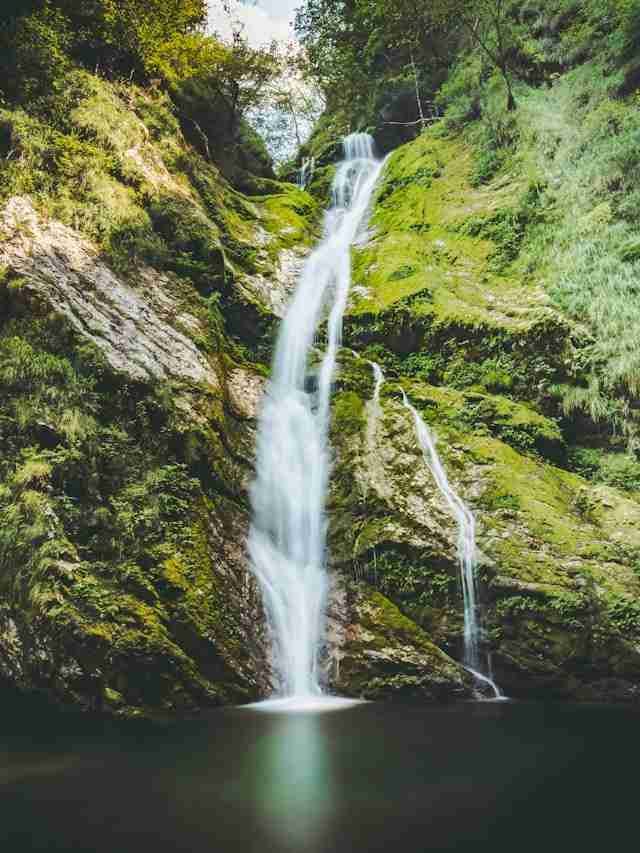
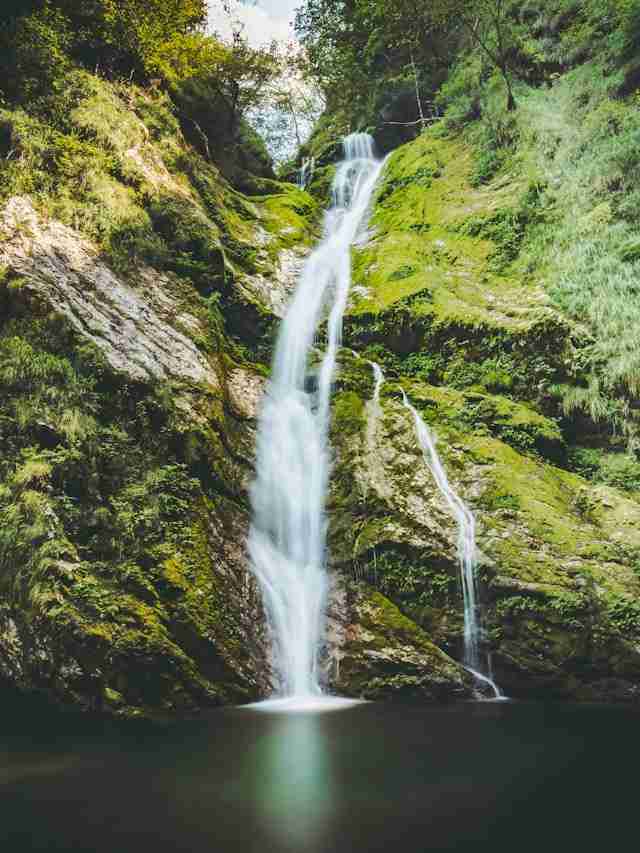
Hidden in the wooded hills above Villa Santina in the province of Udine, Cascata Plera is one of Friuli Venezia Giulia's most beautiful waterfalls. Tumbling in a clean white column down a rugged cliff into a rocky basin, the falls are framed by dense forest that shifts dramatically with the seasons. In spring, the scene is alive with fresh greens, while autumn sets the surrounding slopes ablaze with warm tones. The waterfall's vertical drop, combined with the secluded character of the gorge, makes it a rewarding destination for photographers seeking to capture both power and stillness in nature. Easy access from the town below and a setting that feels far from the bustle of the valleys make Cascata Plera an ideal subject for those looking to work with light, water, and texture in a concentrated, intimate landscape.
Best Photography Opportunities
• Full View from the Basin
The most obvious but also the most rewarding perspective is from the basin directly below the waterfall. Here the full height of Cascata Plera is visible, its vertical drop framed by cliffs and dense foliage that change color with the seasons. Wide-angle compositions allow you to capture the waterfall in its entirety, emphasizing scale by including the rocky basin or forest edge in the foreground. This position is also ideal for experimenting with different shutter speeds, from silky long exposures that smooth the water into a flowing ribbon to fast shutter captures that freeze individual droplets. Arriving early in the morning provides soft light, fewer visitors, and calm conditions that make this spot especially photogenic.
• Foreground Streams and Moss-Covered Rocks
The water leaving the plunge pool creates a stream filled with mossy boulders and small cascades that provide natural leading lines into the main waterfall. These elements allow for layered compositions where the foreground texture of rock and water complements the vertical plunge behind. Using a tripod and neutral density filters, you can transform the rushing water into smooth ribbons that snake through the frame, adding balance and flow to your images. Low angles work particularly well, placing stones and moss close to the lens to create depth. Seasonal variations add interest here too, from bright green moss in spring to icy details in winter.
• Abstract Close-Ups of Water and Cliff Detail
Cascata Plera is not only about the full view but also about the smaller interactions between water and rock. A telephoto or macro lens allows you to isolate sections where the water strikes the cliff face, creating spray, streaks, and swirling detail. These abstract images are rich in texture and lend themselves well to black-and-white conversions that emphasize contrast. Overcast light is especially helpful for this kind of photography, as it avoids harsh highlights and reveals subtleties in the stone surface. Spending time searching for repeating patterns or unusual shapes in the falling water can yield a very different and creative portfolio.
• Seasonal Framing Through the Forest
The gorge is surrounded by deciduous forest that transforms the appearance of the waterfall throughout the year. In spring and early summer, fresh green leaves soften the scene, while autumn brings orange and yellow tones that contrast with the white water. Winter strips the trees bare, creating a minimal, graphic composition that emphasizes the starkness of the drop. Photographers can use these natural frames to create context, shooting through branches or leaves to add depth and mood to the image. Each visit during a different season provides entirely new opportunities for framing and atmosphere.
• Atmospheric Mist After Rain
Following heavy rain, Cascata Plera increases in power, and mist often rises into the gorge, transforming the entire space into something ethereal. These conditions make the air shimmer, soften edges, and create shafts of light when the sun breaks through clouds. Compositions during these moments can be moody and dramatic, with the waterfall emerging partially through drifting vapor. A telephoto lens works well for isolating misty layers, while wide shots capture the overall effect of water, stone, and haze blending into a unified scene. Photographers who come prepared with waterproof gear will find these post-rain conditions some of the most rewarding of all.
Best Time to Visit
Cascata Plera is accessible year-round, but its photographic character changes dramatically with the seasons. In spring, snowmelt and rainfall ensure strong flow, while the forest adds bright green tones to the scene. Summer brings easier access and reliable weather, though the falls may be less forceful during dry spells, and midday light can be harsh. Autumn is perhaps the most rewarding season, as rich colors surround the cascade and early morning fog often lingers in the valley. Winter offers a quieter, more minimal landscape, sometimes with snow or ice adding texture to the waterfall's edge. The best light typically arrives early in the day when the gorge remains shaded and the waterfall is evenly lit, while overcast conditions are excellent for managing contrast during long exposures.
How to Get There
Cascata Plera is located near the town of Villa Santina in Friuli Venezia Giulia's Carnia region. From Villa Santina, it is only a short drive to the trailhead, with clear local signage pointing the way. The walk to the falls takes about 20 to 30 minutes along a forested path that ascends gently but can be damp and uneven, particularly after rain. Sturdy shoes with good grip are recommended. Parking is available in Villa Santina and in small designated areas closer to the trail. Access is free, and no permits are required for photography. The space around the falls is open enough to set up a tripod comfortably, though care is needed on wet rocks near the basin. Drone use should be approached cautiously due to local regulations and the narrow gorge, where turbulence and spray can make flying risky.
Recommended Photography Gear
Photographers visiting Cascata Plera will benefit from a kit that balances flexibility with durability in damp, shaded conditions. A wide-angle lens between 14 and 24 millimeters is ideal for full views of the falls, while a mid-range zoom such as a 24 to 70 millimeter lens works well for compositions that include stream foregrounds and surrounding forest. A telephoto lens up to 200 millimeters is recommended for isolating detail in the falling water or cliff textures. A sturdy tripod is essential for long exposures and low-light conditions, particularly under the forest canopy. Neutral density filters allow creative control over shutter speed, while a circular polarizer helps reduce glare and deepen foliage tones. A rain cover or weather-sealed bag protects gear from spray, and a microfiber cloth is indispensable for clearing lenses during misty conditions. Sturdy hiking boots, layered clothing, and waterproof outerwear will keep you comfortable while working in the gorge environment.
Nearby Photography Locations
This dramatic gorge carved by the Vinadia stream is located a short distance from Villa Santina. Its narrow rock walls and rushing water create a moody environment perfect for long exposures and abstract studies of stone and flow.
Known as the largest natural lake in Friuli Venezia Giulia, Lago di Cavazzo lies about 15 kilometers away. Its still waters reflect the surrounding mountains beautifully, particularly during sunrise or sunset when the light is calm and warm.
• Tolmezzo
The nearby town of Tolmezzo offers a mix of alpine architecture, cobbled streets, and sweeping mountain backdrops. It is a good location for cultural and documentary photography that contrasts with the natural settings of the waterfalls.
• Monte Zoncolan
This high mountain pass is famous among cyclists but also an excellent photography destination. The road climbs into wide alpine landscapes, offering elevated views, open ridges, and seasonal pasture scenes that change dramatically with light and weather.
• Ravascletto Meadows
Located in the same area as Monte Zoncolan, these meadows are dotted with rustic huts and filled with wildflowers in summer. In autumn, they turn golden, making them an ideal complement to the more intimate, shaded setting of Cascata Plera.
Cascata Plera is a place where natural energy and quiet setting come together in a single frame. Its vertical plunge, textured basin, and seasonal shifts create a subject that rewards both first-time visitors and returning photographers. With patience and preparation, this hidden waterfall in Friuli Venezia Giulia offers images that combine intimacy, atmosphere, and timeless alpine character.
Comments
Loading comments…