
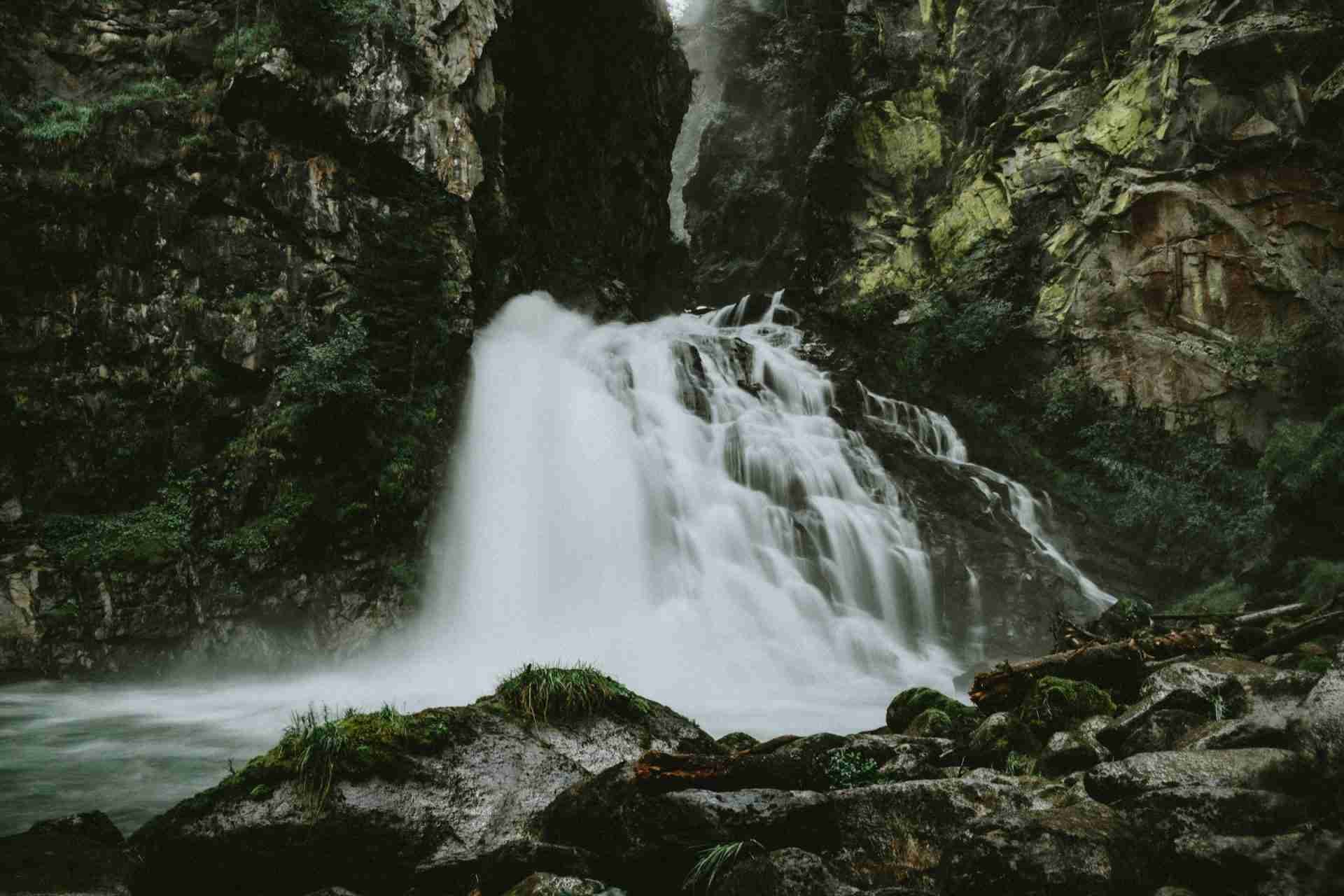
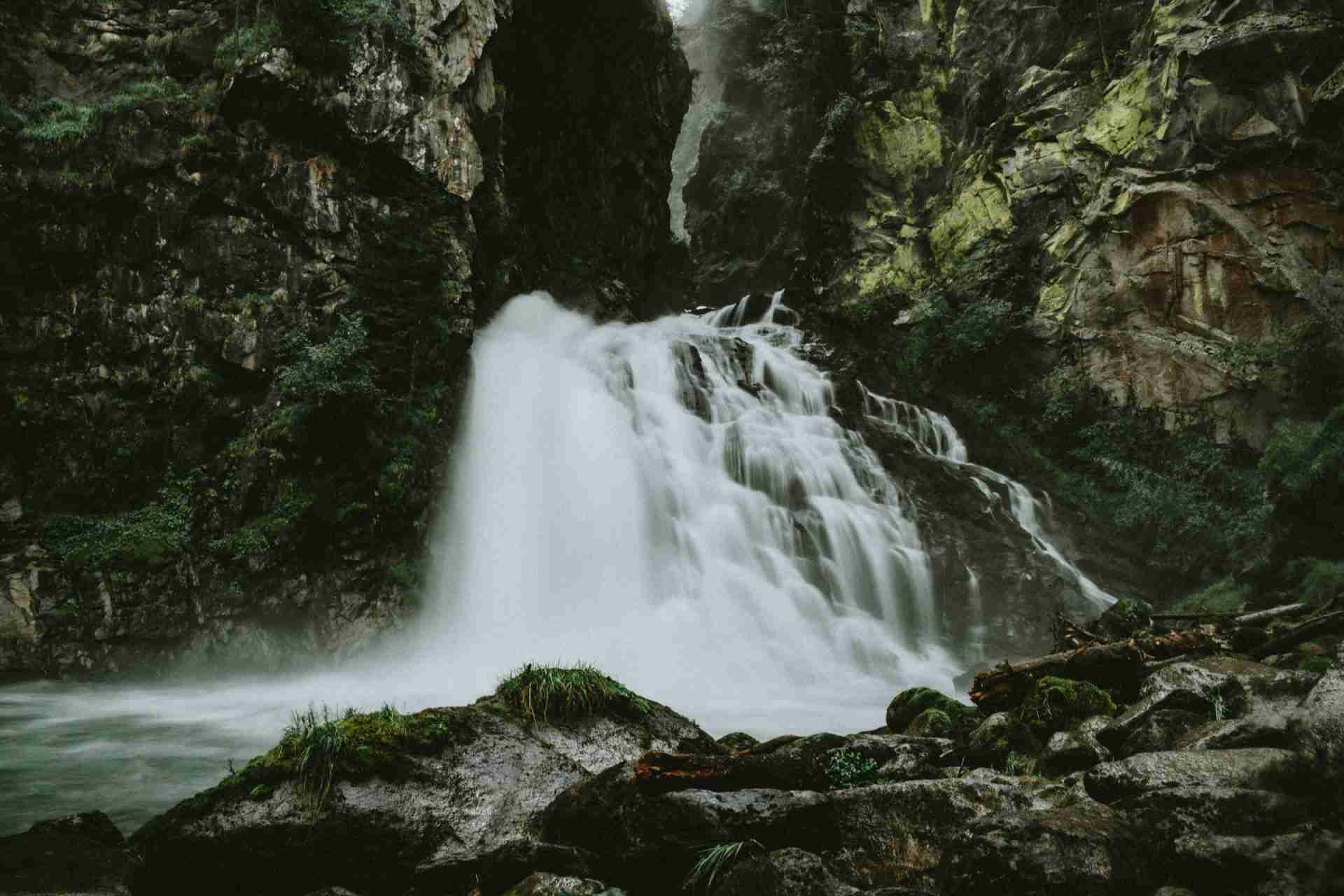
Cascate di Riva, located just outside Campo Tures in South Tyrol, is one of the most photogenic waterfall systems in the region. The falls are fed by mountain runoff from the Rieserferner group and drop in three distinct stages through a narrow, forested gorge. This area is a compact but dynamic series of cascades connected by a well maintained hiking trail. The sound of rushing water is constant, although depending on the season, the volume can shift dramatically from moderate flow to thunderous spray. For photographers, the appeal comes from vertical rock walls, layered drops, wooden viewing platforms, and constantly moving water. It's a location that rewards patience and careful positioning rather than rushing from one overlook to the next.
Best Photography Opportunities
• The Lower Waterfall and Classic Long Exposure Setup
The first waterfall is the most accessible and often the most photographed, but that doesn't mean it's boring. From the main viewing platform, you can frame the entire drop as it funnels into a narrow basin below. A wide lens works well here, especially if you include sections of the dark cliff walls to give the water context and scale. The key is positioning yourself slightly off center rather than directly in front of the falls, which creates more depth and avoids a flat composition. Slower shutter speeds smooth the falling water into clean ribbons, but you still want enough texture to show movement rather than turning it into a white blur. Early morning is ideal because you'll have fewer people on the platform and more control over your composition.
• The Middle Cascade and Gorge Depth
The second waterfall feels more enclosed and, in many ways, more dramatic. The gorge narrows here, and the water cuts through rock in a more defined vertical channel. This is where you can emphasize height by shooting from slightly lower along the path and angling upward. Including trees at the top edge of the frame adds scale and prevents the rock walls from feeling too heavy. Overcast conditions are your friend in this section, as they help preserve detail in both the bright water and darker stone. After rain or during snowmelt, this section becomes especially powerful, and the increased flow adds energy to your images.
• The Upper Falls and Forest Integration
By the time you reach the upper waterfall, the setting opens slightly and gives you more flexibility. Here, you can combine flowing water with surrounding forest in a more balanced composition. A moderate focal length helps maintain a natural perspective without exaggerating foreground elements. In autumn, this area really shines because the surrounding trees add color that contrasts with the cool tones of water and rock. If the water level is moderate, you can experiment with slightly longer exposures to show multiple streams blending together. It's less about raw power and more about harmony between elements.
• Stairways, Platforms, and Trail Framing
The wooden staircases and viewing platforms are not just functional, they can be used creatively. Shooting from behind railings or along the lines of the steps adds a sense of progression and movement through the scene. These elements can guide the viewer's eye toward the waterfalls rather than simply presenting them head on. You do need to be mindful of clutter, especially during busy hours. Arriving early allows you to use these structural elements without constant interruptions from other visitors. This approach helps tell the story of exploring the gorge.
• Detail Work in Rock, Spray, and Side Streams
Beyond the obvious wide compositions, Cascate di Riva offers strong opportunities for tighter studies. The rock surfaces are textured and often wet, creating subtle tonal variation and depth. Side streams and smaller cascades along the trail can make excellent standalone subjects. A short telephoto lens lets you isolate patterns where water meets stone. Faster shutter speeds can freeze droplets and splashes, giving you a completely different feel compared to classic long exposure shots. These smaller details help round out your set and prevent it from becoming repetitive.
Best Time to Visit
Late spring and early summer are often the most dramatic times to visit. Snowmelt from higher elevations increases the volume significantly, and the waterfalls feel more powerful and energetic. After heavy rainfall, the flow becomes even stronger, though conditions can be slippery and mist heavier near the base of the falls.
Early morning is consistently the best time to shoot. The gorge limits harsh direct sunlight, but midday brightness can still create blown highlights in fast moving water. Morning light is softer and easier to control, and you'll also avoid the heaviest foot traffic. Autumn is excellent if you want color contrast in the surrounding forest. Winter can be beautiful as well, especially if ice forms along the edges, but trail conditions may require extra caution. No matter the season, overcast skies are often preferable for maintaining balanced exposures.
How to Get There
Cascate di Riva is located just outside Campo Tures and is clearly signposted. There is a designated parking area near the trail entrance, and from there it's a short walk to the first waterfall. The path connecting all three falls is well maintained but steadily uphill, with wooden stairs and sections of packed trail.
There is an entrance fee to access the waterfall trail, and pricing can change over time. Proper footwear is important, especially in wet conditions, as spray and damp steps can make surfaces slick. Plan enough time to move slowly between levels if you're photographing seriously. Rushing through will limit your ability to experiment with angles and exposure.
Recommended Photography Gear
A sturdy tripod is essential if you plan to work with longer shutter speeds. The platforms can vibrate slightly with foot traffic, so stability matters. A standard zoom lens covers most compositions, while a wide lens helps in tighter sections of the gorge.
A polarizer is extremely useful here. It cuts glare on wet rock and deepens water tones, especially under brighter conditions. Bring a microfiber cloth because spray is constant near the falls, and you'll be cleaning your front element frequently. Waterproof footwear and some basic rain protection for your gear are wise choices, particularly during peak flow seasons.
Nearby Photography Locations
This medieval castle overlooks Campo Tures and offers elevated views across the valley. It provides strong architectural compositions that contrast nicely with the forested waterfall setting.
An alpine lake with clean reflections and mountain backdrops. It's a more open landscape scene compared to the enclosed gorge of Cascate di Riva.
A nearby mountain area with hiking trails and expansive valley views. It offers broader alpine landscapes to complement waterfall imagery.
Another mountain area within easy driving distance. It provides different elevation and perspective options for landscape photography.
• Brunico
A historic town with traditional architecture and mountain surroundings. It adds urban texture to a nature focused itinerary.
Comments
Loading comments…