
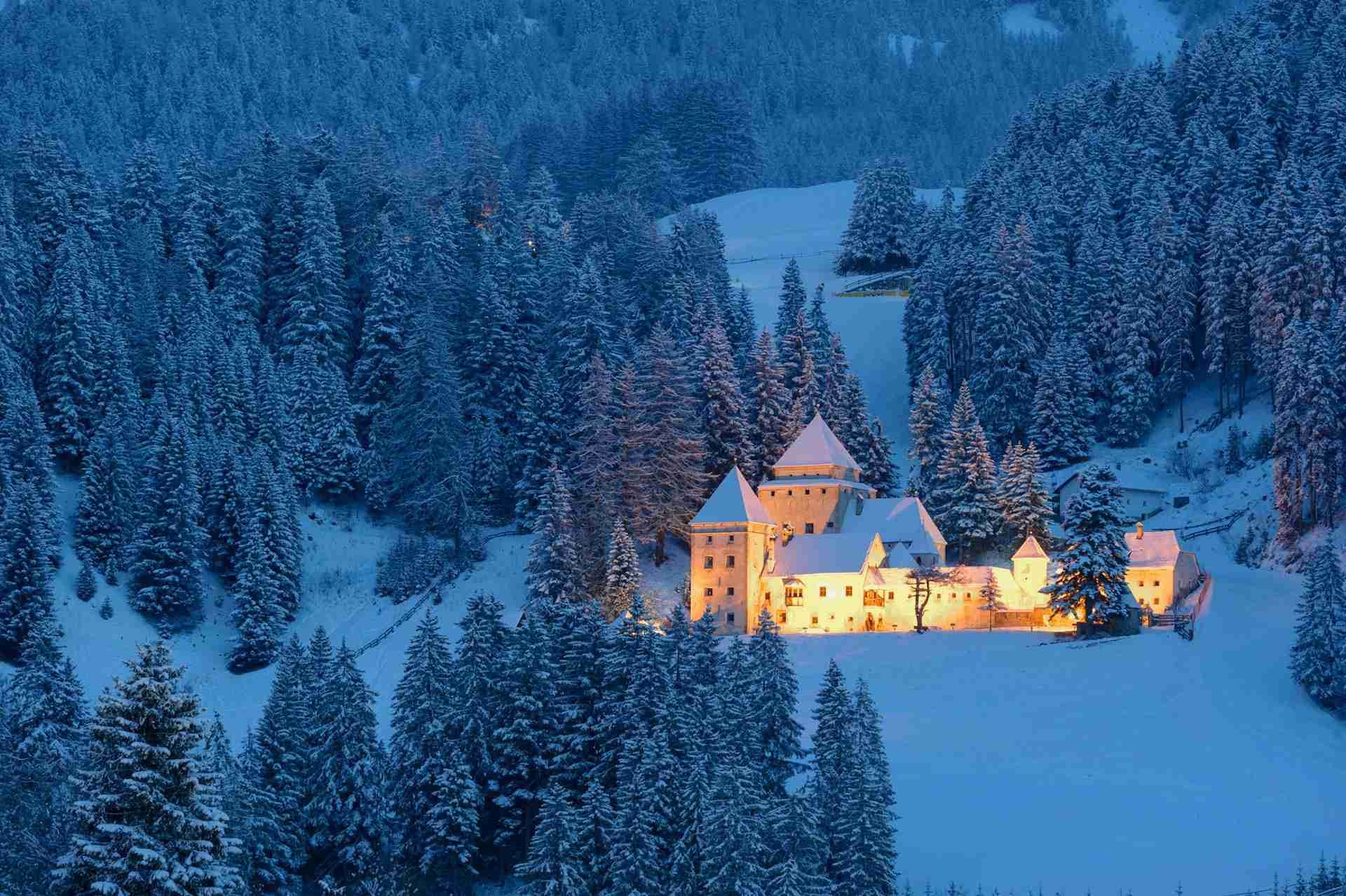
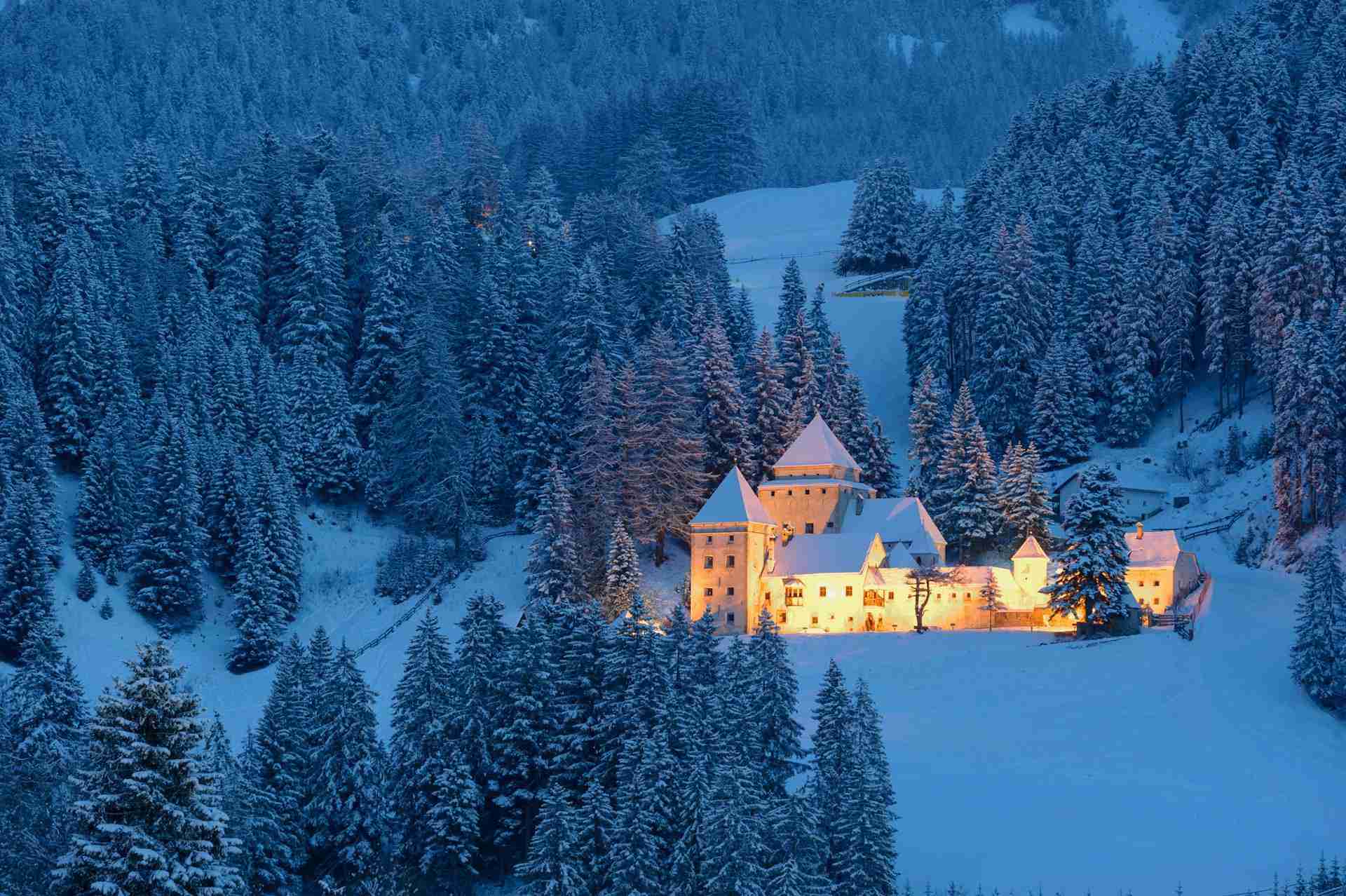
Tucked into the quiet upper reaches of Val Gardena, Castel Gardena (also known as Fischburg) rests between alpine slopes and forested hills, halfway between the villages of Selva and Santa Cristina. Unlike the dramatic mountaintop fortresses of South Tyrol, this privately owned 17th-century hunting castle sits low in the valley, surrounded by open meadows and pine forest. Its elegant yet restrained Renaissance lines, soft ochre exterior, and backdrop of Dolomite peaks make it a subtle but rewarding subject for photographers interested in layered compositions, long-lens compression, and soft mountain light. The castle is not open to the public, but several well-worn walking trails pass nearby, offering clean sight lines and shifting light that changes with the time of day. Castel Gardena is a place to photograph with intention, inviting the kind of image-making that considers mood and context over access.
Best Photography Opportunities
Evening Side Light from the Selva Ridge Trail
One of the most effective vantage points for photographing the castle comes from the low ridgeline to the east, just above the Selva-Santa Cristina trail system. In late afternoon and early evening, sunlight strikes the castle at a clean angle, casting warm, directional light that brings out the shape and tone of the walls. The position allows you to frame the building against forested slopes and distant Dolomite peaks. Use a medium telephoto lens to compress the natural layers of meadow, woodland, and stone. This is a rewarding spot for photographers who appreciate subtle color balance and clean composition built on depth rather than drama.
Morning Mist and the Forest Edge
In the cooler months, especially in spring and autumn, mist often collects in the lower part of the valley and moves slowly across the open meadows near the forest edge. Castel Gardena emerges gradually in these conditions, its outlines softened by haze and rising light. This is an excellent opportunity for photographers working with subdued contrast and pastel tones. Shoot with a short telephoto to compress the mist and isolate the structure against layers of forest or open land. Early light tends to be cooler and gentler, perfect for building quiet, reflective compositions.
Winter Framing Through Bare Trees
In winter, the trees surrounding the castle lose their leaves, opening up natural frames that are harder to find in other seasons. Snow often settles across the rooftops and surrounding paths, adding clean lines and cool color to the scene. The castle's warm-toned exterior contrasts well with the snowpack, particularly under overcast skies or during twilight. From low vantage points along the trail, you can shoot through the trees or use their vertical structure to add framing to your composition. This approach works especially well for photographers interested in black and white or reduced-color work.
Telephoto Compressions with the Dolomites
From the switchback sections of the hillside trails above Santa Cristina, you can align Castel Gardena with the Dolomite massifs in the distance. These shots work best with long lenses in the 200 to 400 millimeter range, allowing you to compress scale and create striking combinations of architecture and alpine rock. This approach is most successful in the golden hours when the color separation between foreground and background is at its strongest. Even slight shifts in your position can completely change the background alignment, so allow time for experimentation.
Twilight and Artificial Illumination
Though infrequently lit, Castel Gardena is sometimes illuminated in the evening or during local events. When this happens, the soft yellow lighting within the windows contrasts beautifully with the blue ambient light of twilight. Use a tripod for exposures between one and four seconds to balance shadow detail and highlight glow. Framing the castle from a mid-range distance allows you to capture the lit structure without overwhelming the scene with too much sky. This moment is short-lived, so timing and readiness are key. Watch for cloud cover or valley mist that might diffuse or soften the glow.
Best Time to Visit
Castel Gardena is photographable throughout the year, but spring and autumn are the most versatile seasons in terms of light, color, and atmosphere. Spring mornings often bring mist and soft greens to the landscape, while autumn offers deep forest tones and clean afternoon shadows. The surrounding meadows are particularly photogenic in early October when the light is angled and the vegetation still has structure. In summer, the scene becomes lush and bright, though strong midday sun can create harsh contrast.
Winter provides a more minimal scene with snow and bare trees, ideal for photographers interested in working with tone and shape rather than color. Sunrise and golden hour remain the most productive times regardless of season. Morning light is softer and often more diffused, while late afternoon brings warmth to the western face of the castle. Cloudy conditions are excellent for evenly lit studies of texture and architecture, especially when the goal is to reduce visual clutter and highlight form.
How to Get There
Castel Gardena is located in the Val Gardena region of South Tyrol in northern Italy. The closest towns are Selva di Val Gardena and Santa Cristina. The castle itself is privately owned and not open to public access, but several public hiking trails pass within clear viewing distance. The most convenient approach is from Santa Cristina. From the village center, follow local signage or trail markers toward Monte Pana. After about twenty minutes on foot, the trail opens into a wide meadow with direct line of sight to the castle.
There is no dedicated parking at the castle, but public parking is available in Santa Cristina, from which the trail begins. The path is well maintained, though uneven in sections. There are no entry fees or permits required to walk the trail or photograph the exterior of the castle from public land. Visitors should respect all private property boundaries and avoid crossing into the fenced grounds. Trail conditions are generally accessible from late spring through early winter, though snow may limit access in heavy winter months.
Recommended Photography Gear
A 70 to 200 millimeter lens is one of the most versatile tools for photographing Castel Gardena, offering the reach to compress foregrounds while still allowing for detailed studies of structure. For long-distance alignment with Dolomite peaks, a lens with reach beyond 300 millimeters will give you maximum compositional control. A standard 24 to 70 millimeter zoom may also be useful for wider views from closer trails or for including nearby forest elements in the frame.
A tripod is essential for low-light shooting, especially during twilight or foggy mornings. A polarizer helps manage glare and deepen contrast in the forest, particularly after rainfall. For winter photography, weather-resistant gear and protective covers are recommended. Since most photography will happen from hiking paths, a lightweight pack with a minimalist setup will make it easier to move between vantage points without fatigue. No filters are necessary unless you plan to shoot long exposures during twilight, in which case a neutral density filter will allow for longer shutter speeds.
Nearby Photography Locations
This iconic ridge above Ortisei offers some of the most compelling mountain views in the Dolomites. The jagged vertical peaks and rolling alpine meadows make it an ideal location for dramatic wide-angle landscape photography. Morning visits often include fog or low clouds, adding mystery and scale.
Located just above Santa Cristina, Monte Pana is a wide, open plateau with excellent views toward Sassolungo and the surrounding peaks. It is quieter than many other viewpoints and offers strong afternoon light with ample space to shoot in solitude. In winter, it becomes a snowshoe route with excellent visibility.
Perched above Ortisei, this small hilltop church offers one of the most photogenic alignments in the valley. From the trail, you can frame the church against a sweeping backdrop of Dolomite cliffs. Visit at sunrise or sunset when warm light illuminates the facade while the peaks fall into deep shadow.
Accessed by cable car from Santa Cristina, Col Raiser opens into expansive alpine pastures with hiking access to ridge lines and panoramic views. These meadows are especially beautiful in mid to late summer when wildflowers bloom and afternoon storms roll over the mountains.
This traditional Tyrolean village has narrow pedestrian streets, colorful balconies, and soft mountain light that is especially striking in the early evening. It is a great location for architectural detail work and street photography with a quiet alpine feel.
Castel Gardena is not a fortress of spectacle but one of restraint. It holds its place quietly in the valley, shaped by light, time, and the steady rhythm of the seasons. For photographers who value layered composition, shifting weather, and the interaction of built form with landscape, it offers a subject that becomes richer each time you return. Its value lies not in access, but in how well you pay attention to what surrounds it.
Comments
Loading comments…