
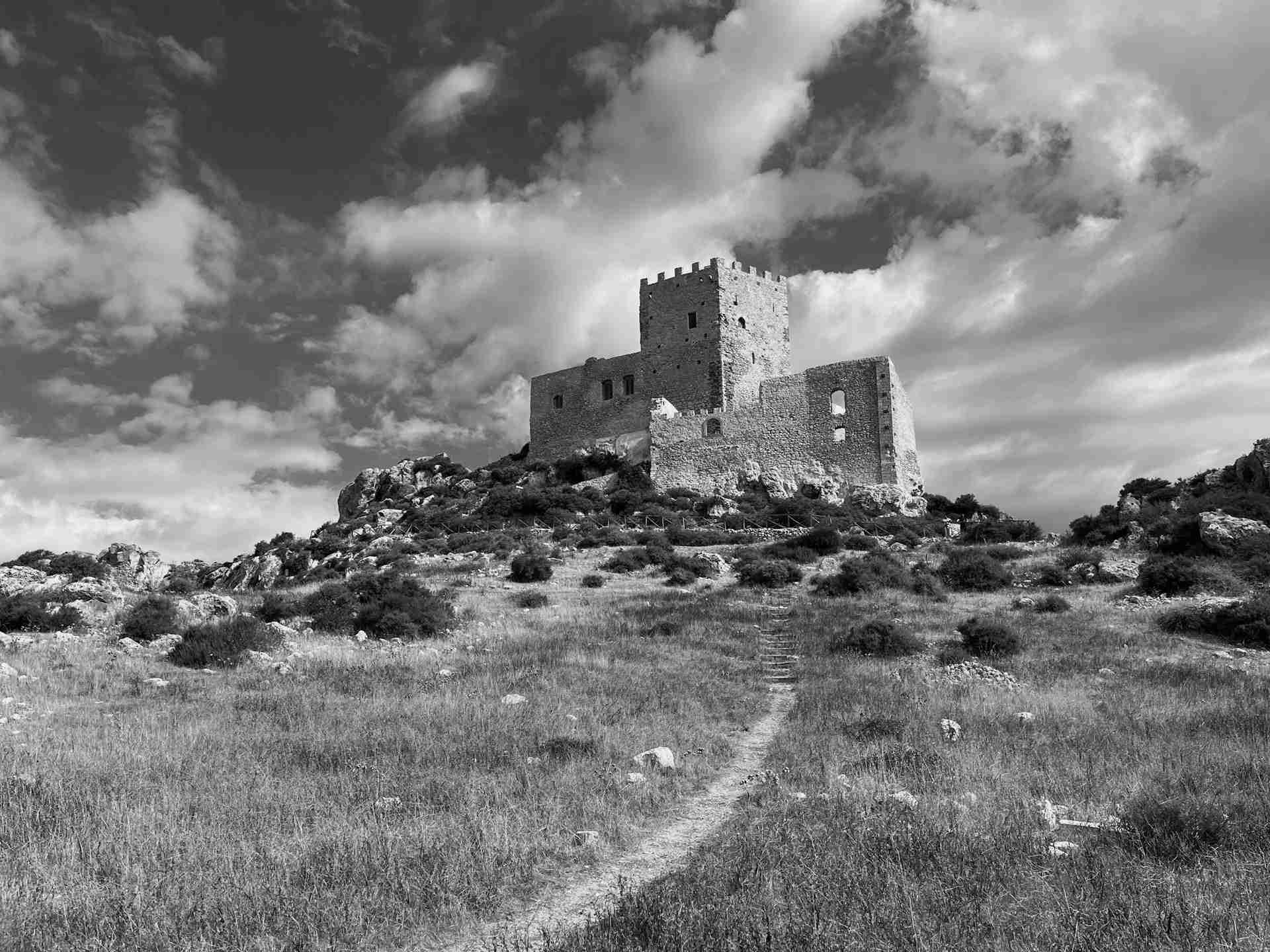
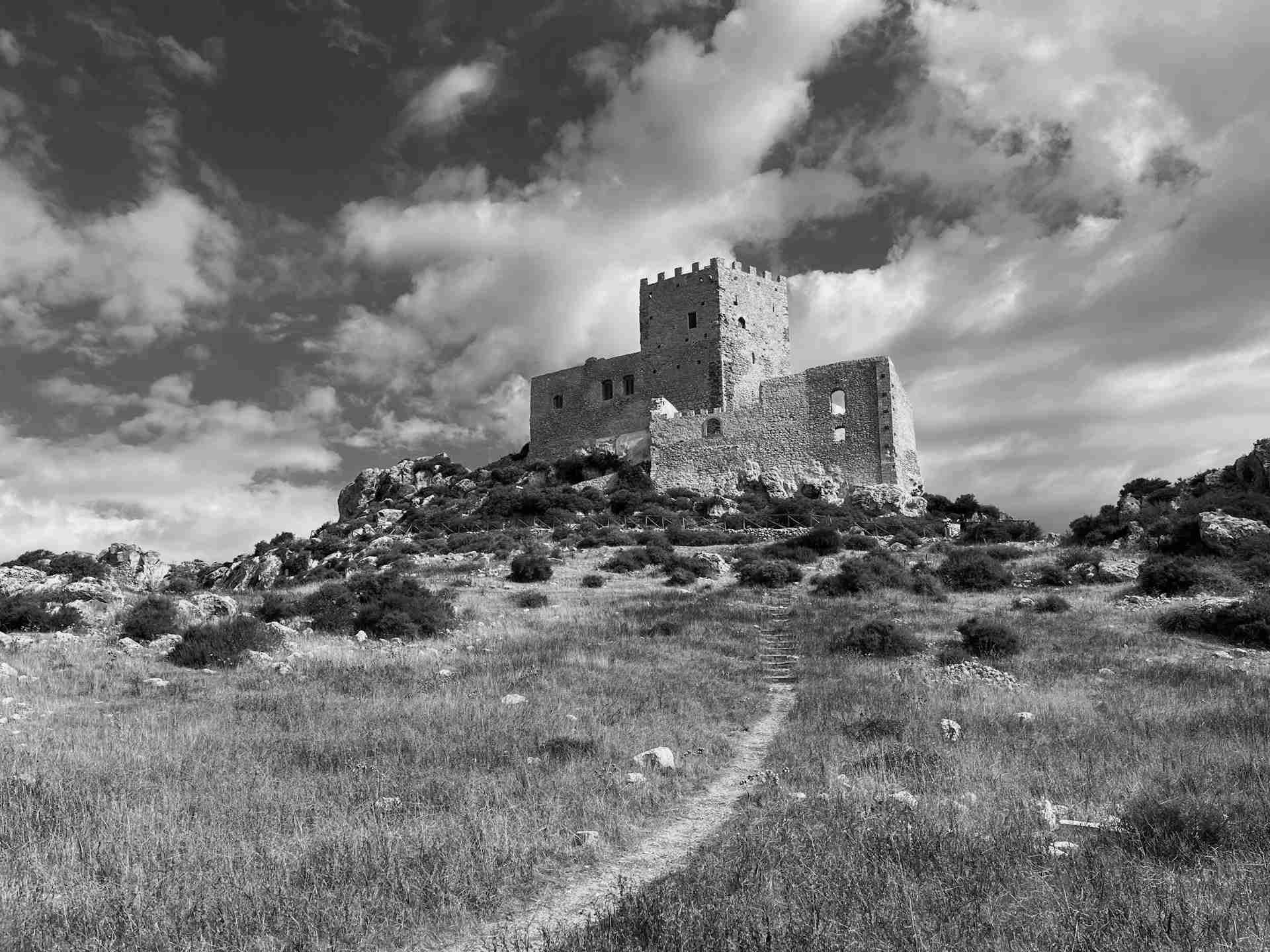
Perched high on a rocky spur overlooking the Mediterranean, Castello Chiaramontano stands as a weathered sentinel above the town of Palma di Montechiaro. Built in the 14th century by the Chiaramonte family, the castle dominates both the coast and the inland hills, making it a compelling subject for photographers drawn to layered landscapes and historical texture. Its fortified walls and angular towers are softened by centuries of exposure to salt wind and sun, while the surrounding cliffs and olive-dotted slopes provide a natural stage for compositions that shift dramatically with the light. This is a location that lends itself equally to broad vistas and detailed studies, where every hour brings a change in color, contrast, and shadow.
Best Photography Opportunities
Dramatic Cliffside Views at Golden Hour
The castle sits above a steep descent to the Mediterranean, offering commanding views in every direction. Golden hour brings warm side light across the structure, illuminating the rough stone and enhancing the warm tones of both the walls and surrounding terrain. Shooting from the ridge trails to the south allows for clean compositions of the castle backlit by sea haze or glowing in late light. Use a medium zoom to compress the scene and emphasize the drop-off below the castle. These conditions are ideal for atmospheric landscape shots that incorporate both historical architecture and coastal expanse.
Stone Detail and Weathered Texture
Up close, Castello Chiaramontano reveals a wealth of photographic texture. The walls are constructed from irregular local stone, patched and eroded by centuries of exposure. Arches, arrow slits, and partial ruins offer framing opportunities and structural rhythm. Shoot in soft light or under thin cloud to capture subtle shadows and tonal detail without harsh contrast. A short telephoto or macro lens is useful here for isolating details like masonry joins, weathered carvings, or lichen-covered stone. Pay attention to how different surfaces interact with light throughout the day, especially along the shadowed northern edges of the keep.
Wide Landscape Shots from Inland Fields
To the north of the site, a network of dirt paths and agricultural plots provide elevated vantage points for composing wide shots of the castle against the sea. In early morning or late afternoon, these angles catch long shadows across the terrain, adding depth and structure to the landscape. A wide-angle lens allows you to work with layers: field, hill, castle, sea. This is also an effective time for working in panoramic format, as the view from here takes in both the built structure and the open coastline beyond. Cloud movement over the sea can add visual interest and rhythm to longer exposures.
Twilight Silhouettes and Coastal Sky
At twilight, Castello Chiaramontano becomes a strong silhouette against the deepening blue of the Mediterranean sky. The minimalist lines of the walls and towers hold up well in silhouette, especially when viewed from the south or southeast. Use a tripod and shoot from lower ground to exaggerate the vertical profile of the castle. Expose for the sky to preserve gradient and subtle post-sunset color. These compositions are simple but striking, especially when windblown grasses or rock features are allowed into the foreground as dark forms against the fading sky.
Black and White Architectural Studies
The castle's form and setting are especially well suited to black and white photography. The heavy geometry of its design, the contrast between weathered stone and open sky, and the range of textures across its surfaces all translate beautifully into monochrome. Strong midday light, which can be challenging in color, creates high-contrast conditions that are ideal for emphasizing shape, shadow, and architectural rhythm. Use a polarizer to deepen the sky and increase definition in the stonework. Focus on angles that highlight the vertical mass of the walls or the interplay of light across textured surfaces.
Best Time to Visit
The best time to photograph Castello Chiaramontano is in the early morning and late afternoon, when the light falls at an angle across the terrain and stone. These periods create long shadows and warm highlights, bringing depth to the structure and enhancing both detail and atmosphere. In summer, heat haze can build quickly during midday hours, softening distant views and reducing contrast. Autumn and spring offer more balanced light throughout the day, with cooler temperatures and clearer skies, especially in the early morning.
Winter brings softer light and stronger skies, particularly after coastal storms, though access may be limited due to mud or wind. Twilight is especially rewarding in winter months when the sun sets over the sea with richer gradient and less haze. The castle is best approached with flexibility, allowing time to explore both the immediate structure and the surrounding landscape as conditions change. Coastal breezes are common, and clouds often pass quickly, creating constantly shifting light that rewards patience and return visits.
How to Get There
Castello Chiaramontano is located just south of Palma di Montechiaro in the province of Agrigento, Sicily. From the town center, follow Via Castello southward along a narrow but paved road that climbs toward the headland. The road ends near a gravel parking area, from which the castle can be accessed by foot. The walk is short but uneven in places, so sturdy shoes are recommended. There is no formal entrance booth, and access is free, though the interior is often gated or partially restricted due to preservation concerns.
Photography around the perimeter and exterior is unrestricted. The terrain is rocky with limited shade, so bring water, especially in warmer months. Early visits are advisable to avoid heat and strong overhead light. Public transport to Palma di Montechiaro is limited, so a rental car is the most practical option for photographers traveling with gear. Roads from Agrigento or Licata are paved and generally well maintained, with signage increasing closer to the site. Mobile reception is reliable throughout the area.
Recommended Photography Gear
A wide-angle lens in the 16 to 35 millimeter range is ideal for landscape shots that include the castle within its broader coastal context. A standard zoom such as a 24 to 70 millimeter lens gives flexibility for mid-range compositions and architectural studies. A telephoto lens from 70 to 200 millimeters is useful for compression shots from a distance, especially when working from inland hills or isolating the castle against sea and sky.
A sturdy tripod is essential for twilight, long exposures, or low-light detail work. A circular polarizer will help manage sky contrast and reduce glare on stone surfaces. A six-stop ND filter is useful for softening wave or cloud movement in wide compositions. Consider bringing a lens hood or rain cover, as wind near the cliffs can be strong and unpredictable. Comfortable hiking shoes are a must for exploring off-path terrain, and gloves may be helpful in cooler seasons for early morning setups.
Nearby Photography Locations
The old quarter of Palma offers a contrasting subject to the castle's solitude, with winding streets, fading baroque architecture, and layered urban forms. Soft afternoon light brings out the texture in the aging facades, and narrow alleys offer strong opportunities for high-contrast compositions.
About 40 minutes west along the coast, Scala dei Turchi is a white limestone cliff formation that drops into turquoise sea. Its stark surface, curved lines, and light-reflective texture make it ideal for both minimalist and abstract photography. Sunrise and sunset are especially rewarding for color and form.
A major archaeological site with well-preserved Greek temples set across a long ridge. These ruins offer strong compositional lines, grand scale, and opportunities for both architectural and landscape photography. Visit early to avoid crowds and capture warm side light.
Licata Harbor and Waterfront
To the east, the harbor town of Licata features working fishing docks, colorful boats, and textured facades that lend themselves to documentary-style shooting. Early morning activity and low sidelight make it a rewarding stop for street and maritime photography.
A quiet headland with unusual white rock formations and sea cliffs, Punta Bianca offers dramatic coastal landscapes and intimate geological detail. Its remote setting allows for uninterrupted shooting, particularly in the late afternoon as light warms across the stone.
Castello Chiaramontano offers more than a view. It holds the weight of time in its walls and invites a slow, deliberate approach to composition. Whether framed against the sea, studied up close in fading light, or caught in silhouette at dusk, the castle serves as both anchor and lens through which the surrounding landscape gains shape and meaning. For photographers who value atmosphere, texture, and a sense of place built slowly through repetition, it offers lasting material.
Comments
Loading comments…