
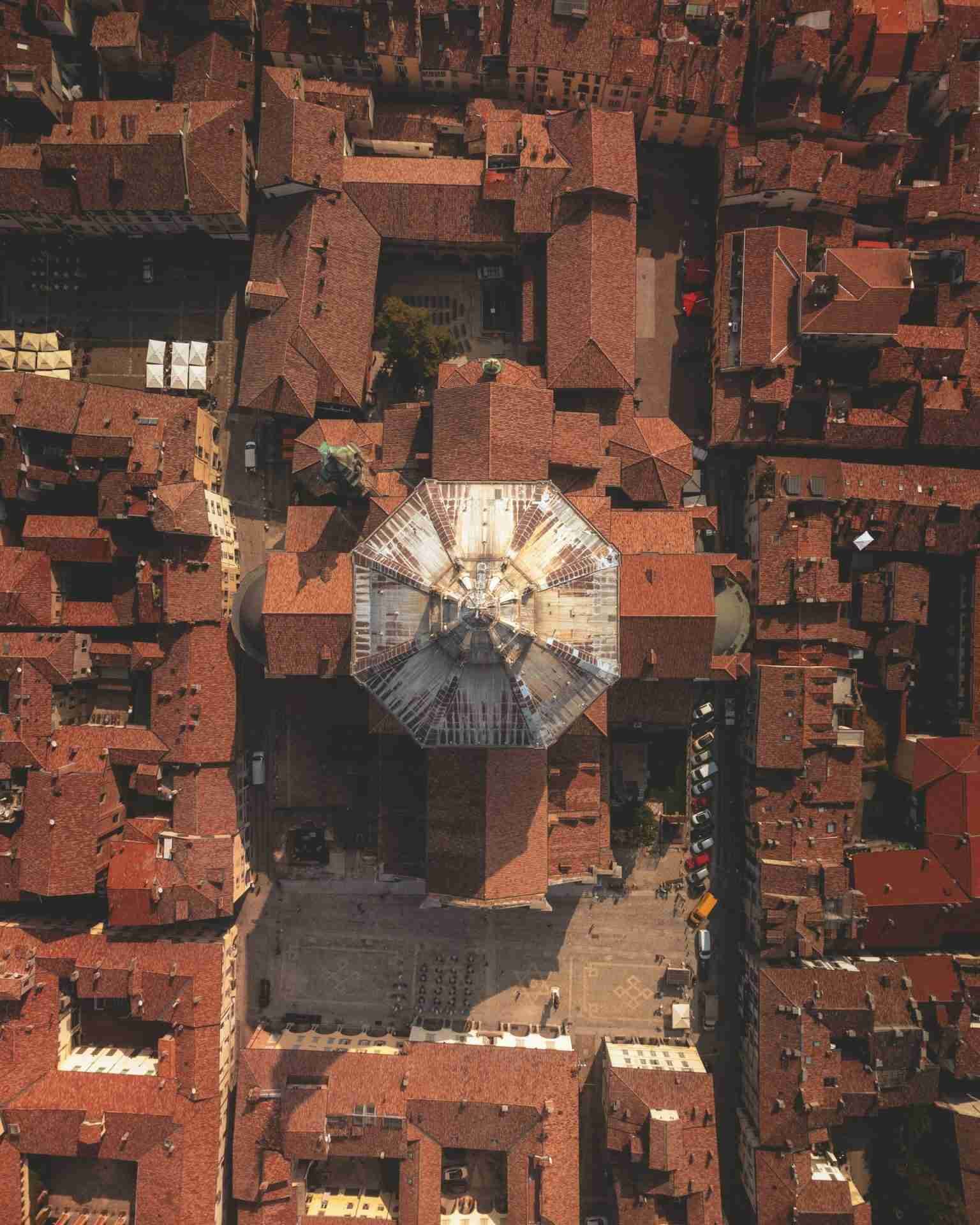
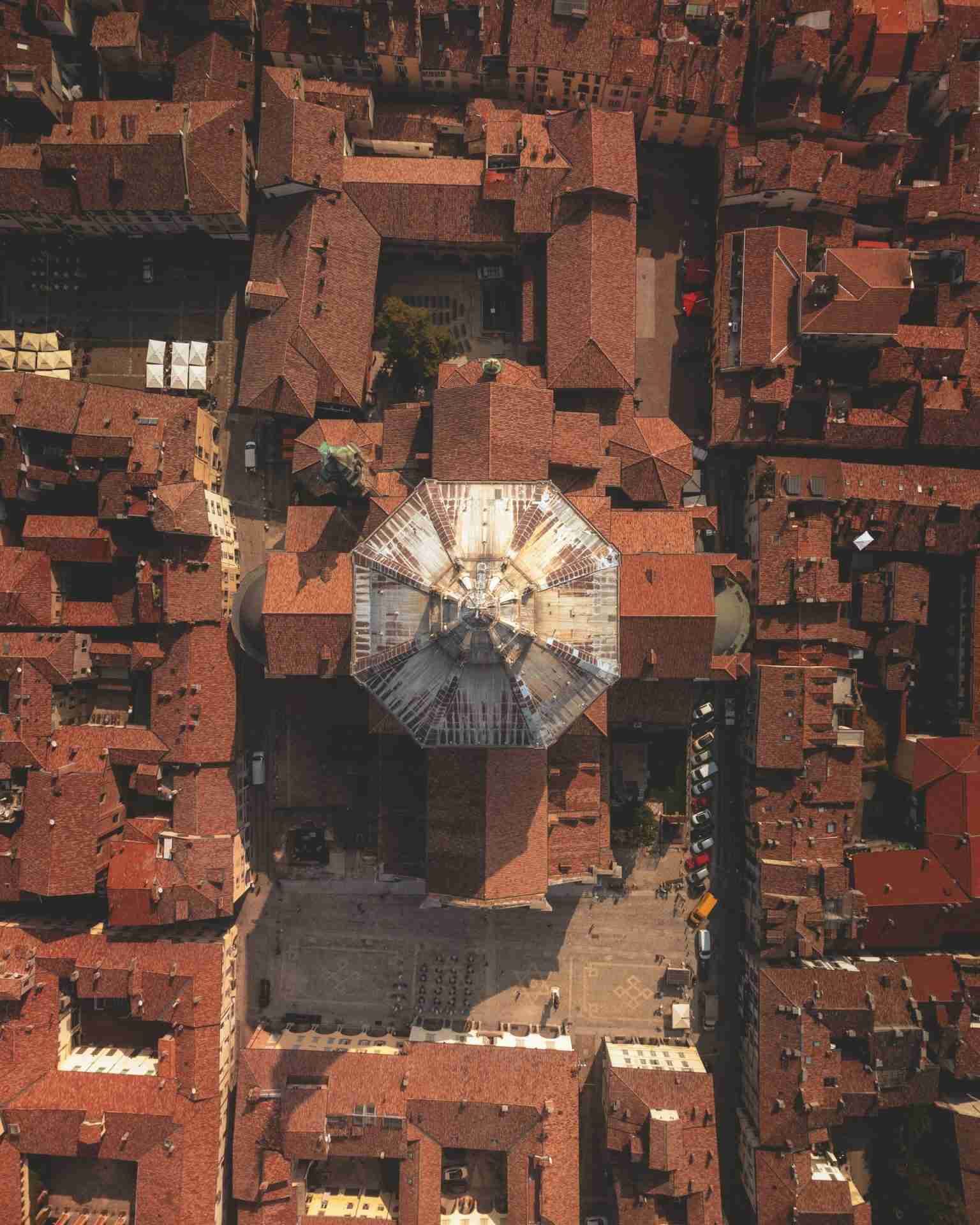
Duomo di Pavia, officially known as Duomo di Santo Stefano e Santa Maria Assunta, anchors the historic center of Pavia with its immense dome and broad stone façade. Dating back to the 15th century, the cathedral reflects Renaissance design principles, with balanced proportions and a clear sense of structure that reads well from multiple angles. The dome rises high above the surrounding rooftops and is visible from several streets before you even reach the piazza. Up close, the façade reveals layers of carved stonework, columns, and recessed sections that create depth throughout the day. For photographers, the cathedral offers both grand exterior views and a spacious interior that supports symmetry and clean architectural compositions.
Best Photography Opportunities
• Wide Piazza Views Showing the Full Façade
From the open space in front of the cathedral, the entire façade can be framed in a single composition. The broad steps and symmetrical layout make it straightforward to build a balanced image. Small changes in position affect how the dome aligns with the lower structure and how surrounding buildings enter the frame. Early light helps preserve detail in pale stone and reduces harsh shadow across carved sections. These views are strongest when the foreground remains uncluttered.
• Elevated Views of the Dome Above Rooftops
From nearby streets and higher vantage points in the city, the massive dome becomes the primary subject. Longer focal lengths compress the surrounding rooftops and emphasize the scale of the structure. These compositions work well when the sky is simple and clean, allowing the dome to stand out clearly. Adjusting your angle slightly can prevent antennas or modern elements from interfering with the skyline. This perspective highlights the cathedral's presence within the urban fabric.
• Detail Studies of Stonework and Columns
Closer framing of the façade reveals sculptural details, columns, and carved ornament. Side light brings out texture and shadow within recessed areas. Even on overcast days, subtle relief in the stone remains visible and photographable. This approach works best when isolating specific sections rather than trying to include too much. Detail studies add variety to a wider architectural series.
• Interior Symmetry Along the Nave
Inside the cathedral, the long nave provides a clear central axis for symmetrical compositions. Standing along the centerline emphasizes the height of the vaulted ceiling and the rhythm of columns. Soft interior light filters through high windows, creating an even tonal range that suits careful exposure. A tripod may be useful where permitted, especially in lower light. These images focus on proportion and depth rather than ornament.
• Dome and Ceiling Details
Looking upward, the interior dome and vaulted ceilings offer strong circular and geometric forms. Careful positioning keeps lines straight and prevents distortion. Even light helps retain detail in painted and stone surfaces. These compositions benefit from patience, especially when waiting for fewer visitors in the frame. They provide a different scale and perspective compared to exterior shots.
Best Time to Visit
Early morning and late afternoon are the most favorable times for exterior photography of the Duomo. Lower sun angles enhance the texture of the stone façade and reduce flat lighting. Morning often brings fewer visitors, allowing cleaner compositions in the piazza. Late afternoon light can add warmth and depth, especially when the sun strikes from the side. Midday light may flatten detail and increase contrast on bright surfaces. Overcast conditions are excellent for detail work and interior shooting, as they soften shadows and create even illumination. Seasonal changes mainly affect crowd levels and daylight hours rather than the structure itself.
How to Get There
The Duomo di Pavia is located in the historic center of Pavia and is easily reached on foot from anywhere within the city core. Pavia is well connected by train to Milan and other Lombardy cities, followed by a short walk to the cathedral. There is no fee to photograph the exterior from public space. Interior access is typically open during visiting hours, though restrictions may apply during services. Arriving early provides greater flexibility for both exterior and interior compositions. The surrounding streets are pedestrian friendly, making it easy to move between viewpoints.
Recommended Photography Gear
A standard zoom lens is ideal for capturing both wide façade views and tighter architectural details. A short telephoto lens helps isolate the dome from surrounding rooftops and compress exterior elements. A tripod can be helpful inside the cathedral for lower light conditions, subject to local guidelines. A polarizer may reduce glare on stone surfaces under strong sun. Keeping the camera level is important to maintain straight lines and balanced proportions. Because the cathedral is centrally located, carrying a manageable kit allows easy movement around the piazza and interior.
Nearby Photography Locations
The covered bridge over the Ticino River offers repeating arches and strong symmetry. It pairs well with the cathedral for architectural contrast.
This historic castle provides brick courtyards and fortified walls. It complements the Renaissance stonework of the Duomo.
The university's arcaded courtyards offer repeating columns and controlled light, ideal for symmetry focused images.
The main square introduces arcades and street life, adding context to a Pavia focused shoot.
Located just outside the city, this monastery complex offers intricate stone façades and cloisters. It extends architectural exploration beyond the city center.
Comments
Loading comments…