
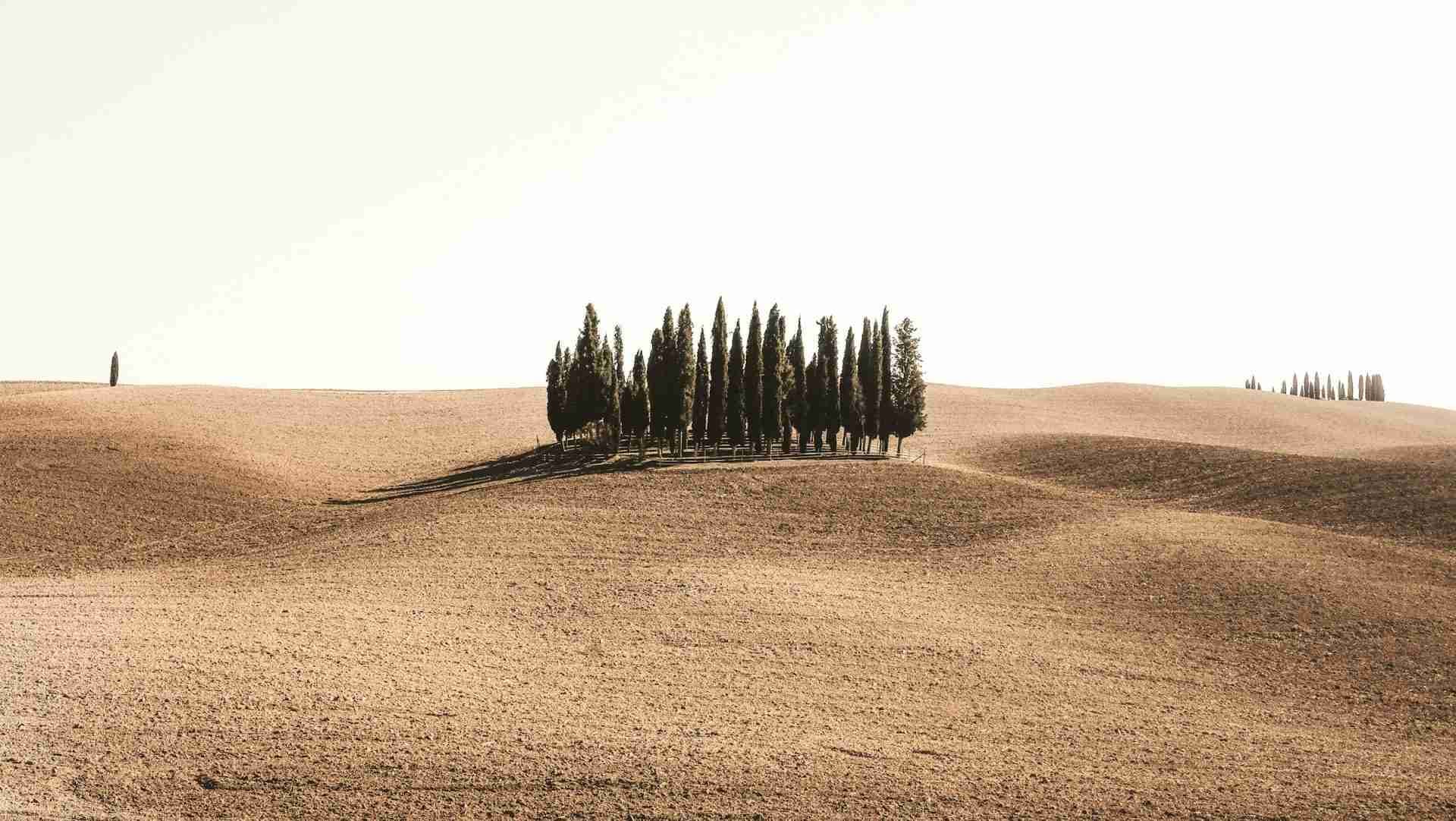
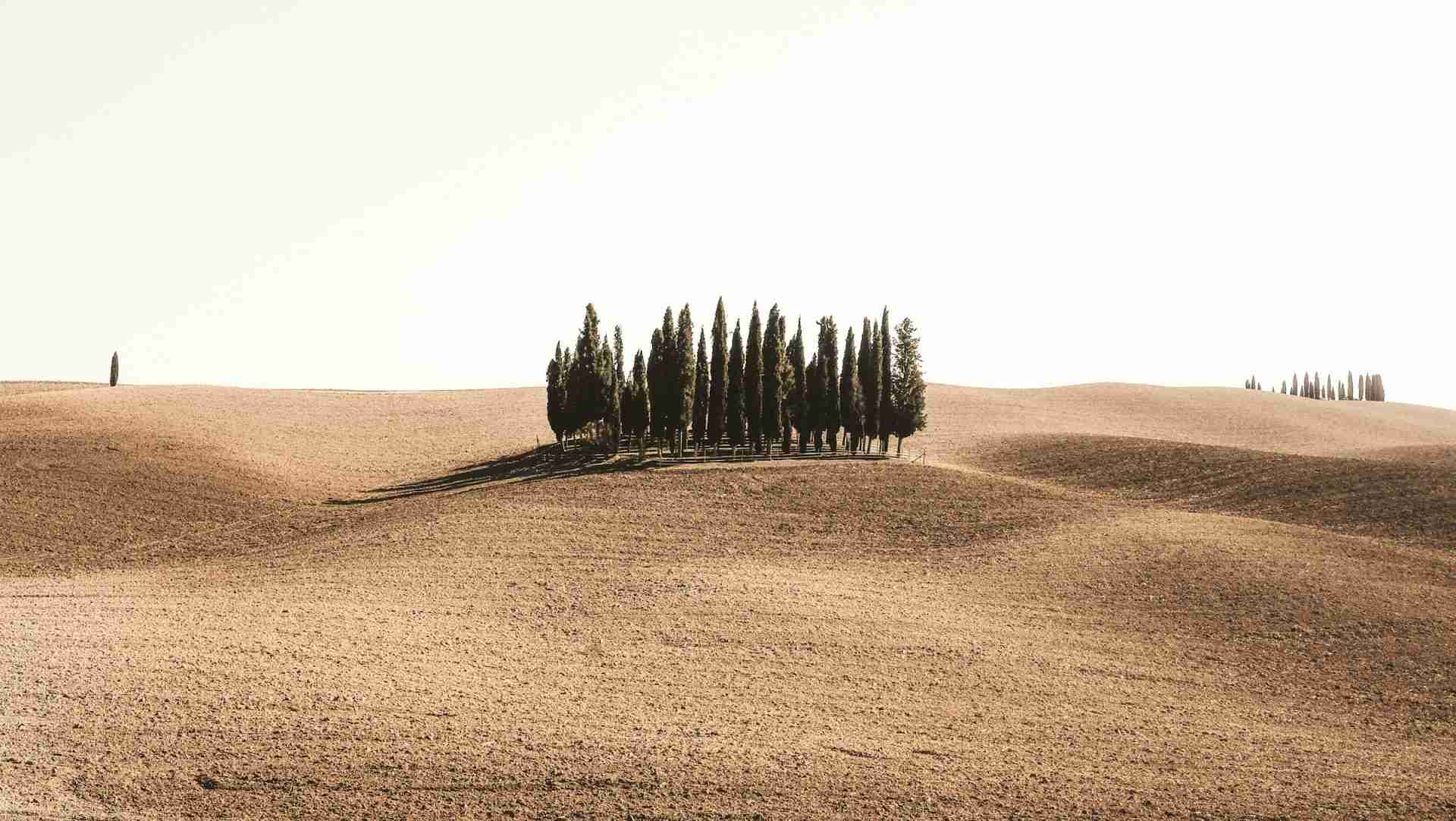
Set atop a gentle rise just outside San Quirico d'Orcia, the Cipressi di San Quirico d'Orcia is a small circular grove of cypress trees surrounded by the open fields of Tuscany. These trees are a favorite among landscape photographers for their strong shape, minimal surroundings, and how they sit so cleanly against the rolling hills of the Val d'Orcia. The grove feels both sculpted and natural, offering endless opportunities to work with light, scale, and repetition. Whether shot from a distance or framed close to emphasize line and shadow, the trees give structure to a landscape defined by soft edges and long horizons. It is a location that rewards simplicity and patience.
Best Photography Opportunities
• Telephoto Compression from the Roadside Turnout
The grove can be photographed effectively from the roadside along SS2 (Via Cassia), where a small gravel pullout provides space to park and set up gear. From this position, a long lens allows you to compress the surrounding fields and flatten the folds in the hills. The trees become a tight shape with the curves of the land supporting the composition. These images work well in early morning light when the shadows are soft and the landscape has subtle color. Even on overcast days, the location holds together cleanly due to the simplicity of the subject.
• Wide Angle Framing from Nearby Footpaths
While access to the exact field is limited by farmland boundaries, well worn walking paths near the roadside allow for slight shifts in position and elevation. A wide angle lens can be used here to include lines in the field or subtle textures in the foreground that lead toward the grove. In spring and early summer, the grass is green and smooth, providing contrast with the dark vertical trees. Late afternoon light adds gentle shadow to the trees and helps sculpt the surrounding landscape without strong contrast.
• Silhouettes against Open Sky
The grove's strong shape makes it a good subject for silhouette photography, especially when the sky is clear or holds layered color at dusk. Framing the trees low in the frame with open sky above gives the image a simple, graphic feel. These compositions work best when the horizon is clean and the camera is kept at a slight distance to avoid distracting elements in the frame. A standard lens between 50 and 85mm is effective here for controlling distortion and keeping the shape compact.
• Seasonal Repeats with Shifting Fields
Though the grove itself does not change, the fields surrounding it offer seasonal variation that completely transforms the image. In spring, green fields provide a soft base that works well with light pastel skies. In summer, the golden soil and dry grasses give warmth to the scene. Autumn tends to mute the tones, while winter brings harder shadows and sometimes early morning mist. Each season offers a different relationship between the grove and its background.
• Abstract and Compressed Studies from Distance
From farther out along SS2 or slightly elevated roadside viewpoints, the grove can be rendered as a small element within a broader frame of hill lines and tilled patterns. These shots are ideal for more abstract takes that emphasize repetition and flow rather than subject detail. Use longer focal lengths to isolate the shape of the trees while layering them with the patterns in the landscape. These compositions are especially successful in soft, diffused light when texture matters more than contrast.
Best Time to Visit
The grove is photogenic throughout the year, though the look of the landscape shifts dramatically between seasons. Spring provides fresh green grass and soft morning light, while summer brings golden tones to the ground and more contrast in the sky. Autumn light is often lower and more directional, with fewer visitors at roadside pullouts. Winter can be stark but clean, with clearer skies and early shadows. Sunrise is a quiet time to photograph, with less vehicle traffic and more open access to compositions. Sunset is good for silhouettes and warm side light but tends to bring more people to the location. Fog is possible in the early morning hours, especially in cooler months, and helps separate the trees from the background hills.
How to Get There
Cipressi di San Quirico d'Orcia sits directly off SS2 (Via Cassia), just a few minutes' drive north of San Quirico d'Orcia. The grove is clearly visible from the road and is marked on most map applications. There is a small gravel turnout near the trees where you can park safely without obstructing traffic. There are no formal facilities, marked trails, or fences, but the surrounding land is active farmland. Visitors are expected to remain along visible footpaths and avoid entering planted or tilled areas. There is no entrance fee, and the site is accessible year round.
Recommended Photography Gear
A long lens in the 135 to 300mm range is key for compression shots from the roadside. A standard zoom or short wide angle lens is useful for environmental compositions when working with foreground elements or sky. A tripod is recommended for early morning or low light shooting, especially when aiming for precise horizon alignment or working with low ISO. A lens hood helps cut glare when the sun is low on the horizon, and a polarizer can be helpful for managing reflections in the air or deepening the tone of the sky. There is no shade at the location, so prepare accordingly if working during midday hours.
Nearby Photography Locations
Located just a short drive away, this small stone chapel sits quietly among open fields with a row of cypress trees framing it from both sides. The location offers clean compositions and soft light at sunrise and sunset.
• Pienza
This nearby hill town provides long views across the Val d'Orcia, tight stone alleyways, and Renaissance-era architecture. The town walls overlook the valley and make for excellent elevated vantage points, especially in early morning light.
• Podere Belvedere
One of Tuscany's most well known rural villas, Podere Belvedere sits on a hill and is framed by curving trees and distant layers of soft hills. It is best photographed at sunrise when mist may still be hanging in the low valleys.
This small town built around a thermal pool offers both architectural interest and moody morning compositions when steam rises from the water. It is best in cool weather, early in the day, and works well for quiet detail photography.
Just to the northeast, the Crete Senesi area features a more rugged and sculpted landscape of bare ridges, clay slopes, and winding roads. It is excellent for abstract compositions and long telephoto studies of layered terrain.
Comments
Loading comments…