
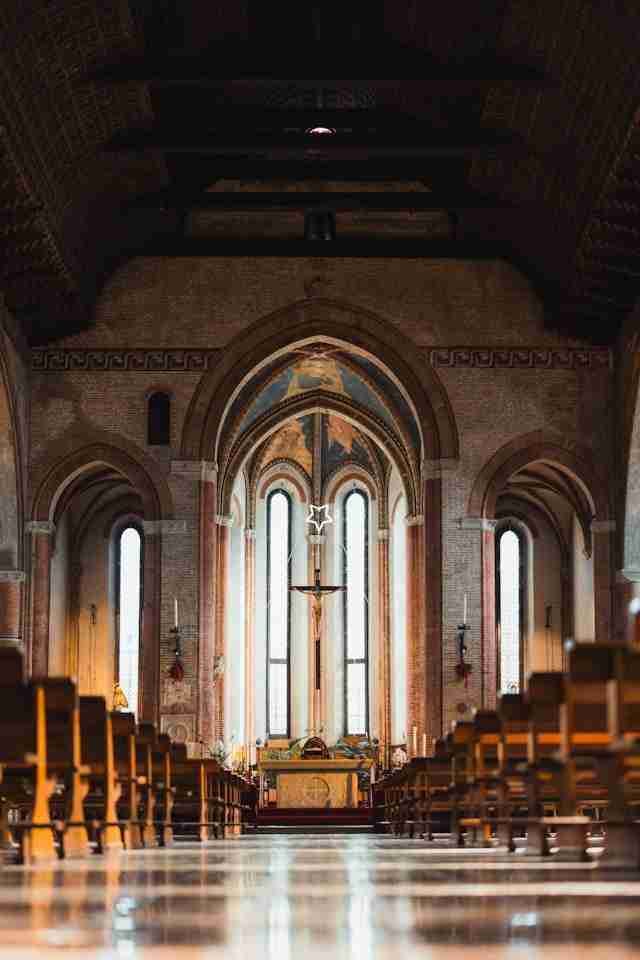
In the quiet center of Treviso, the Convent of St. Francis stands as a rich subject for photographers drawn to clean lines, historic textures, and the interplay of natural light with aged architecture. Built in the 13th century and now home to the Friars Minor Conventual, the structure balances its spiritual purpose with architectural clarity. With its exposed brick walls, tall windows, and modest bell tower, the convent reflects the Romanesque-Gothic transition common to the region. What sets it apart for photographers is the way light wraps around the surfaces at different times of day, creating depth and contrast without relying on ornament. Whether you're shooting the exterior along Via Sant'Antonio or stepping inside for softer compositions, this location invites a focused and respectful approach to architectural photography.
Best Photography Opportunities
• Wide Exteriors with Foreground Texture
The best way to photograph the full convent is from the quiet square facing its main facade. In the early morning or late afternoon, the sun casts angular light across the brickwork, bringing out subtle variations in tone. Using a 24 to 35mm lens allows you to include both the building and the surrounding paving stones, which provide useful texture and context. Keep your frame low to emphasize the vertical rhythm of the structure and avoid cutting off the modest bell tower. Trees in the square can be used to partially frame the composition and add a soft organic element that contrasts with the hard lines of the brick.
• Bell Tower and Shadow Studies
The convent's bell tower, while not tall, provides a clean vertical that works well for isolating details against the sky. Mid-morning light tends to create crisp shadows across its surface, especially when viewed from the narrow side streets adjacent to the square. A short telephoto lens between 85mm and 135mm allows you to compress the geometry and play with shapes. Consider working in black and white to reduce distraction and emphasize form. Even on cloudy days, the soft texture of the brick gives enough variation to create strong monochrome compositions.
• Interior Arches and Diffused Light
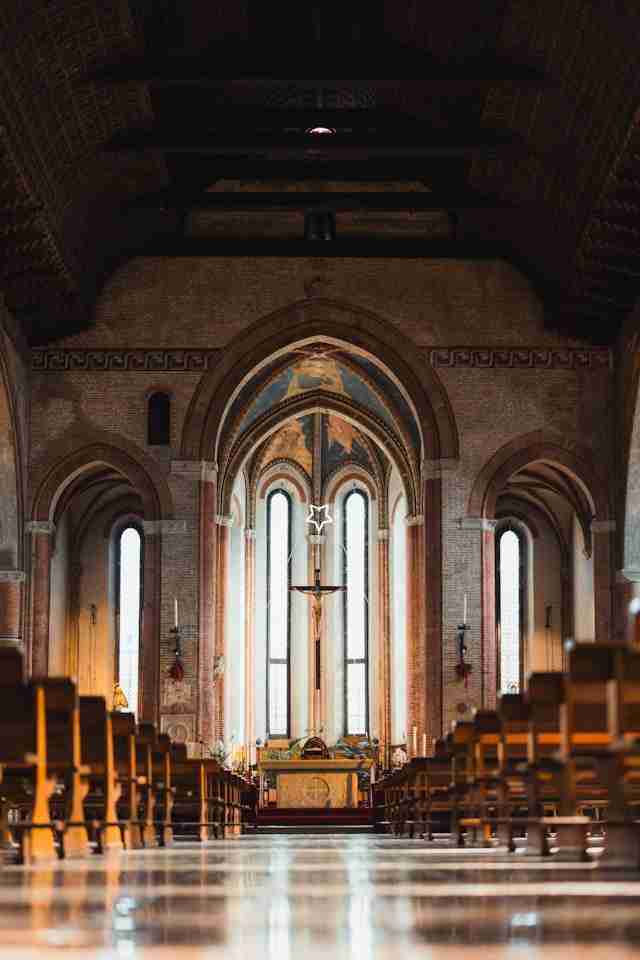
If access to the interior is available, use the opportunity to focus on the arched vaults, high windows, and soft, indirect light that fills the chapel and surrounding walkways. These spaces are quiet and rarely crowded, making long exposures with a tripod feasible. A wide-angle lens helps you work with the symmetry of the arches, while a fast prime lens at f/2.8 or wider is ideal for capturing low-light scenes without pushing ISO too far. Pay attention to the way light falls on worn stone and aged wooden benches. These subtle textures hold up well in detailed edits and reward careful framing.
• Side Passageways and Brick Details
On the sides of the convent, narrow walkways and walls provide more intimate compositions that highlight the variety of brickwork used over the centuries. Shoot with a mid-range zoom to control perspective and bring out the small architectural changes between sections of the building. The late afternoon sun often hits these side walls at a shallow angle, revealing imperfections and giving the scene a more tactile quality. These are good places to experiment with minimal compositions that isolate color, line, and surface.
• Contextual Urban Framing
Treviso is a walkable city, and the convent is surrounded by typical northern Italian architecture with colorful walls, iron balconies, and hanging laundry. Including portions of the neighborhood in your frame helps anchor the convent within its urban setting. Use reflections in puddles after rain or shoot through alleys for natural vignettes. This approach works well for a series or photo essay, connecting the spiritual calm of the convent with the everyday life just outside its doors.
Best Time to Visit
For exterior shots, early morning and late afternoon offer the best directional light. Morning sun hits the main entrance and facade, while late-day light side-lights the structure and creates deep shadows across the square and side walls. Avoid midday when the sun flattens the surfaces and creates harsh highlights that are difficult to manage, especially on the lighter areas of brick.
Interior photography is best done during quiet hours in the mid-morning or late afternoon, when the convent is less active and the ambient light is still strong enough to work without excessive ISO or long exposures. Overcast days are excellent for both indoor and outdoor compositions that focus on texture and shape.
Spring and autumn are ideal for photographing in Treviso in general, as the light is softer, the air is clearer, and there are fewer tourists. Winter offers low sun angles that enhance shadow detail, while summer's strong light is more difficult to work with unless you're aiming for bold contrast.
How to Get There
The Convent of St. Francis is located in central Treviso and is easily accessible on foot from the main train station, which is about a 15-minute walk through the old city. Trains run frequently from Venice, Padua, and other regional hubs, making Treviso a convenient day trip for photographers based in the Veneto.
There is no entrance fee to visit the exterior or surrounding square, and the area remains open to foot traffic throughout the day. Access to the interior may be limited to specific hours depending on religious services or special events. Photography inside the church is generally permitted, but always ask permission if unsure, especially when using a tripod.
Public parking is available outside the old city walls, but the area immediately around the convent is pedestrian-only. It's best to arrive by train or park in one of the nearby public garages and walk in. The walk itself passes through photogenic streets, so plan time for wandering both before and after your main shoot.
Recommended Photography Gear
A wide-angle lens from 16 to 35mm is ideal for capturing the full building within its urban context, especially in the narrow square. A mid-range zoom such as 24 to 70mm helps when transitioning between street-level compositions and architectural detail. For isolating elements like the bell tower or surface textures, a short telephoto between 85mm and 135mm is highly effective.
Bring a small tripod if you plan to shoot in low light or want longer exposures indoors. A fast prime lens, such as a 35mm f/1.8 or 50mm f/1.4, is useful in dimmer interior spaces or for handheld work in the shaded courtyards and alleys. A polarizing filter can help manage reflections from nearby windows or reduce glare on smoother stone surfaces. A lens cloth is recommended, especially when working outdoors in humid or misty conditions.
Keep your kit lightweight and quiet, as the environment inside the convent is subdued and respectful. Carry a small bag that won't get in the way in narrow corridors or among seated visitors during religious events.
Nearby Photography Locations
This central square in Treviso features grand civic architecture and is surrounded by arcades, columns, and soft-toned facades. It is especially beautiful in the early morning when the light filters between buildings and casts long shadows across the paving stones.
• Isola della Pescheria
The fish market island, connected by pedestrian bridges and framed by canals, offers excellent reflections and glimpses into daily life in Treviso. The combination of water, structure, and movement makes it a good spot for both detail and environmental shots.
One of the most scenic canal sections in the city, lined with colorful buildings and small footbridges. Visit in the early morning or evening when light skims the water and creates soft, reflective surfaces that pair well with the aged walls.
Another large religious site in Treviso with high vaulted ceilings, frescoes, and massive brick pillars. It complements the more restrained design of the Convent of St. Francis and offers a different kind of interior light and form.
• Treviso's City Walls and Gates
The historic defensive walls and arched gates surrounding the city are great for capturing larger structural elements, particularly in side light. Long shadows, repeating patterns, and preserved stonework all contribute to clean compositions with strong architectural rhythm.
Photographing the Convent of St. Francis is less about grandeur and more about patience. Its quiet lines, measured design, and the interplay of light and surface offer a steady stream of opportunities for thoughtful composition. In a city already shaped by water, bridges, and shadow, the convent stands as a place of calm geometry and aged stillness, inviting you to slow down and see how light touches stone.
Comments
Loading comments…