
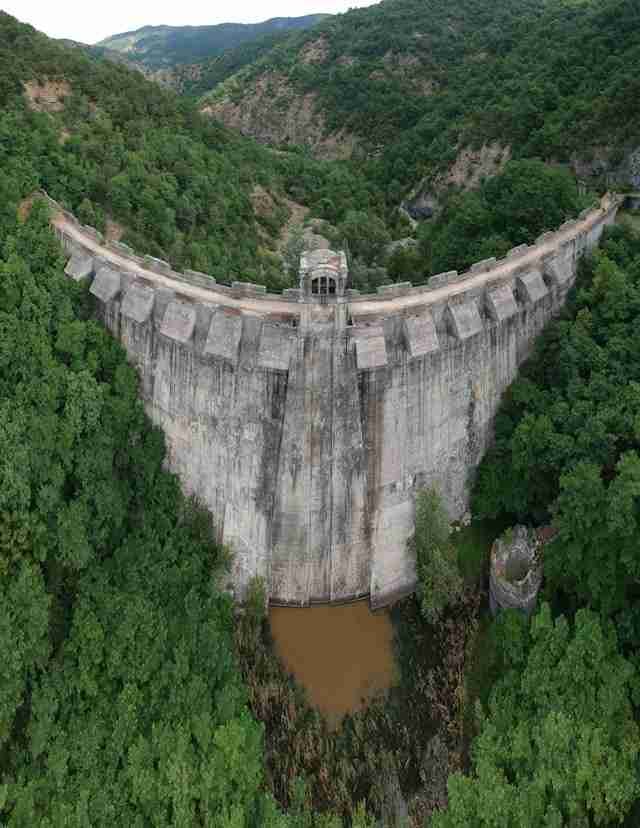
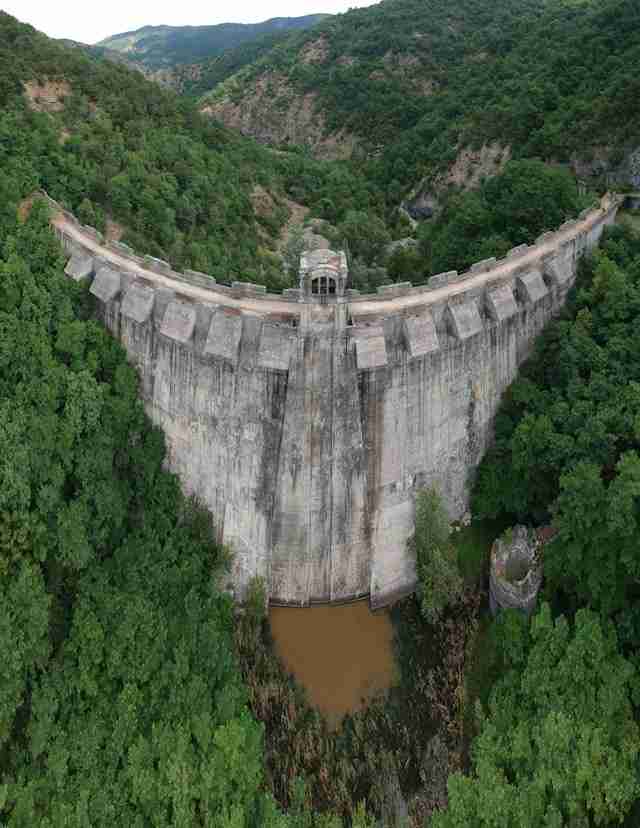
High above the Orba River valley in northern Italy, the ruins of the Diga di Molare tell a story carved in concrete and scarred by tragedy. Once the largest dam in Europe, the structure collapsed catastrophically in 1935, releasing a wave of destruction that swept through the valley and reshaped the land. Today, what remains of the dam lies deep in the forested hills outside Molare. Time and erosion have reclaimed much of the site. For photographers, the Diga di Molare is a place where nature and manmade form meet. Crumbling walls, overgrown channels, and fractured spillways provide raw material for documentary, landscape, and abstract shooting alike. Remote and weathered, the location offers visual weight and silence in equal measure.
Best Photography Opportunities
The Broken Spillway from the Valley Floor
Reaching the base of the former dam reveals the most dramatic angle of what remains of Diga di Molare. From here, the ruined spillway rises sharply above the riverbed, broken and overgrown but still clearly shaped by its original purpose. The view is framed by steep, tree-covered hillsides that close in tightly around the structure, emphasizing its isolation and height. A wide-angle lens helps bring in the surrounding terrain, while early morning or overcast light allows for even exposure across the complex surfaces of concrete and stone. When water is present, the small pools and streams running through the lower section add texture and movement to the frame, creating strong foreground elements for a deeper composition.
View from the Upper Ridge
A short but steep climb from the main path leads to the rim above the dam site, where a section of the original arch and basin can still be seen. From this higher elevation, the landscape opens up and the full footprint of the old reservoir area becomes visible, bordered by wooded slopes and scattered debris. A standard zoom lens works well here, giving flexibility to move between wide contextual shots and tighter frames of the eroded structure. In the afternoon, side light from the west creates long shadows that emphasize the broken edges and scattered materials on the slope. This is also one of the few places where the full size of the dam's original construction can be imagined, even in its current state.
Details of Crumbling Concrete and Rusted Metal
Throughout the site, small structural remnants offer close-up subjects that show the slow breakdown of the dam over time. Pieces of rebar poke through fractured concrete, rusted bolts sit loose in half-buried mounting plates, and moss grows in the joints between old retaining walls. These details are best photographed using a short telephoto or macro lens, especially on overcast days when soft light reveals texture without casting harsh shadows. These small scenes often carry more emotional weight than wide landscapes, especially when photographed with a shallow depth of field to isolate the subject. They work well as part of a series that focuses on decay, history, and the return of nature.
Long Exposures of Water and Ruins
After spring rain or during the wetter months, parts of the site fill with water and runoff flows through cracks and channels in the remaining stonework. These moving elements bring contrast to the stillness of the surrounding ruins and are ideal for long exposure photography. Using a tripod and neutral density filter allows for smooth, flowing water to pass through the frame while the static walls and broken surfaces remain sharp and textured. Framing the water against sharp lines of concrete or natural elements like fallen branches creates a layered image that feels balanced and quiet. These scenes work best in the early morning when the light is soft and the area is less disturbed.
Overgrown Trails and Forest Encroachment
The paths leading in and out of the dam site are just as photogenic as the main ruins themselves. Old access roads are now shaded by mature trees, with grasses and roots covering what were once hard surfaces. Fences, crumbling retaining walls, and weathered posts still mark the way, though much of the original trail infrastructure has been taken over by time. These scenes work well with a 35mm or 50mm lens, especially when using natural light to create depth and soft contrast between path and surroundings. On misty mornings or in late afternoon, the forest glows with subtle light that adds mood to what might otherwise seem like simple trail shots. These quieter compositions help tell the full story of the location as a place being slowly reclaimed.
Best Time to Visit
The Diga di Molare ruins are best visited from late March through early November when the trails are clear and the weather supports a safe and enjoyable hike. Spring, from April through early June, offers the most dynamic lighting conditions and access to water features. This is the time when snowmelt and rain increase flow through the lower sections of the site, which is ideal for long exposure photography. Trees begin to bloom and moss on the concrete surfaces becomes more vibrant. Morning mist is also more common during this season and can give a soft, even quality to light throughout the forest.
Summer brings warmer weather and longer days, which helps with flexibility in timing shoots but also introduces stronger sun and thicker foliage. By July and August, many of the structural elements are partially hidden by growth, especially along the trails. If visiting during this time, early morning or late afternoon will offer the best light, while also avoiding the brightest and hottest part of the day. The site becomes more humid and insects are more active, so preparing for those conditions is essential.
Autumn, especially from mid-September into October, is one of the most visually rewarding times to photograph the area. The surrounding forest changes color, adding contrast to the grey and brown tones of the ruins. The light becomes softer, the air cooler, and the trails less busy. Leaf litter gathers around the structures, and morning light cuts lower across the slopes, highlighting texture in both vegetation and stone. This season is also the most balanced in terms of color and shadow, making it ideal for full-day shoots.
Winter access is possible but only recommended for experienced hikers. Snow and ice can cover the trails, and light falls off quickly due to shorter days and dense forest cover. The trade-off is a cleaner, more minimal look to the site. Without foliage, the full outline of the ruins becomes easier to read and photograph. These conditions require extra care with footing and gear protection, but the results can be stark and unique.
How to Get There
The ruins of Diga di Molare are located in the hills just outside the town of Molare in the Piedmont region of northern Italy. To reach the site, you will need to drive out of town along narrow local roads toward the Orba Valley. There are no formal signs or marked trailheads, but hiking guides and GPS coordinates can help you find one of several informal access points. The hike to the dam takes about one hour, depending on which path you take. The trail that starts from the new dam is fairly straight forward as it follows former dirt roads. Plus just after fording the second stream, there is even a sign. Finding the start of the trail may be the trickiest part.
There is limited parking near some of the upper forest roads, and the routes in can vary based on season and trail condition. Cell service can be unreliable in the valley, so it's important to download maps or have a GPS device before setting out. The site is open and unfenced, with no entrance fee or access restrictions, but visitors should use caution. Some parts of the ruins are unstable, especially after rain, and certain areas near the spillway have sharp drop-offs. There are no services nearby, so bring water, snacks, and any gear you may need. Drones are permitted but should be flown respectfully and in accordance with local airspace rules.
Recommended Photography Gear
Photographing Diga di Molare requires a setup that balances reach and portability, as you'll need to carry everything in over uneven terrain. A wide-angle zoom lens, such as a 16–35mm, is useful for capturing the full layout of the ruins from both above and below. It works especially well in tight spots where you want to include both the structure and its surroundings. A standard zoom, like a 24–70mm, provides flexibility for most general compositions and trail shots, allowing you to move between wide context and tighter framing without switching lenses.
A telephoto zoom, ideally in the 70–200mm range, is recommended for isolating details like cracks, rusted bolts, or layering background trees behind a piece of remaining structure. These longer focal lengths also help if you're working from above or need to stay clear of unstable ground. A sturdy but lightweight tripod is essential for long exposure work, especially when photographing flowing water or shooting in low light under the forest canopy. A remote shutter release or timer mode helps reduce camera shake.
A circular polarizer is helpful for cutting glare on wet concrete or reflective surfaces and will also boost color contrast in the green and brown tones of the forest. A neutral density filter gives you more control over shutter speed when working with water movement. Bring a lens cloth to keep your glass clear in humid or misty conditions, and consider packing a weather cover if rain is in the forecast. Trail shoes or hiking boots with strong grip are highly recommended, and your camera bag should be stable and easy to carry across steep ground. Extra batteries, water, and a flashlight are also worth bringing, especially if you plan to shoot early or stay through dusk.
Nearby Photography Locations
Lago di Ortiglieto
Just upstream from the dam site, this small reservoir is surrounded by forested hills and quiet inlets. Its still surface reflects the trees and sky, especially in the early morning or after a rain. The area is peaceful, uncrowded, and pairs well with a visit to the dam ruins.
This large natural park to the south offers panoramic views, open ridges, and broad hiking paths. The terrain is varied, with wide vistas, exposed rock faces, and seasonal color that photographs well at sunrise or sunset. It's a great contrast to the narrow valley around the dam.
A hilltop village just a short drive away, Rocca Grimalda features old stone buildings, narrow streets, and a strong visual connection to the surrounding valley. It's perfect for handheld shooting in soft morning or evening light, and offers both street scenes and elevated landscape views.
This spa town blends Roman ruins and old-world architecture with quiet courtyards and narrow alleys. The textures of the stone, arches, and public fountains offer a slower, more urban style of photography that complements the rural setting of Diga di Molare.
Capanne di Carrega Ligure
An abandoned village high in the Ligurian Apennines, this site includes stone homes, crumbling walls, and panoramic views over rolling hills. It is remote but highly photogenic, with scenes that lend themselves to both wide storytelling and detailed exploration.
The Diga di Molare site may be quiet and overgrown, but for photographers willing to hike in and look closely, it offers a powerful mix of forgotten structure and natural recovery. Every corner of the site reveals something different, whether it's a wide view across the valley or a single bolt rusting into the ground. With good timing and the right gear, it's a location that rewards careful observation and simple, honest shooting.
Comments
Loading comments…