
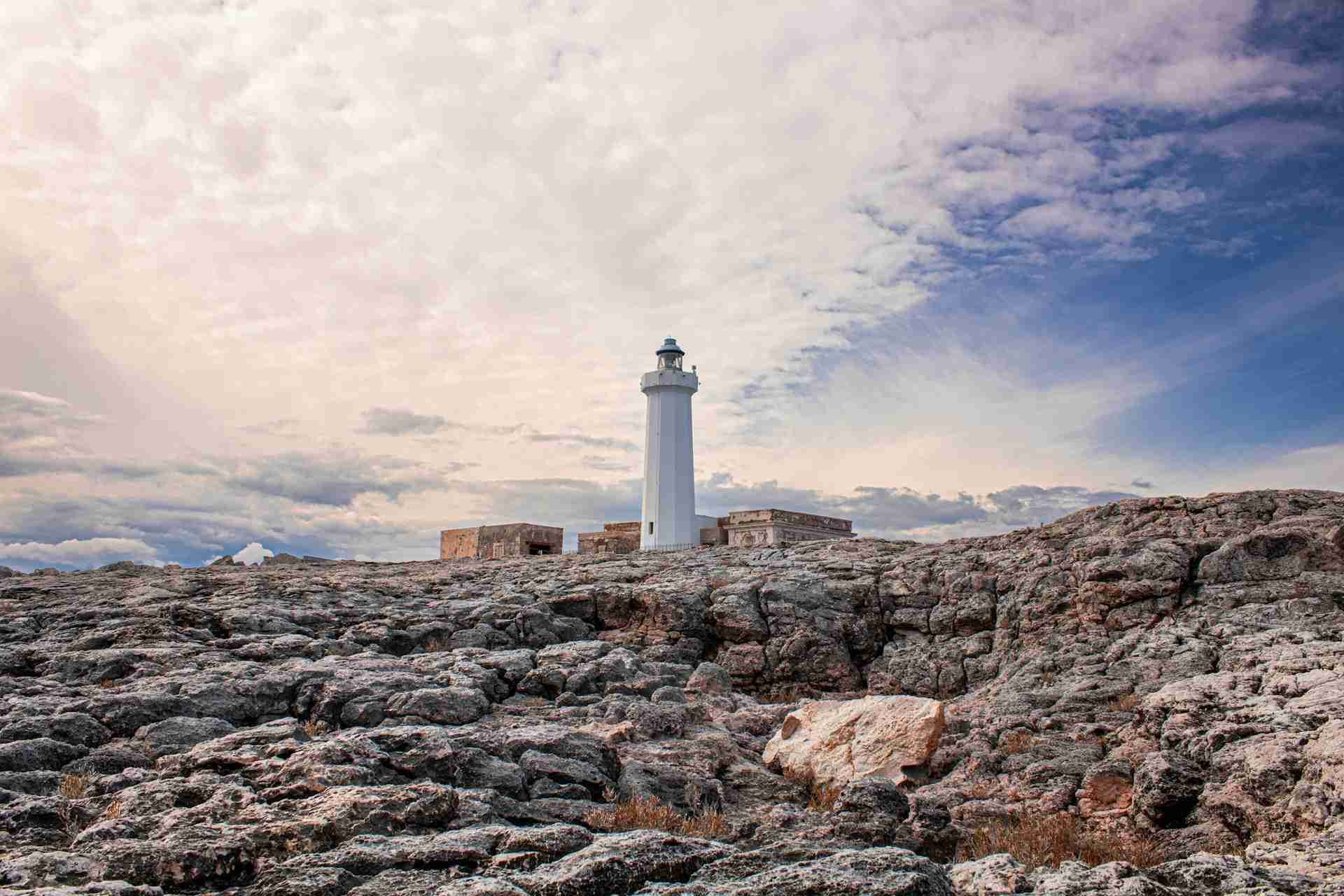
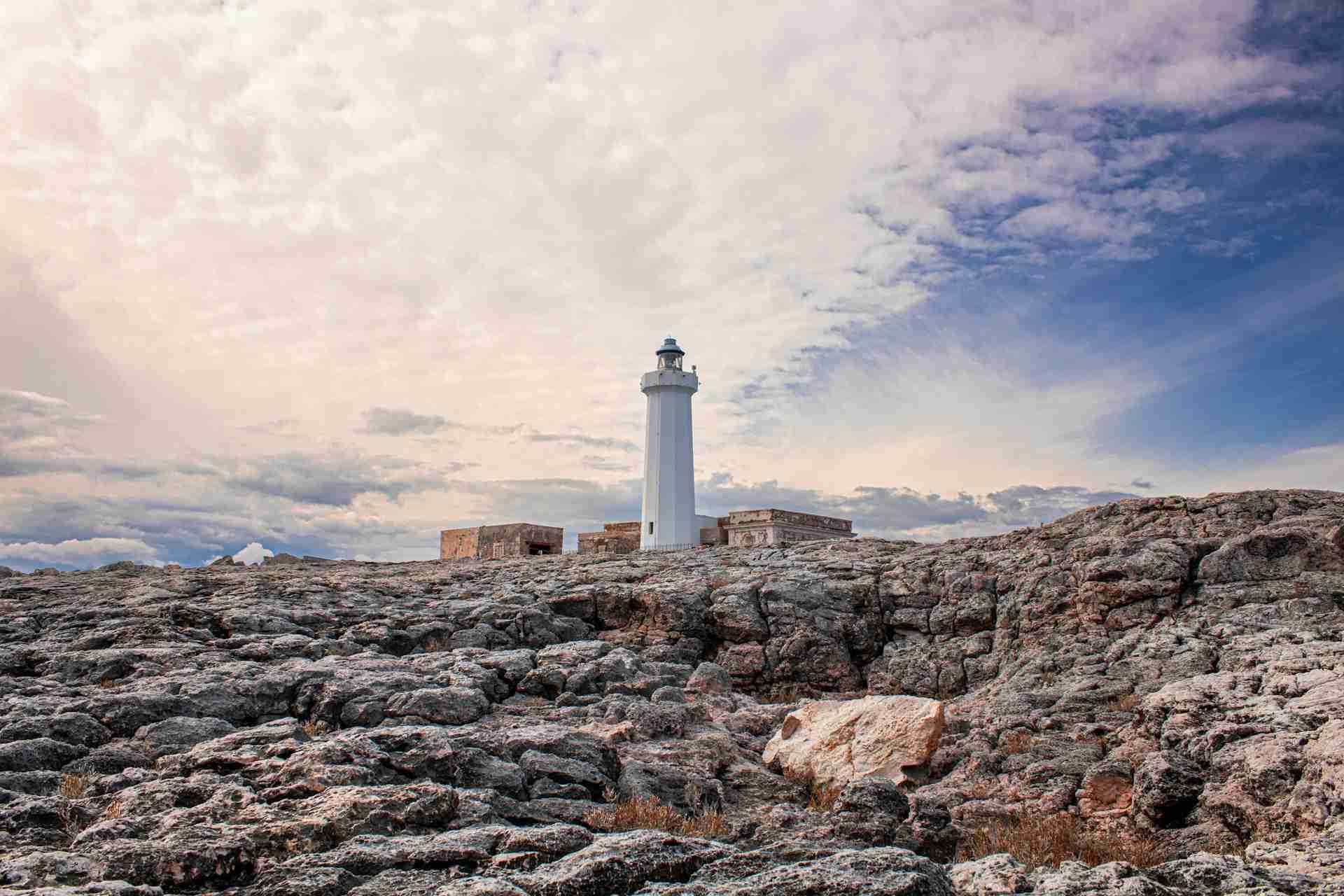
Perched on the rugged limestone cliffs of the Plemmirio Marine Reserve, just south of Syracuse in Sicily, Faro di Capo Murro di Porco is a lighthouse that feels inseparable from its wild coastal setting. Built in the mid-19th century, the lighthouse rises in stark white against a backdrop of turquoise sea and jagged rock, marking one of the most dramatic promontories on the eastern coast of Sicily. The surrounding cliffs are cut with deep fissures and natural pools, while the horizon stretches uninterrupted toward the Ionian Sea. Photographers are drawn here not only to the lighthouse itself but also to the interplay of light, weather, and coastline that shifts constantly throughout the day. This is a place where the man-made and natural coexist in bold simplicity, offering compositions that can be minimal, textured, or panoramic depending on your approach.
Best Photography Opportunities
• Lighthouse from the cliff edge
: The most immediate and rewarding shot is the view of the lighthouse rising above the cliff edge, with the sea stretching endlessly behind it. A wide-angle lens allows you to include the rugged limestone foreground, creating depth and contrast with the stark tower. Morning light often illuminates the sea in shades of turquoise, while evening brings golden tones to the rock that balance beautifully against the cooler whites of the structure. Positioning the lighthouse off-center can emphasize its role as part of the broader seascape rather than isolating it as a standalone subject. Waiting for dramatic waves crashing below adds movement and drama to the frame.
• Textures of the Plemmirio cliffs
: The limestone formations surrounding the lighthouse are carved by centuries of wind and sea, producing jagged patterns, natural arches, and pools that work as powerful foregrounds. By placing the lighthouse in the distance, you can use these natural details as leading lines or frame elements. Shooting at low angles exaggerates the textures, especially during golden hour when shadows emphasize the fissures and layers. These compositions are equally effective in monochrome, where contrast dominates, or in color, where warm rock tones play against the blue of the Ionian Sea.
• Drone perspectives over the reserve
: Aerial views reveal the lighthouse in its full context, perched on the edge of cliffs that drop sharply into crystal-clear water. From above, the irregular coastline forms graphic patterns, with deep blues blending into emerald shallows. Early morning flights are ideal, when the light is soft and the sea calm, giving maximum clarity to the underwater topography. At sunset, aerial shots highlight the warm glow along the cliffs and the isolated geometry of the lighthouse standing sentinel over the reserve. Always check local restrictions before flying, as Plemmirio is a protected area, and use only stable conditions since coastal winds can be strong.
• Silhouette at sunset
: The western view of the lighthouse at dusk provides one of the most atmospheric compositions. As the sun dips below the horizon, the lighthouse becomes a clean silhouette against fiery skies. A tripod is necessary for long exposures, which soften both the sea and clouds while maintaining the sharp profile of the tower. Including foreground rocks or pools creates reflections that double the effect of the sunset. This angle works well both with wide compositions that highlight sky and sea, and tighter frames that reduce the image to the essential outline of the structure.
• Night sky photography
: With minimal light pollution over the reserve, Faro di Capo Murro di Porco is a strong location for astrophotography. The lighthouse itself provides a static anchor in the frame, while stars wheel above in long exposures. Summer months are particularly rewarding for Milky Way photography, with the galactic core visible above the southern horizon. Using the limestone cliffs in the foreground creates depth and texture, balancing the celestial expanse above. A wide, fast lens and sturdy tripod are essential here, along with patience to wait for clear skies.
Best Time to Visit
The best seasons to photograph Faro di Capo Murro di Porco are spring and autumn, when the light is softer, the air clearer, and crowds minimal. From March to May, wildflowers bloom across the reserve, adding subtle touches of color to the rocky landscape. During September and October, sunsets are especially vivid, with warm tones lasting long into the evening and reflecting across calmer seas. Summer brings the most consistent weather, but also harsher midday light and larger numbers of visitors. Early mornings and evenings are the most rewarding times during this season, when the sun is low and shadows carve detail into the limestone.
Winter can be more challenging, with frequent storms and high winds, but these conditions can also deliver dramatic skies and powerful waves that add energy to your compositions. The cliffs are particularly striking during these months, as the sea turns darker and more turbulent. Regardless of season, sunrise and sunset are the most productive times of day, offering directional light that enhances both the form of the lighthouse and the textures of the cliffs. Midday is best used for aerial or drone work, where strong overhead light reveals the clarity of the water and the patterns beneath the surface.
How to Get There
Faro di Capo Murro di Porco is located within the Plemmirio Marine Reserve, approximately 15 kilometers south of Syracuse. By car, the lighthouse can be reached in about 25 minutes from the city center, following local roads that wind through residential areas before reaching the reserve. Parking is available along the roadside near the access trails, but spaces are limited. From there, a short walk across rocky ground leads directly to the cliffs surrounding the lighthouse. The paths are uneven and exposed, so sturdy footwear is strongly recommended, and caution is necessary near cliff edges. Access to the lighthouse building itself is restricted, but the surrounding area is open and free to visit. Photographers should bring water, sun protection, and plan visits outside of the hottest part of the day, as there is little shade in the reserve.
Recommended Photography Gear
A wide-angle zoom lens, such as a 16 to 35 millimeter, is essential for capturing the scale of the cliffs and including strong foregrounds in your compositions. A mid-range zoom in the 24 to 70 millimeter range provides flexibility for framing the lighthouse in context with its environment. For isolating details of waves, cliff textures, or distant layers of coastline, a telephoto lens up to 200 millimeters is extremely useful. Drone photographers can make the most of this site's patterns and perspectives, though only when conditions are calm and regulations permit flying.
A sturdy tripod is indispensable for both long exposures at sunset and night sky photography. Neutral density filters allow for extended shutter speeds, softening waves and clouds to create contrast with the hard limestone formations. A polarizer is helpful during midday, cutting glare on the water and intensifying the blues and greens of the sea. Weather protection for your camera and lenses is recommended, as salt spray and strong coastal winds are common. Comfortable, durable footwear is essential for moving safely across sharp limestone, and lightweight clothing with sun protection is necessary for daytime visits.
Nearby Photography Locations
: The historic island heart of Syracuse offers a very different subject, with baroque architecture, narrow lanes, and vibrant street life. The seafront promenade at sunset provides strong contrasts between ancient stone and modern city life.
: North of Plemmirio, this beach area is known for its clear water and bright white sand. It provides softer, more tranquil seascapes compared to the cliffs of Capo Murro di Porco, especially during early morning light.
: A small coastal hamlet near the reserve, Ognina features traditional fishing boats and natural harbors that are excellent for colorful, human-scale compositions. Evening light across the water highlights the painted hulls and nets.
: Just west of the reserve, Arenella offers broad sandy expanses and calmer waters that are well-suited to minimalist seascapes. Reflections in the shallow surf are particularly effective at sunset.
: Inland from Syracuse, this dramatic canyon features natural pools, waterfalls, and lush vegetation, offering a completely different photographic environment. The steep descent trails provide elevated viewpoints over the gorge that work best in the soft light of morning.
Faro di Capo Murro di Porco is a place where Sicily's coastal drama meets human history, a white beacon set against cliffs carved by the sea. For photographers, it is a site that rewards patience, timing, and awareness of shifting conditions, offering compositions that range from intimate textures to sweeping panoramas. Standing on these cliffs with the sea at your feet, every frame carries both the presence of the lighthouse and the power of the Ionian coast.
Comments
Loading comments…