
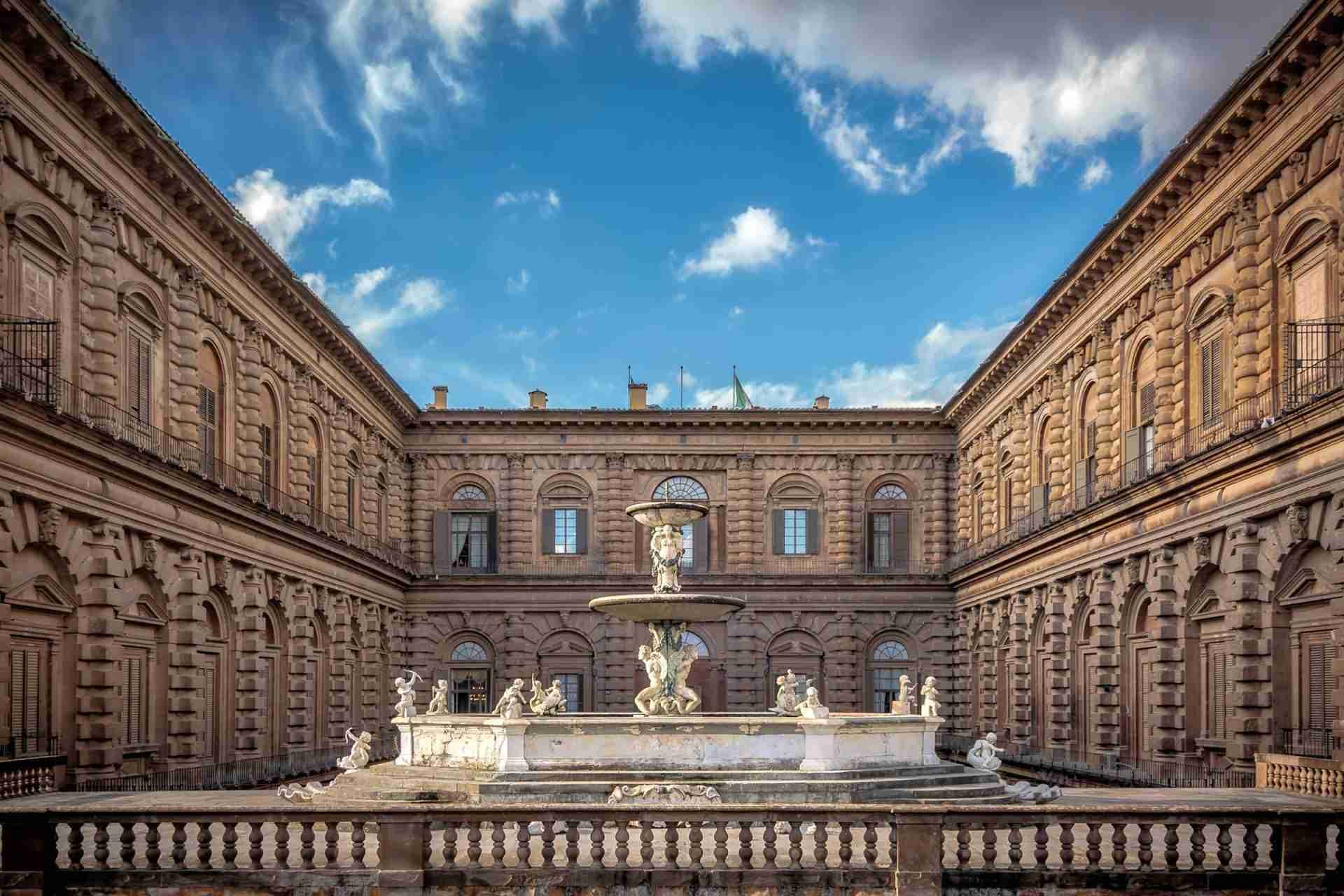
Tucked behind the stunning Palazzo Pitti and framed by the palace's symmetry, the Fontana del Carciofo sits quietly in the Cortile dell'Ammannati. This enclosed courtyard marks the transition between the palace's interior and the vast layout of the Boboli Gardens, offering photographers a secluded space to work with strong geometry, directional light, and finely detailed ornamentation. The fountain, crowned by a sculpted artichoke and flanked by statues, rises from a symmetrical basin nestled in a square that rarely feels rushed. It is a scene that changes slowly through the day but rewards patience with balanced compositions and control over framing. Photographing here is as much about working the angles of light and architecture as it is about capturing the fountain itself.
Best Photography Opportunities
Front composition facing the fountain
The most straightforward angle places the Fontana del Carciofo centered in the frame, backed by the structured architecture of the southern courtyard wall. The elevation of the palace creates a natural visual anchor behind the fountain, with stone detailing and windows adding geometric interest. In the morning, light filters in at a low angle, lighting the fountain from the side and revealing both its wet surfaces and the blocky textures of the stone behind it. This alignment works well with a standard zoom lens and benefits from a tripod for carefully balanced framing. Waiting for a moment without foot traffic lets the symmetry of the space come through clearly, making this one of the most stable and composed shots in the area.
Diagonal angles and layered statues
Shifting slightly to either side of the square introduces angles that give more depth to the frame. These compositions show more of the flanking sculptures and use the shadow lines of the palace to add complexity. Afternoon light, especially during spring and autumn, cuts across the scene and catches the edges of statues, bringing out more visual contrast. Shooting from a lower position here can help separate the layers while still keeping the architectural backdrop intact. These diagonal views are ideal for highlighting the interplay between structure and ornamentation.
Fountain detail in varying light
Close up shots of the fountain's upper sections, including the artichoke crown and the flowing water, offer a change in scale and texture. During early hours or after light rain, water droplets cling to the sculpted forms and catch reflections from the palace walls. A short telephoto or macro lens allows you to focus in on these details while isolating background elements. As the light shifts throughout the day, different carvings become more prominent, offering the chance to build a small series of images with changing highlights. Composing these tight shots without people in the frame is easier here than in Florence's more crowded sites.
Light and shadow under the loggias
The arcades lining the edges of the courtyard cast regular patterns of shadow on the stone, which change character from hour to hour. Photographers working with contrast and tonal range will find strong material here. These shadows create leading lines that can frame the fountain or pull the viewer's eye toward points of interest along the palace wall. The stone surfaces of the colonnades themselves are also photographable, offering rough texture and aged detail that complements wider shots of the square. This area is best photographed when the sun is at a moderate angle, not too high or flat.
Soft Evening light near closing
While the courtyard does not stay open after dark, the final hour of admission can offer some of the most usable light. The western edge of the space allows a soft wash of evening light to enter as the sun drops. This light gently touches the fountain and palace walls without causing harsh contrast, making it ideal for longer exposures. Fewer visitors tend to linger at this time, and the square often clears enough to allow for more thoughtful composition. A tripod and a bit of patience go a long way toward capturing the quiet quality of the space before it closes for the day.
Best Time to Visit
The courtyard at Palazzo Pitti is best photographed in the early morning or late afternoon, when the light has direction and the space is less populated. In the morning, light enters from the eastern side and falls across the square, creating long shadows and giving form to the fountain's sculpture. This is also when tour groups have not yet arrived, allowing time to shoot with minimal interruptions. Spring and autumn are ideal seasons to visit, with softer light, clearer skies, and a comfortable range of temperatures for working with gear.
Midday in summer can be challenging, as the overhead sun flattens detail and bounces off the pale stone, making exposures more difficult to control. The courtyard also becomes busier, with more people moving through the space between gallery and garden. If you plan to shoot during these hours, look for tight compositions and shaded areas where the light is more even.
Late afternoon brings warm tones to the stone surfaces and introduces long side shadows that work well for highlighting sculpture and structural detail. This time of day is especially good in winter, when the sun stays lower and the light lasts longer across the surface of the walls. Cloudy or lightly overcast days reduce contrast, which can be helpful for architectural studies and shooting finer details of the statues and fountain.
The area is only accessible during the official opening hours of the Palazzo Pitti complex, and exact closing times vary by season. Visiting in the last hour before close often gives the most uninterrupted time to work, but you should plan your shots in advance, as the light fades quickly and access to the square ends promptly.
How to Get There
The Fontana del Carciofo is located in the Cortile dell'Ammannati, the central courtyard behind the main body of Palazzo Pitti on the south side of the Arno River in Florence. From the Duomo or Santa Maria Novella train station, it is about a 15 to 20 minute walk across Ponte Vecchio, continuing south through Via de' Guicciardini and into Piazza de' Pitti. Entry is through the Palazzo Pitti ticket office, and admission is required for all visitors, including those who only want to access the courtyard and gardens.
Once inside, the courtyard is directly connected to both the Palatine Gallery and the Boboli Gardens, making it easy to include in a larger shoot of the area. The space is flat and easy to navigate with gear. There is no additional charge for photography unless you are conducting a commercial shoot. Tripods are allowed in the courtyard, though staff may ask you to move if you obstruct foot traffic or block an entrance.
There is no practical parking nearby for visitors. If you are staying within Florence, walking is the most efficient option. Public buses run along Via Maggio and Via Romana, with stops within a few blocks of the palace entrance.
Recommended Photography Gear
This courtyard is well suited for photographers who value control over dynamic range, framing, and subtle variations in light. A standard zoom lens, such as a 24 to 70 millimeter, is useful for wide architectural shots and midrange compositions that include both the fountain and surrounding stonework. For close studies of sculpture and the artichoke fountain crown, a short telephoto or macro lens will help isolate subjects and capture texture in the stone. These lenses also help compress background elements and flatten perspective when needed.
A tripod is strongly recommended, especially for morning and evening shooting when light levels are lower. Using a tripod also supports more thoughtful framing and stability during longer exposures. For photographers who want to photograph the water flowing from the fountain, a neutral density filter makes it possible to use slower shutter speeds, even in bright conditions. A remote shutter release or a two second timer helps maintain sharpness when working from a tripod.
If you are shooting during peak light hours, a lens hood will reduce unwanted glare off the stone, and a polarizing filter may help manage reflections on wet surfaces or windows. While the courtyard is protected from wind and rain, bringing a lens cloth is helpful, as water spray from the fountain can collect on front elements if you get close. Battery and card use is minimal here unless you are bracketing or shooting extended time lapses. The gear needs are simple but precise, and keeping your setup lean will allow you to work fluidly as the light changes throughout your visit.
Nearby Photography Locations
Directly behind the courtyard, the Boboli Gardens stretch over a large hill with sculpted paths, formal landscaping, and elevated views of the city. From several points near the top of the garden, you can photograph Florence's skyline, often with rows of trees or hedges framing the shot. The gardens are large enough to return multiple times without repeating the same compositions.
A short walk east through Costa San Giorgio, this garden offers structured staircases, flowering arches, and one of the clearest elevated views of the Duomo and Palazzo Vecchio. In spring, it is especially good for capturing layers of natural and architectural elements in the same frame. The garden is less crowded than Boboli and ideal for longer sessions with a tripod.
A few blocks from Palazzo Pitti, this quieter square provides a strong contrast to the formal style of the palace. It is a space for street photography, with local markets, cafes, and a church that sits cleanly in frame. The light here is soft in the morning and makes for natural, handheld compositions.
Via Romana
Running south from the palace, this street has a mix of small storefronts, textured stone walls, and consistent directional light during the afternoon. It is a productive spot for practicing composition using repetition, signage, and angled shadows cast by overhead wires and windowsills.
Back across the river in the historic center, the inner courtyard of Palazzo Vecchio offers another structured environment with frescos, arches, and a central fountain. While busier than the Pitti courtyard, it still supports careful study and detail work under diffused light.
The courtyard behind Palazzo Pitti does not offer broad views or dramatic angles, but that is what makes it a valuable space for photographers who prefer precision, control, and clarity. With its clear lines, filtered light, and sculptural details, the Fontana del Carciofo invites images that are considered rather than rushed. It is not a place of spectacle, but of balance and repetition, where strong photographs come from observing subtle changes and working them with intention.
Comments
Loading comments…