
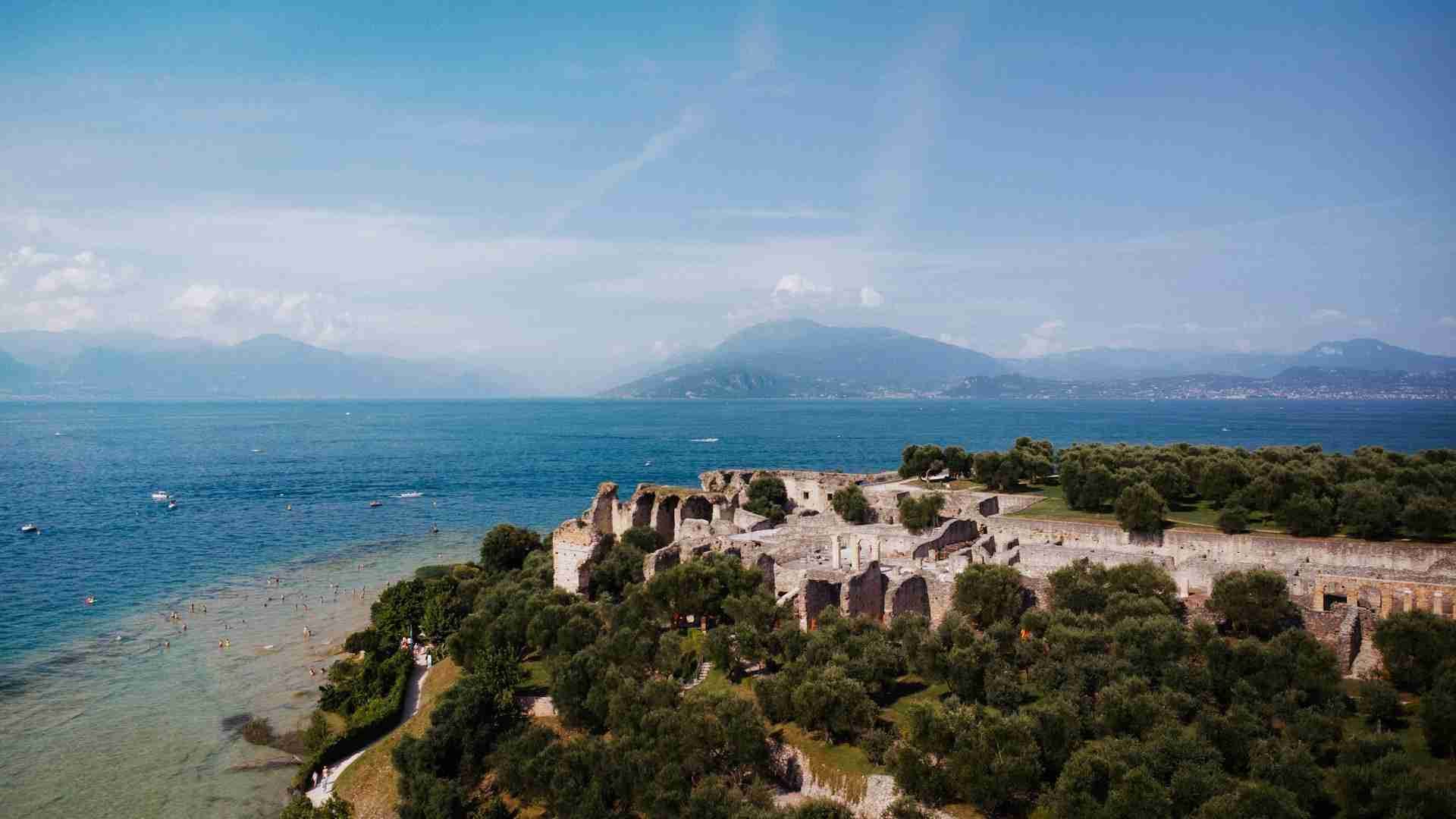
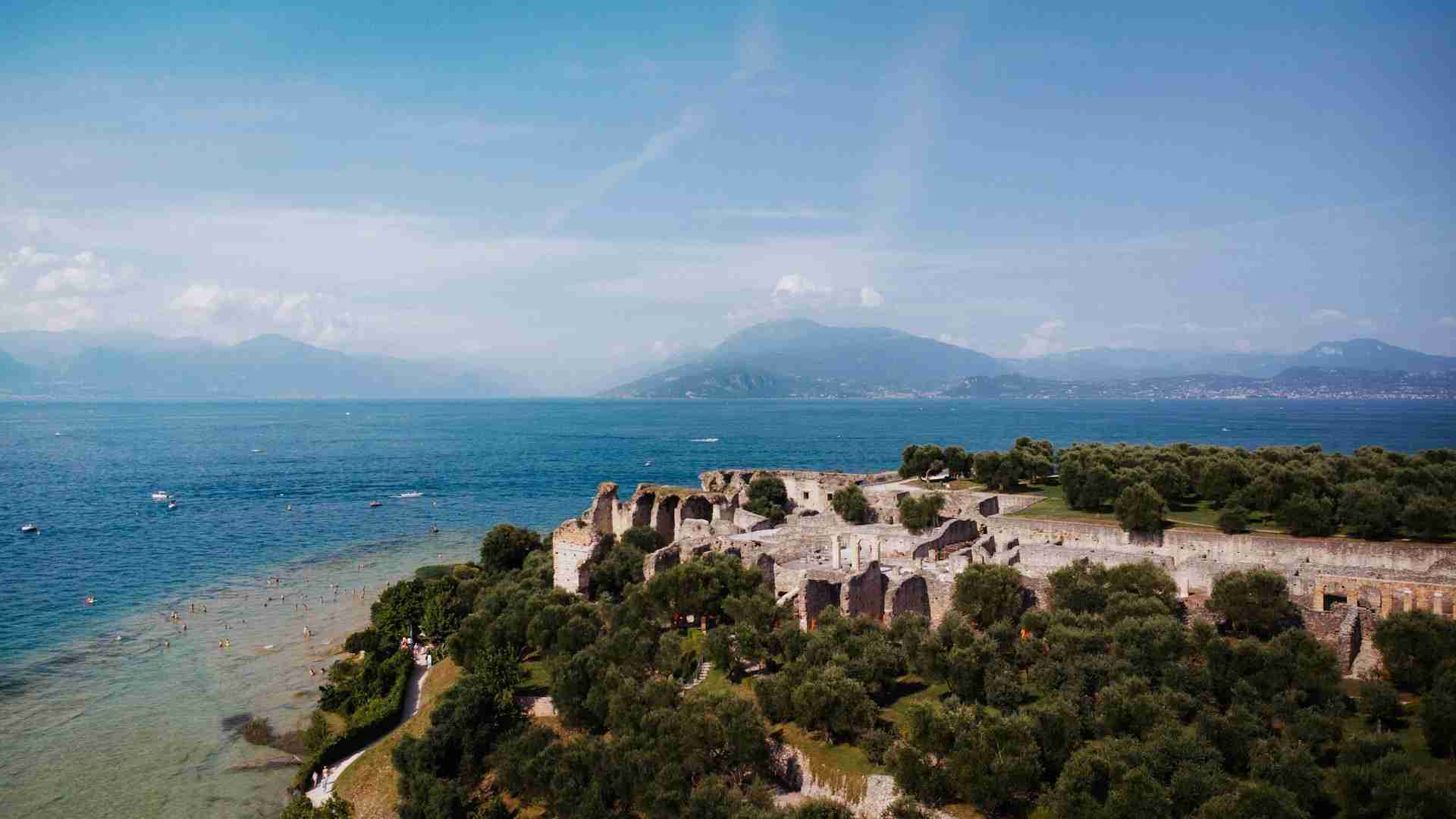
At the northern tip of Sirmione's narrow peninsula, the Grotte di Catullo offers one of the most wide-ranging photographic experiences on Lake Garda. These ancient Roman ruins are all that remain of a vast villa complex overlooking the water, with crumbling walls and open arches that frame views of the lake and distant mountains. The site is surrounded by olive groves, wild grass, and clear shoreline, creating a mix of texture and scale that suits both detailed and wide compositions. The adjacent Museo Archeologico di Sirmione adds historical context and visual contrast, with curated artifacts displayed in clean, modern interior spaces. Together, the ruins and museum give photographers a rare opportunity to capture centuries of history set against one of Italy's most photogenic lakes.
Best Photography Opportunities
• Framing the Lake through Roman Arches
One of the most visually satisfying shots here comes from standing within the ruins and looking out through the surviving archways or column gaps toward the lake. These structures naturally create a foreground frame that draws attention to the horizon beyond. Position yourself so that the lake and distant mountains line up cleanly in the background, creating depth and balance. The warm stone tones contrast beautifully with the blue of the water, especially in the early morning or late afternoon when the light falls at an angle. A mid-range lens works well to keep both architectural and natural elements sharp in the same frame.
• Wide Landscape Shots of the Entire Ruins Site
The villa complex is large and mostly open to the sky, which means you can step back and shoot wide to capture the full layout of the ruins. From certain elevated spots, you can look across the crumbled foundations and stone pillars toward the lake, giving a strong sense of scale and placement. Early or late in the day, side light will create shadows that define the structure's lines and textures. A wide-angle lens helps exaggerate depth and lead the viewer's eye through the ruins, especially if you include some of the surrounding olive trees or footpaths in your frame. Shooting during overcast conditions also works here, softening light on the stone and reducing harsh contrast.
• Detail Shots of Stonework and Textures
Close-up images of the ruins can be just as compelling as the wide views. Look for weathered stone surfaces, worn marble, and brickwork with moss or wild plants growing between the cracks. These textures tell the story of age and erosion and lend themselves to quieter compositions. A macro or telephoto lens lets you isolate these features without including distractions from the surrounding scene. Try shooting in low side light to bring out surface detail, or use flat midday light to reduce shadows and focus attention on the material itself.
• Interiors and Exhibits at the Museo Archeologico
Inside the on-site museum, you'll find glass cases of Roman artifacts, tools, and sculpture fragments, displayed in clean, softly lit rooms. Photography is usually allowed without flash, and the minimal design of the museum helps keep the focus on the objects. Reflections in the display cases can be challenging, so a circular polarizer or careful positioning can help reduce glare. These interior shots contrast nicely with the open ruins outside and add a human element to the location by showcasing how the space was once lived in. Look for compositions that pair labels, textures, and display lighting in a balanced way.
• Olive Groves and Wild Plant Life Surrounding the Site
The area around the ruins includes a large grove of mature olive trees, with gnarled trunks and silvery leaves that shimmer in soft wind. These trees create great background elements or can be the subject of their own compositions. During certain seasons, wildflowers and tall grasses grow between the trees and along the stone paths, adding color and softness to your frames. Use a wide aperture to isolate the foreground and let the ruins blur slightly in the background, creating a layered image that blends nature with history. Late afternoon light works especially well here, casting long shadows and warming up the tones.
Best Time to Visit
Light and season have a strong effect on how the Grotte di Catullo photographs. Spring and autumn are the best times to visit, offering softer light, fewer crowds, and more dynamic skies. From April to June, the surrounding landscape is green and full of wildflowers, while September and October bring warmer tones and better visibility across the lake. Early morning is the quietest time on site, and the low angle of the sun helps sculpt the stone surfaces and highlight texture in the ruins.
Summer brings strong sunlight and higher contrast, which can be challenging mid-day but useful during the golden hour when long shadows fall across the uneven ground. The lake is often calm in the early morning, making it easier to photograph reflections through the arches. Winter offers more solitude and cooler light, but access can be limited during storms or poor weather. Always check hours and entry conditions before your visit, especially in the off-season, as the site has structured opening times and may close during maintenance periods.
How to Get There
The Grotte di Catullo and Museo Archeologico are located at the northern end of the Sirmione peninsula on Lake Garda. If you're arriving by car, parking is available at the base of the old town in designated lots along Via XXV Aprile. From there, the ruins are about a 20-minute walk through the pedestrian-only historic center. For a more scenic route, you can also take a ferry to Sirmione and walk from the port through town.
Entry to the site requires a ticket, which includes access to both the ruins and the museum. Hours vary by season, so check ahead before planning a shoot around sunrise or sunset. Tripods are generally allowed outdoors, but you may be asked to avoid blocking walkways during busy hours. Photography inside the museum is permitted without flash, though some exhibits may be marked as restricted. Bring water, as there is limited shade on the ruins site, and the walk from town can be warm during summer.
Recommended Photography Gear
A standard zoom lens such as a 24–70mm will cover most of the key scenes at the ruins, allowing you to switch easily between wide landscapes and tighter architectural frames. A wide-angle lens in the 16–35mm range is helpful for capturing the open layout of the site and shooting through arches and columns. For isolating details in stonework, a 70–200mm telephoto or macro lens will help you pull out texture and surface contrast.
A circular polarizer is useful for managing reflections off the lake and reducing glare on glass cases inside the museum. A lightweight tripod is recommended for early morning or late afternoon long exposures, particularly if you want to bracket for HDR or shoot in lower light. For comfort, use a small backpack to carry gear while navigating uneven terrain. Drone photography is possible in the area but regulated—if you plan to fly, confirm local restrictions and avoid busy hours or tight urban areas around the peninsula.
Nearby Photography Locations
At the entrance to Sirmione's old town, this 13th-century fortress is one of the most visually dramatic spots on Lake Garda. Photograph it from the outside for clean reflections in the canal or climb the tower for panoramic views over the rooftops and lake. Early morning light is ideal for catching the castle walls before the crowds arrive.
Just below the Grotte di Catullo, Jamaica Beach features flat limestone slabs that extend into the lake, offering strong leading lines and clean water reflections. It's particularly photogenic at sunrise or during golden hour when soft light skims across the lake. The rocks can be slippery, so wear shoes with good grip if you're shooting at the waterline.
• Porto Galeazzi Boardwalk
Further south along the peninsula, this quieter stretch of waterfront offers a long wooden pier and open views of the lake. It's a great location for shooting still water, light trails at twilight, or subtle reflections with minimal foot traffic, especially in the off-season.
A short ferry or drive from Sirmione, Desenzano offers a mix of old town charm, marina views, and wide waterfront promenades. The harbor area is especially good for photographing boats against the lake with the hills in the background. Sunset and blue hour are both productive here due to the open view west across the water.
While farther afield, Monte Baldo is accessible by cable car from Malcesine and offers a complete contrast in elevation. From the top, you get sweeping views over the full stretch of Lake Garda, with trails and alpine landscapes that work well for wide-angle and telephoto landscape work.
Grotte di Catullo offers a rare blend of history, light, and open space that's hard to match elsewhere on Lake Garda. Whether you're shooting tight textures in ancient stone, wide frames of lake and ruins, or quiet scenes in the olive groves, this site rewards patient, thoughtful photography. It's the kind of place where the past and present line up in the same viewfinder and every direction you turn feels like it belongs in a frame.
Comments
Loading comments…