
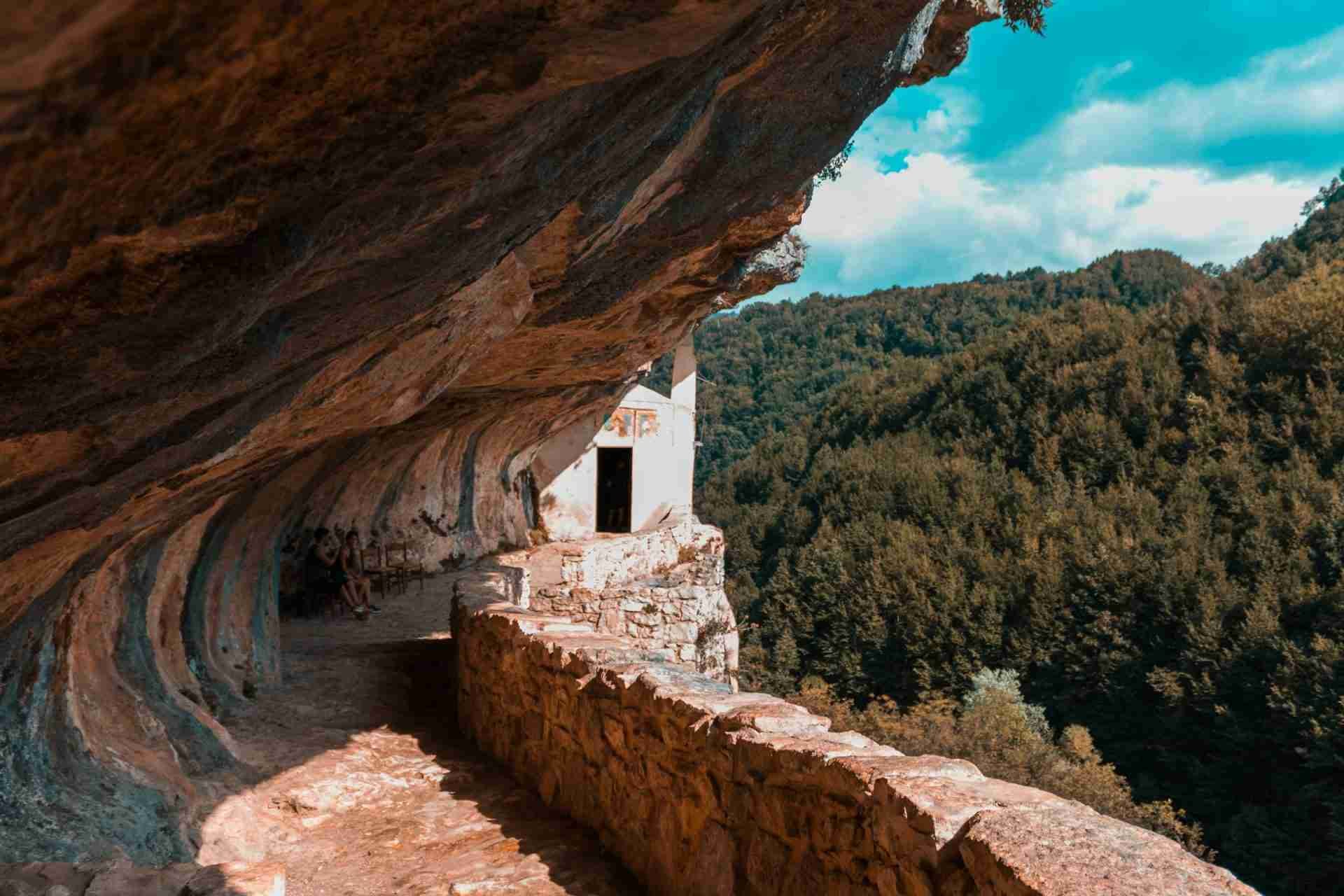
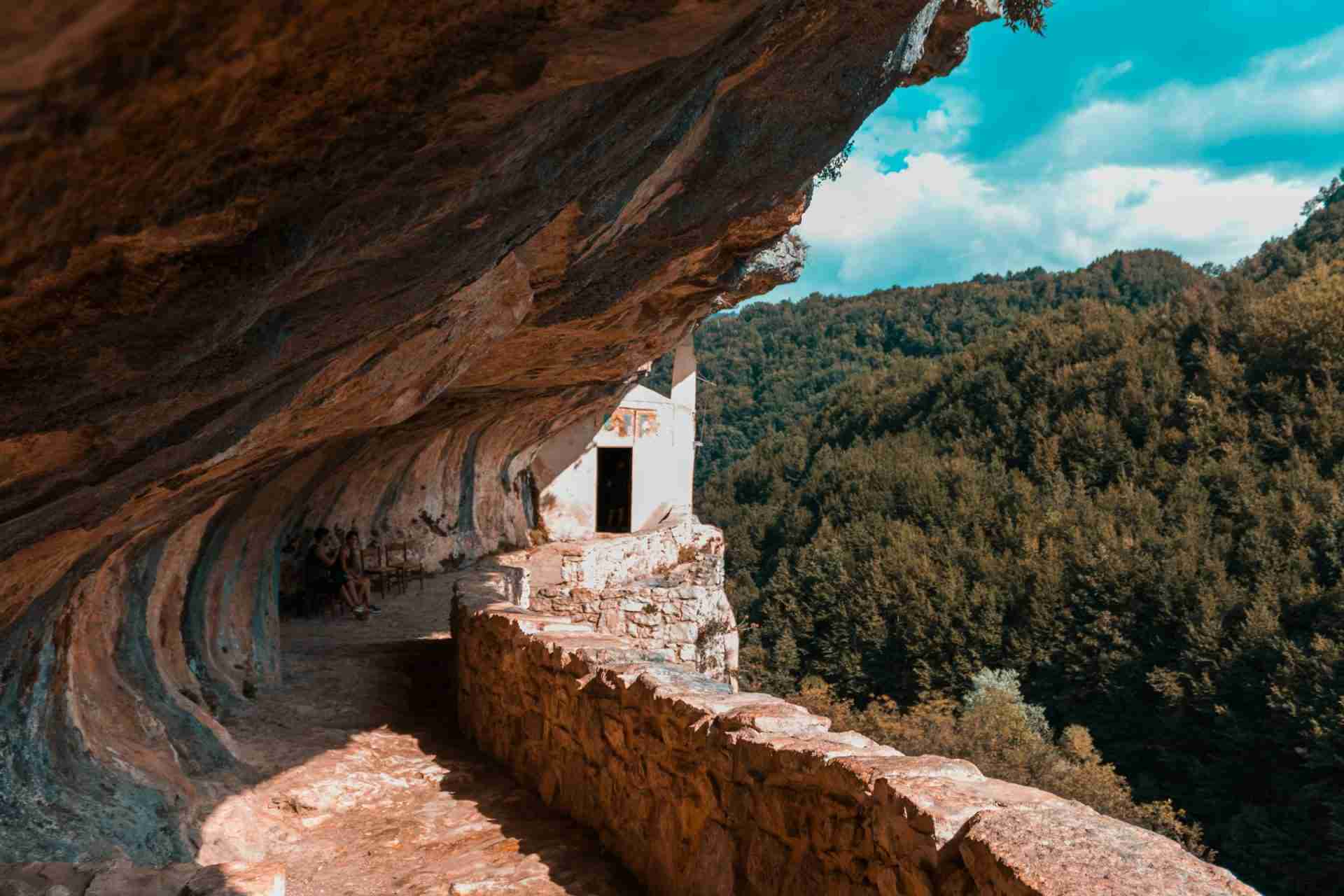
Tucked beneath a limestone overhang high in the Abruzzo mountains, the Hermitage of San Bartolomeo in Legio clings to the cliffs of the Vallone di Santo Spirito like a forgotten outpost between earth and sky. Built in the 11th century and shaped by centuries of solitude, this remote religious site above Roccamorice offers a uniquely powerful setting for photography. The hermitage blends into the stone, carved into the mountain itself, accessible only by footpaths through olive trees, wild herbs, and sheer rock walls. For photographers seeking isolation, texture, and the interplay of architecture with nature, San Bartolomeo presents a rare chance to document silence carved in stone.
Best Photography Opportunities
• Full View from the Ridge Path
Before descending to the hermitage itself, stop along the trail that runs parallel to the opposite slope. From this ridge, you can frame the entire structure beneath its rock shelter, revealing how it blends into the mountain wall. A medium telephoto lens, around 70 to 100mm, works well for this shot, compressing space and emphasizing the integration of building and stone. This view is strongest in the early morning when sunlight brushes the cliff face and shadow creeps below the overhang. Overcast days also work, allowing for more balanced tones without harsh contrast.
• Descending Trail and Framing Through Archways
As you approach the hermitage, the narrow trail offers compositions that build tension through framing and reveal. Stone steps cut into the hillside descend gradually, with arched rock ceilings above and partial views of the structure ahead. These transitional shots are ideal for storytelling, capturing the journey into the site. Use a 24 to 35mm lens to show scale while maintaining focus on the architectural elements. The muted light along the trail makes for soft exposures that favor texture rich stone and weathered plaster.
• Close Architectural Details
Once inside the shallow cave that shelters the hermitage, shift your focus to the blend of human craftsmanship and natural surface. Carved inscriptions, votive niches, and door lintels are weathered but still rich in shape and meaning. A standard lens or short telephoto allows you to isolate details without distortion. Light filters gently into the space, creating natural contrast between shadowed recesses and sunlit surfaces. These are best captured on days with partial cloud cover when the exposure range stays manageable.
• Pilgrimage Footpath and Human Scale
Including visitors along the footpath, especially approaching the hermitage from below, adds narrative and scale. Pilgrims, hikers, or solitary figures climbing the final stretch of trail emphasize the verticality and remoteness of the site. Use a mid-zoom lens and position yourself slightly above the trail to preserve depth in the composition. These shots are particularly strong during golden hour when the warm tones of the mountain light contrast with the cooler shadows of the rock shelter.
• Wide Shots from Below the Cliff
After passing the hermitage, the path loops further down into the gorge, offering a chance to look back and up. From this angle, the cliff dominates the frame with the hermitage nestled high above, forming a visual punctuation mark in the stone. A wide lens in the 16 to 24mm range lets you include the natural curve of the ravine and the surrounding vegetation. Late afternoon light casts strong shadow lines down the rock face, adding structure and contrast to the wider frame.
Best Time to Visit
Spring and autumn are the most favorable seasons to photograph San Bartolomeo. In spring, the surrounding landscape is alive with green undergrowth and blooming herbs that contrast beautifully with the pale limestone. Autumn introduces warmer colors in the trees and grasses, giving you a muted palette that pairs well with the hermitage's weathered surfaces. Morning light from the east brings out the detail in the rock walls and keeps the interior shaded but softly lit. Late afternoon light can be more dramatic, but parts of the structure fall into deeper shadow. Summer can be hot and harsh, with strong midday light creating challenging contrast. Winter visits are possible, but the path may be slippery and light conditions more limited.
How to Get There
The Hermitage of San Bartolomeo is located in the Majella National Park, near the village of Roccamorice in the Abruzzo region of central Italy. From the village, follow signs toward the Eremo di San Bartolomeo. There is a small gravel parking area near the start of the footpath. From there, it is roughly a 30 minute walk along a marked trail that descends into the valley. The path is uneven and rocky in sections, so sturdy shoes and moderate fitness are required. There is no entrance fee, and the site is open year round, though conditions vary seasonally. The hermitage itself is not staffed, and services are minimal. The quietness of the area is part of its charm, making it essential to bring water, sun protection, and any gear you may need, as there are no facilities nearby.
Recommended Photography Gear
A lightweight kit works best for this location due to the hike in and the narrowness of the trail. A wide to standard zoom, such as a 16 to 35mm or 24 to 70mm, covers most needs from broad compositions to closer architectural shots. A 70 to 200mm lens is optional but valuable for compressing the cliff face or isolating the structure from a distance. A small tripod is useful for low light conditions near the shaded interior or during golden hour, though you will need to carry it down and back up the trail. A circular polarizer helps control reflections on stone and deepen sky contrast. A lens cloth is essential due to the dust and potential for damp air under the overhang. Travel light and focus on mobility, as the best compositions come from moving along the path and adjusting to subtle shifts in light.
Nearby Photography Locations
Another dramatic cliffside hermitage nearby, Santo Spirito offers more expansive interiors and sweeping views of the surrounding mountains. The structure is partially restored and provides contrast to the raw simplicity of San Bartolomeo. Best photographed early in the morning from the trail above.
• Blockhaus Viewpoint
Located higher in the Maiella range, this panoramic overlook offers views across the Apennines and down toward the Adriatic coast. It is ideal for wide landscapes and atmospheric conditions, especially at sunrise when the mountains catch the first light.
The historic village below the hermitage features narrow lanes, stone walls, and rustic textures. It is a great place for street photography, quiet architectural frames, and context setting shots for the wider area.
• Orfento Valley Trail
A lush gorge trail that leads through dense forest and along a riverbed, this location is ideal for woodland and water photography. Ferns, moss, and light shafts provide strong compositions during mid morning or after rain.
This Romanesque abbey near Serramonacesca offers symmetry, stone carvings, and a tranquil atmosphere surrounded by trees and hills. The morning light filters through its small windows and across the worn steps of its exterior.
Comments
Loading comments…