
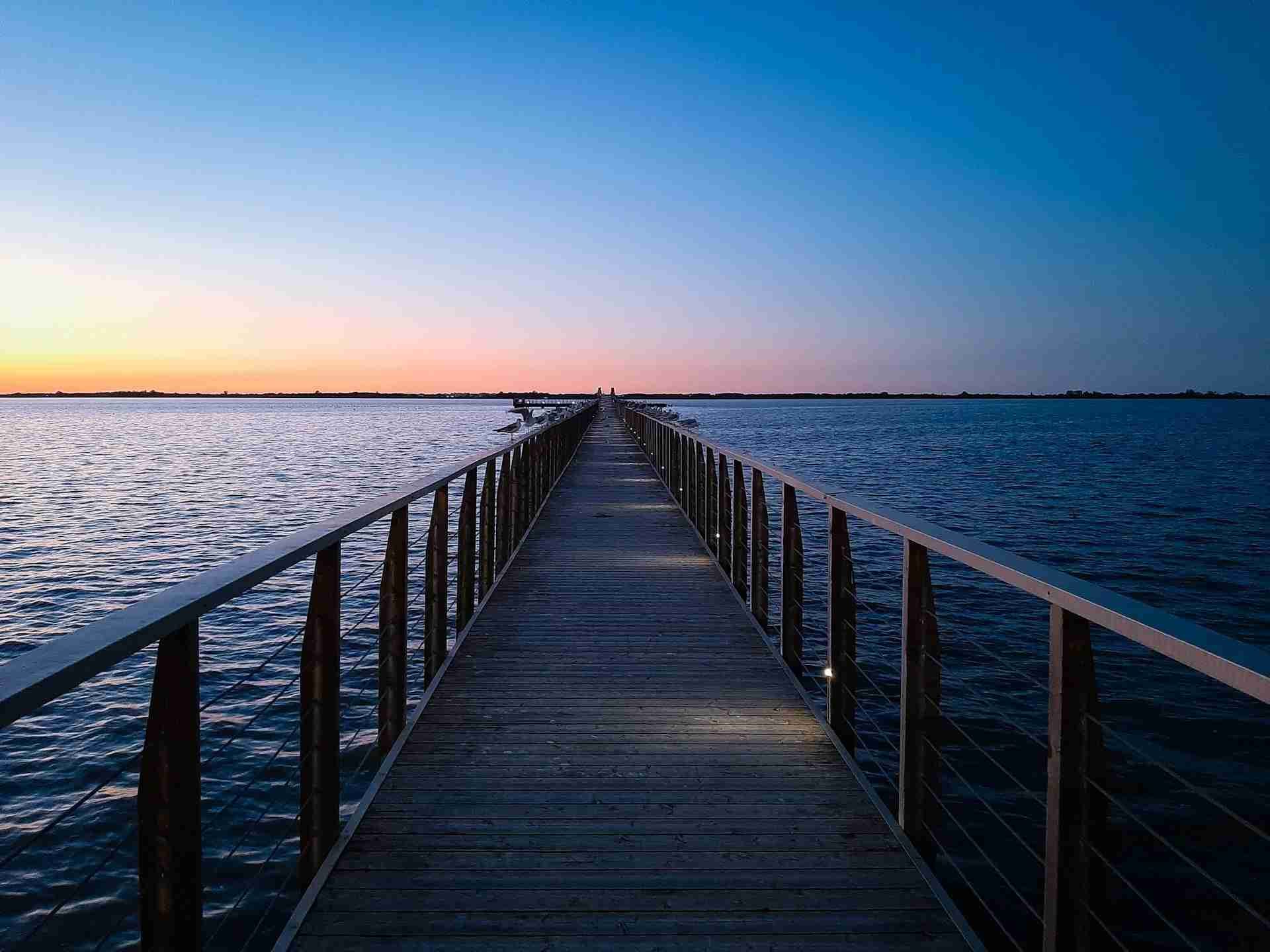
Rising subtly from the calm waters of Lake Lesina in northern Apulia, the Isolotto di San Clemente is a quiet and powerful subject for photographers seeking both visual simplicity and layered history. Just a few hundred meters offshore, this tiny island is reachable via a wooden walkway that stretches across reeds and shallows, guiding visitors through time as much as space. Once home to a Roman structure and later a church dedicated to the Holy Martyr Clement, destroyed during Saracen incursions, the island now holds only a foundation, an iron cross, and the faint outlines of stories half-buried in earth and myth. Surrounded by glassy water, low skies, and soft lake light, the island invites slow compositions, thoughtful framing, and a reverence for silence. It is Italy's only lake island, and it feels entirely removed from time.
Best Photography Opportunities
Golden Hour Across the Walkway
The wooden walkway that connects the mainland to the island is a natural leading line, especially during the golden hour when light skims across the surface of the lake and warms the reeds. Shooting low from the start of the walkway allows you to guide the eye straight to the cross at the island's center. A wide-angle lens can incorporate reflections, texture in the wooden planks, and cloud movement, while a longer lens can compress the scene to emphasize the isolation of the cross against the water. Subtle directional light creates contrast on the structure and enhances the tactile quality of this minimalist composition. This angle is particularly rewarding when clouds reflect color just above the horizon.
Misty Mornings and Minimal Compositions
Early morning often brings mist or haze over Lake Lesina, softening the outlines of the island and muting the colors of the landscape. This is the time for minimalist photography. With the iron cross emerging from the fog and the lake merging seamlessly into the sky, you can create frames that feel almost abstract. Use a long lens to isolate the cross and its base, or a normal lens to frame the entire island in negative space. These moments are fleeting and subtle, but they offer some of the most emotionally resonant images the location can produce.
Reflections and Long Exposures at Dusk
In calm weather, the lake's surface becomes mirror-like, especially as dusk falls and winds settle. The reflection of the cross and ruins on the water creates symmetry and balance that lend themselves well to long exposures. A six-stop or ten-stop neutral density filter lets you blur any remaining ripples and smooth the sky, emphasizing the structure's form. Including just a sliver of the walkway or a cluster of reeds can add grounding to the composition. Soft twilight hues and quiet water give the scene a timeless quality that works beautifully in print.
Texture and Detail Shots of the Foundation
Though modest in size, the remains of the Roman and medieval structures are rich in texture. Weathered stone, iron fittings, and exposed foundations offer a closer narrative for those interested in architectural detail. These shots work well in soft overcast light or in the shade of late afternoon. Use a macro lens or a standard prime with a shallow depth of field to isolate cracked mortar, lichen patterns, or the interaction of metal and stone. These intimate frames contrast well with the wide lake views and round out a complete photographic study of the site.
Seasonal Transitions in the Wetlands
The walkway crosses wetland shallows where birdlife and aquatic plants change with the seasons. In spring and early summer, reeds grow tall and green, while in autumn they turn golden and brittle. Including these seasonal textures in your foreground or background helps anchor the island in its environment. Migratory birds often pass through the area, and their inclusion in the frame, whether in motion or perched in the reeds, adds life and balance to landscape compositions. A fast shutter helps freeze movement without sacrificing clarity across the scene.
Best Time to Visit
Spring and autumn are the best seasons to photograph the Isolotto di San Clemente, when the light is soft and the lake is most likely to be still. In spring, the wetland is full of life and the greens are fresh and vibrant. In autumn, the fading vegetation and gentler sun create a subdued and reflective palette, often enhanced by misty mornings or golden evening light. Summer can be productive in the early morning or late evening, but heat haze and high sun can make shooting during the day more difficult. Winter brings a starker visual atmosphere that suits black and white photography, though rain and flooding may limit access.
Early morning is generally the best time to photograph, particularly when mist or low light brings contrast and calmness to the scene. The walkway and lake reflect light beautifully at sunrise. Evening light can also be very effective, especially when clouds pick up subtle color during twilight. Midday light is less appealing unless used for texture work or managed with filters to balance exposure.
How to Get There
The Isolotto di San Clemente is located in Lake Lesina, a brackish coastal lagoon in the province of Foggia, Apulia. The nearest town is Lesina, which is accessible by regional roads and lies about one hour by car from Foggia. Once in Lesina, follow signs to the lakefront. The wooden walkway to the island begins near the waterfront promenade and is easy to locate from the main square.
There is no fee to access the walkway or the island, though parking near the lake may be regulated in peak seasons. Walkers should wear sturdy shoes, as the walkway may be slick with dew or moisture. Tripod users should take care when positioning gear along the path, especially if others are passing. There are no services on the island itself, so all gear and water should be brought in advance. The town of Lesina offers restaurants, small shops, and accommodations within walking distance.
Recommended Photography Gear
A wide-angle lens in the 16 to 35 millimeter range is ideal for capturing the island, walkway, and surrounding wetlands in a single frame. A standard zoom such as a 24 to 70 millimeter lens provides flexibility for both landscape and detail compositions. A telephoto lens, preferably in the 70 to 200 millimeter range, allows you to isolate the cross, capture birds in flight, or compress layers across the lake.
A tripod is essential for long exposures and low-light shooting at dawn or dusk. A circular polarizer is useful for cutting glare on the water and increasing contrast in the sky. Neutral density filters in six-stop or ten-stop strengths will help extend exposure time for water smoothing and sky blending. A macro lens or close-focusing prime is helpful for texture shots of stone, iron, and organic material around the ruins. Always bring lens cloths, especially in the early morning when condensation and mist can affect image clarity.
Nearby Photography Locations
The town's lakefront offers a mix of color, texture, and still water. Small boats rest at anchor along the piers, and the pastel buildings reflect in the water during golden hour. This is a great location for street-to-landscape transitions and quiet, reflective scenes just after sunrise.
Lesina Marina and Coastal Dunes
South of town, Lesina Marina features a long stretch of beach framed by dunes and low vegetation. The wide, open horizon is excellent for minimalist compositions and layered skies. This location also offers opportunities for bird and wildlife photography during migration seasons.
Bosco Isola Nature Reserve
This strip of protected land between Lake Lesina and the Adriatic Sea is filled with pine forest trails, saltwater inlets, and seasonal wildlife. The changing textures of dune grass, sand, and shallow water allow for a wide range of natural compositions. It is a quieter counterpart to the main lake area.
Accessible by ferry from Termoli, the Tremiti Islands offer limestone cliffs, turquoise water, and centuries-old stone architecture. The islands provide an entirely different atmosphere from Lake Lesina and are ideal for seascapes, detail photography, and drone work when weather permits.
East of Lesina, the Gargano peninsula rises into hills filled with olive groves, historic towns, and cliffside viewpoints. Photographers can explore a range of inland scenes, including hilltop churches and winding forest roads that contrast with the lake's calm flatness.
Though modest in size, the Isolotto di San Clemente invites a deliberate and focused approach. Its stillness, subtle light, and layered past create a photographic environment rich in meaning without ever feeling busy. Whether you are capturing the cross through morning mist or walking slowly across the reeds as the sun sets, this island rewards those who pay attention to silence, space, and the timeless pull of water and stone.
Comments
Loading comments…