
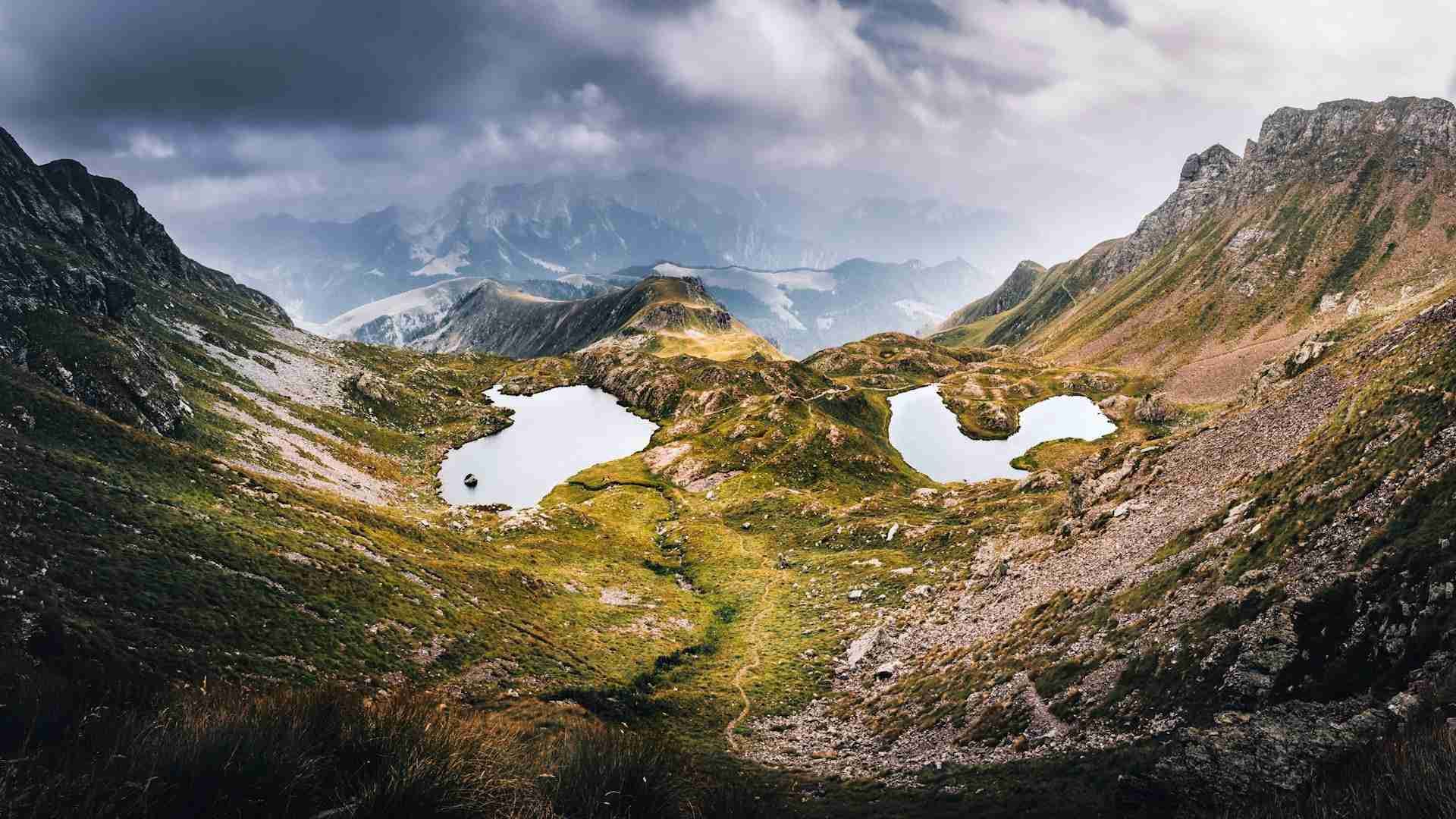
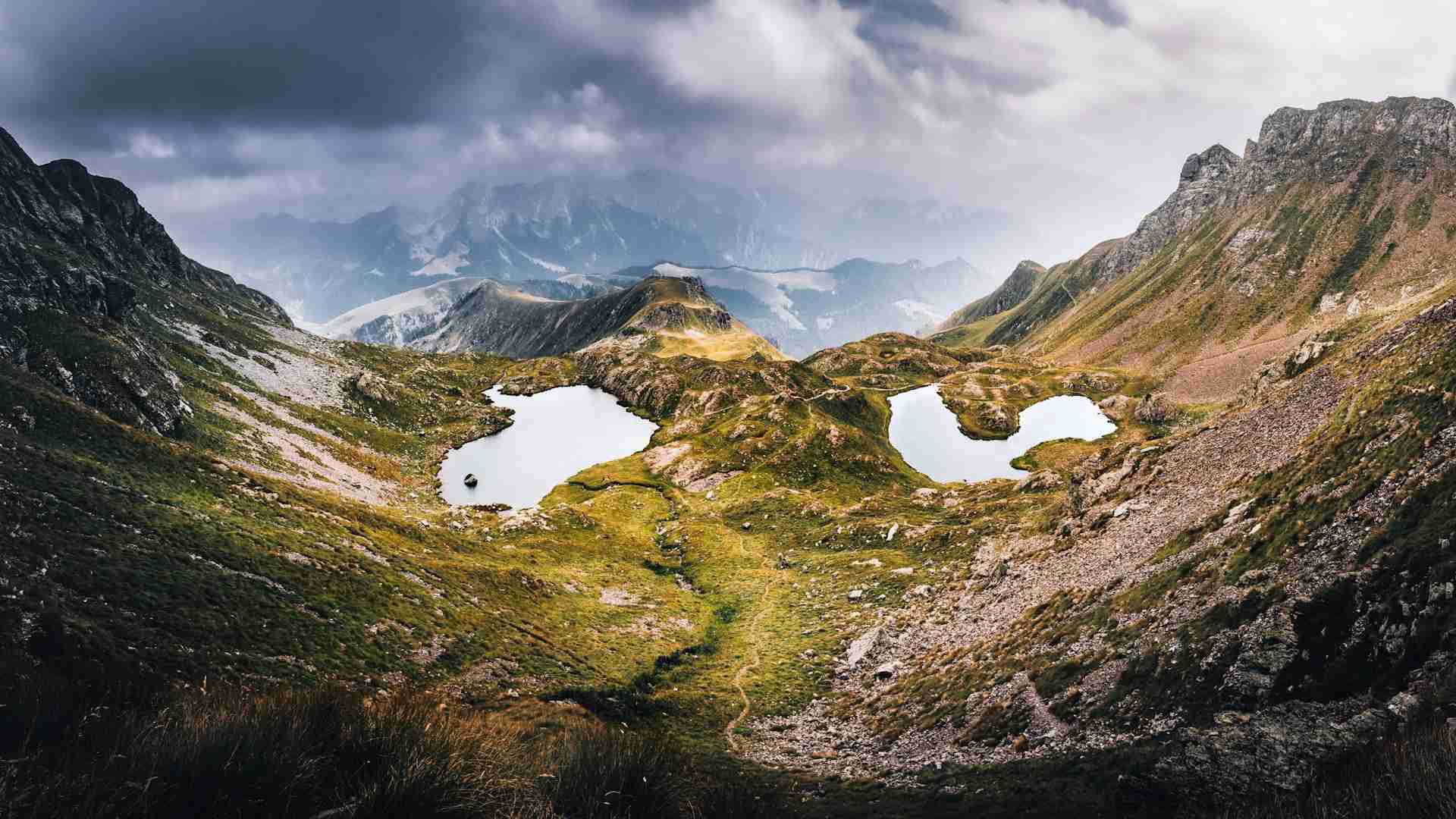
Tucked into the remote folds of the Orobie range in the Province of Bergamo, the Laghetti di Ponteranica are a cluster of alpine lakes that reflect the rugged peaks surrounding them with near-perfect clarity. Set high above the village of Cusio in northern Italy, these lakes sit quietly in a wild, open landscape defined by grassy basins, rocky outcrops, and towering ridgelines. Photographers who make the effort to reach this lesser-known area are rewarded with mirror-still water, layered mountain backdrops, and shifting light that transforms the mood of the landscape from one moment to the next. With minimal built infrastructure and few crowds, the Laghetti di Ponteranica offer a rare opportunity to capture raw alpine scenes that remain largely untouched by development. This is a place where the light comes clean, the silence runs deep, and the frame belongs entirely to mountain and sky.
Best Photography Opportunities
• Reflections in the Upper Ponteranica Lake
The highest of the Laghetti di Ponteranica offers the most dramatic reflections of the surrounding peaks. In the early morning, when the wind is calm and the light is soft, the surface of the lake becomes a perfect mirror. Photographers can position themselves at the water's edge to compose symmetrical frames with sky, rock, and their inverted counterparts. The contrast between the jagged ridgelines and the stillness of the water creates a natural tension in the image. A wide-angle lens helps emphasize foreground elements such as stones, grasses, or early-season snow patches, while maintaining the full sweep of the scene.
• Twilight Color and Alpine Glow on the Peaks
As the sun sets, the light often strikes the upper ridges long after the lakes themselves fall into shadow. This alpine glow—where the peaks catch a final wash of warm light—creates a beautiful separation between the dark foreground and the illuminated backdrop. Shooting toward the west allows you to capture this contrast with the lakes providing a dark reflective base. This is a strong opportunity for telephoto work, especially if you want to isolate the color change on individual peaks or create compressed layers of mountain and sky. A tripod and a graduated neutral density filter help manage exposure between the sky and the land.
• Low-Angle Compositions with Foreground Texture
The basins around the lakes are covered in soft grasses, weathered rocks, and small wildflowers depending on the season. Shooting low to the ground with a wide aperture lets you use these foreground textures to lead into the frame and add depth. This technique is particularly effective during golden hour, when side light brings out detail in the grass and casts long shadows across the uneven terrain. Including blurred or sharp elements in the foreground, such as tufts of grass or alpine blossoms, adds scale and ties the viewer into the environment.
• Cloud Drama and Weather Changes on the Ridge
The Orobie Alps are known for fast-changing weather, and the Laghetti di Ponteranica sit at just the right elevation to capture cloud movement across the ridges. On days when fog rolls in or clouds begin to build, the mood of the entire basin shifts. These are perfect conditions for atmospheric work where the peaks disappear and reappear through gaps in the mist. Long exposure photography with neutral density filters is especially effective here, as it softens cloud edges and enhances the contrast between stone and sky. Patience is key—waiting for the right break in the clouds can result in a frame filled with depth, light, and movement.
• Panoramas from the Trail Above the Lakes
The trail that climbs above the Laghetti toward Monte Ponteranica offers broad panoramic views of the entire basin and the valleys beyond. From this vantage point, photographers can create wide stitched panoramas or use a single wide frame to capture the arc of lakes, peaks, and sky in one expansive image. The changing elevation also allows you to look down on the lakes, which reveals their shape and placement more clearly than from the shore. This perspective is especially powerful at sunrise or sunset when shadows stretch across the landscape, giving it texture and visual rhythm.
Best Time to Visit
The best time to photograph the Laghetti di Ponteranica is from late June through mid-October, when the snow has melted from the trails and the high basins are fully accessible. In early summer, the grasslands are green and wildflowers are in bloom, adding color and texture to the foreground. July and August bring the most stable weather, with clear mornings and the highest chance of calm water for reflections. However, this is also the season with the brightest sun and strongest midday contrast, so early morning and late evening remain the most productive shooting windows. September and October offer quieter trails, rich golden tones in the grass, and more dramatic cloud formations, especially in the late afternoon. These months also bring earlier sunsets and colder nights, which can create surface frost or low fog around the lakes at dawn. The light throughout the day remains low and directional, making it easier to work with natural contrast and form. Avoid visiting during or immediately after heavy rain, as the trails become slippery and fog may completely obscure the views. Always check mountain weather forecasts before setting out, as conditions can change quickly at this elevation.
How to Get There
Laghetti di Ponteranica are located above the village of Cusio in the Province of Bergamo, in northern Italy's Lombardy region. From Bergamo, the drive to Cusio takes approximately two hours by car, following the SP25 through San Giovanni Bianco and then winding into the mountains. Free parking is available near the Rifugio Madonna delle Nevi, which serves as the starting point for several trailheads. The most direct route to the lakes follows trail number 101, with a well-marked but moderately steep ascent through forest and alpine pasture. The hike to the lakes takes approximately two and a half to three hours one way, with a total elevation gain of about 700 meters. Though not technically difficult, the trail does require good fitness and sturdy hiking boots, especially after rain. In early summer, small snow patches may linger near the lakes, and in autumn, frost may be present in shaded areas. There is no fee to access the trail or the lakes, and wild camping is permitted in the area with respect for local regulations and environmental considerations. There are no facilities at the lakes, so bring all necessary water, food, and gear for the duration of your shoot. The route is popular with local hikers but rarely crowded, especially at sunrise or in the late afternoon.
Recommended Photography Gear
Photographing the Laghetti di Ponteranica requires a lightweight but capable kit designed for high-elevation hiking and fast-changing mountain weather. A wide-angle lens, such as a 16 to 35 millimeter, is essential for capturing the lakes with their surrounding ridges and reflections. A mid-range zoom like a 24 to 70 millimeter lens is useful for more intimate scenes, including trail views, boulder textures, and low-angle compositions. A lightweight tripod with stable footing is important for long exposures and twilight shooting, especially on uneven ground near the water. Bring a complete set of neutral density filters, including a 6-stop and 10-stop for exposure control, and a graduated ND for handling bright skies. A circular polarizer is useful for reducing glare from water surfaces and enhancing the natural saturation of sky and grass. A microfiber cloth is necessary to clean lenses affected by fog, mist, or condensation, which is common near the water in the early hours. A weather-sealed bag or rain cover is recommended due to sudden weather changes. Extra batteries should be kept insulated, particularly in colder months when power drains faster. For the hike itself, wear proper mountain boots, pack layers for wind and temperature changes, and carry enough water and snacks for a long day. If shooting sunrise or sunset, bring a headlamp for safe navigation in low light.
Nearby Photography Locations
Located above the Laghetti on the trail toward Monte Ponteranica, this mountain hut offers sweeping views of the Orobie range and nearby alpine lakes. The area around the rifugio provides strong sunset compositions with light falling across the surrounding ridgelines. The hut itself can be a subject, framed against peaks or stars during early evening.
Just over the ridge toward Valgerola, this glacial lake sits in a broader basin and features colorful mineral deposits and varied shoreline textures. The surrounding terrain is more open, allowing for wide-angle panoramic scenes and long exposures that incorporate shifting clouds or water reflections.
This high trail connects several peaks above the Laghetti and offers a balcony-like view down into the Cusio valley. The path is narrow and exposed in places, but it delivers excellent opportunities for telephoto landscape shots that capture light across ridges and valleys layered in morning haze.
• Valtorta Meadows
Located at a lower elevation, the alpine pastures of Valtorta are ideal for early summer photography when flowers are in full bloom and traditional stone huts dot the landscape. This area works well for more intimate scenes and foreground-driven compositions, especially in early morning light.
A short drive from Cusio, this high mountain pass offers an entirely different view of the Bergamasque Alps, with wide ridgelines and road switchbacks perfect for late afternoon light. From the higher points along the pass, you can photograph both the Orobie range and distant views toward the central Alps.
The Laghetti di Ponteranica are not just another stop in the Italian Alps. They are a place where silence, elevation, and shifting light come together in scenes that feel both ancient and untouched. For photographers willing to climb, wait, and watch, these high lakes offer compositions that are clean, quiet, and deeply rewarding.
Comments
Loading comments…