
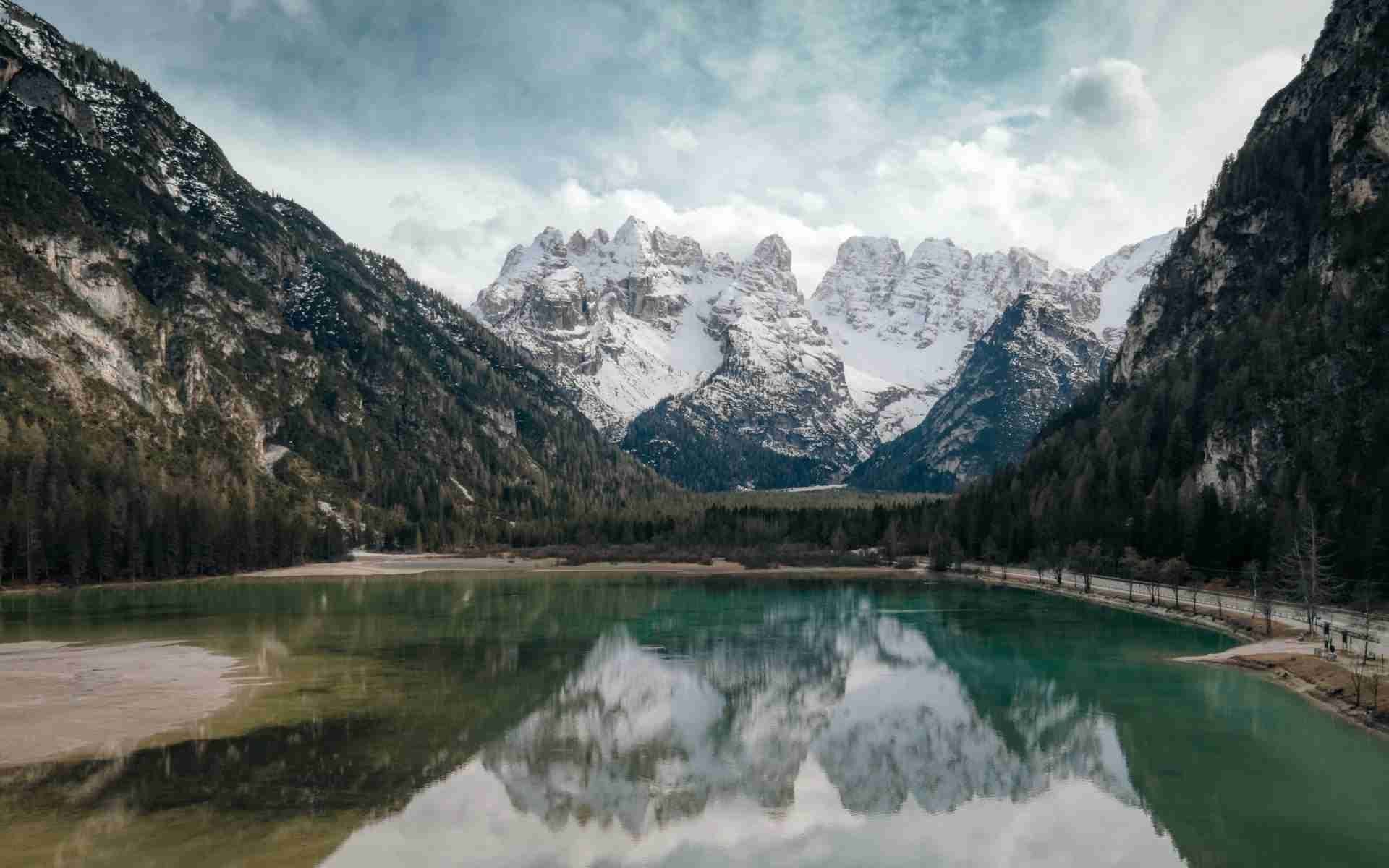
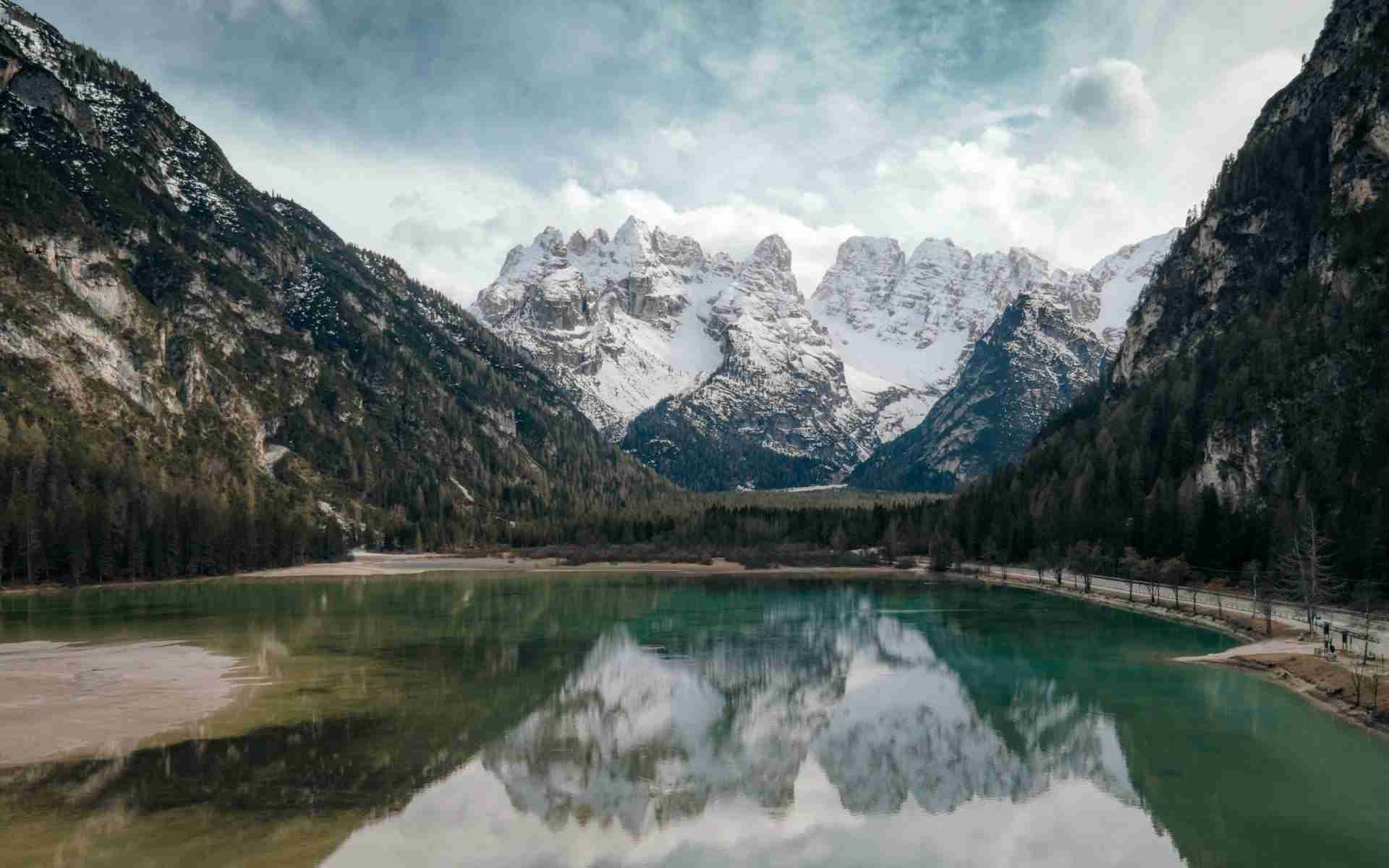
Lago di Landro, located just south of Toblach in the Höhlensteintal valley, is one of the more serene and accessible lakes in the Dolomites. Surrounded by vertical limestone walls and framed by forested slopes, the lake has a calm, reflective surface that draws photographers looking for clean compositions and early morning solitude. What sets this location apart is its open visibility from shore, allowing for mirrored images of the surrounding peaks without the need for long hikes or elevated vantage points. It is a place where small changes in weather and light make a significant impact on the scene, turning stillness into the main compositional element. Lago di Landro rewards photographers who work patiently and deliberately, seeking subtle textures and light transitions rather than chasing dramatic peaks or crowds.
Best Photography Opportunities
• Northern shoreline reflections
are among the most compelling features of Lago di Landro. This side of the lake faces directly toward the towering rock faces of the Cristallo group, creating a clean backdrop for mirrored compositions at sunrise. The water here is often glassy in the early morning hours, especially from late spring to early fall, making it possible to capture perfect symmetrical images of the peaks above. Use a wide angle lens to include shoreline grasses or overhanging branches in the foreground, which can help create visual layers in the frame. As the sun begins to rise and light touches the cliffs, a warm glow appears in the reflection before it does in the sky, offering a short but powerful window for color contrast.
• Sandbanks and shallow inlets on the western edge
reveal dynamic patterns in the lake's perimeter, especially during late summer when water levels recede. These features expose cracked earth, small driftwood arrangements, and isolated tufts of grass that can anchor your foreground. Shooting from low angles here lets you place those details prominently in the frame while the reflected mountains remain soft and balanced in the background. This is a strong area for experimenting with depth of field, especially if you want to create contrast between near textures and distant forms. The exposed shoreline also shifts with seasonal rainfall, so each visit offers a slightly different set of natural compositional tools.
• Southern end compression shots
work well for telephoto compositions that emphasize the vertical rise of the cliffs behind the lake. From this angle, the mountains appear more layered, and morning mist often lingers along the tree line, giving you atmospheric separation between rock, forest, and sky. Use a lens in the 70 to 200 millimeter range to isolate ridge lines, capture low light as it scrapes across the rock, or frame mist moving between trees and stone. These are not broad scenic shots but rather focused studies in tone and form. This end of the lake receives indirect morning light that adds softness and avoids harsh contrast, allowing for more nuanced exposures.
• Dynamic cloud and fog interactions
are common in the valley, especially during transitional seasons like May or October when cool air meets residual warmth from the lake. These shifting conditions allow you to work with long exposures even shortly after sunrise, as the clouds often hang low or sweep across the water in slow motion. A tripod and a neutral density filter help stretch shutter times to blur the sky and water surface while keeping the landscape sharp. This is a location where patience pays off, as waiting twenty minutes can completely change the light structure and cloud distribution in your frame. Fog also tends to drift in from the north and settle briefly before rising, giving you only a few minutes to capture some of the most interesting interactions between air and light.
• Winter and early spring contrast scenes
provide a different mood altogether. When the surrounding slopes are dusted in snow but the lake remains unfrozen, the scene becomes a blend of cool tones and dark reflections. This setting favors minimalist compositions, where a single tree, rock outcropping, or snow patch can serve as the focal point against the smooth surface of the water. With clear skies, you can use side light to bring out texture in the snow without overexposing the surrounding cliffs. This is also an excellent time to shoot in black and white, as the stripped color palette lends itself naturally to high contrast, graphic compositions that focus on form and light.
Best Time to Visit
Lago di Landro is accessible year-round, but for photographers, the most productive window runs from late May through October. During late spring, snowmelt fills the lake and brings with it vibrant water clarity, while patches of remaining snow on the cliffs add texture to the distant ridgelines. June and July provide the most consistent morning reflections, as calm weather dominates and the sun rises early enough to give you a long blue hour followed by a steady build into golden light. Wildflowers are not abundant right at the lake, but nearby meadows can offer complementary color for broader environmental shots.
August tends to be warmer and drier, with the lake often dropping slightly and revealing more shoreline detail, which can add interest to foregrounds. Sunrise light hits the cliffs behind the lake first, bouncing warm tones back onto the water before fully illuminating the scene. This indirect reflection is often more photogenic than the direct light itself. September is ideal for those who prefer moodier scenes, as mist becomes more common and sun angles produce longer shadows along the shore. Cloud inversions and valley fog are also more likely in the early morning during this period, giving photographers a rare chance to capture layers of water, air, and stone in a single frame.
In winter and early spring, access depends on road conditions, but the lake can still be reached if the SS51 is open. Snow tends to linger on the surrounding cliffs well into April, providing excellent contrast and texture even before the trees begin to show any seasonal color. Light is low and directional throughout the day, making it easier to shoot at almost any hour, particularly for those interested in high contrast compositions or snow textures. The valley setting limits direct sunset opportunities, so early to mid-morning remains the best time for most photographs.
How to Get There
Lago di Landro is located along the SS51 highway between Toblach and Cortina d'Ampezzo, making it one of the easiest Dolomite lakes to access by road. From Toblach, the drive takes approximately 15 minutes heading south through the Höhlensteintal valley. From Cortina, the lake is about 35 minutes to the north, depending on traffic and weather. The parking lot sits directly next to the northern shore and is free of charge, though it can fill up during the day in summer. No permits or entrance fees are required for photographers, and you can begin shooting within minutes of arrival.
The area around the lake is flat and easy to navigate, with gravel paths and shoreline access that make it suitable for tripods, long exposures, and low angles. There are no major elevation gains or difficult trails to manage, so it is an excellent location for sunrise work without the added burden of a pre-dawn hike. The most photogenic spots are accessible within a five-minute walk from the parking area, including the inlets on the western edge and the tighter views along the southern bank. If you're planning to photograph multiple Dolomitic lakes in one day, Lago di Landro makes for an ideal first stop thanks to its open light and quiet atmosphere.
Recommended Photography Gear
Photographing Lago di Landro calls for a gear setup that handles both subtle detail and broad reflections. A wide angle lens in the 14 to 35 millimeter range is essential for shooting reflections from close to the shoreline. These lenses allow you to include strong foreground elements, such as cracks in the lakebed, driftwood, or grasses, without losing the towering cliffs in the distance. Be mindful of distortion at the edges, especially when placing horizons or symmetrical reflections near the bottom third of your frame.
A midrange zoom such as a 24 to 70 millimeter lens is a useful tool for balancing proximity and reach, particularly when the weather is shifting quickly and you need to recompose on the fly. For more focused work, a telephoto lens in the 70 to 200 millimeter range will help you isolate specific ridgelines, mist columns, or distant light patches on the cliffs. This longer focal length is especially useful during low contrast mornings when soft light benefits from tighter compositions.
A tripod is essential for pre-dawn and long exposure shooting. The lake's surface is often calm enough to work with slower shutter speeds, and a tripod will give you precision framing while waiting for fog or clouds to move into place. Bring a circular polarizer to cut down on surface glare and to manage reflections when needed. Graduated neutral density filters are helpful when shooting into brighter skies, and a 6 or 10 stop ND can open up long exposure possibilities once the sun rises. Keep microfiber cloths ready, especially in cooler months when condensation and mist can build up quickly on glass elements.
Footwear should be waterproof, as the best foregrounds are often just at the edge of the water or in shallow inlets. The terrain is gentle, so you can carry a full kit without concern for weight, but pack a weatherproof cover for your bag to protect your gear from surprise showers. Extra batteries and memory cards are always a good idea, particularly if Lago di Landro is your first stop before heading to other nearby locations.
Nearby Photography Locations
, a short drive north, offers a very different style of lake photography with wooden boats, steep cliffs, and a strong sense of structure. Arriving at dawn gives you time to capture reflections and boat patterns before the lake becomes active. It is busier than Landro, but the compositional possibilities are diverse, especially in early morning fog or low angled light.
provides an alpine contrast to the stillness of Landro. The peaks require a longer hike but reward with sweeping views, rocky foregrounds, and opportunities for golden hour photography as the sun rises behind the eastern ridgelines. You can also look back toward Lago di Landro from the higher trails for wide, layered scenes.
, near Sesto, is a narrow, peaceful valley with strong vertical backdrops and forested lower slopes. It offers a completely different set of subjects, from grassy meadows to wooded paths, and works well during early autumn when the trees begin to shift color and the valley often holds onto morning fog.
, overlooking the entire Höhlensteintal valley, offers a historical and visual counterpoint to the lakes below. From its plateau, you can shoot long distance scenes of Landro and the surrounding mountains. It is an excellent location for sunrise with minimal obstruction and strong lateral light on the surrounding terrain.
, only a few kilometers north, is another peaceful location with clear reflections and reed-filled shallows. This lake often has morning mist and subtle textures that work well with telephoto or macro compositions. It's an ideal location for quiet, detail-oriented photography after a sunrise session at Landro.
Lago di Landro is an amazing hidden gem with its quiet energy and photographic flexibility make it a location worth returning to. It invites you to slow down, watch the light, and shape images from elements that others overlook. Whether you are working in soft mist, sharp morning light, or the lingering glow of spring snow, this lake has a voice of its own.
Comments
Loading comments…