
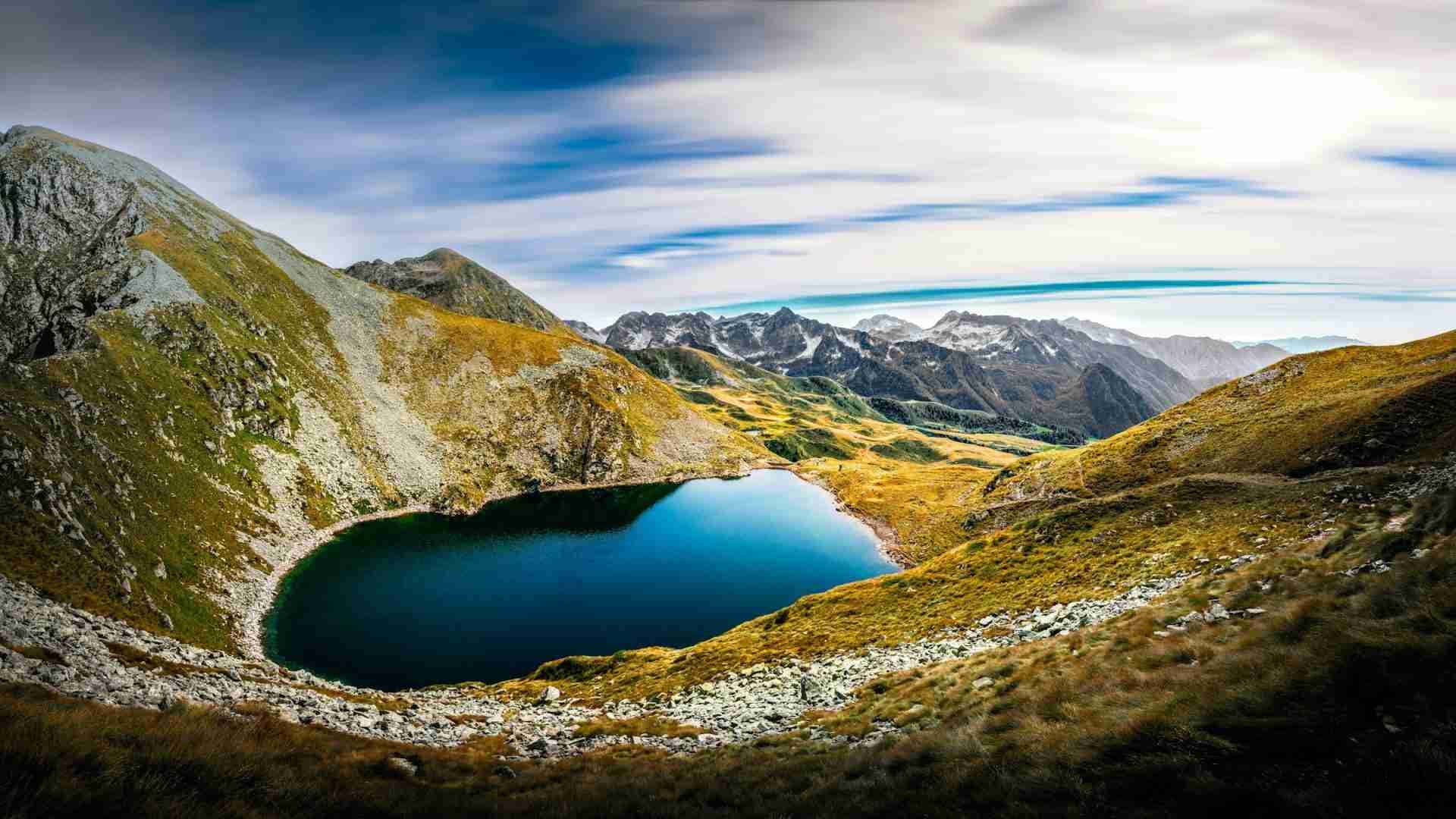
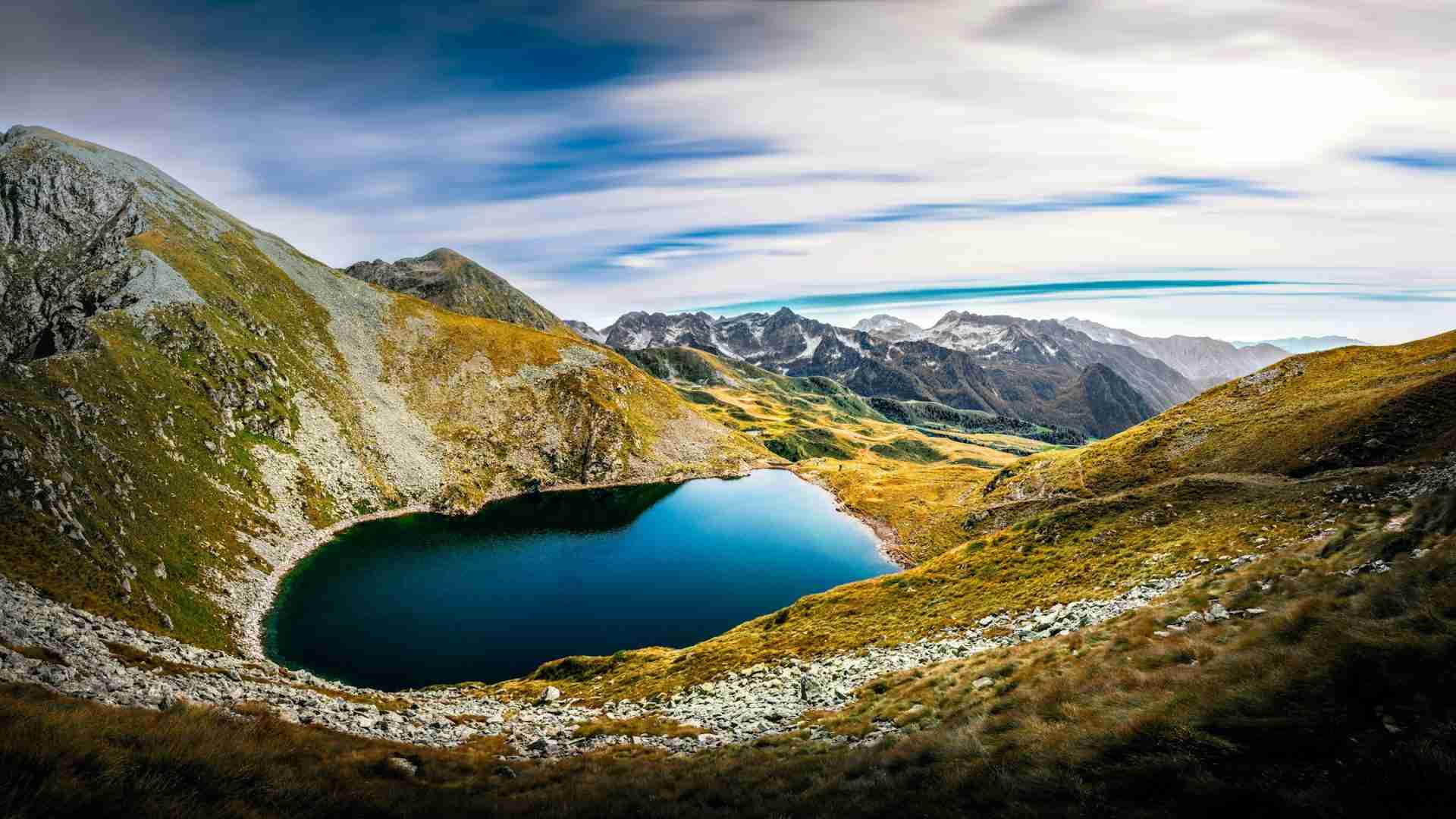
Lago Moro is a small alpine lake set above the village of Foppolo in the Orobie Alps of Northern Italy. Surrounded by rocky slopes and open mountain ridge lines, the lake feels compact and contained, which makes it easy to build balanced compositions without overwhelming scale. The shoreline alternates between stone, grass, and shallow water, offering simple foreground options that do not distract from the surrounding peaks. What makes Lago Moro appealing for photography is its clarity and structure. The lake sits cleanly within its basin, and from many positions the mountains frame the water in a way that feels natural rather than forced. Outside peak hiking season, the setting is quiet and calm, giving you time to work slowly and refine your framing.
Best Photography Opportunities
• Classic Reflections From the Shoreline
On still mornings, Lago Moro becomes a strong reflection subject, with surrounding peaks mirrored clearly in the water. Low shooting angles increase the impact of the reflection and help simplify the background. Small shifts along the shoreline allow you to control how ridge lines align with the lake's edge. Even subtle ripples can add texture without ruining symmetry. These compositions work best when wind is minimal and light is soft.
• Rocky Foreground With Mountain Backdrop
The scattered rocks around the lake provide natural foreground anchors for wide compositions. Placing a single rock or cluster near the edge of the frame helps guide the viewer into the scene. Careful positioning prevents the foreground from overpowering the lake itself. Mid range focal lengths often provide the most balanced perspective between foreground detail and background peaks. This approach works especially well in early light when contrast remains controlled.
• Elevated Views From Nearby Slopes
Hiking slightly above the lake opens up layered views where water, slopes, and distant ridge lines stack clearly within the frame. From this vantage point, the lake becomes part of a broader alpine landscape. Longer focal lengths can compress layers and simplify the terrain. Light moving across the mountains adds depth and variation without requiring a change in position. This perspective is useful when the shoreline feels crowded or visually busy.
• Detail Studies Along the Water's Edge
Beyond wide scenes, Lago Moro offers smaller details such as clear shallows, submerged stones, and textured shoreline transitions. These subjects work well when light is even and reflections are less defined. Close framing highlights water clarity and surface texture. Overcast conditions help maintain subtle tones without harsh shadow. Detail work adds variety to a set built around larger landscapes.
• Seasonal Changes
Depending on the season, the area around Lago Moro changes noticeably. Early summer can include lingering snow patches on nearby slopes, creating contrast with the darker rock and water. Late summer introduces softer greens and drier textures that shift the overall mood. Including subtle seasonal elements helps anchor the lake within a specific time of year. This approach strengthens a series of images taken during a single visit.
Best Time to Visit
Early morning is the most reliable time to photograph Lago Moro. Wind is usually lighter, allowing for cleaner reflections and smoother water surfaces. The lower sun angle also adds gentle definition to rocky slopes without flattening the scene. Late afternoon can be productive if cloud cover softens the light, though stronger winds may disturb reflections. Midday tends to introduce harsher contrast and more active hikers along the shoreline. Spring and early summer often provide higher water levels and fresher alpine color, while late summer and early autumn bring clearer air and fewer visitors. Planning around calm weather conditions is just as important as planning around light, especially if reflections are a priority.
How to Get There
Lago Moro is reached by hiking from the village of Foppolo in Lombardy. Several marked trails lead upward with moderate elevation gain over a few kilometers. The path is well defined but includes rocky and uneven sections, so proper footwear is recommended. Parking is available in Foppolo, followed by the hike to the lake. There is no general fee to access the lake itself, though parking policies in the village may vary. Allow enough time for the return hike, especially if planning an early morning or sunset session.
Recommended Photography Gear
A versatile lens range works well at Lago Moro. A standard zoom covers most wide landscape needs, while a longer focal length is useful for isolating peaks and compressing layers from elevated positions. A tripod is strongly recommended for early morning sessions when light levels are lower and reflections require precise framing. A polarizer can help manage glare on the water and enhance sky contrast when conditions allow. Weather protection for gear is important, as alpine conditions can change quickly. Keeping equipment manageable is advisable due to the hike required to reach the lake.
Nearby Photography Locations
• Foppolo
The village itself provides mountain architecture and elevated views toward surrounding peaks. It works well for contextual images before or after hiking to the lake.
• Passo di Dordona
This nearby mountain pass offers sweeping views across alpine terrain. It provides broader landscape opportunities beyond the contained setting of Lago Moro.
• Lago delle Trote
Another alpine lake in the region, Lago delle Trote offers a slightly different basin and shoreline structure. It pairs well with Lago Moro for a varied lake focused shoot.
• Val Carisole
This valley features open slopes, streams, and rugged ridgelines. It is useful for wider mountain compositions.
A prominent peak in the Orobie Alps, this mountain offers more dramatic elevation and scale. It adds contrast to the smaller, contained feel of Lago Moro.
Comments
Loading comments…