
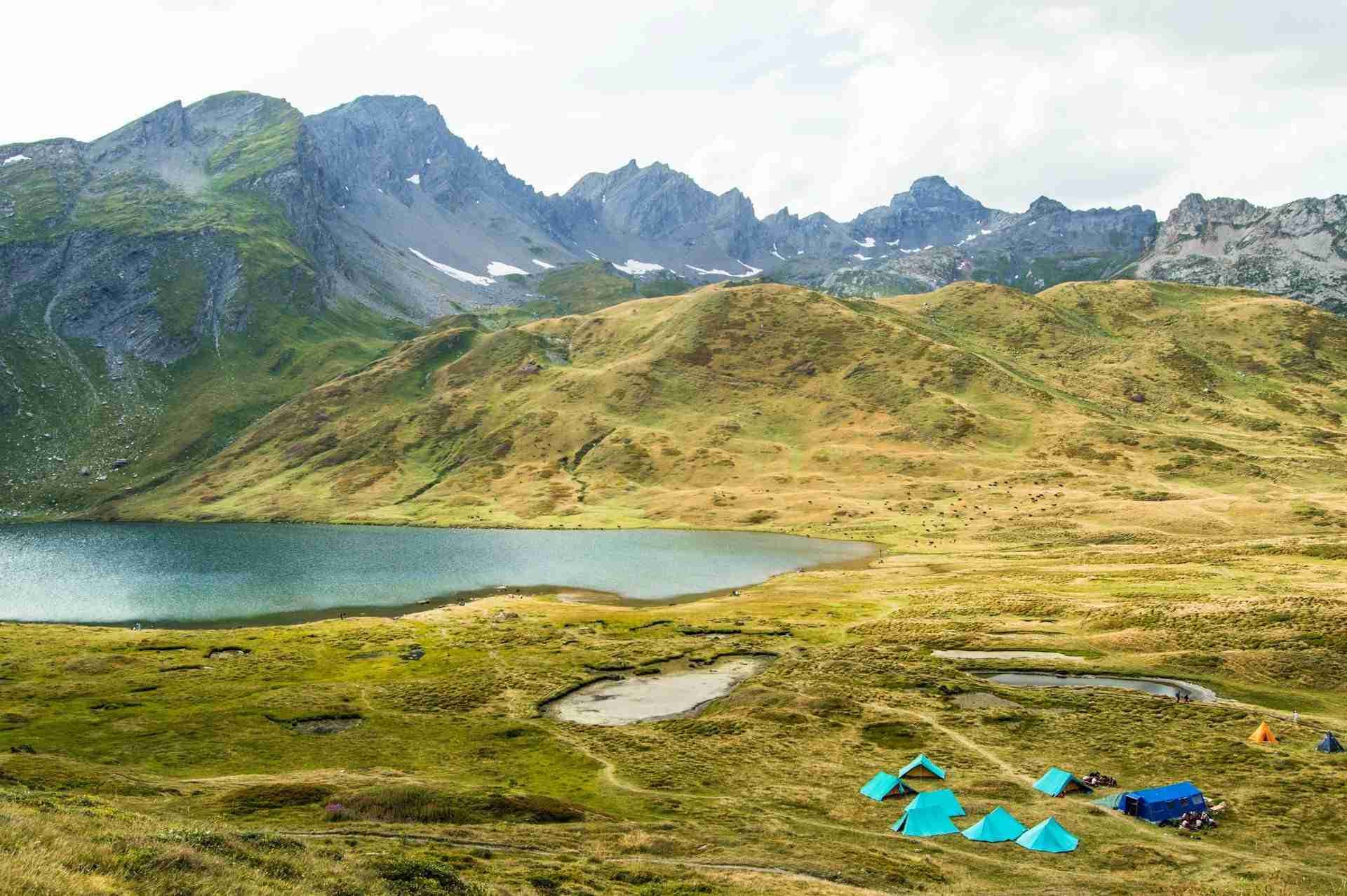
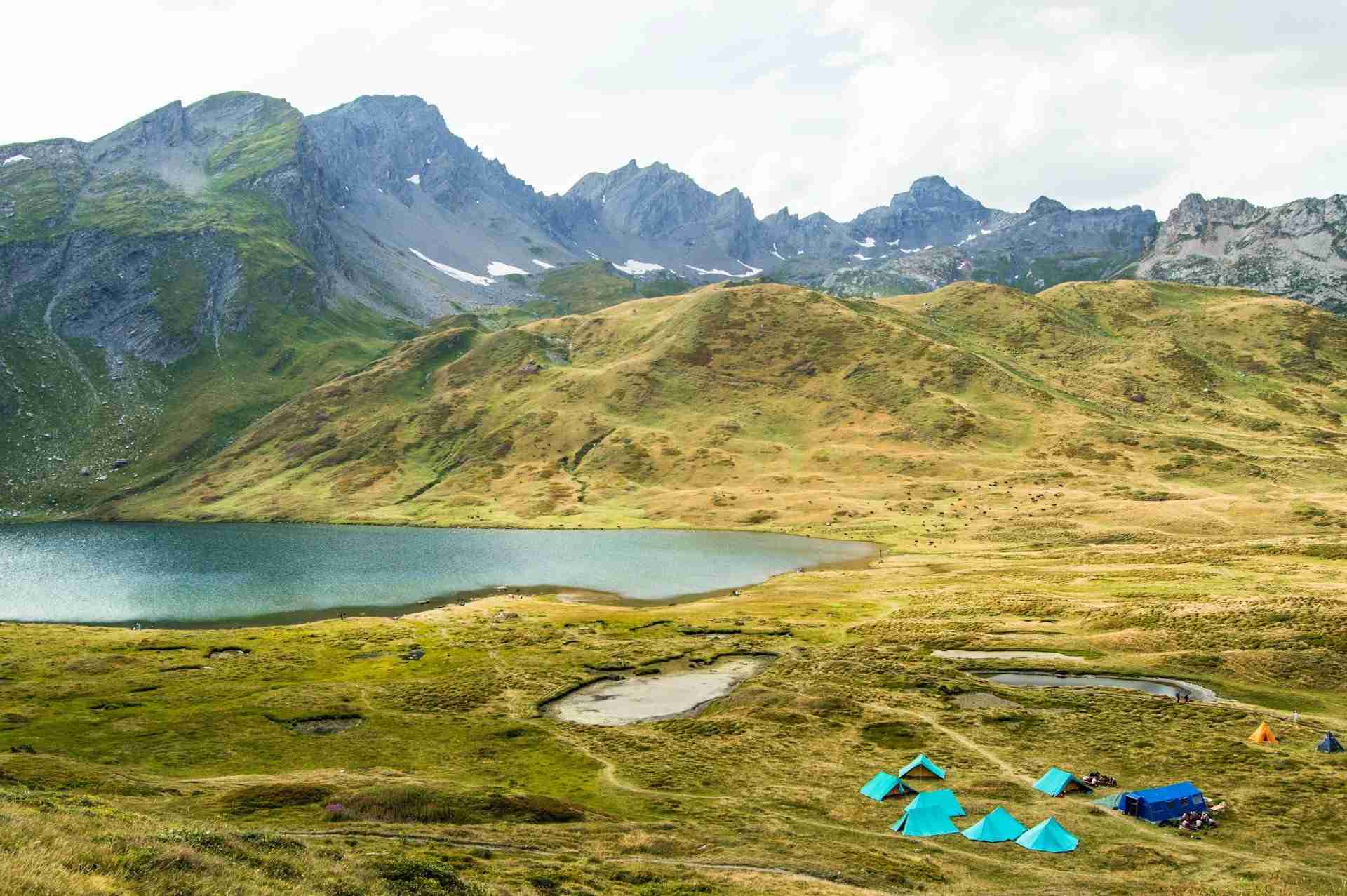
Tucked into a high-altitude basin just below the Col du Petit Saint-Bernard, Lago Verney is a pristine alpine lake perched at 2,088 meters above sea level, straddling the mountainous frontier between Italy and France. This glacial lake near La Thuile in the Aosta Valley is a haven of clarity and calm, surrounded by wildflower meadows, rugged peaks, and sweeping views of the Graian Alps. For photographers, Lago Verney offers a rare combination of accessible elevation and mirror-like reflections, with compositions that shift dramatically between the softness of dawn light and the sharp contrast of midday alpine sun. Whether capturing the lake's glassy surface at sunrise or its grassy shoreline under brooding mountain skies, this location rewards a patient eye and a sensitivity to weather, light, and silence.
Best Photography Opportunities
• Reflections of the Mont Blanc Massif
One of the lake's most celebrated photographic angles is the southern view where, on a still morning, the snow-covered summits of the Mont Blanc massif reflect perfectly in the lake's clear waters. This is best captured at sunrise, when the peaks catch early light and the air is calm. Use a wide-angle lens to frame the lake in the foreground with the mirrored skyline behind. Even in summer, early mornings are brisk and can produce mist that softens the outlines of the mountains and adds atmosphere to the shot.
• Alpine Meadow Foregrounds and Wildflowers
In late spring and summer, the meadows surrounding Lago Verney burst into bloom with alpine wildflowers—gentians, edelweiss, and buttercups among them. These foregrounds work beautifully with low-angle compositions, leading the eye from floral detail to water and peaks. Use a mid-range zoom or macro lens to capture the flowers in sharp detail with a soft mountain backdrop, particularly during golden hour when side light enhances texture and color.
• High Contrast Sky and Cloud Reflections
Weather in the high Alps can change rapidly, offering dramatic skies even in midsummer. When clouds roll through the valley, they often reflect with striking symmetry in the lake's still water. A polarizer can help fine-tune reflection intensity or cut through surface glare depending on your intent. Black-and-white processing can also elevate these high-contrast moments, emphasizing shape and light play across water and sky.
• Minimalist Compositions with Water and Stone
The lake's rugged shoreline includes rock outcrops, grass tufts, and waterlogged driftwood—ideal for minimalist or abstract compositions. Isolate these elements with a telephoto or prime lens, especially during overcast light, which softens tonal transitions. These studies work well in series, focusing on line, shape, and repetition across the shoreline.
• Golden Hour Silhouettes and Low Light Work
As the sun sets behind the surrounding peaks, the lake and landscape descend into cool tones, with silhouettes of distant ridges and lingering color in the sky. Use a tripod and long exposure to smooth the lake surface and capture soft gradients. In clear conditions, blue hour can bring out rich blues and purples reflected in the water, while partial cloud cover enhances warmth at the horizon.
Best Time to Visit
Lago Verney is typically accessible from mid-June to early October, depending on snowfall and trail conditions. Peak photographic season runs from late June through August, when wildflowers are in bloom and trails are fully open. July and early August offer the best chances for calm reflections and warmer light conditions, though the lake remains cool even in summer.
Mornings are ideal for still water and low-angle light on the mountains, while evenings offer stronger directional light and opportunities for long-exposure silhouettes. Weather can shift quickly, especially in the afternoon, bringing dramatic skies that favor moodier landscape work.
Autumn comes early at this elevation—by late September, golden larch trees and the first dustings of snow may appear on surrounding slopes, adding seasonal contrast. Winter access is limited, and snow often obscures the lake entirely until the late thaw.
How to Get There
Lago Verney is located just below the Col du Petit Saint-Bernard, near the Italian border with France. From the town of La Thuile, follow the SS26 road (Strada Statale 26 della Valle d'Aosta) toward the mountain pass. There is a small parking area near the Rifugio Petit Saint-Bernard and the nearby hospice complex, from which the lake is about a 10-minute walk via a gently descending trail.
The route is straightforward and suitable for most visitors, though proper hiking footwear is recommended due to potentially muddy or uneven terrain, especially after rain or early in the season. There are no facilities directly at the lake, but nearby refuges provide meals and restrooms during summer months. The area is protected, so visitors should stay on marked paths and carry out all waste.
Access is not possible during winter and early spring, as the pass is closed due to snow. Check local conditions or with the La Thuile tourism office before planning a visit in the shoulder seasons.
Recommended Gear and Shooting Tips
A wide-angle lens (16–35mm) is essential for capturing lake reflections and broad landscape scenes. A standard zoom (24–70mm) gives flexibility for floral foregrounds and layered mountain views. A telephoto (70–200mm) is useful for isolating elements, compressing ridgelines, or capturing cloud movement.
Use a tripod for dawn and dusk shots, especially for long exposures or when bracketing for high dynamic range. A polarizer helps manage reflections and enhances color saturation, particularly when shooting midday. ND filters allow for extended shutter speeds to smooth water or emphasize cloud motion.
Always shoot in RAW to manage contrast and subtle color gradients, and be ready for rapid weather shifts with lens cloths, protective gear, and a rain cover. Mornings are often clear, but by afternoon, quick-moving fog or storms may roll in.
Bring spare batteries, as cold morning temperatures can reduce performance, and ensure cards have sufficient space—this is a location where you'll likely shoot generously, especially under changing light.
Nearby Photography Locations
Just above the lake, this historic alpine pass offers panoramic views, ancient Roman ruins, and wide compositions over the surrounding valleys. Excellent for early morning or twilight shots with long sightlines and cloud layers.
• Rifugio Petit Saint-Bernard Area
The area surrounding the hospice and rifugio includes old stone walls, high-mountain meadows, and scattered alpine architecture—ideal for environmental portraits or documentary-style images.
This alpine town offers quaint streets, dramatic backdrops, and access to forested trails and small waterfalls—perfect for a secondary location with more village character.
• Lac Sans Fond
A lesser-known glacial lake located a hike further along the ridge line, offering a more remote experience with clear waters, rocky shores, and elevated perspectives—great for adventurous photographers seeking solitude and cleaner light.
Above the pass on the French side lie the remains of 19th-century military fortifications. These offer historical context and strong silhouettes at sunset, especially when framed against clouds drifting through the high saddle.
Lago Verney is a quiet, elevated gem where light, reflection, and alpine austerity meet. For photographers seeking solitude, compositional clarity, and a canvas shaped by both geology and atmosphere, it is a place that speaks softly but leaves a lasting visual impression—one frame at a time.
Comments
Loading comments…