
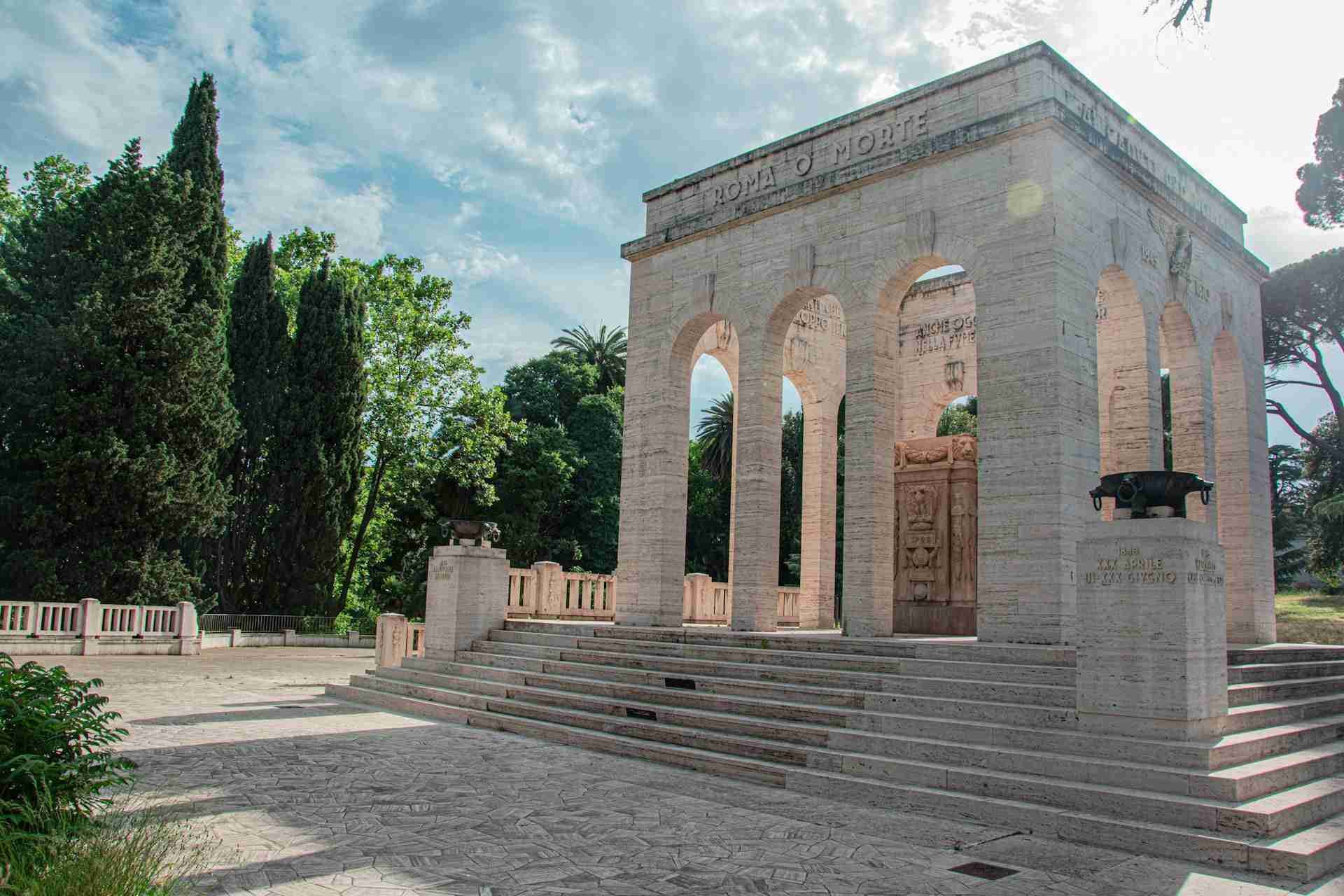
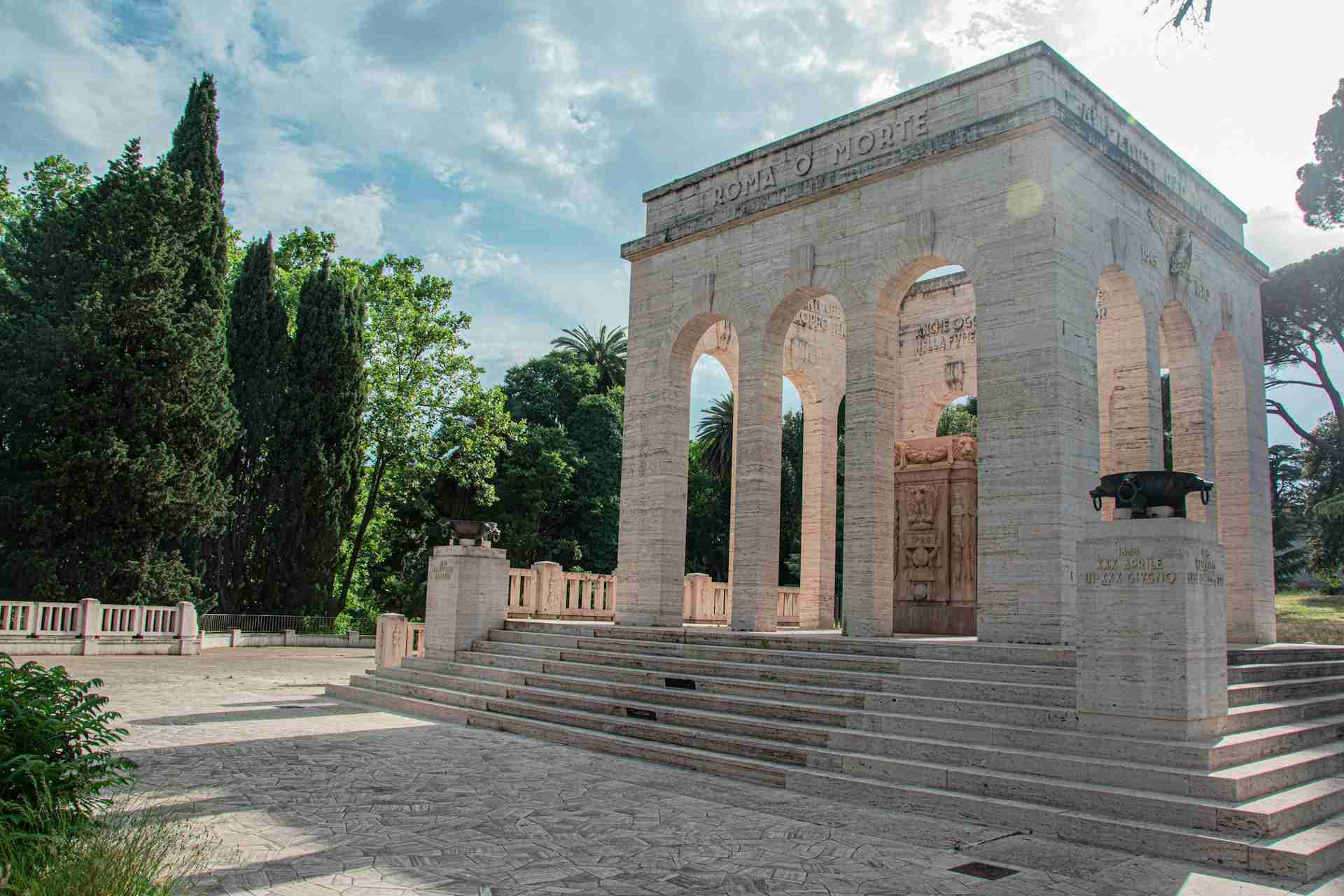
Set at the edge of Gianicolo Hill in Rome, the Mausoleo Ossario Garibaldino is a solemn stone structure that honors the fallen volunteers who fought during the Roman Republic's defense in 1849. Surrounded by pine trees and framed by sweeping views of the city, the mausoleum offers a quiet and powerful space for photographers drawn to historic architecture and memorial landscapes. The building features a square base, arched entryway, and sculptural details including bronze garlands, plaques, and the inscription honoring those buried within. Though less visited than Rome's central landmarks, its setting provides a peaceful backdrop and room to move freely while working with light and shadow. It's a strong location for photographers interested in architecture, history, and the interplay between stonework and nature.
Best Photography Opportunities
Full mausoleum compositions
The front view of the mausoleum offers a symmetrical structure with a strong presence and minimal visual distractions. Shooting straight on allows the arched entrance and inscription to anchor the frame, while the paved approach and flanking trees offer natural leading lines. This angle works well early or late in the day when side light adds definition to the stonework. A standard or slightly wide lens keeps proportions natural while still allowing enough space to show context. The sky above the hilltop is often clean and bright, giving contrast that helps the structure stand out clearly.
Details of plaques, bronze elements, and surface textures
Close up shots of the sculptural bronze elements, such as garlands and commemorative plaques, reveal the detail and craftsmanship built into the monument. These surfaces show signs of age and weathering that add interest to tightly composed shots. A macro or short telephoto lens is useful here for isolating individual textures or inscriptions without including background clutter. Overcast days are ideal, as they soften the light and make the bronze and stone easier to expose evenly. These images are useful for building narrative or thematic sets that focus on the site's historic significance.
Side views with tree framing and directional light
The mausoleum is surrounded by tall pines and low plantings, which can be used to create natural frames or layering in side compositions. Shooting from the path along either side introduces depth and a different spatial relationship between the structure and its environment. Light falling through the trees often casts soft, broken shadows on the stone, which adds texture and variation across the façade. These angles also show how the building sits within the landscape rather than isolated from it. A wide or standard lens works well to balance foreground detail with architectural structure.
Overhead view from the rear slope of Gianicolo Hill
The elevated terrain just behind the mausoleum offers a slight rise where photographers can shoot from above, placing the monument against the city skyline in the distance. This view combines the solemn tone of the memorial with a broader connection to Rome, making for an image with both local and symbolic weight. Late afternoon is especially effective, as the low sun adds warmth and separates the layers of stone, foliage, and distant rooftops. A telephoto lens compresses these layers nicely and helps isolate the structure from nearby trees. This setup is strong for wide environmental portraits or quiet storytelling frames.
Shadows and black-and-white work in morning light
Because of the position of the trees and the flat, solid design of the monument, strong shadows often fall across the stone surface in the morning. These conditions are excellent for photographers working in black and white, with deep contrast and defined edges that emphasize form. Shadow from the columns and surrounding elements can break up the frame and introduce abstraction. A tripod helps if you're shooting at low ISO to preserve dynamic range. Framing tightly or shooting at a slight upward angle brings attention to shape and texture, removing the distraction of the horizon.
Best Time to Visit
Early morning is the best time to photograph the Mausoleo Ossario Garibaldino. Light comes in low and soft from the east, raking across the monument and the path leading to it. This timing allows for both warm tonal range and long directional shadows, particularly effective for architectural and textural compositions. Weekday mornings are typically quiet, which means fewer people walking through the space or lingering nearby. If you plan to include the city view from the rear slope, late afternoon and golden hour offer rich tones and clearer skies.
Spring and fall bring the best seasonal variety. In spring, the trees around the mausoleum fill in with soft green growth, creating filtered light and shade throughout the grounds. Fall introduces warmer color in the tree line and a softer atmosphere in the afternoon. Summer light is harsher but can still be effective early or late in the day. Winter flattens the color palette and reduces crowd activity, giving the site a more austere mood that works well for black and white or minimalist photography.
How to Get There
The Mausoleo Ossario Garibaldino is located on Via Garibaldi in the Gianicolo district of Rome. It can be reached on foot from Trastevere by following the uphill paths of Passeggiata del Gianicolo or Via di Sant'Onofrio. Public buses also run along Viale delle Mura Gianicolensi, which connects to Via Garibaldi near the hill's summit. For drivers, limited parking is available nearby along the side streets, though spaces are not guaranteed.
There are no entrance fees or restricted hours for viewing the monument. The surrounding area is open to the public and part of the broader Gianicolo park landscape. Paved walkways lead directly to the mausoleum, and the terrain is mostly flat with a gentle slope. There are benches nearby and shaded areas under the trees for breaks between sessions. Facilities are limited in this part of the park, so it's best to bring water and prepare ahead if you plan to stay for an extended shoot.
Recommended Photography Gear
A standard zoom lens in the 24–70mm range covers most compositions at this location. It allows for wide architectural framing, clean front views, and close up details of the monument's carvings and bronze elements. A wide angle lens is useful when working close to the base of the structure or for including more of the surrounding park in the frame. For shots from the slope behind the mausoleum or for compressing layers against the city, a short telephoto in the 85–135mm range is especially helpful.
A tripod is recommended for early morning or low light work, especially for photographers interested in detail or black-and-white shooting with narrower apertures. A polarizing filter can help reduce glare on the stone and deepen sky tones during the day. If you plan to work on texture studies, a macro lens or extension tube is a good option for isolating surface details. The monument is surrounded by open space with plenty of room to set up gear, so you can shoot without feeling rushed or cramped. A lightweight bag and minimal setup are ideal for navigating the short walk up to the site and around the grounds.
Nearby Photography Locations
Just a few minutes uphill from the mausoleum, this open plaza offers sweeping views of Rome's skyline from an elevated vantage point. It's a popular sunset location but also works well in the morning for atmospheric cityscapes with long shadows and soft light. Statues and historical markers around the square can also add interest to wider compositions.
This monumental fountain sits just downhill from the mausoleum and features dramatic marble forms and a cascading water basin. It's an excellent subject for long exposures, particularly early in the morning when fewer people are around. Architectural details and the nearby archways offer strong framing opportunities.
This tree-lined promenade runs along the ridge of Gianicolo Hill and includes walking paths, statues, and filtered light through the pine canopy. It's a strong location for capturing casual park scenes, light and shadow patterns, and street-style compositions with a quiet mood. The elevation also provides glimpses of the city below.
A short distance to the west, this large public park includes formal gardens, wooded paths, and a variety of architectural features. It's useful for landscape and nature photography, as well as architectural detail shots of historic walls, fountains, and garden structures. Early morning and late afternoon light bring out texture in the old stone and gravel paths.
Trastevere neighborhood
Descending the hill into Trastevere opens up a completely different type of photography, with narrow streets, worn doorways, and active street life. This area is ideal for detail studies, documentary work, or layered scenes that contrast color and shadow. The mix of old walls and lived-in character gives photographers plenty to explore.
The Mausoleo Ossario Garibaldino is a quiet and powerful place for image making, removed from the busier tourist zones but rich with visual potential. Its structure is clean and timeless, and its surroundings give room to move, think, and compose carefully. Whether you're working in close or looking for wide context, it's a strong setting for thoughtful, architecture focused photography.
Comments
Loading comments…