
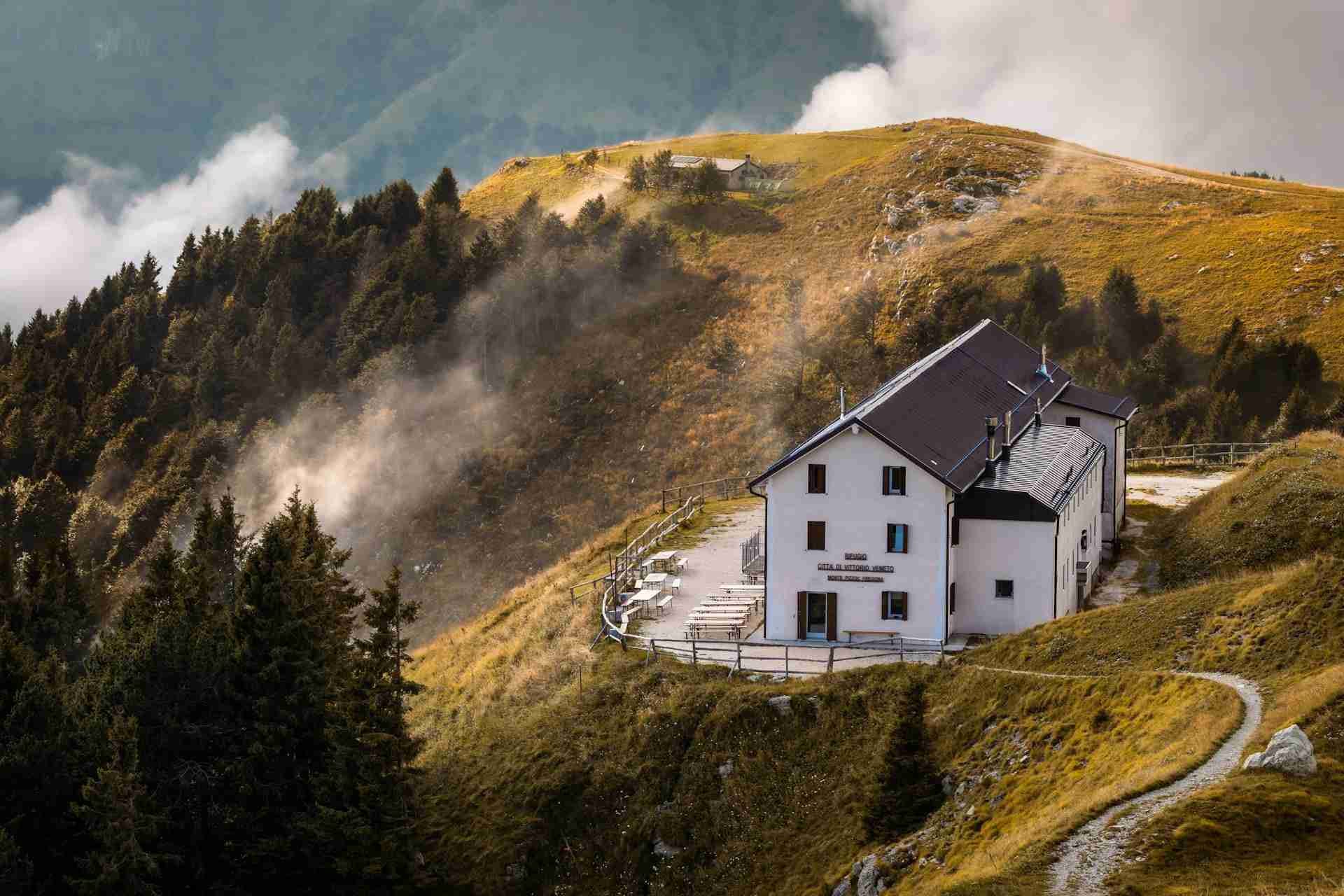
Monte Pizzoc rises above the northern plains of the Veneto region, offering sweeping views from its ridgeline over the towns of Fregona, Vittorio Veneto, and the surrounding foothills of the Dolomites. Its summit, which sits just above 1,500 meters, delivers some of the broadest panoramic shooting opportunities in the Province of Treviso, with layered mountain ranges to the north and farmland patterns stretching south toward the Adriatic. What makes Monte Pizzoc especially appealing to photographers is its combination of open space, wind-swept textures, and reliable side light that shapes both landscape and sky. On clear days, visibility can stretch for dozens of kilometers, and in the early or late hours, shifting color gradients develop across both sky and land. With minimal obstructions and year-round access, the mountain is well suited to wide-angle and telephoto work alike, whether you're composing full landscapes, compressing distance across hills and towns, or isolating light across ridgelines.
Best Photography Opportunities
• Wide Panoramas from the Summit Ridge
The main ridge of Monte Pizzoc offers a nearly unobstructed 360-degree view, which is ideal for sweeping panoramic compositions. Facing north, the Prealps and Dolomites form a jagged skyline that holds snow late into spring. Turn south, and you get a full view of the Veneto plain with its patchwork of fields and small towns. Shoot early or late in the day to take advantage of angled light and long shadows across the valleys. A wide-angle lens in the 16 to 24 millimeter range will allow you to include foreground textures, especially the rough grass and rock outcrops that frame the horizon. For stitched panoramas, use a tripod and ensure consistent exposure across frames.
• Telephoto Compression of Distant Villages
With clear air and high vantage points, Monte Pizzoc is excellent for long-lens work. A 70 to 200 or 100 to 400 millimeter lens lets you compress layers of terrain and pick out small churches, farms, or town centers far below. These shots are strongest during early morning or late afternoon, when low light rakes across the scene and defines structure with soft contrast. Haze can build during the midday hours, especially in summer, so plan your longer shots for earlier sessions. Winter often brings clearer skies and drier air, helping distant details stay crisp.
• Cloud Formations and Sky Drama Above the Line
Because Monte Pizzoc stands somewhat isolated from larger ranges, it catches fast-moving weather systems and shifting cloud formations throughout the year. These changing skies offer strong visual weight and serve as the dominant element in many compositions. Use a wide frame to place dramatic clouds above ridgelines or valley floors, or tilt the horizon lower to let the sky take over. Stormy conditions often build quickly in the afternoon, especially in late summer. A circular polarizer can help manage glare in open daylight but should be used with care to avoid uneven skies across wider frames.
• Backlight and Rim Light on Grasses and Rock
In early morning and again before sunset, light cuts across the open terrain and creates strong backlit edges on the dry alpine grasses and scattered limestone. These conditions are perfect for creating minimalist frames with sharp edges and simple compositions. Shoot toward the light, and use exposure compensation to prevent losing shadow detail. A fast lens helps isolate foreground elements against soft background blur. These subtle, close compositions offer a different kind of frame than the broader landscape views and work especially well under soft, angled light.
• Night Photography and Light Pollution Control
Thanks to its elevation and distance from larger towns, Monte Pizzoc offers relatively dark skies compared to much of the surrounding region. On clear nights, the ridgeline is well-suited to star photography, especially if you include the shape of the mountain itself or small manmade features like fences or stone paths. If you plan to shoot during a new moon, bring a headlamp and set your frame during daylight for easier alignment. A fast wide-angle lens is best, along with a sturdy tripod. Keep an eye on wind conditions, as gusts are common even during calm evenings and may affect longer exposures.
Best Time to Visit
Monte Pizzoc is accessible year-round, but the most productive seasons for photography are spring and autumn. From April through early June, the summit area comes alive with new growth and a mix of green tones that contrast well with lingering snow on the northern ridges. Late spring mornings bring soft fog into the lower valleys, which slowly lifts to reveal towns and tree lines in stages. This is one of the most visually rewarding conditions for layered compositions, especially with long lenses.
Summer offers longer daylight hours and generally stable conditions, but heat can lead to atmospheric haze that flattens distant views. Sunrise and sunset become especially important during this season, both for light quality and for capturing clear air before or after the warmest part of the day. Afternoon thunderstorms are also more common in summer and can be used to build storm-light compositions with fast-moving shadows and textured skies.
Autumn is arguably the best time to photograph Monte Pizzoc. From mid September through October, grasses turn golden, and the quality of light improves as the sun drops lower in the sky. The air becomes clearer, and the lower plains often fill with morning fog that burns off slowly. These are ideal conditions for both wide and compressed landscape images. Winter access depends on snowfall, but the road is often cleared to the upper area. Snow textures and morning light on bare rock and frost offer clean, minimal compositions with sharp contrast.
How to Get There
Monte Pizzoc is located above the town of Fregona in the Province of Treviso. From Vittorio Veneto, follow the SP422 north toward Fregona, then take Via Cordella and follow signs toward Rifugio Città di Vittorio Veneto, which sits near the summit. The road is paved but narrow and includes tight switchbacks in the final stretch. It remains open for most of the year, though snow and ice may temporarily limit access in winter.
Parking is available near the summit area or at the rifugio itself, depending on the season. From there, a network of short trails leads across the ridgeline and toward various viewpoints. The terrain is open and gentle, allowing easy movement with gear. There are no fees to visit or photograph the area, and tripods are allowed. Drone use may be subject to regional flight restrictions, so always check current regulations before flying. Mornings are quiet, with fewer hikers or day visitors, especially on weekdays.
Recommended Photography Gear
A wide-angle lens between 16 and 35 millimeters is ideal for sweeping ridgeline shots and cloud formations. For distant villages and mountain layering, bring a telephoto lens in the 70 to 200 or 100 to 400 millimeter range. A sturdy tripod is essential for long exposures and night photography, particularly due to the wind often present near the summit. If you're shooting panoramas, use a leveling base or nodal rail to keep your frames aligned.
A circular polarizer can help reduce glare and deepen sky tones, but avoid overuse when shooting with ultra-wide lenses. Neutral density filters are useful for smoothing wind-blown grasses or creating long exposures during brighter daylight hours. A microfiber cloth and sensor blower will help keep dust and fine debris off your lenses, especially on breezy days. If shooting before dawn or after sunset, bring a headlamp and extra batteries. The elevation and exposure to weather make a windproof layer essential, even during summer mornings.
Nearby Photography Locations
Just east of Monte Pizzoc, the Cansiglio forest offers a completely different atmosphere, with dense beech trees, rolling clearings, and moody light filtering through the canopy. It is especially photogenic in autumn, when morning fog hangs low and the forest floor turns golden.
Visible from Monte Pizzoc and reachable within a short drive, this lake is framed by forested hills and often catches early morning mist. Its reflective surface and long shoreline lend themselves well to sunrise compositions and minimalist water frames.
A narrow mountain pass carved into the rock with sharp switchbacks and stone galleries, San Boldo is ideal for photographing lines, scale, and contrast between road and cliff. Early or late light gives the best shadow detail along the stone walls.
The historic center of Vittorio Veneto features narrow lanes, arched walkways, and stone buildings with textured facades. These scenes are best shot in soft light or under overcast skies, with plenty of detail for architectural studies.
A high ridge with excellent views of the Piave Valley, Monte Cesen is another strong spot for sunrise and telephoto landscape work. In winter, the snow textures and soft light make it especially effective for clean compositions with defined shadow.
Monte Pizzoc rewards patience and clear seeing. The combination of elevation, shifting light, and simple terrain means that even small changes in time or weather can completely transform a scene. Whether you are working with bold skies, compressed valley light, or quiet backlit details in the grass and stone, the mountain offers a wide range of images for photographers who enjoy space, movement, and clarity in their frame.
Comments
Loading comments…