
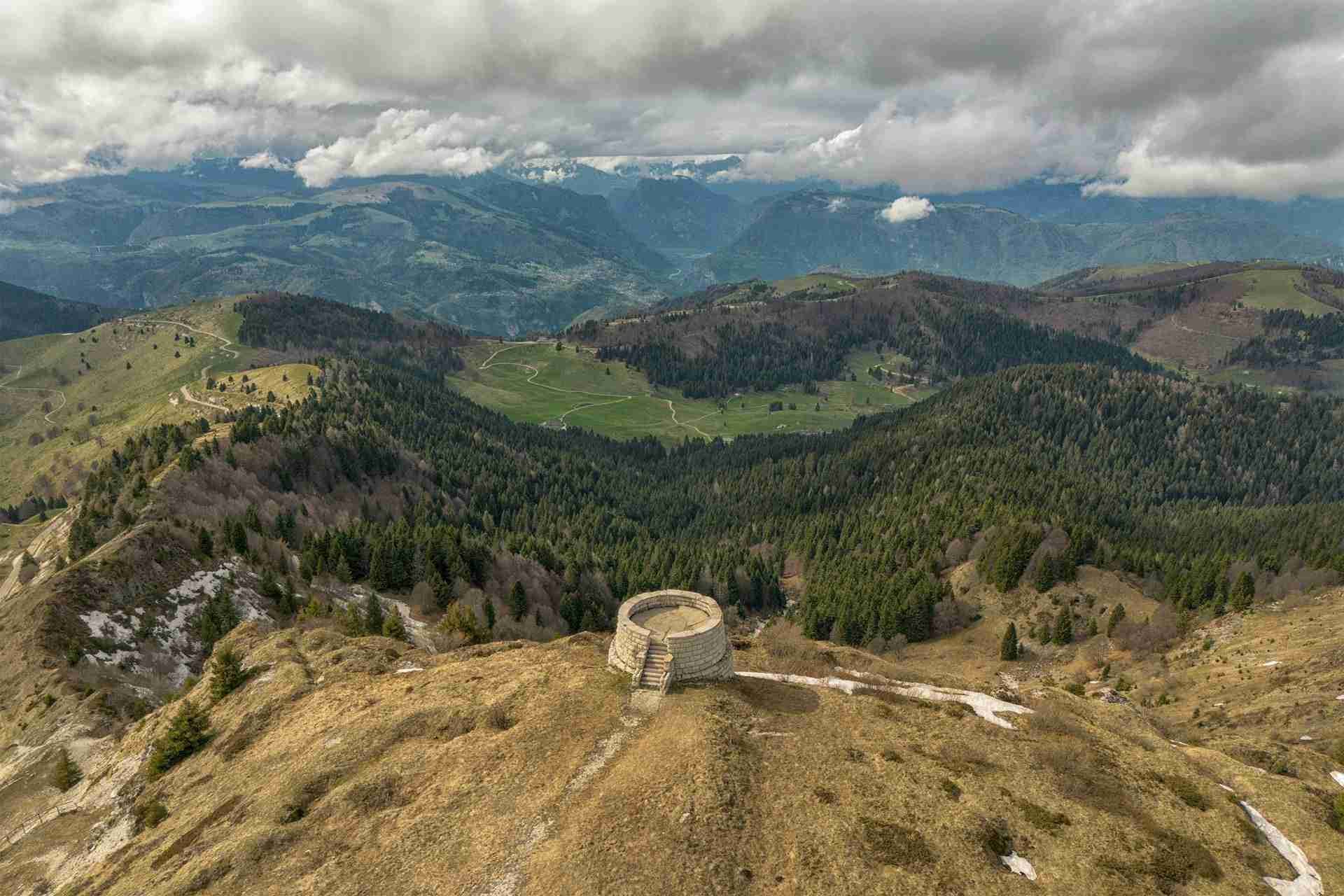
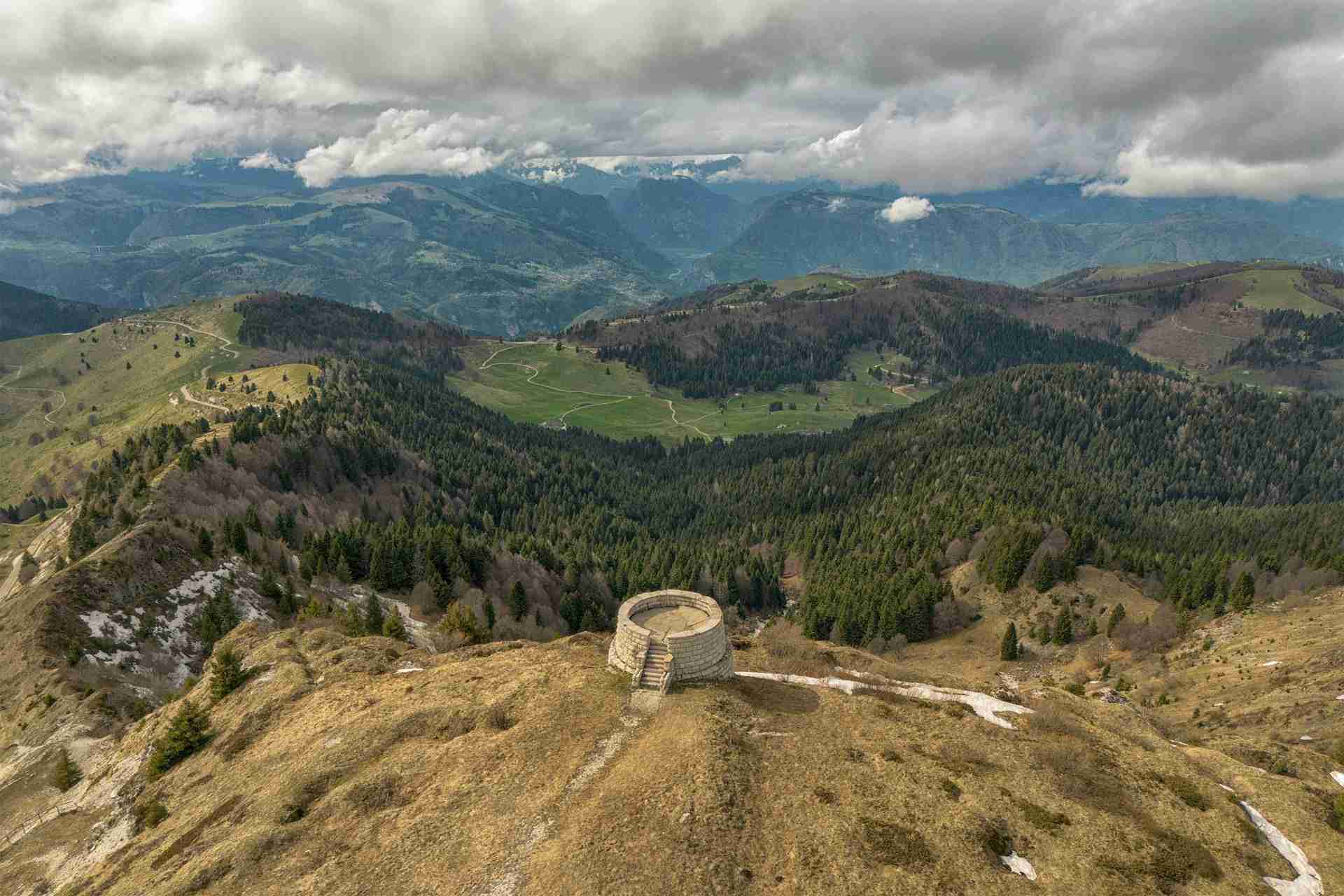
Tucked just north of the grand military memorial atop Monte Grappa, the Osservatorio Monumentale Cima Grappa Lookout is a quiet, stone-built platform that offers uninterrupted views across the Venetian Prealps and deep into the valleys below. While the main war memorial draws larger crowds, this small lookout rewards photographers who seek stillness and open sightlines in every direction. The structure is simple, built from light stone and designed to blend into its rocky surroundings, but its position on the northern edge of the summit ridge makes it a natural anchor for wide alpine compositions. Wind, weather, and open light define the experience here, where clouds roll fast over the peaks and golden hour often arrives with little warning. This is a location for slow observation, for tracking changing weather across the ridges, and for building photographs with quiet strength.
Best Photography Opportunities
• Sunrise
Standing just behind the lookout facing north and northeast, you'll find one of the most complete panoramic views of the Venetian Prealps. At sunrise, the low light strikes across the ridges and valleys in layered bands of shadow and warmth, often revealing low clouds trapped in the basins below. A wide angle lens is essential here to capture the full spread of the view, but don't overlook using a midrange focal length to isolate layers and textures. This angle also works well in soft fog, when only the closest ridges are visible and the lookout seems to rise above a sea of cloud. Arrive early, set up a stable tripod, and allow the light to move slowly through the scene.
• The Ridge Path
Looking south from the approach trail to the lookout, you can photograph the stone structure itself outlined against the sky. This works best in the late afternoon or during sunset, when the sun drops low behind the structure and creates a strong silhouette. Use this composition to contrast the built form with open sky, or place the lookout off center to let clouds or distant peaks add balance. A telephoto lens is useful here to compress the structure and isolate the line of the ridge. On clear evenings, the light can be surprisingly clean, creating smooth gradients behind the lookout's simple shape.
• Detail Work
Though small, the lookout contains interesting details for close photography. The rough texture of the local stone, the aged patina on the metal elements, and the weather worn corners of the platform all photograph well in diffused or side light. Use a short telephoto lens or macro setup to frame these elements tightly. These images are ideal on cloudy days, when the contrast is soft and the materials become more visually expressive. This kind of work adds a thoughtful, observational layer to a broader landscape set.
• Alpenglow at Sunset
As the sun sets behind the western ridges, the lookout becomes a quiet perch to photograph the distant Dolomites and the shifting tones of light across the landscape. The horizon often turns a deep red or purple, with the mountains catching the final light while the valleys fall into shadow. Use a longer lens to compress the peaks and isolate the glow where it strikes the higher elevations. Tripod and manual exposure adjustments are useful here, especially as the dynamic range increases quickly after sunset. Wind conditions can change fast, so stabilize your gear and protect against cold drafts.
• Night Sky Photography
On clear nights, the high elevation and lack of nearby light pollution make the lookout an excellent place for night sky photography. The low stone walls can be used to frame stars, constellations, or even the Milky Way during summer months. Use a wide aperture and longer exposure to capture detail in the stars, and be prepared with extra layers, as temperatures drop quickly after dark. These compositions work best with a foreground subject like the lookout wall or a distant silhouette of peaks on the horizon. Allow your eyes time to adjust, and experiment with different angles for the cleanest sky.
Best Time to Visit
The lookout is accessible year round, but the best seasons for photography are late spring through early autumn, when weather is more predictable and the trails are clear of snow. From May to June, the surrounding slopes begin to green and wildflowers start appearing along the ridge path. Sunrise and early morning sessions during this time offer soft light, cool air, and clean skies. September and early October are also excellent, with crisp visibility, golden light, and far fewer visitors on the mountain.
Summer provides the widest access window, though it also brings stronger midday light and occasional afternoon storms. Plan early sessions or wait until evening to avoid the flat, overhead lighting of midday. In winter, snow can cover the access roads and trails, limiting reach unless you arrive with proper gear or guided assistance. However, if accessible, snowy conditions create striking contrasts between the lookout and its white surroundings.
Golden hour is the most productive time of day, especially at sunrise when the landscape remains calm and winds are minimal. Sunset offers longer views and warmer tones, but wind can increase suddenly and temperatures drop quickly after the sun sets. Check the forecast carefully, and plan for fast weather changes, particularly in shoulder seasons.
How to Get There
The Osservatorio Monumentale Cima Grappa Lookout is located just north of the main war memorial complex on Monte Grappa in the Veneto region of Italy. From the town of Bassano del Grappa, drive along the SP148 road toward the summit. The road is winding but well maintained during the warmer months. Near the summit, there is a large parking area just below the war memorial, which serves as the starting point for accessing both the main site and the lookout.
From the parking area, walk up to the main circular memorial structure and follow the path leading north along the ridge. The lookout sits just beyond the main complex, about a five to ten minute walk from the central area. The trail is paved and gradual, with only a slight incline. There are no access fees to visit or photograph the lookout, and you are free to set up tripods and gear throughout the area.
If arriving for sunrise or night photography, plan to arrive early and bring a headlamp for navigating the ridge path in the dark. During peak summer months, the site is busier during the day, so early morning or late evening sessions offer more space and fewer distractions.
Recommended Photography Gear
Photographing the lookout and surrounding views requires a setup that handles both wide scenes and long distance compression. A wide angle lens in the 14 to 30 millimeter range is essential for sunrise and sunset when you want to include the stone lookout, foreground texture, and sky in a single frame. This lens is also useful for night photography, especially when shooting stars above the horizon.
A 24 to 70 millimeter lens is a strong all around choice, giving you flexibility to work between landscapes and tighter framing on ridge lines or structures. This lens is particularly effective when working with changing light conditions, allowing you to adjust quickly without switching gear. A longer lens, such as a 70 to 200 millimeter, is ideal for isolating distant peaks, picking out weather shifts, or working with compressed perspectives at sunset.
Bring a sturdy tripod for long exposures, night photography, or balancing strong wind conditions near the summit. A polarizer can help deepen sky contrast and reduce haze in the distant mountain ranges. Neutral density filters are helpful for smoothing clouds or softening the light during bright daylight sessions.
Nearby Photography Locations
, just south of the lookout, offers a dramatic circular structure built into the summit. The repetition of stone lines and radial design make it excellent for architectural framing and shadow studies, particularly in morning light.
, a short walk from the main parking area, gives you a broad western panorama perfect for late afternoon and sunset compositions. Include small foreground elements like fences or flowers for added scale.
• Monte Tomba
, farther to the southeast, offers another summit trail with open views and fewer visitors. Its soft rolling hills contrast with the more rugged character of Monte Grappa and work well for longer landscape studies.
• Brenta Valley Below the Ridge
, visible from several points near the lookout, gives a sweeping view of patchwork farmland, winding roads, and morning mist. Best captured with a long lens during the early hours.
, which connects from the north side of Monte Grappa, provides changing viewpoints and wildflower-lined paths. This trail is less visited and rewards photographers interested in quieter scenes with layered terrain and distant peaks.
The Osservatorio Monumentale Cima Grappa Lookout is not a dramatic building or a grand destination, but it offers something more lasting—a quiet place to witness the light shift across mountains, the sky clear or close, and the valley move through color and shadow. It is a space made for careful observation, where photography becomes not just about the frame, but about waiting for the wind to settle and the light to arrive.
Comments
Loading comments…