
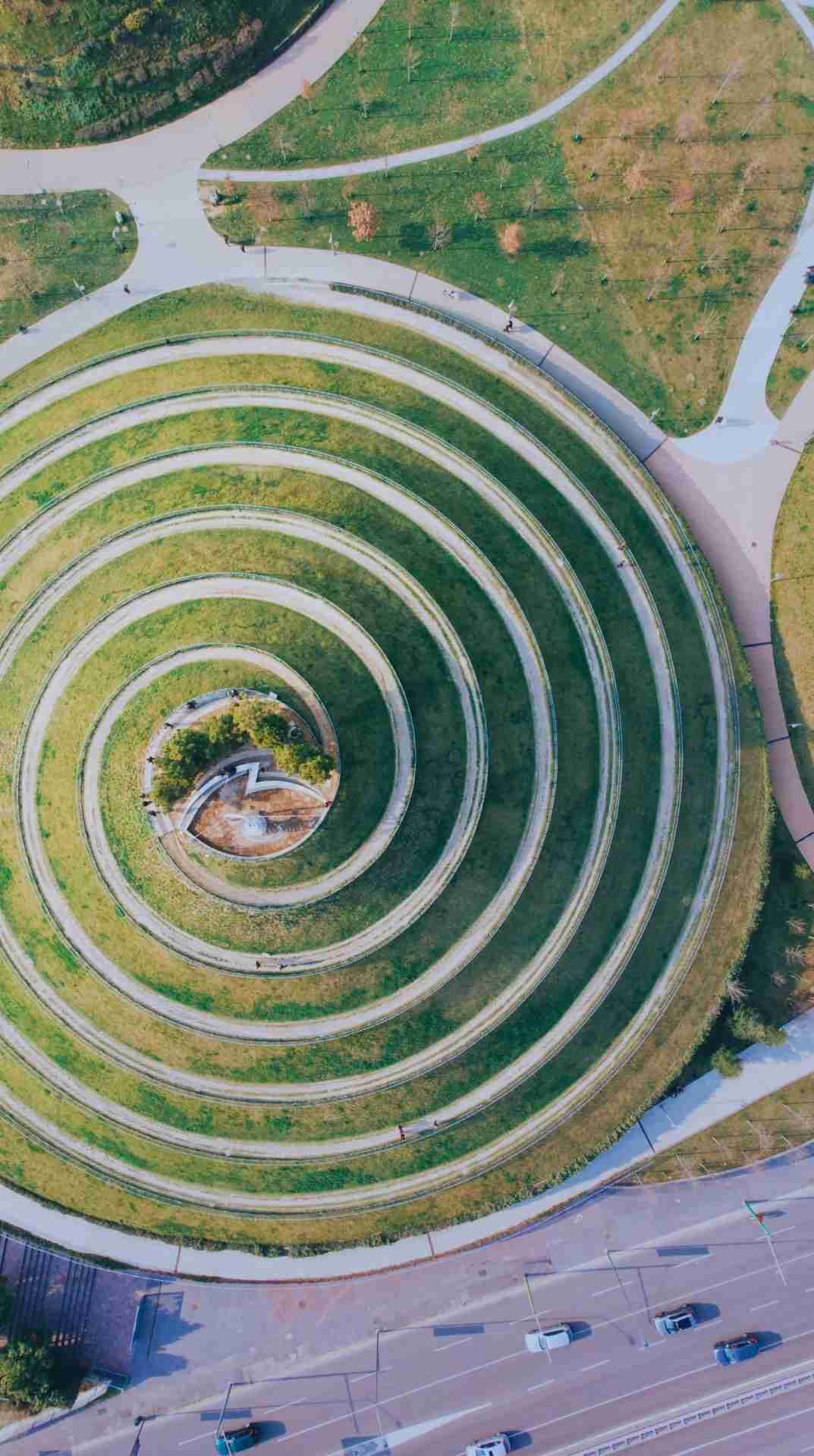
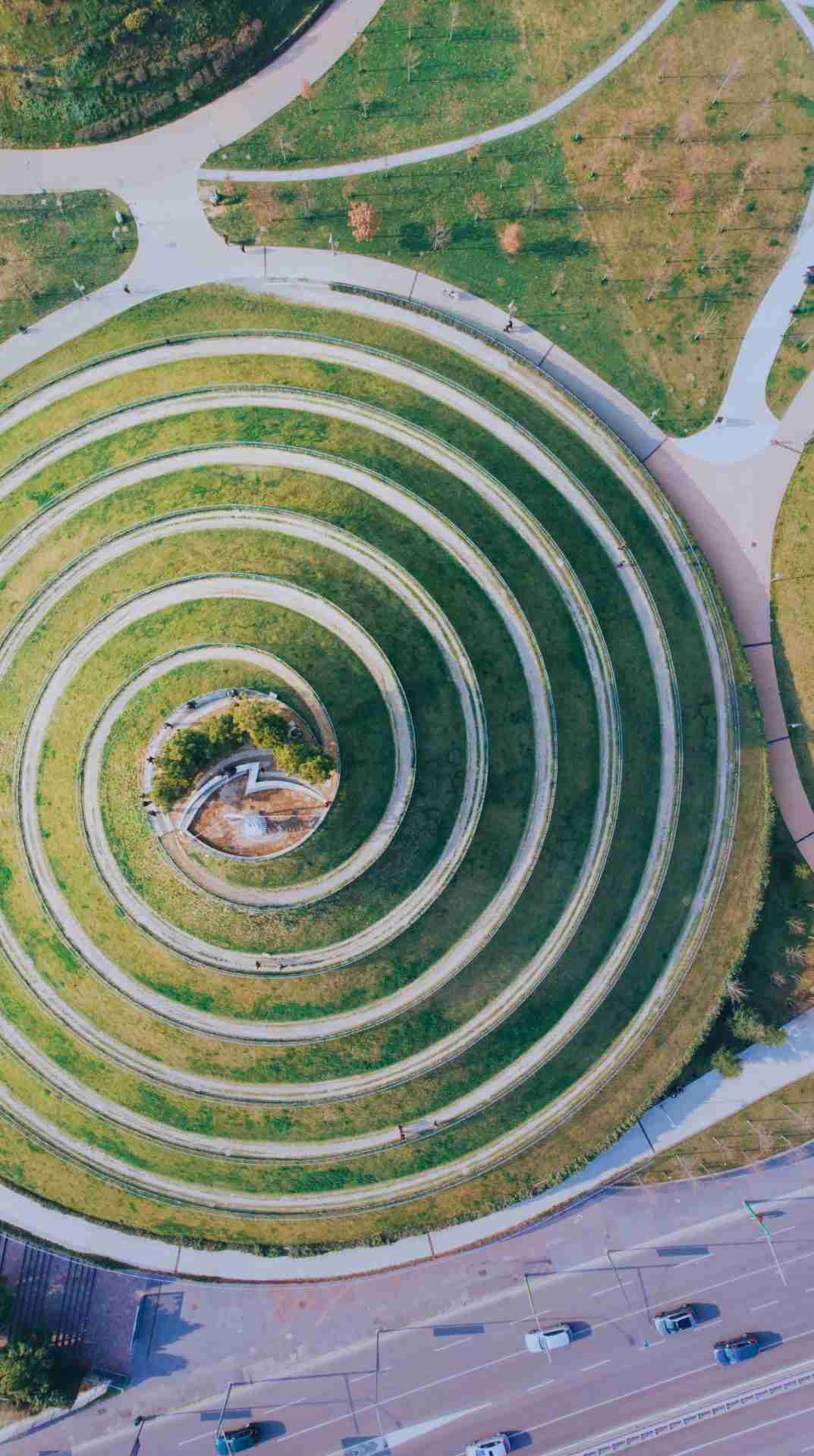
Parco del Portello in Milan is a modern urban park built on the site of a former Alfa Romeo factory, where landscape design, public art, and green architecture merge into a clean and intentional composition. The centerpiece of the park is the spiraling landform designed by Charles Jencks, titled the Monumento DNA. This sculptural mound, with its gentle ramped path and DNA inspired double helix shape, offers photographers a chance to work with structured landscape, controlled elevation, and geometric harmony. Surrounded by reflective buildings and tree lined walkways, the park also includes water features and elevated viewpoints that respond well to shifting light. It is a thoughtfully designed space with strong lines and minimal clutter, ideal for those drawn to form, scale, and urban landscape photography.
Best Photography Opportunities
• Drone Views of the DNA Spiral and Path Network
The aerial perspective reveals the full clarity of the monument's design. From above, the green mound spirals upward with two interweaving paths, mimicking the strands of DNA. Flying a drone here allows you to capture both the sculpture and the park's overall layout, including the water features and structured tree rows. Early morning or late afternoon provides soft light that enhances the shadows along the path and highlights the topography. The geometry is most striking when viewed directly overhead, though angled shots from mid-height also show the monument's rise against the surrounding skyline. Always fly within legal limits and away from foot traffic.
• Ground Level Compositions from the Base of the Spiral
Standing at the base of the mound, you can shoot upward along the curving path as it wraps around the grassy rise. Use a wide lens to emphasize foreground slope and path curvature. This approach works best in directional light when long shadows form across the ramp, adding dimension to the shape. Including a person walking along the path can help convey scale and create a focal point within the frame. Early morning light tends to be clean and directional, while evening offers a warmer tone and more people in the scene.
• Sunset from the Summit of the Monumento DNA
At the top of the spiral, you have a modest but clear view across the Portello district. From here, you can shoot toward the city skyline, or frame the surrounding parklands in soft backlight. A lens in the 35 to 70mm range is helpful for compressing the view and bringing out detail in the background architecture. The elevated platform is small but clean, and sunset light can fall across the ridge in ways that highlight both the monument's edge and the park's horizon line.
• Reflections and Symmetry along the Water Canal
The park includes a long rectangular reflecting pool that borders its southern edge. On calm days, this water feature mirrors the nearby buildings and sky, offering clean symmetry for photographers working with stillness and vertical subjects. Early morning is best for undisturbed reflections, while golden hour introduces warm light and clearer contrast. Framing the reflection from low to the ground with a wide lens increases the impact of the mirrored image. Be aware of foot traffic, as the area is popular with walkers and runners.
• Detail Studies
Throughout the park, contrast between hard surfaces and planted areas offers opportunities for tighter compositions. Metal railings, stone benches, and paved lines intersect with grass, flowers, and tree shadows. Use a 50mm lens to isolate these relationships and build compositions around light and texture rather than subject. These images often work best on overcast days or in the soft light of early morning. The clean lines of the park's design make it especially rewarding for minimalist or abstract photography.
Best Time to Visit
Parco del Portello is open all year and accessible at all hours, but early morning and late afternoon are the most productive times for photography. Morning light offers cleaner air and fewer visitors, which is ideal for both ground and aerial shooting. Sunset introduces warmer tones and highlights the west facing features of the spiral monument. Overcast skies help reduce glare on the water and bring out texture in the lawn and paths. Spring and early summer add soft greens and blooming plants to the landscape, while autumn creates contrast between fallen leaves and the structure of the paths. The park's simplicity means light and season play a major role in shaping your compositions.
How to Get There
Parco del Portello is located in the northwestern quadrant of Milan, near the CityLife and Portello districts. The easiest access is by public transport, with several bus and metro lines stopping within walking distance. The closest metro stop is Lotto or Portello, followed by a ten minute walk to the park entrance. For drivers, nearby streets offer limited parking and several garages serve the shopping center adjacent to the park. The Monumento DNA is visible from much of the park and is easily accessible by a paved walking path that loops gently to the top. Entry to the park is free, and the terrain is suitable for tripods, rolling camera bags, or light gear setups.
Recommended Photography Gear
A wide angle lens is essential for working with the monument's curves, whether from the base or while standing on top. A standard zoom lens helps frame the skyline and distant architectural elements. A drone with a reliable gimbal and high resolution camera allows for aerial shots of the park's geometry and is particularly effective for showing scale and structure. A tripod is useful for reflection shots and for low light compositions around sunrise or sunset. A circular polarizer can help with managing reflections on water and enhancing contrast in the sky. Bring a lens cloth for handling dust or moisture on windy days, and lightweight walking shoes to comfortably navigate the spiral path and surrounding walkways.
Nearby Photography Locations
Just a short walk away, this district is home to modern skyscrapers, reflective surfaces, and wide public plazas. The contrast between smooth glass architecture and sculpted parkland makes it ideal for architectural and abstract work.
Also known as the "Hill of Milan," this man made rise provides elevated views over the city and is particularly beautiful during golden hour or after a winter snowfall. Tree lined paths and open sky make it ideal for minimalist compositions.
Located at the edge of Parco Sempione, this triumphal arch offers classical lines and wide open space for both symmetrical and street style photography. Best photographed at sunrise when shadows are long and the square is quiet.
This nearby modern square features bold urban geometry and strong diagonals formed by buildings and walkways. It's especially compelling at night when artificial lighting creates contrast and depth across the large plaza.
Milan's largest central park, Parco Sempione offers a more organic counterpoint to Portello's design. It includes water, monuments, tree canopies, and open lawns, all of which offer softer, more natural compositions throughout the day.
Comments
Loading comments…