
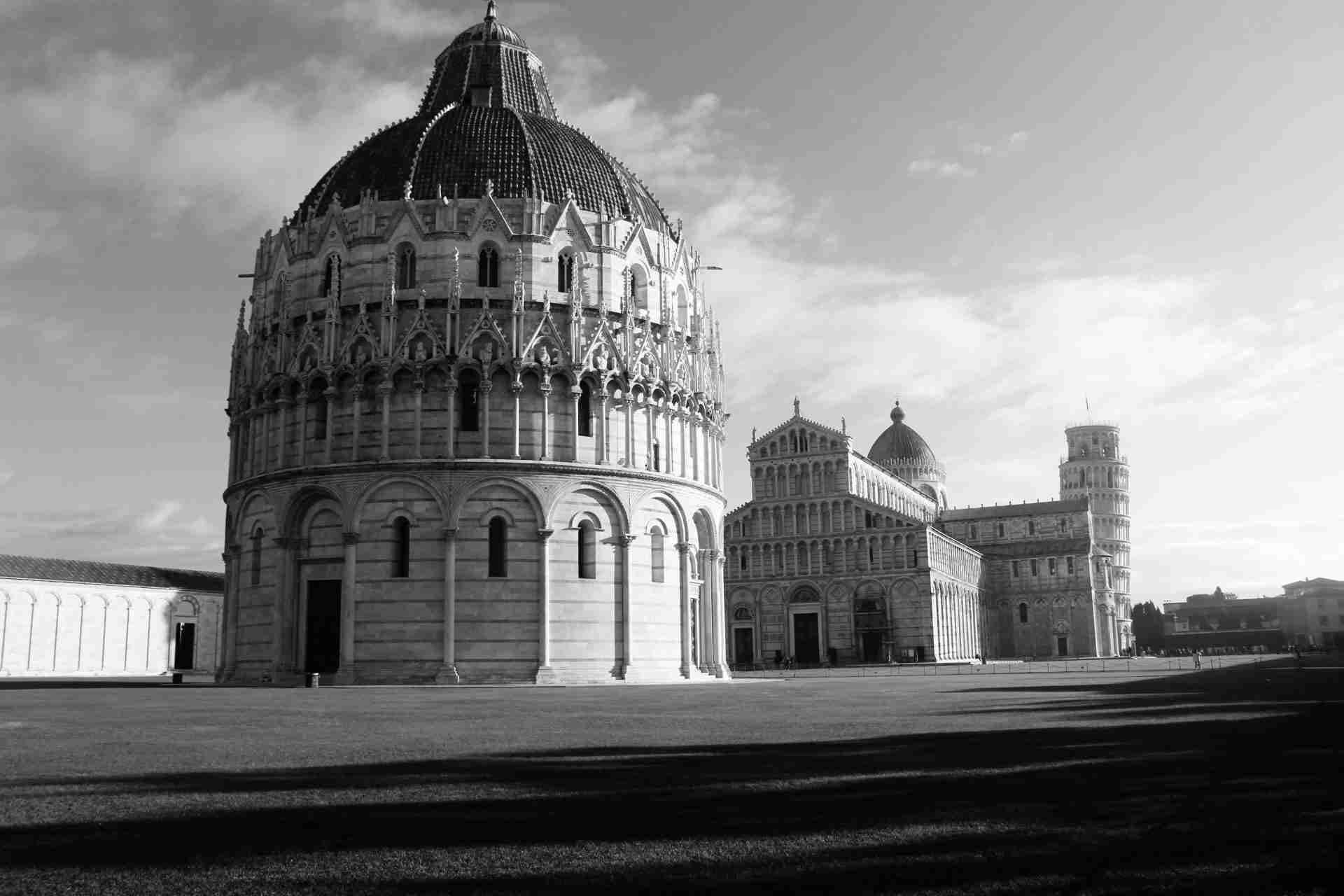
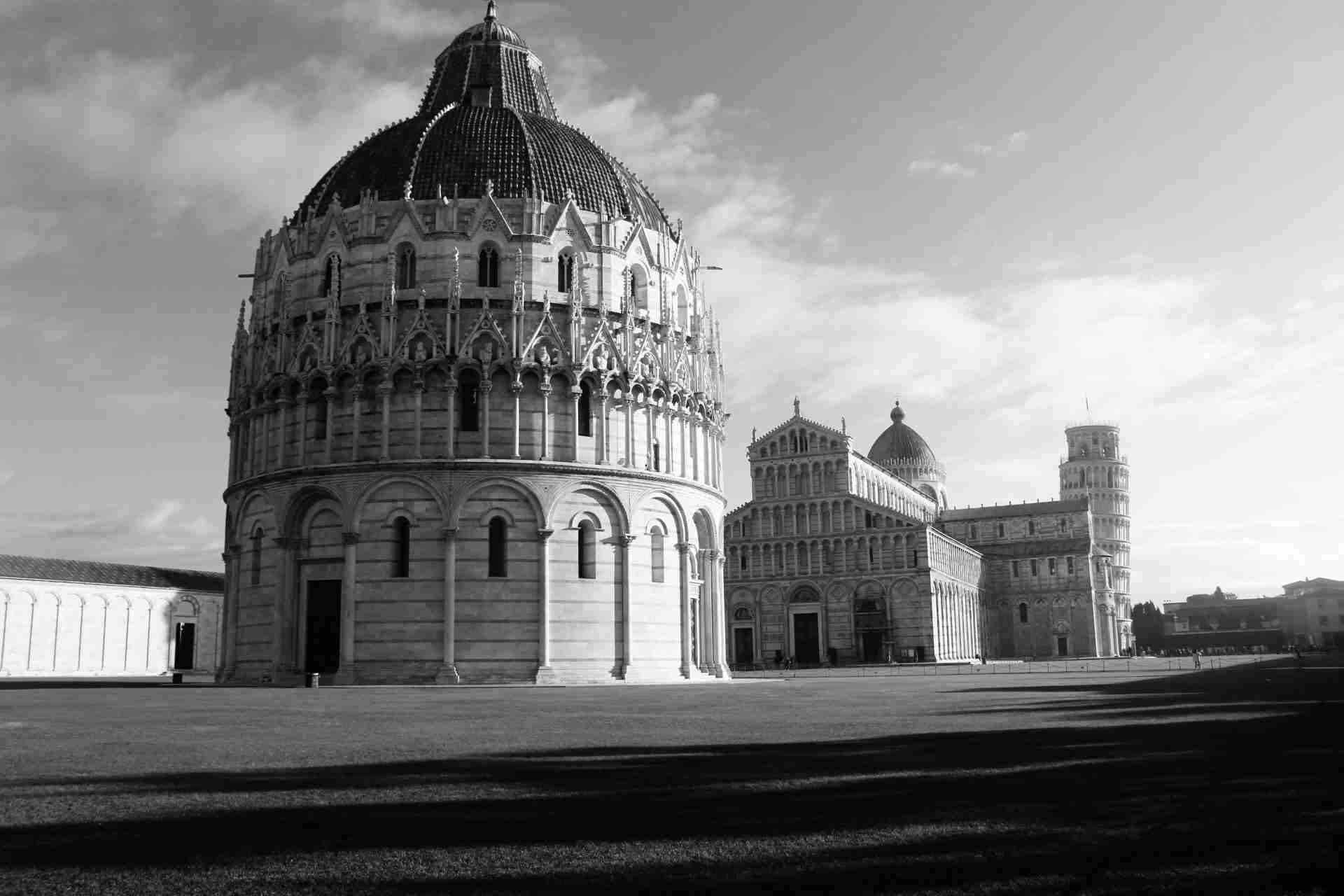
Piazza dei Miracoli is one of those places that feels almost unreal the first time you step into it. A wide green lawn opens up, and rising from it are three monumental white marble structures: the Battistero di San Giovanni, the Cattedrale di Pisa, and the Leaning Tower of Pisa. There's no dense urban clutter around them, just open space and sky, which makes the architecture stand out clearly from almost any angle. The marble changes tone throughout the day, shifting from cool white in the morning to warmer hues later on. Because the buildings sit on a broad lawn rather than being hemmed in by streets, you have room to move and experiment with perspective. For photographers, this is less about finding a hidden angle and more about working carefully with scale, alignment, and light.
Best Photography Opportunities
• Classic Leaning Tower Alignment
The Leaning Tower is the obvious focal point, but the strongest compositions come from careful positioning rather than simply centering it. Walking the perimeter of the lawn allows you to control how dramatically the tilt reads in the frame. Shooting slightly lower emphasizes the lean against open sky, while a higher angle reduces distortion. Including part of the cathedral or baptistery in the background can add context without cluttering the scene. Early light helps separate the tower from the sky and reduces harsh shadows in the arcades. Patience is important here, especially if you want a frame free of crowds or people posing in front.
• Cathedral and Tower Relationship
Positioning yourself to capture both the cathedral and the tower in one frame creates a strong architectural pairing. The horizontal mass of the cathedral contrasts with the vertical lean of the tower. A moderate focal length keeps the proportions natural and avoids exaggerating perspective. Paying attention to spacing between the two structures prevents them from visually merging. Light from the side adds definition to the cathedral's layered arches and column details. This composition tells a fuller story than isolating a single monument.
• Battistero as Foreground Anchor
The Baptistery is often overlooked in favor of the tower, but it offers excellent compositional strength. Its circular form provides a solid foreground element that can balance the vertical tower behind it. Shooting from the outer edge of the piazza allows you to layer baptistery, cathedral, and tower in sequence. The dome's shape contrasts nicely with the sharper lines of the tower. Even, soft light works particularly well here because it preserves detail in the marble carvings. This approach creates depth across the entire field.
• Arcade Details and Marble Texture
Moving closer to the cathedral reveals intricate stonework, carved capitals, and layered arcades. Tighter framing allows you to focus on repetition and pattern rather than overall structure. Side lighting enhances relief and texture in the marble surfaces. A short telephoto lens can isolate sections of façade without distortion. These detail shots add variety to a series dominated by wide landmark views. They also hold up well in flat, overcast light.
• Wide Field Composition
Stepping back toward the outer edge of the piazza at golden hour allows you to include all three monuments within the same expansive frame. The green lawn becomes a clean base layer beneath the white architecture. As the sun lowers, the marble warms and shadows lengthen, adding depth to what can otherwise feel flat at midday. Careful horizon leveling is essential in wide shots, especially with the tower's lean. This broader composition works best when the sky adds subtle color rather than heavy contrast.
Best Time to Visit
Early morning is the most productive time to photograph Piazza dei Miracoli. Light is softer, shadows are manageable, and the lawn is far less crowded. Because the piazza is fully open to the sky, midday sun can create strong contrast and wash out detail in the marble surfaces. Morning sessions provide more balanced exposure across all three buildings.
Late afternoon into early evening also works well, especially when angled light warms the stone. During summer, tourist numbers increase significantly throughout the day, so arriving early is especially important if you want cleaner frames. Overcast conditions can actually be helpful here, as they reduce harsh shadow under arches and preserve fine architectural detail. Planning around peak visiting hours makes as much difference as planning around light.
How to Get There
Piazza dei Miracoli is located in Pisa and is easily reached on foot from the city center. Pisa is accessible by train from Florence and other major cities in Tuscany. From Pisa Centrale station, it's roughly a 20 to 25 minute walk through town to the piazza.
Access to the square itself is free, but entry to climb the Leaning Tower or visit the cathedral and baptistery requires a ticket. Exact pricing changes over time, so it's best to check current information before visiting. Security checks may apply for entry into the buildings. Because the lawn is expansive and flat, moving around with camera gear is straightforward, but expect crowd control measures during busy periods.
Recommended Photography Gear
A standard zoom lens covers most needs here, from wide environmental compositions to moderate architectural framing. A wider lens is useful when including multiple buildings in one frame, but care must be taken to avoid distortion. A short telephoto helps isolate façade details and compress architectural layers.
A tripod can be useful for early morning or late evening work, though restrictions may apply during peak hours. A polarizer can deepen sky tones and reduce glare on bright marble in strong light. Since the location is easily accessible and flat, carrying a slightly broader kit is manageable, but keep mobility in mind if navigating crowds.
Nearby Photography Locations
• Arno River
The river offers calmer architectural reflections and softer urban scenes compared to the monumental scale of the piazza. Bridges and riverside buildings provide layered compositions, especially at sunset.
This historic street features arcades, shopfronts, and tighter urban framing. It provides a contrast to the open field of Piazza dei Miracoli with more intimate city scenes.
A small Gothic church along the Arno, known for its detailed exterior carvings. It offers intricate architectural photography in a compact riverside setting.
Located within the same complex but often less crowded than the tower, this cemetery cloister provides repeating arches and interior courtyard compositions.
The riverfront streets along the Arno offer classic Tuscan building facades and evening reflections. They expand your Pisa photography beyond the iconic monuments.
Comments
Loading comments…