
Fountains, Facades, and Flowing Crowds: Photographing Piazza Navona
Piazza Navona is one of Rome's most visually layered public spaces, a living stage of baroque design, flowing fountains, and shifting light. Built over the footprint of the ancient Stadium of Domitian, its elongated oval shape gives photographers long lines of sight and ever-changing human interaction. At its heart are three grand fountains, the most famous being Bernini's Fountain of the Four Rivers, surrounded by richly textured buildings, domed churches, and cobblestone geometry. From early morning calm to evening bustle, Piazza Navona offers photographers a dynamic blend of structure, water, motion, and atmosphere. It is a place where architectural precision and everyday rhythm meet in constantly changing light.
Best Photography Opportunities
• Fountain of the Four Rivers (Fontana dei Quattro Fiumi)
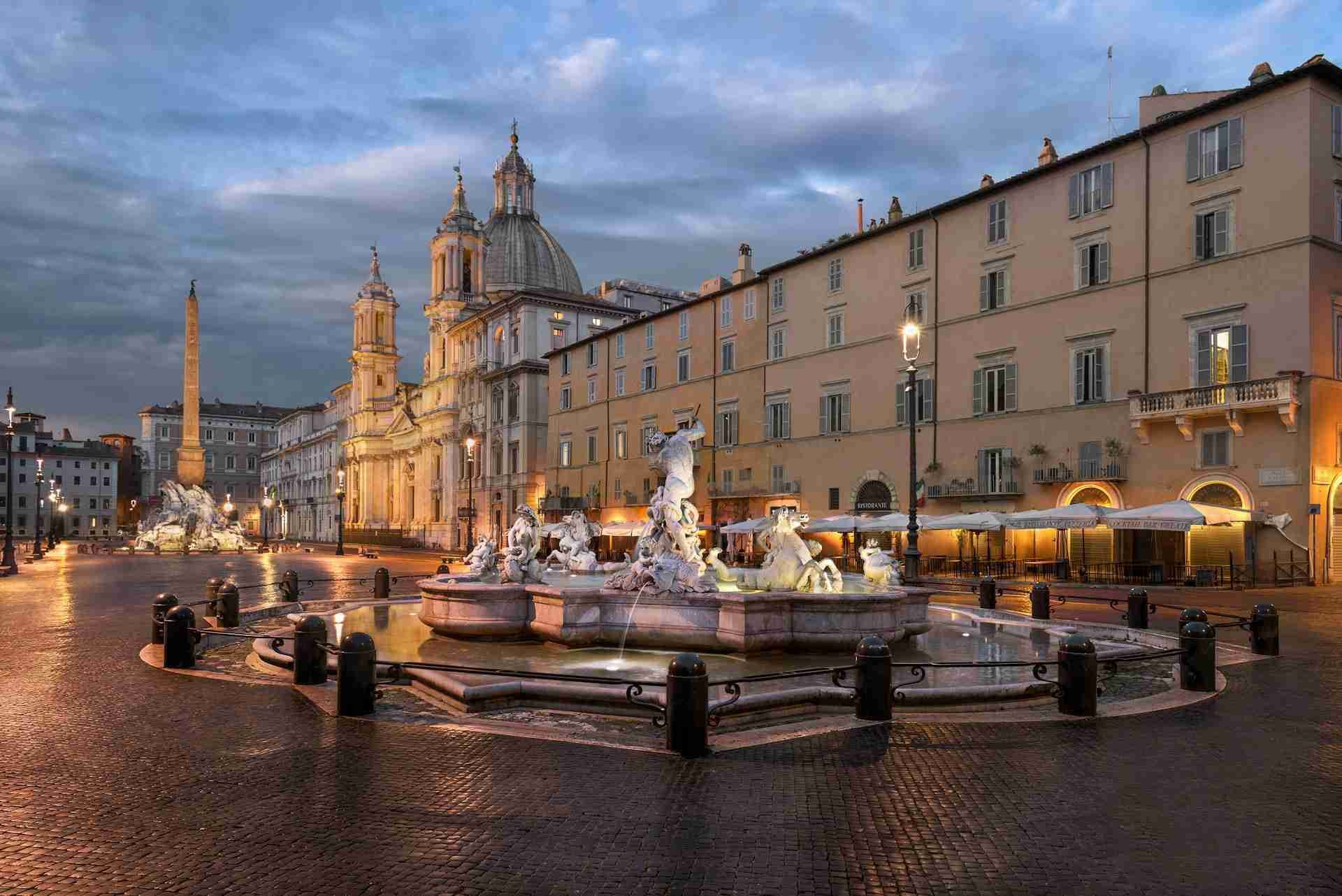
Bernini's masterpiece is a magnetic focal point, with dramatic figures carved around a central obelisk rising from a rock formation. Shooting in the early morning gives you clean views without heavy crowds, while evening offers dramatic shadow play and the potential for long exposures with blurred movement in the square. Use a wide-angle lens to include the full scale of the sculpture, or a mid-telephoto to isolate gestures and water flow. The direction of light changes how the faces and limbs of the statues appear, making multiple visits worthwhile. Night shots can be compelling when the fountain is lit and reflected in surrounding wet stones.
• Sant'Agnese in Agone Church Facade
Directly across from the main fountain, this baroque church anchors the square with its domed structure and twin bell towers. The best time to photograph it is mid to late afternoon, when warm light strikes the facade directly. Framing it with elements of the fountain or including passing figures helps emphasize scale and context. Details of the sculpture and architecture also benefit from a zoom lens that flattens perspective and highlights symmetry. Interior access is free and offers dramatic light slants and a richly decorated dome for wide-angle architectural shots.
• Side Arcades and Evening Market Stalls
Along the long edges of the piazza, covered arcades and shopfronts provide shadow and repetition. These spaces are excellent for photographing rhythm, human interaction, and texture. During the evening hours, artists, vendors, and street musicians line the edges, creating layers of activity. Use a fast prime lens to isolate motion or work handheld under low light. The arcades can also frame the central fountains in more abstract or intimate compositions.
• Reflections After Rain
When rain falls and the crowds thin, Piazza Navona becomes a mirror. Reflections of domes, lights, and sculptures ripple across the cobblestones and puddles, allowing for graphic compositions and layered depth. Shooting just after rain, especially during blue hour, brings out color saturation and highlights the contrast between the wet stone and glowing lights. A tripod and long exposure will allow you to blur people while retaining sharp architectural lines. Look for angles where multiple elements reflect together to create symmetry.
• Elevated Perspectives from Surrounding Buildings
Though few are public, some rooftop terraces or hotel windows offer rare views of the piazza's full shape. If access is possible, use a wide lens to emphasize the stadium-like curve of the space and include vertical depth with the fountains and facades. Early morning or dusk is best for managing contrast and soft light. These views are ideal for storytelling compositions that include people, space, and form in a single frame. Researching possible access through hotels or cultural venues may yield worthwhile vantage points.
Best Time to Visit
Early morning is the most peaceful time to photograph Piazza Navona, especially in the shoulder seasons of spring and autumn. Light is soft, crowds are minimal, and the fountains catch early reflections with less interference. This time of day is best for architectural detail, wide compositions, and uninterrupted symmetry.
Late afternoon to golden hour is excellent for warm light on the facades and the mood of daily life as the piazza fills. Street performers, artists, and vendors bring energy, and the shifting light adds layers to both the buildings and human interactions. After sunset, blue hour and night lighting add a completely different mood, with the fountains lit and the square alive with movement.
Winter offers clearer skies and quieter days, while summer brings longer light and heavier foot traffic. Rain is not a deterrent, as post-storm reflections and wet stones create rich photographic opportunities. Overcast days also work well for shooting the sculptural details and stonework without harsh contrast.
How to Get There
Piazza Navona is located in the historic center of Rome and is pedestrian-only. The closest bus stops are along Corso Vittorio Emanuele II, just a few minutes' walk away. From there, follow signs or walk through side streets to reach the square. It is easily accessible from the Pantheon, Campo de' Fiori, or Castel Sant'Angelo on foot.
There is no entrance fee, and photography is unrestricted in the public square. Tripods are allowed but can be difficult to use during busy hours. If you plan to shoot early or late in the day, you will have more freedom to set up gear and explore different angles without obstruction.
Recommended Photography Gear
A wide-angle lens (16–35mm) is essential for capturing full views of the fountains and the church facade. A mid-range zoom (24–70mm) works well for detail, portraits, and compressing layers of activity in the square. A fast prime lens is useful for low light street scenes or isolating faces and movement in crowded settings.
A tripod is helpful for blue hour and night photography, particularly for long exposures and reflections. A polarizer can reduce glare on wet stones or water surfaces, and a lens cloth is essential if shooting in rainy or humid conditions. A lightweight camera bag will allow you to move freely through the square and transition between locations quickly.
If possible, bring a small step stool or find slightly raised pavement to gain a subtle elevation. This helps reduce distortion and offers clearer lines of sight across the crowd. Comfortable shoes are essential, as you will likely move around frequently to find the best angles and changing light.
Nearby Photography Locations
• Pantheon
Just a short walk away, the Pantheon offers strong lines, monumental columns, and dramatic interior light from the oculus. Morning or late afternoon is best for exterior shots with warm tones and softer shadows.
This market square is filled with street life and changing color throughout the day. Early morning captures vendor setups, while late afternoon gives strong backlight through the canopies.
A ten-minute walk from Piazza Navona, this bridge features angels, stone balustrades, and views toward Castel Sant'Angelo. Best shot at sunset with river reflections and soft silhouettes.
This nearby street offers charming storefronts, archways, and a more intimate feel than the wide piazza. Ideal for handheld, low-profile shooting and street portraiture.
Home to Caravaggio masterpieces, this richly lit interior provides dramatic contrast and layered composition opportunities. Photography is allowed without flash, and a fast prime is recommended.
Piazza Navona gives photographers something different every time. From quiet mornings to lively evenings, the square changes with the light and the rhythm of the crowd. Its architecture stays steady, but what happens around it keeps things interesting and fresh.
Comments
Loading comments…