
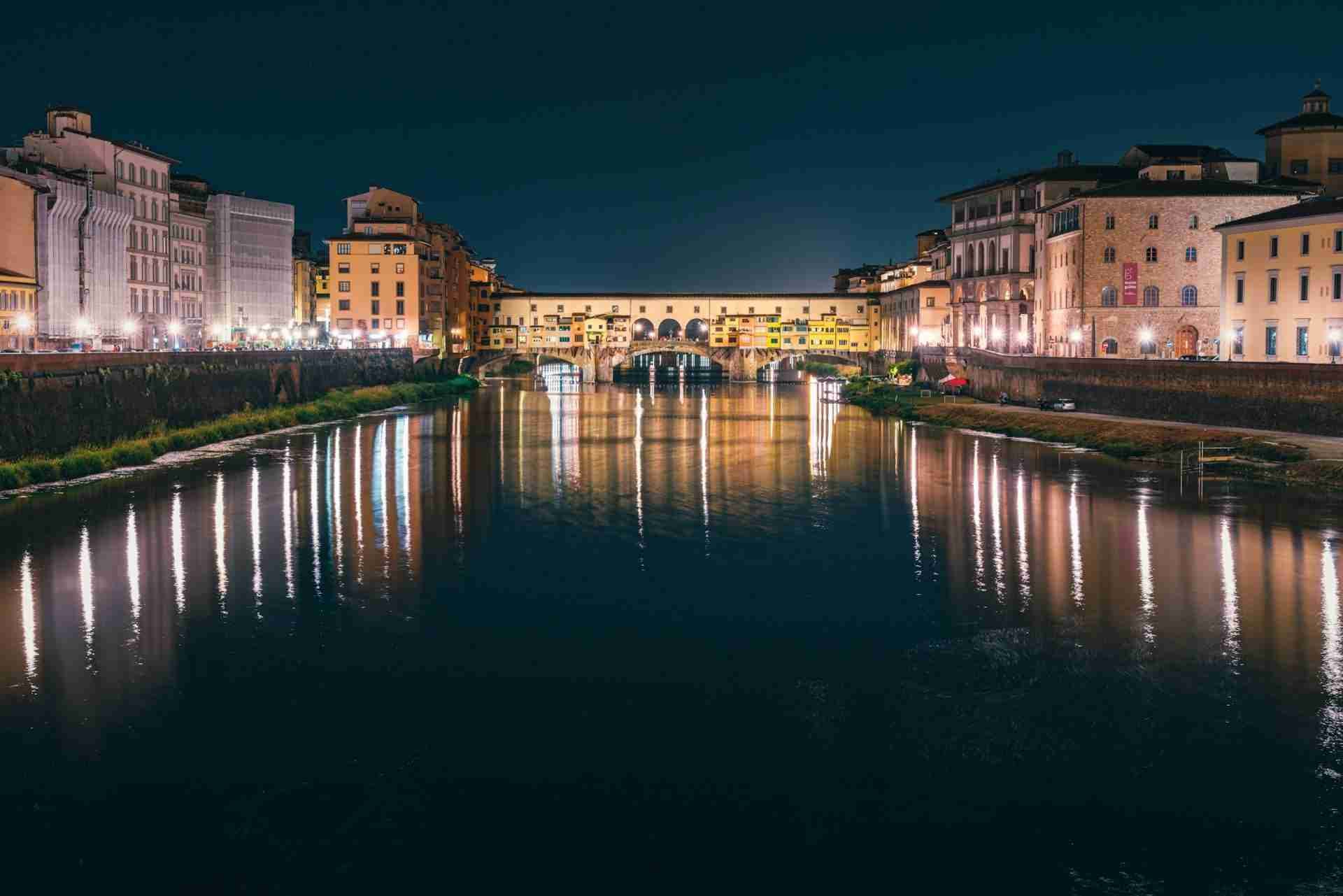
Ponte alle Grazie is one of the most dependable viewpoints in Florence for photographing Ponte Vecchio without battling crowds. While most visitors cluster directly on the famous bridge, this crossing gives you breathing room and a clean line of sight along the river. From here, the Arno flows directly toward Ponte Vecchio, creating perfect leading lines that pulls the eye straight into the frame. Buildings stack tightly along both sides of the water, with warm colors and worn textures that photograph well in soft light. On calm mornings, the river acts like a mirror and doubles the entire city into your scene. The bridge itself is simple and practical, which makes it ideal as a working platform rather than a subject. For photographers who prefer control over their space and light, this is one of the most useful spots in Florence.
Best Photography Opportunities
Sunset Over Ponte Vecchio
The classic view from Ponte alle Grazie looking west toward Ponte Vecchio becomes a dynamic scene during sunset. As the sun lowers behind the city, the buildings lining the river are bathed in warm tones that shift by the minute. The light hits the sides of the shops on the bridge, catching their earth-toned surfaces and casting long reflections on the water below. Shooting with a medium or telephoto lens helps compress the distance and isolate the bridge against the glowing river. This is a moment when photographers can experiment with exposure bracketing or filters to control highlights and preserve detail in the shadowed portions of the frame.
Early Morning Mist and Still Water
Mornings here, especially in late autumn and winter, can offer a more subtle scene when fog rests on the water and the city is just beginning to wake. The river smooths out into a mirror, turning Ponte Vecchio into a near perfect reflection surrounded by pastel skies. Shooting just after sunrise with a tripod and low ISO allows for sharp, detailed images with soft gradations in tone. The quiet adds to the experience, and long exposures with an ND filter can give the water a glassy look while ghosting out any passing boats or pedestrians. This time of day is best for minimalist compositions and thoughtful framing.
Blue Hour River Scenes
Once the sun is gone and city lights begin to glow, the Arno takes on a new character. From Ponte alle Grazie, you can photograph the bridges illuminated in a row, each one leading the eye toward the darkened hills in the distance. The water catches reflections from street lamps and windows, creating strong lines and color trails that work well in long exposures. A fast prime lens helps you shoot handheld in lower light if you do not want to set up a tripod, though a sturdy tripod is best for capturing the smooth water and light trails. Blue hour here is never rushed, it lingers, giving you time to fine-tune your frame and exposure.
Reflections and Leading Lines
One of the more subtle but rewarding compositions from this bridge is the use of river reflections and the straight edges of the buildings as leading lines. Shooting during midday or slightly before sunset allows light to hit the buildings directly, helping to create strong vertical and horizontal lines along the water's edge. A polarizing filter can help deepen the sky and reduce glare from the water, making the reflections cleaner and more defined. This is a great place to work with a wide lens to include both the water and the skyline without distortion. Even though the bridge itself is not ornate, its position makes it a strong compositional tool.
Changing Light Through the Day
What makes Ponte alle Grazie a standout location is how it offers usable light throughout the day depending on where you point your lens. In the late afternoon, the western facing view of Ponte Vecchio catches direct light. By morning, the eastern side toward the hills gets soft sidelight that works well for tighter compositions of rooftops and the landscape beyond. Photographers can return to this same bridge multiple times in a day and come away with completely different images depending on how the light behaves. It is an excellent practice spot for reading light and experimenting with angles.
Best Time to Visit
Ponte alle Grazie works well year round, but different seasons offer different advantages. Spring and autumn are ideal for golden hour shooting, as the sun sets directly behind Ponte Vecchio and the weather tends to be clear but not overly bright. These months also have the benefit of fewer tourists crowding the bridges and riverbanks. Summer brings more consistent sun, but the light can be harsh mid day and the area is more active, especially in the evenings. Winter offers the chance for morning mist and moody skies, perfect for more subdued, reflective compositions. The best time of day to shoot here is the hour before sunset through to blue hour, though sunrise can be rewarding if you are aiming for quieter scenes and pastel tones.
How to Get There
Ponte alle Grazie is located on the eastern edge of Florence's historic center and is easily reached on foot from most parts of the city. From Piazza della Signoria, walk southeast along Via de' Benci, which leads directly to the bridge in about ten minutes. If you are staying across the river in the Oltrarno district, it is also just a short walk along the river's edge. Photographers should know that there is no fee to access the bridge itself, and it remains open at all hours. Parking in this area is difficult and generally restricted to residents, so it is best to avoid driving unless you are arriving very early in the morning. Several city buses stop nearby, but for photographers carrying gear, walking allows for the most flexibility and exploration.
Recommended Photography Gear
Given the variety of lighting conditions and perspectives available from Ponte alle Grazie, it helps to come prepared with a mix of lenses. A standard zoom such as a 24-70mm covers most scenes effectively, while a longer telephoto like a 70-200mm allows you to isolate the Ponte Vecchio or capture distant detail in the hills beyond the city. A wide lens can be helpful if you want to include more of the sky and river, but be mindful of distortion when shooting architecture. A tripod is highly recommended for early morning and evening shots, especially if you are planning to do long exposures. A polarizing filter is useful during mid-day to cut down reflections and deepen the water's surface, and a neutral density filter can help smooth the river's movement when light levels are still high.
Nearby Photography Locations
This bridge sits just downstream from Ponte Vecchio and provides a more compressed view of it, with symmetrical lines and less foot traffic to contend with. The marble details of the bridge itself also make for interesting subject matter, especially during blue hour when the lights of the city cast reflections along the arches and into the water.
A short walk uphill from the river's south side brings you to this wide overlook that stretches across all of Florence. From this elevation, photographers can capture the entire city, with the Duomo, Palazzo Vecchio, and the bridges all aligned in the frame. Sunrise is especially striking from here, as the city gradually fills with warm light from the east.
Just beyond Piazzale Michelangelo, this lesser-known garden provides terraced views and a more intimate setting for photographing Florence from above. The garden's pathways and archways can be used creatively to frame the skyline, and the location sees far fewer visitors, making it ideal for slow, deliberate shooting.
Lungarno degli Archibusieri
Running along the northern edge of the river just below the Uffizi, this walkway offers a closer perspective of Ponte Vecchio and the reflections beneath it. It is particularly useful for those looking to experiment with different focal lengths or practice symmetry in architectural photography.
This Romanesque church sits on a hill even higher than Piazzale Michelangelo, giving photographers a quieter, more peaceful place to photograph Florence from above. The church itself is a worthy subject, and the surrounding cemetery adds character and historical detail to any wide shot of the skyline.
As the light shifts and the river moves, Ponte alle Grazie remains one of the few places in Florence where a photographer can pause, observe, and truly respond to the scene. It invites patience and rewards return visits, with no two days offering quite the same experience. Whether you're after the drama of sunset, the softness of morning mist, or the quiet rhythm of the Arno at night, this bridge continues to be a place where strong images come naturally.
Comments
Loading comments…