
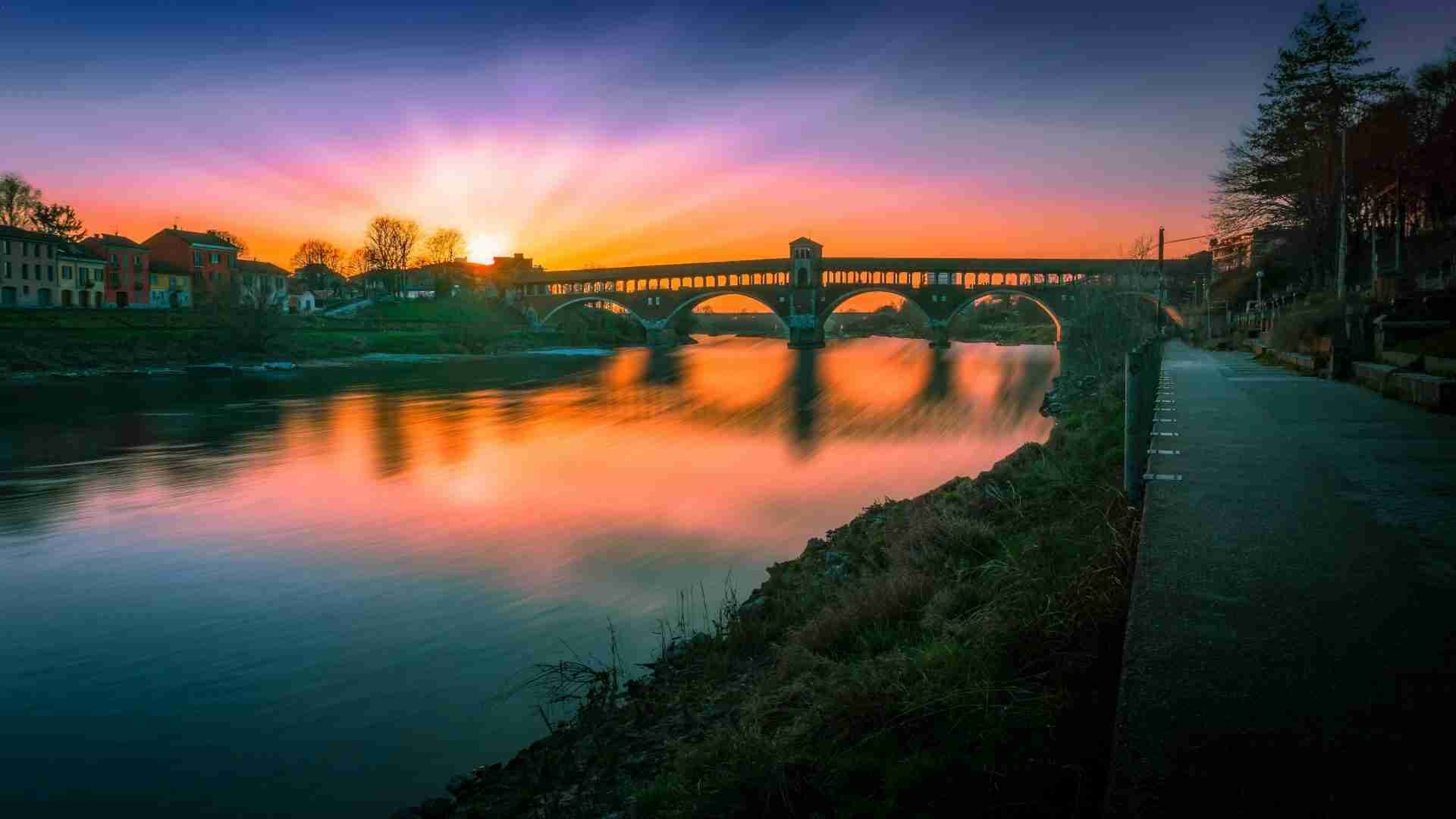
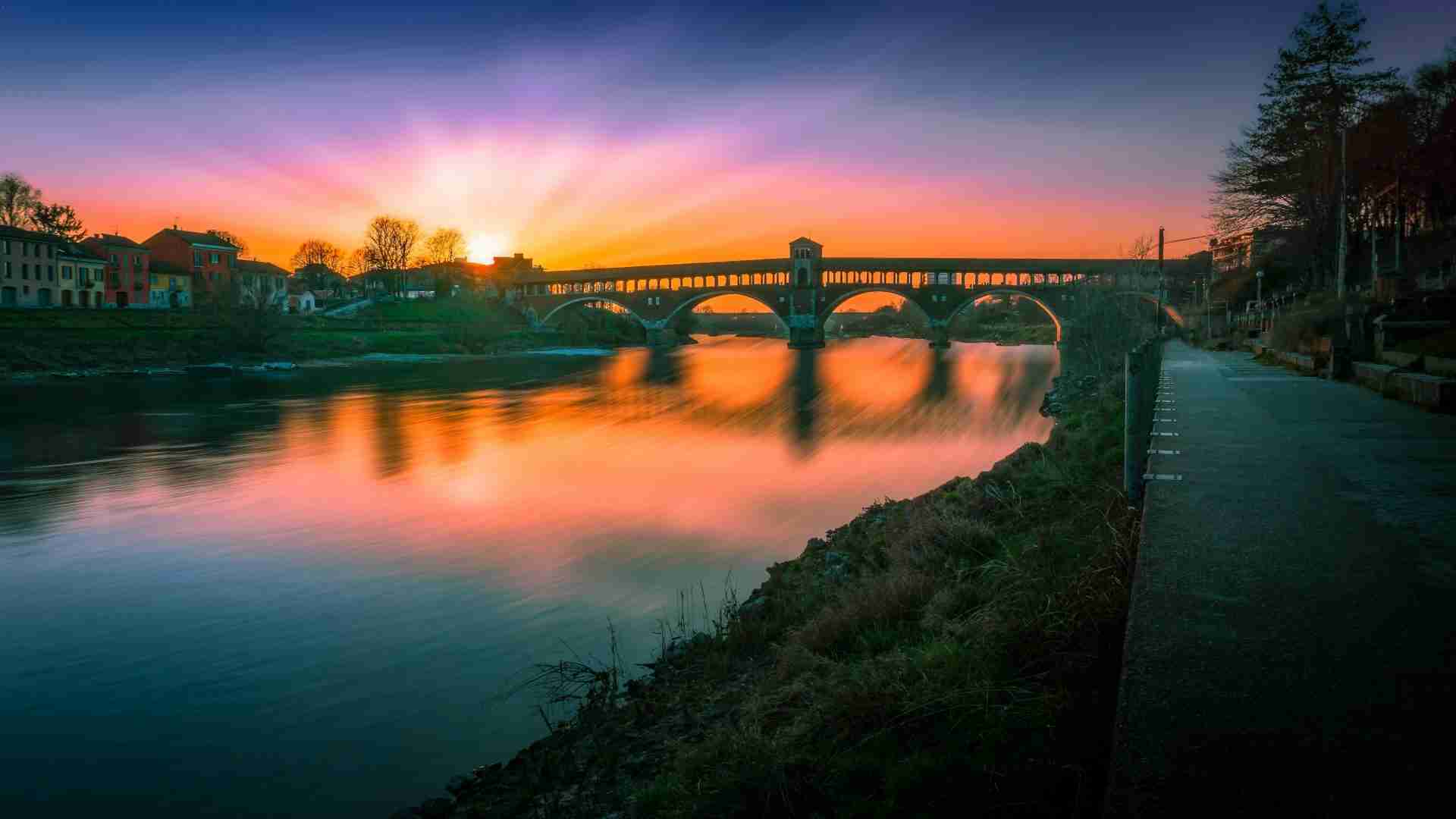
Ponte Coperto (also known as Ponte Vecchio) spanning the Ticino River is a unique brick covered bridge linking the historic center of Pavia with the Borgo Ticino district. The series of arches underneath and the enclosed walkway topped with a tiled roof create strong repeating patterns that are easy to work into clean compositions. The small chapel at the center breaks up the long span and gives you a natural focal point without complicating the frame. You can shoot it from the riverbanks for wide views that show the full structure, or step inside the passage to focus on symmetry and depth. It's the kind of structure that gives you options, whether you're working with wide views from the riverbanks or exploring depth and symmetry inside the covered passage.
Best Photography Opportunities
• Wide Views From the Riverbanks
From either side of the river, the full length of the bridge can be photographed in one frame. The series of arches creates a steady visual rhythm, while the roof line forms a clean horizontal anchor across the water. Slight changes in position upstream or downstream affect how the arches overlap and how reflections appear. When the river is calm, the arches mirror softly on the surface, reinforcing the repetition. These compositions work best when the horizon is kept level and distractions along the shoreline are minimized.
• Centering the Chapel as a Focal Point
The small chapel located at the midpoint of the bridge provides a natural visual anchor. By aligning it carefully within the frame, you can balance the arches on either side and create a structured composition. A longer focal length helps compress the repeating arches and make the chapel feel more integrated into the span. Subtle shifts in angle prevent the chapel from blending into the roof behind it. This approach is particularly effective when light adds gentle texture to the brick without creating harsh shadow.
• Symmetry Inside the Covered Walkway
Inside the bridge, the repeating columns and roof supports create strong linear perspective. Standing along the centerline of the passage allows you to build clean symmetrical compositions that draw the eye toward the vanishing point. Even light makes it easier to manage contrast between brick walls and the walkway floor. Foot traffic can affect symmetry, so timing matters. This viewpoint highlights the bridge as an interior architectural space rather than just a structure over water.
• Low Angles Beneath the Arches
From select spots along the riverbanks, the underside of the arches becomes the focus. This angle emphasizes the curve of the masonry and the structure's engineering rather than the roof above. When water levels are steady, reflections can double the shapes and strengthen the pattern. Careful framing helps avoid modern elements that may interrupt the historic feel. This approach works especially well in softer light that preserves detail in both brick and water.
• Reflections at Blue Hour
As daylight fades, the brick begins to glow subtly against cooler tones in the sky and river. During blue hour, the bridge takes on a balanced mix of warm and cool color that can feel calm and deliberate. A tripod helps maintain precision as shutter speeds lengthen. Reflections become more pronounced as surface movement slows. These sessions reward patience and careful exposure control.
Best Time to Visit
Early morning and late afternoon are the most reliable times to photograph Ponte Coperto. Morning often provides softer light and fewer pedestrians, which makes both riverbank and interior compositions easier to manage. Late afternoon and sunset introduce warmer tones that enhance the brick and create appealing reflections on the Ticino. Midday light can be harsh and flatten texture, especially on clear days. Overcast conditions are excellent for interior symmetry shots because they reduce contrast and create even illumination. Seasonal changes affect crowd levels and river conditions more than the structure itself, with spring and autumn often offering the most comfortable working environment.
How to Get There
Ponte Coperto is located in central Pavia and is easily reached on foot from most areas of the historic center. Pavia is well connected by train to Milan and other cities in Lombardy, followed by a short walk to the river. There is no fee to walk across or photograph the bridge from public areas. Riverbank paths on both sides provide multiple viewpoints without restricted access. Parking is available in designated city areas, though walking is often the most convenient way to move between shooting positions. Arriving early helps secure quieter conditions inside the covered passage.
Recommended Photography Gear
A standard zoom lens is ideal for most situations here, allowing quick adjustments between wide river views and tighter architectural framing. A short telephoto lens works well for compressing arches and isolating the chapel within the span. A tripod is strongly recommended for blue hour and interior symmetry compositions where precision matters. A polarizer can help reduce glare on the water and deepen sky tones when conditions allow. Keeping the camera level is important to preserve straight lines, especially inside the walkway. Because the bridge is centrally located and easy to access, a compact kit makes it simple to move between viewpoints without hassle.
Nearby Photography Locations
The cathedral's large dome and detailed façade offer a different architectural subject within walking distance. It pairs well with the bridge for a balanced city shoot.
This historic castle features brick walls and open courtyards that echo the material of Ponte Coperto. It provides additional opportunities for pattern and structure.
The university's arcaded courtyards offer repeating columns and controlled light, making them ideal for symmetry focused compositions.
Across the bridge, this neighborhood provides views back toward Ponte Coperto from a different angle. It is useful for contextual images showing the bridge within the cityscape.
• Parco del Ticino
The natural park along the river offers quieter landscapes and open water scenes. It provides a calm contrast to the architectural focus of the bridge.
Comments
Loading comments…