
Tucked deep within Venice's Castello district, the Ponte dei Conzafelzi spans a narrow canal where silence lingers longer and daily life unfolds without performance. Built in the 19th century, this cast iron bridge offers a perspective that blends architectural refinement with the fluid textures of Venetian waterways. The surrounding setting—composed of intimate canals, pale stucco facades, and moored boats rocking gently beneath shuttered windows—feels suspended in time. For photographers drawn to Venice's quieter, moodier corners, this location rewards patience and an eye for subtle rhythm. Ponte dei Conzafelzi is not a postcard scene, but a frame in which the spirit of the city gently exhales.
Best Photography Opportunities
• Palazzo Tetta Surrounded by Water
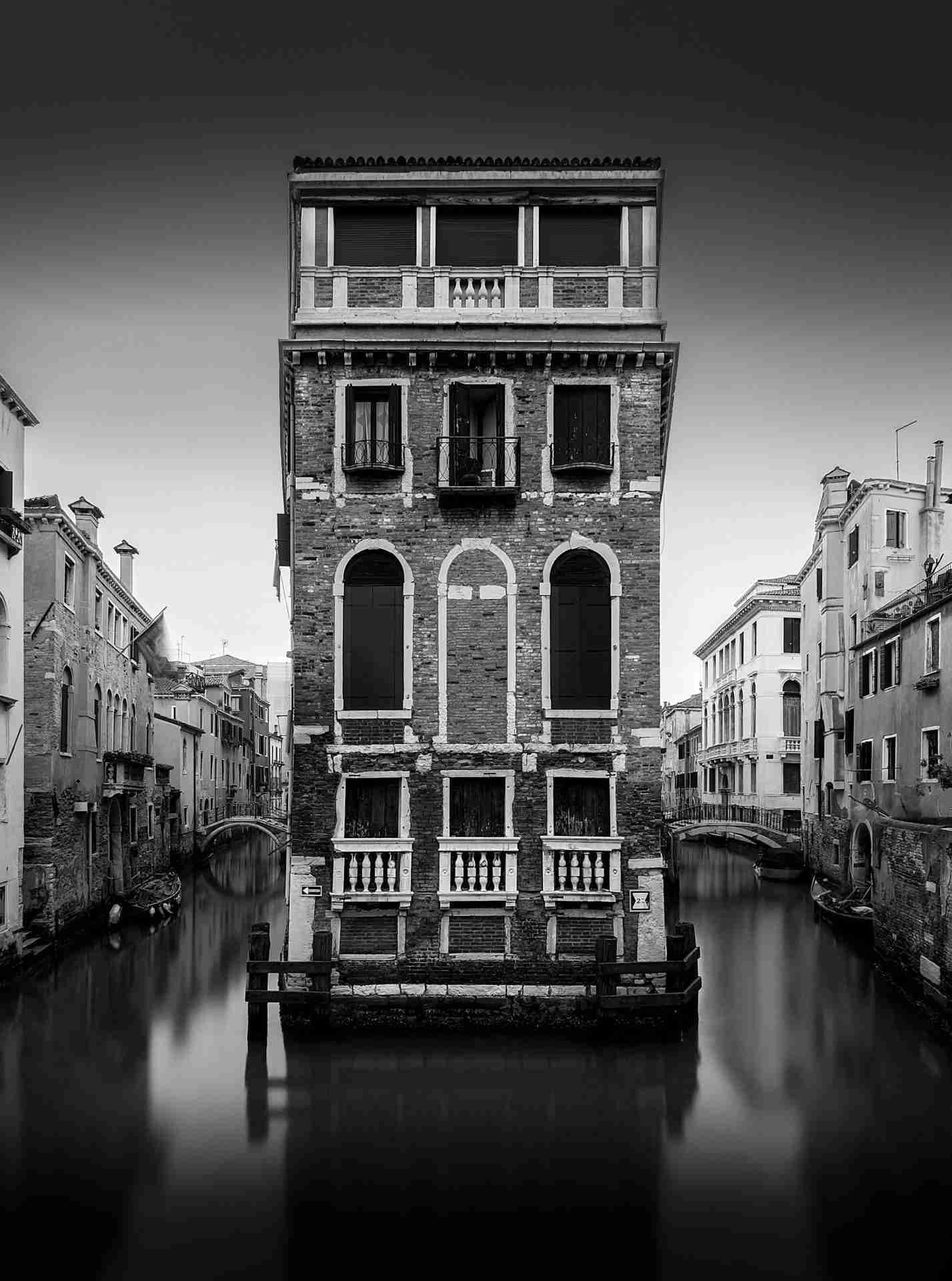
: From the center of the bridge, looking north, you'll see Palazzo Tetta—one of the few buildings in Venice fully encircled by canals. Framed from Ponte dei Conzafelzi, the building's worn façade rises directly out of the water, forming a layered composition of vertical walls, wooden docks, and colorful shutters. Morning light gently brushes the brickwork and brings warm contrast to the cool blue shadows on the canal. Use a standard or short telephoto lens to compress the scene, and time your shot to include soft reflections or a passing boat for added dynamism.
• Architectural Ironwork and Texture
: The bridge itself is made of wrought iron with intricate detailing—curved lines, floral motifs, and riveted joints that speak to 19th-century craft. These structural elements make excellent studies in light and shadow, particularly when captured with a fast lens at wide aperture. Shooting close-up with selective focus turns these designs into abstract compositions, while a high-contrast black and white treatment highlights the interplay between iron, water, and stone.
• Canal Portraits and Still-Life Scenes
: Looking east or west from the bridge reveals a classic Venetian composition—slim canal walls, green-tinged water, and boats moored beneath arched windows. This is a prime location for capturing everyday scenes of laundry lines, flower boxes, and gondoliers passing quietly below. Frame with intention: vertical compositions often work best in these narrow spaces. A polarizer can help reduce glare from the water, allowing the stone textures to emerge beneath the surface.
• Blue Hour Stillness
: In the hour following sunset, the Castello canals slip into deep blue stillness, lit softly by warm yellow lamps reflecting off the water. The symmetry of bridge and canal becomes more pronounced, and the slow shutter opportunities are excellent. Bring a tripod and shoot with a small aperture to capture long exposure reflections. Empty canals and glowing windows create a moody, cinematic atmosphere that suits minimalist framing or quiet storytelling.
• Street Life and Local Movement
: Though quieter than San Marco or Rialto, this neighborhood remains lived-in. Elderly residents may cross the bridge mid-morning; delivery boats and small carts often appear without warning. Capturing motion here requires anticipation and discretion. A 35mm prime is perfect for candid shots that include the architectural context. Frame your subject on the bridge itself or entering from a side alley for strong leading lines and narrative potential.
Best Time to Visit
The Ponte dei Conzafelzi is best photographed in the early morning, when the canal water is undisturbed and the light falls softly from the east. Between sunrise and 9 a.m., the reflections are at their most pristine, and foot traffic is minimal. This is also the ideal time to work with longer exposures or quiet compositions that benefit from an undisturbed scene.
In late afternoon, the bridge catches golden sidelight, especially in spring and autumn when the sun sits lower in the sky. Shadows lengthen across the facades and deepen the canal's green hues, perfect for moody detail work and high-contrast frames. Blue hour is particularly strong here: with low lamp lighting and lingering natural twilight, the area takes on a reflective, almost suspended quality.
Winter offers a chance to photograph the bridge with mist in the canal or subtle fog along the alleys. These conditions bring out the patina in the stone and ironwork and mute the palette for contemplative, tonal work. In summer, avoid midday hours when harsh sunlight flattens the narrow canal and the reflections become overblown—early and late remain the best windows for all seasons.
How to Get There
Ponte dei Conzafelzi is located in the Castello sestiere of Venice, a 10-minute walk east of Piazza San Marco. From the square, head northeast via Salizada San Lio, then onto Salizada dei Greci, and follow signs toward Campo San Giovanni in Bragora. The bridge spans the Rio de San Giovanni Laterano, just beyond the intersection of Calle del Piovan and Fondamenta del Piovan.
There are no access restrictions or fees—like most of Venice, the bridge is publicly accessible at all hours. Because it's set within a mostly residential area, foot traffic is light compared to central tourist routes. The nearest vaporetto stop is San Zaccaria (serviced by lines 1 and 2), a 7-minute walk from the bridge through quiet canals and local neighborhoods.
The bridge is pedestrian-only and wide enough to accommodate tripods without obstructing movement. While there are no benches or railings for gear setup, nearby alleys and fondamenta offer sheltered corners to pause, adjust, or wait for changing light.
Recommended Gear and Shooting Tips
Photographing Ponte dei Conzafelzi requires a versatile yet minimalist setup. A mid-range zoom (24–70mm) will cover most compositions, from canal-wide frames to architectural details. A fast 35mm or 50mm prime is excellent for low-light scenes and capturing life on the bridge with shallow depth of field. For telephoto work, a 70–200mm lens helps isolate distant windows, rooflines, and canal textures, but weight may be a factor when navigating narrow alleys.
A lightweight tripod is essential for blue hour or long exposures, especially when shooting toward the canal with reflected light. ND filters are useful for smoothing ripples on the water or softening cloud movement in long exposures. A circular polarizer can help reduce glare and deepen sky tones, but use cautiously to avoid uneven polarization across narrow canal compositions.
Because this location is about quiet balance and clean framing, consider slowing your approach. Scout multiple angles before choosing your setup. Work with the geometry of the bridge railings, waterline, and architectural edges to lead the eye naturally through the frame. Pay attention to color temperature in post-processing—early and late light here can shift dramatically, and slight warming can help retain the subtle charm of the scene.
Nearby Photography Locations
• Ponte del Cristo
: Just a few minutes east, this small stone bridge offers a layered view of moored boats and distant bell towers. The narrow canal below creates strong compositional lines and excellent symmetry when framed with care. In late afternoon, the buildings catch warm light that reflects richly into the water.
• Campo Santa Maria Formosa
: A short walk northwest, this vibrant square offers broad open space, historic facades, and excellent golden hour light on the church and surrounding buildings. Photographers can capture architectural studies, candid street life, or high-contrast shadows during early morning and late afternoon.
: South of the Ponte dei Conzafelzi lies Venice's historic shipyard, with grand gates, lion statues, and unique bridges leading into the Arsenale complex. This area offers strong lines, nautical textures, and reflections from the wide canals flanking the complex—perfect for graphic compositions and maritime storytelling.
• Fondamenta dei Felzi
: This quiet canal path just north of the bridge runs along narrow water lanes lined with aged stucco buildings and flower boxes. It's ideal for capturing Venice in its slower moments, with intimate reflections and still-life compositions of shutters, ropes, and iron grates.
• Ponte Storto
: West of the Castello district, this subtly slanted bridge offers a unique asymmetrical perspective on the canal beneath. The lean of the bridge and the surrounding warped architecture makes for striking compositions that contrast with the symmetry of Conzafelzi.
Ponte dei Conzafelzi is a study in restraint—a quiet corner where form, texture, and rhythm create photographs not of spectacle but of presence. In a city often defined by grand gestures, this bridge whispers instead. For the patient eye, that whisper is more than enough.
Comments
Loading comments…