

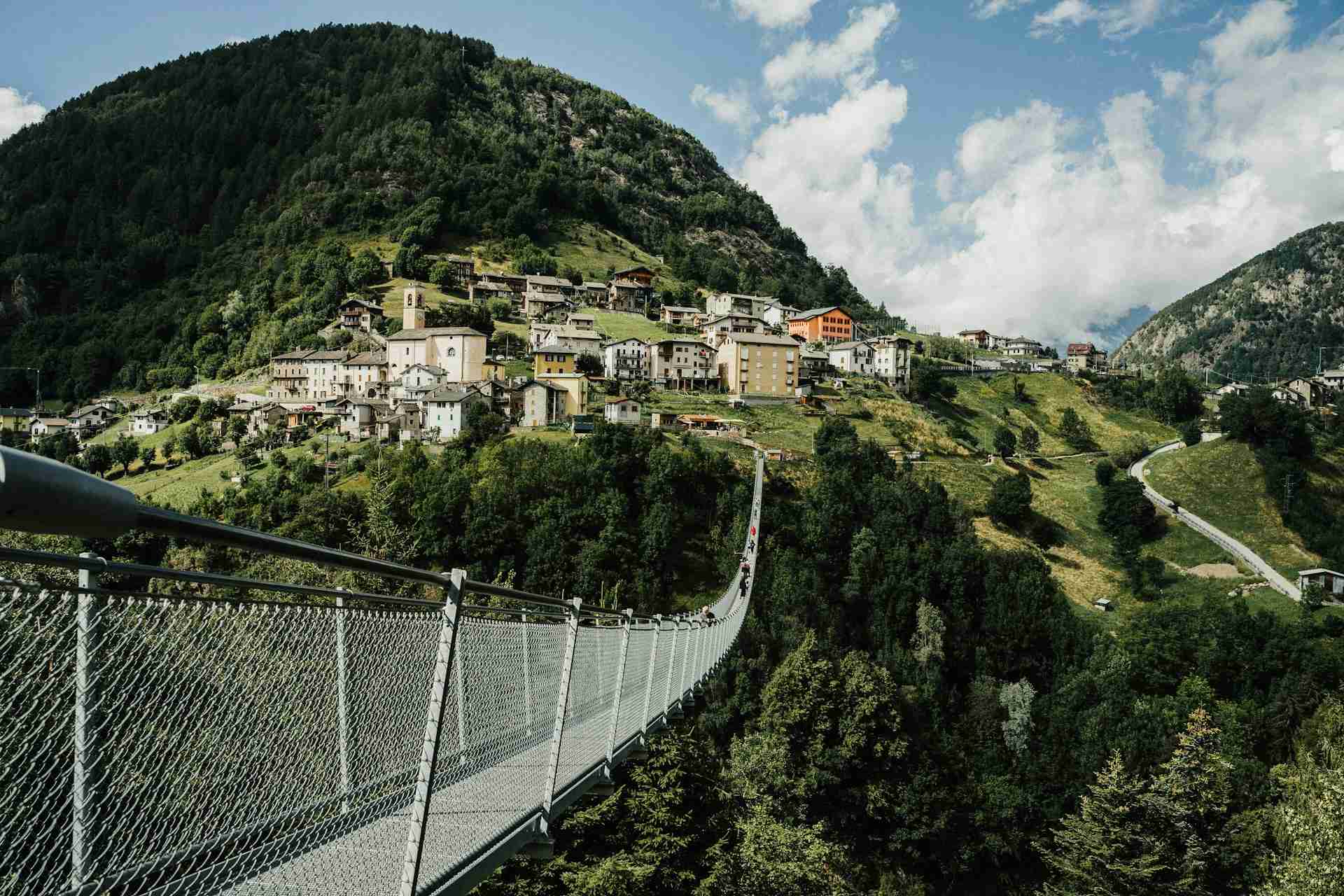
Ponte nel Cielo is one of those locations that immediately feels different from a typical landscape shoot. Suspended high above the Valle di Tartano, this pedestrian bridge stretches across the valley and gives you a completely open view in every direction. It is not just about the bridge itself, but how it places you right in the middle of the landscape rather than looking at it from a distance. The height, the lines of the structure, and the surrounding mountains all come together in a way that makes composition feel very natural. You can focus on the bridge as a subject, use it to lead through the scene, or turn outward and work purely with the valley. It is a place where you will likely try multiple approaches without needing to move far.
Best Photography Opportunities
• Bridge Leading Lines
Standing on the bridge, the cables and wooden walkway create strong lines that pull the viewer straight through the frame. You can position yourself so the bridge runs from the foreground into the distance, with the valley opening up on either side. This works especially well when you keep your composition centered, letting the symmetry guide the shot. Including a person walking across adds scale and helps emphasize the height. Small changes in your position can shift how the lines converge, so it is worth taking a few steps forward or back to refine the balance. It is one of the most direct and effective compositions at this location.
• Views of the Bridge from Valley Slopes
From the trails and viewpoints on either side of the valley, you can capture the full span of the bridge stretching across the landscape. This angle shows how it sits within the terrain and gives a stronger sense of scale compared to being on it. You can frame the bridge with trees or foreground elements to add depth and context. The surrounding mountains and slopes help anchor the composition without overpowering the structure. It is worth exploring both sides of the valley to see how the perspective changes. This approach gives you a more complete view of the location.
• Looking Straight Down into the Valley
From the bridge, you have a clear view directly down into the valley below. This creates a very different type of composition where the focus is on depth and vertical space. You can include part of the bridge in the frame or keep it out entirely for a more abstract look at the terrain. Light and shadow across the valley floor can add texture and interest, especially later in the day. It is a good way to capture the scale of the location without relying on traditional landscape framing. This angle feels very tied to the experience of being there.
• Framing Through Bridge Cables and Structure
The cables and support elements of the bridge can be used as framing tools rather than just background detail. By positioning yourself carefully, you can shoot through these lines and create layered compositions that feel more dynamic. This works well when you include parts of the valley beyond, giving you multiple layers within the frame. You can also use these elements to partially frame a subject, such as a person crossing. It is a simple technique, but it adds variety to your images. Taking time to experiment with different alignments makes a noticeable difference.
• Valley Landscape Shots Beyond the Bridge
Once you step off the bridge, the surrounding area offers plenty of opportunities for more traditional landscape photography. You can use the bridge as a small element within a wider scene or leave it out entirely and focus on the valley itself. Rolling slopes, scattered trees, and mountain ridges give you a range of compositions to work with. Moving a short distance along the trails changes your perspective enough to keep things interesting. It is worth exploring both ends of the bridge rather than turning back immediately. This helps round out your set of images from the location.
Best Time to Visit
Early morning is one of the best times to visit Ponte nel Cielo, especially if you want a quieter experience and softer light across the valley. The lower sun helps define the shape of the landscape and adds depth without creating harsh contrast. It also makes it easier to shoot on the bridge without too many people in your frame.
Late afternoon into evening is another strong option, with warmer light adding more texture to the slopes and surrounding mountains. This is particularly effective if you are shooting from the sides of the valley where you can see light moving across the terrain. Midday can be more challenging due to flatter light and stronger contrast, but it still works if you focus on structure and leading lines. Weather can shift quickly in the mountains, so being flexible with your timing will help you make the most of the conditions.
How to Get There
Ponte nel Cielo is located in the Valle di Tartano in the Province of Sondrio in northern Italy. The usual access point is from the village of Campo Tartano, which you can reach by car from the main valley near Morbegno. From the village, there are clearly marked paths leading to the bridge.
The walk to the bridge is relatively short but includes some elevation change, so comfortable footwear is recommended. Access to the bridge requires a ticket, as it is a maintained attraction with controlled entry. Once on the bridge, you are free to take your time, though it is important to be mindful of other visitors. The surrounding trails are open and give you additional viewpoints without restrictions.
Recommended Photography Gear
A standard zoom lens works very well here, allowing you to move between wide shots of the bridge and tighter compositions without changing lenses. A wide lens is particularly useful on the bridge itself, helping you emphasize the leading lines and sense of depth. A short telephoto can help isolate sections of the valley or compress layers in the landscape.
A tripod can be useful in lower light, especially if you are shooting early or late in the day, but it may not be practical on the bridge itself due to movement and space. A polarizer can help reduce haze in the valley and bring out more detail in the landscape. Since you will be walking and moving around, keeping your gear light and manageable makes the experience much easier. You will likely be adjusting your position often, so flexibility is key.
Nearby Photography Locations
• Val Tartano (Valle di Tartano)
The wider valley offers multiple viewpoints with open landscapes, small villages, and mountain backdrops. It is a good place to step away from the bridge and focus on quieter, more traditional compositions. The variety along the valley makes it worth exploring beyond a single stop.
Morbegno provides a completely different setting with narrow streets, old buildings, and small squares. It is a good option if you want to mix landscape photography with something more architectural. The town has plenty of detail to work with if you take your time.
A short drive away, Val Gerola offers alpine scenery with open pastures, mountains, and winding roads. It is a strong location for wider landscape shots and feels more remote compared to the main valley. The change in terrain gives you a different kind of subject to work with.
This elevated viewpoint gives you a broad look over the Valtellina valley. It is a good spot for layered compositions and wide scenes that emphasize the scale of the area. The higher position makes it especially effective in softer light.
• Abbey of San Pietro in Vallate
This small historic site sits in a quieter part of the valley and offers a mix of architecture and surrounding landscape. It is a more subtle subject compared to the bridge, but it works well for simpler compositions. It is worth a stop if you are exploring the area more thoroughly.
Comments
Loading comments…