
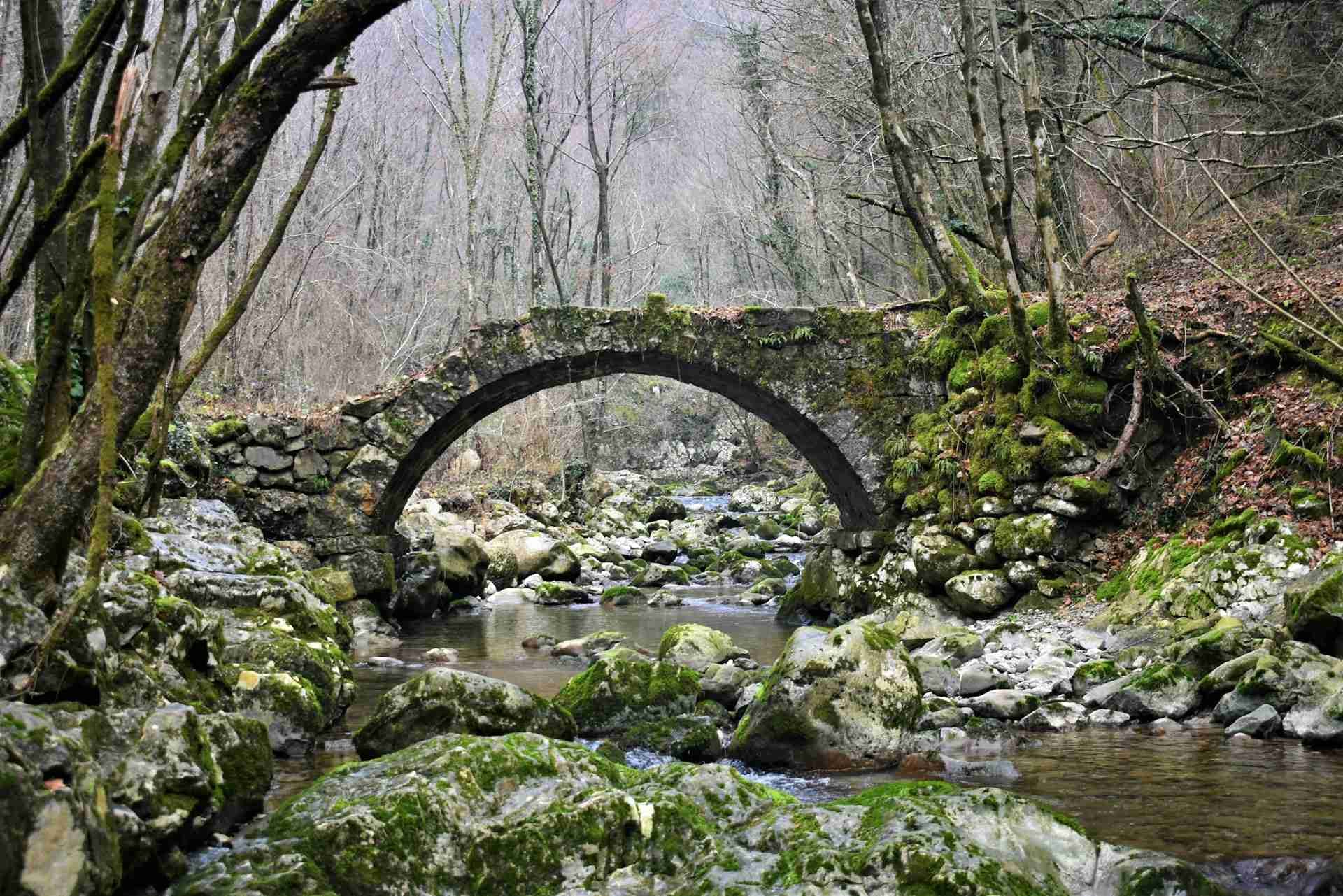
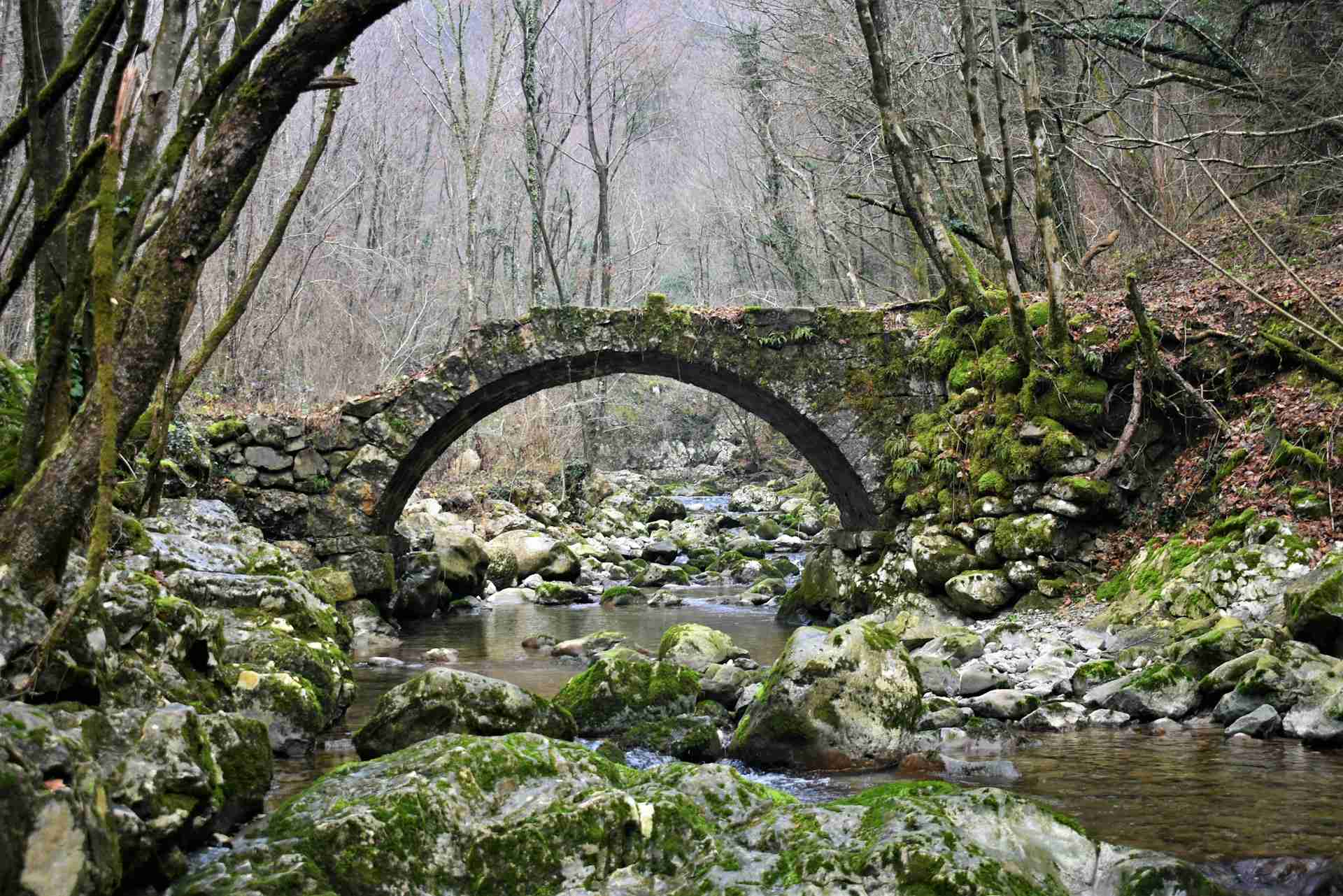
Tucked into a quiet corner of countryside near Borgo Stremiz, the Ponte Romano, also known as Rimski most, is a small stone bridge with centuries of history and subtle visual appeal. It arches gently over a narrow stream, its single span resting among rocks and trees in a natural hollow. Though the structure is humble, its setting invites calm and close observation. Surrounded by woodland and soft hills, the bridge sits in quiet balance with its environment. For photographers who appreciate intimate landscapes, historical texture, and slow paced subjects, this is a place that rewards careful composition and sensitivity to light and detail.
Best Photography Opportunities
• Stream Reflections
Position yourself just downstream of the bridge to frame its arch and its curve mirrored in the water below. This composition works best when the water is calm, creating a natural symmetry that strengthens the shot. A wide lens helps you include surrounding foliage, while foreground rocks can be used to add scale and structure. Early morning provides the softest light, especially when the forest canopy filters in cool tones and mist. During autumn, fallen leaves in the stream create rich surface texture and color contrast.
• Low Angle from the Stream Bed
When water levels allow, stepping down into the stream bed gives you a more dramatic view of the bridge from below. This angle emphasizes the structure of the arch and shows the stonework in close relief. A lens between 24 and 50mm captures both the bridge and its place within the small riverbed. Compose with leading lines from the stream's path or rocks to draw the eye forward. Overcast days or light rain bring out the depth of color in moss and stone without harsh contrast.
• View Along the Bridge Path
From end of the bridge, photograph the walking path as it curves over the bridge and away into the woods. This composition works especially well in spring or early summer when fresh green surrounds the area. Use a standard or short telephoto lens to compress the frame slightly, and consider placing a subject in the distance to give a sense of human scale and movement. Early light through the trees creates pockets of brightness along the path that can be used to add rhythm to the composition. Be cautious about going onto the bridge, it is not maintained and may not be stable.
• Detail Studies
The bridge's stones are irregular and weathered, with moss and lichen covering many surfaces. A 50mm or macro lens allows you to isolate patterns in the stonework, the curve of the arch, or the way roots and ferns grow between the cracks. These images are strongest in diffused light, where subtle tones are preserved. Even small areas can provide compelling compositions, especially when framed tightly against the shapes of nearby foliage.
• Framed Scenes Through the Arch
Use the arch of the bridge to frame whatever lies beyond it. From downstream, you can shoot through the opening to capture the forest or footpath beyond, especially if light is breaking through in the distance. This technique adds depth and structure to the composition and works well with a mid-range lens that allows for careful placement of elements inside the frame. The natural vignette created by the arch helps center attention without needing extra adjustment in post processing.
Best Time to Visit
Spring and autumn are the most rewarding seasons for photographing Ponte Romano. In spring, the forest is fresh and bright, with wildflowers and soft undergrowth along the banks of the stream. Autumn brings warm tones, fallen leaves, and quiet air, with low sun filtering through bare branches. Summer offers deeper greens but can be more contrast heavy under strong sun. Early morning is ideal for calm water and soft light, while late afternoon light reaches through the trees at a lower angle. Overcast skies are excellent for preserving texture in both stone and vegetation. Rain or light fog adds atmosphere and helps reveal the structure of the setting without introducing glare.
How to Get There
Ponte Romano is located near the hamlet of Borgo Stremiz in the Province of Udine, northeastern Italy. The easiest way to reach it is by car, with small local roads leading into the area from nearby towns such as Faedis or Attimis. There is no formal parking lot, but vehicles can be left safely along the roadside near the entrance to the trail that leads down to the stream. From there, the bridge is only a short walk through light woodland, with the path narrowing as it approaches the water. There is no fee to access the bridge or its surroundings, and the area is generally quiet and rarely crowded. Footpaths may be uneven or muddy depending on recent weather, so appropriate footwear is recommended.
Recommended Photography Gear
A wide angle lens is essential for capturing the bridge in its environment, particularly from downstream or above. A standard zoom or 50mm prime is useful for framing the structure or isolating texture. A tripod helps with long exposures and stable compositions, especially in lower light beneath the trees. A polarizing filter can reduce reflections on the water and bring out color in the surrounding forest. A microfiber cloth is useful for wiping down gear in humid or wet conditions. Footwear with good traction will help with navigating the sometimes slippery path near the stream, and a compact backpack makes it easy to carry equipment without limiting your mobility on the trail.
Nearby Photography Locations
A partially restored medieval castle perched on a hill near Attimis, offering views over the surrounding countryside and rich textures in stone and ivy. The ruin is especially striking in the late afternoon when light hits its western walls.
A small but beautiful waterfall located in the nearby valley of Torre. It is surrounded by dense woodland and features layered rocks that create strong vertical compositions. Best photographed in spring or after rainfall when water flow is stronger.
• Mount Joanaz Viewpoints
Accessible by a winding mountain road, this peak provides wide views over Friuli's hills and plains. Early morning or golden hour reveals layers of landscape and occasional low fog in the valleys.
Set into a cliff face, this historic cave site includes a small chapel and ancient steps carved directly into the rock. The approach and entry provide moody, enclosed compositions ideal for experimenting with shadow and texture.
A historic town with a preserved medieval center, arched stone bridges, and riverside views. The Natisone River flows through the center and offers reflections and contrast beneath historic structures.
Comments
Loading comments…