
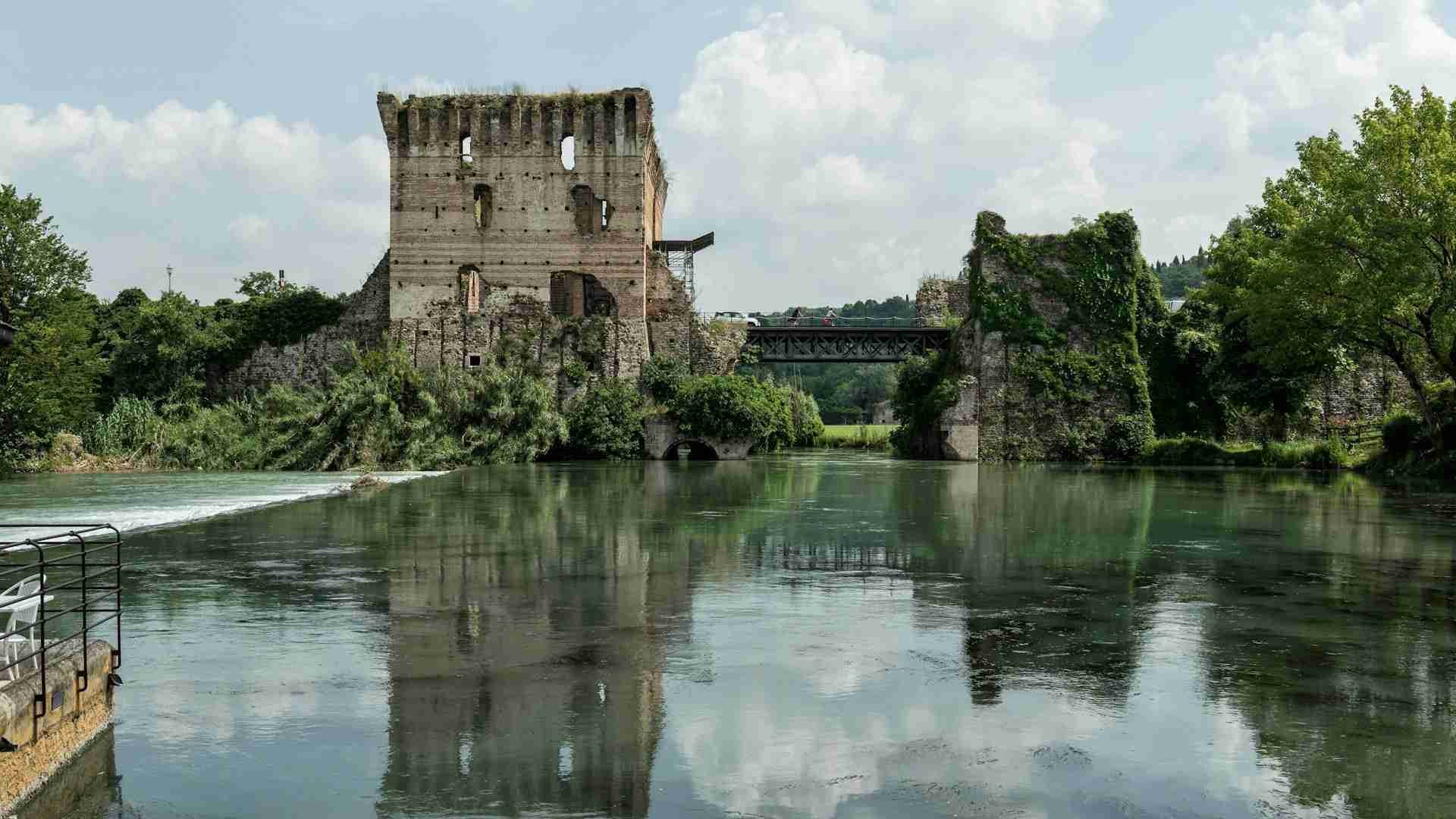
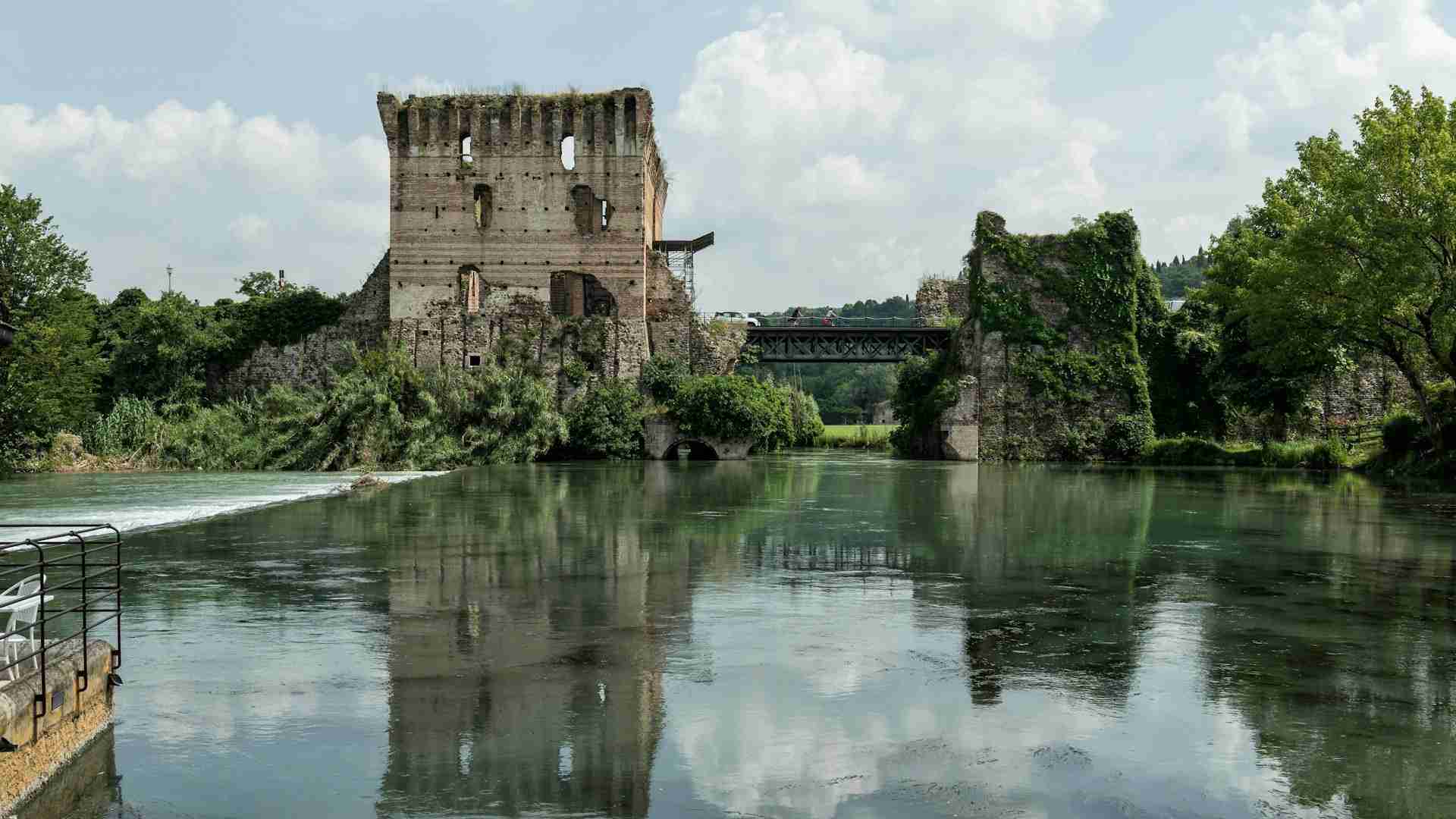
Ponte Visconteo stretches across the Mincio River in Valeggio sul Mincio, combining the mass of medieval military architecture with the reflective calm of a broad river channel. Built in the late 14th century as part of a defensive system by Gian Galeazzo Visconti, this fortified dam was designed to control water flow and protect the nearby Scaliger Castle. Although now partially in ruins, the structure still dominates the river with thick vertical walls, arched passages, and a bold central span. Photographically, the bridge offers strong lines, mirrored symmetry, and rich textures in both brick and stone. It also provides the chance to work with natural light across still water while capturing history embedded into the landscape.
Best Photography Opportunities
• Full Frontal Reflection from the South Bank
From the southern bank of the Mincio River, you can shoot directly toward the main face of the bridge. In early morning light or under soft cloud cover, the surface of the river reflects the vertical structure almost perfectly. This creates a natural symmetry that works well with a wide-angle or standard lens, especially when framed low to include vegetation or the stone edge of the water. Overcast days soften the tonal range and help keep detail in the highlights of the stone, while early golden hour introduces a subtle warmth without harsh shadow.
• Side Angles with Layered Vegetation and Structure
Following the riverside path to the east gives you access to more dynamic side angles, where the contrast between the manmade structure and surrounding greenery becomes more pronounced. During late afternoon, warm light catches the rough brick and casts shadows across the face of the bridge, highlighting its depth and age. Ivy-covered sections and riverside trees can be used to frame the composition and give context. A mid-range zoom lens lets you quickly adjust to the changing balance between light, water, and structure as conditions shift.
• Detail Studies of Brick, Arches, and Decay
Close-up views reveal a great deal of surface variation and history within the materials of Ponte Visconteo. Crumbling mortar, weathered brick, and patches of vegetation offer layered textures that respond well to soft side light. Use a short telephoto or prime lens to isolate specific features, like a series of bricks missing from a corner or the curve of a broken arch. These small studies benefit from neutral light and thoughtful framing, often producing some of the strongest images from a session when combined with wider context shots.
• Framing with Arches and Open Sky
From just under the structure or slightly downstream, you can look through the central arch and use it as a framing device for the landscape beyond. This method works especially well when clouds are moving across the sky or when the background includes rolling green fields and soft hillside shapes. Use a standard lens and position yourself to keep the horizon centered within the arch. If the water is still, reflections will double the effect and create a clean central composition that shows scale without clutter.
• Elevated Viewpoints with Borghetto in the Distance
Just upriver, the village of Borghetto sul Mincio offers a backdrop of terracotta rooftops and narrow stone alleys. From the path above the bridge, you can use a wide lens to include both the ancient structure and the surrounding village, placing the bridge within its living context. Golden hour provides warm side light on both the buildings and the bridge, and early evening allows you to capture the lights of the village as they begin to glow. These wider compositions help tell a more complete story of the landscape and how the bridge connects with the region's cultural fabric.
Best Time to Visit
Ponte Visconteo is photogenic year-round, but the most productive months are from April through October when the river is calm and the surrounding vegetation is full. In spring, the trees around the banks begin to fill in and the grass along the footpaths is fresh and bright. This soft green framing works well in contrast with the warm tone of the brick and stone. Summer brings longer daylight hours and clear reflections in the early morning, though midday light can be harsh if skies are clear.
Autumn is one of the best times to visit, when surrounding trees begin to shift in color and morning mist can form above the river. These conditions offer atmosphere without needing dramatic sky or weather. Winter photography is possible, but the structure can appear flatter in tone and the river often lacks the same reflection quality. Regardless of the season, aim to shoot during golden hour or in soft morning light when the water is undisturbed and the stone holds subtle shadow and contrast.
How to Get There
Ponte Visconteo is located in the town of Valeggio sul Mincio, about 30 kilometers southwest of Verona in northern Italy. If arriving by car, take the A4 motorway and exit at Peschiera del Garda, then follow signs south toward Valeggio. The bridge sits just outside the center of town and is accessible by foot from nearby public parking areas. No fee is required to access or photograph the bridge, and the surrounding trails are open to the public during daylight hours.
The riverside paths are well maintained and easy to walk, with viewpoints both near the bridge and slightly downstream. Cyclists often use the route as part of the Mincio River Trail, so expect some shared use. Early mornings and weekday afternoons are usually the quietest times to work without interruption. Tripods are easy to manage along the riverbanks and paved edges, and the area near the Borghetto footbridge offers the best variety of angles in a compact space.
Recommended Photography Gear
A 24–70mm zoom lens is the most useful all-around option for photographing the Ponte Visconteo. It allows you to capture both wide context views and tighter architectural details. A 16–35mm wide-angle lens is helpful for working close to the structure or for placing the bridge within the landscape when space is limited. If you plan to isolate elements from across the river or work with tighter compositions of texture and decay, a 70–200mm telephoto lens will let you compress features and draw out detail.
A tripod is recommended for low light or long exposure work, especially when shooting reflections across the river. A circular polarizer is useful for reducing glare on the water and enhancing color in the vegetation or sky. If you are shooting in overcast or misty conditions, a microfiber cloth will help manage condensation or moisture on the lens. Bring a lightweight kit if you plan to move between multiple spots along the river, and carry lens caps or a small pouch to protect gear from moisture along the bank.
Nearby Photography Locations
This historic village sits just upstream and offers stone bridges, narrow canals, and tiled rooftops that reflect the medieval character of the region. Early morning is the best time to photograph the streets and water mills without crowds, and golden hour brings soft light across the rooftops.
A short drive from the bridge, this large botanical garden features formal hedges, reflecting pools, and a variety of seasonal blooms. It's a strong contrast to the raw texture of the bridge and offers a chance to photograph symmetry, color, and soft light through trees and water features.
Overlooking the entire area, this hilltop castle provides panoramic views of the Mincio River and surrounding farmland. The castle itself is photogenic from a distance and works well in wider frames that include the bridge and river valley below.
• Mincio River Trail
This cycling and walking path follows the river south toward Mantua and north toward Peschiera del Garda. Along the way, you will find wide river curves, farmland, and quiet bridges that are ideal for minimalist landscape photography in soft light.
Although further west, this quiet Romanesque church sits on high ground at the tip of the Sirmione peninsula. It offers quiet architecture and views over Lake Garda and pairs well with a trip that includes Valeggio and the surrounding region.
Ponte Visconteo is a location that rewards quiet, careful work. It is not about grand drama or constant movement. It offers steady light, clean structure, and a strong relationship between land, water, and time. Whether you are building symmetry across the river, isolating textures in the stone, or looking for simple compositions with weight and shape, this stretch of the Mincio has everything you need to shoot with purpose and patience.
Comments
Loading comments…