
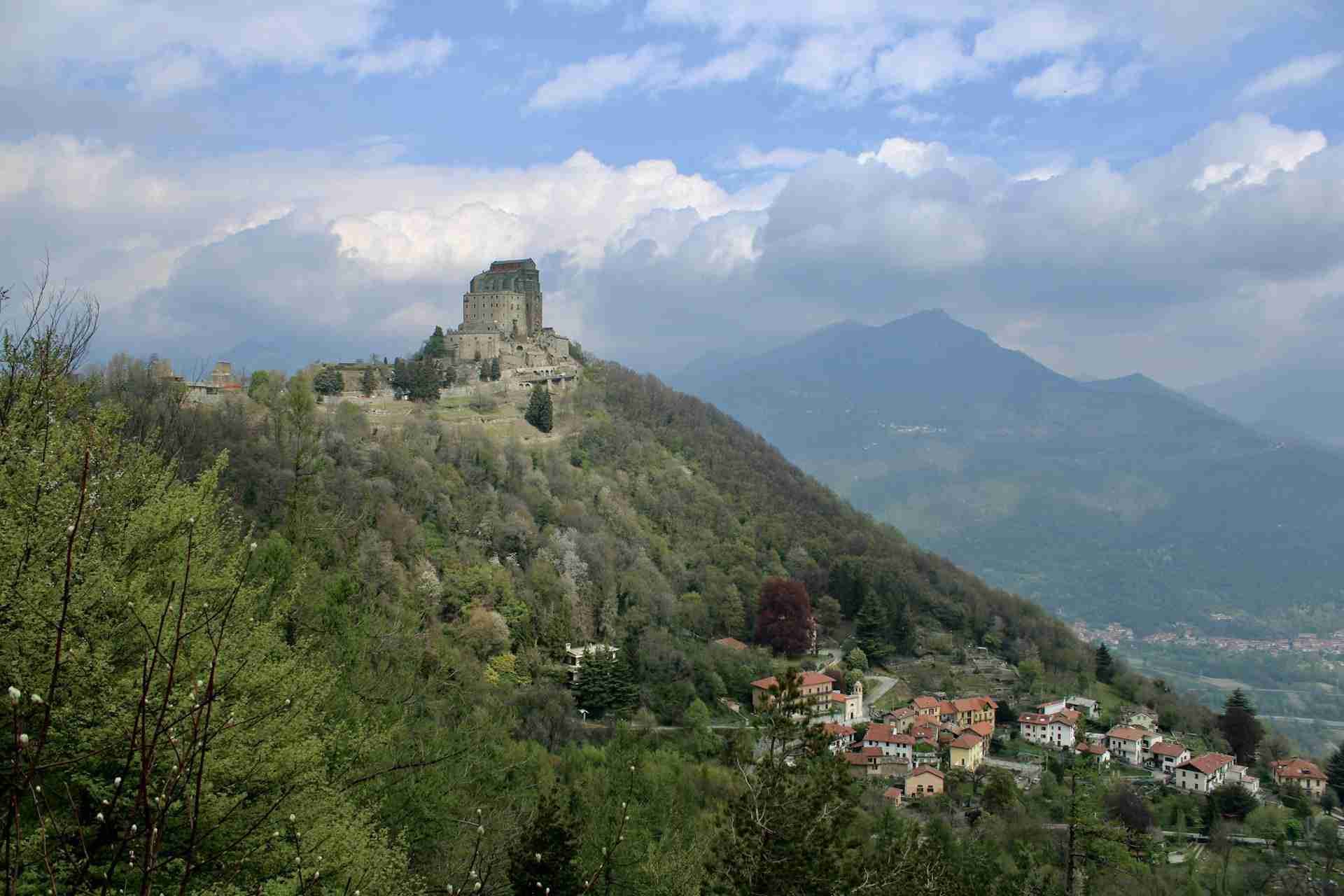
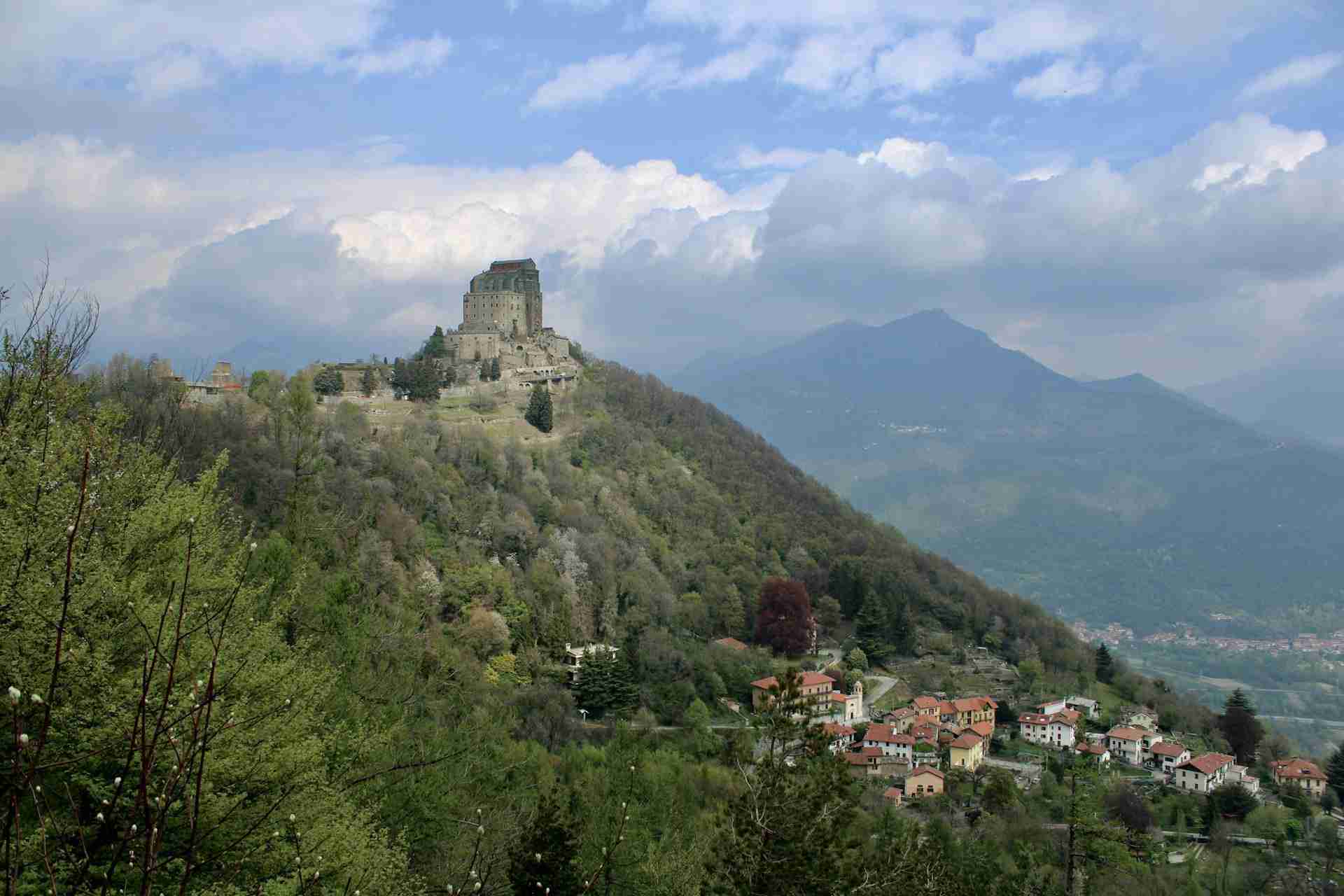
Perched dramatically on Mount Pirchiriano at the entrance to the Susa Valley, the Sacra di San Michele is one of northern Italy's most commanding architectural landmarks. Dating back to the late 10th century, this abbey has long served as both a spiritual and strategic vantage point. From a photographer's perspective, it combines medieval stonework with breathtaking mountain backdrops, giving every composition a mixture of historical weight and natural drama. The abbey appears to grow directly out of the rock, towering above the valley floor, and the sweeping views extend to Turin, the Susa Valley, and the surrounding Alps. Changing weather often brings fog and low clouds, which can shroud the abbey in mystery or reveal it suddenly in bursts of light. Whether captured from below, along the approach trail, or within its ancient walls, the Sacra di San Michele offers some of the most compelling architectural and landscape photography opportunities in Piedmont.
Best Photography Opportunities
• Panoramic Views of the Abbey from Below
From the valley floor near Sant'Ambrogio di Torino, the Sacra di San Michele rises prominently against the cliffs of Mount Pirchiriano. Long lenses compress the abbey against the mountain, emphasizing its scale, while wider lenses capture its relationship to the forested slopes below. Early morning often produces mist in the lower valley, adding layers that accentuate the abbey's height. Shooting at sunset can bathe the structure in warm tones, especially in autumn and winter when the sun sets lower in the sky. Multiple roadside pull-offs and trail openings provide slightly different vantage points, each with potential for dramatic framing.
• Approach Trail and Stone Stairways
The approach to the abbey features steep paths and stone stairways that create excellent leading lines in compositions. Framing these pathways against the looming structure above draws the viewer's eye toward the destination while also capturing the medieval character of the site. Side light during morning or late afternoon reveals texture in the stone walls and stairs, enhancing the sense of history in the frame. Including visitors in shots adds human scale, reinforcing the magnitude of the climb and the abbey itself. These scenes are well-suited to mid-range focal lengths that balance detail and context.
• Architectural Details Within the Abbey
Once inside, the abbey offers rich opportunities for capturing medieval craftsmanship. The "Porta dello Zodiaco," with its sculpted capitals and zodiac motifs, is especially photogenic under soft interior light. High vaulted ceilings, arched windows, and narrow corridors create strong geometric compositions when shot with wide-angle lenses. The play of light and shadow across the stone surfaces shifts throughout the day, rewarding patience and careful observation. Black-and-white conversions work particularly well here, emphasizing form and texture without distraction.
• Summit Views Over the Susa Valley
From the terraces and walls of the abbey, photographers can look out over the entire Susa Valley, with Turin visible in the distance on clear days. These views change character with the seasons, from snow-covered peaks in winter to golden fields in late summer. A polarizing filter helps deepen sky tones and clarify distant ridges, especially during midday when haze is common. Sunset is especially rewarding, with the valley bathed in warm tones while the abbey itself begins to glow in artificial light. Long exposures from this vantage point capture both lingering daylight and the first city lights in Turin.
• Night Photography of the Illuminated Abbey
After dark, the Sacra di San Michele is illuminated by a lighting system that emphasizes its vertical form and stone walls. Shooting from the valley floor, you can frame the abbey as a glowing beacon against the dark slopes. Longer exposures balance the artificial lighting with the night sky, allowing for star trails or even Milky Way shots when conditions are clear. This combination of ancient architecture and natural night sky makes the location uniquely rewarding for astrophotography. Tripods and telephoto lenses are particularly useful here to stabilize and isolate the abbey in low light.
Best Time to Visit
The Sacra di San Michele can be visited and photographed year-round, with each season offering distinct advantages. Spring brings fresh greenery to the surrounding slopes, and morning fog often rolls through the valley, wrapping the abbey in soft layers of cloud. Summer offers the clearest skies and longest daylight hours, though midday light can be harsh, making sunrise and sunset the most rewarding times for photography. Autumn is one of the best seasons, as the forests below the abbey shift into deep red and golden hues, creating colorful contrasts against the stone walls. Winter brings snow to the surrounding Alps, often creating crisp, clear mornings with sharp visibility, while occasional snowfalls dust the abbey itself for striking seasonal images. For lighting, early mornings provide soft side illumination, while late afternoons and evenings offer warmer tones and the possibility of combining twilight with the abbey's artificial lighting.
How to Get There
The Sacra di San Michele is located in Sant'Ambrogio di Torino, about 40 kilometers west of Turin. From the city, follow the A32 motorway toward the Susa Valley, then exit at Avigliana to reach the access roads leading to the abbey. Parking is available below the site, with shuttle buses and marked walking trails leading up to the entrance. The climb on foot takes around 30 minutes from the lower parking areas, while shuttle access provides a shorter walk. There is an entrance fee for visitors who wish to explore the interior and terraces of the abbey, which supports the preservation of the site.
Photographers should allow time for both exterior and interior work, as the abbey and its surroundings require different lighting conditions. Drones are restricted near the abbey due to its cultural heritage status, but ground-level perspectives offer abundant opportunities from multiple vantage points. Tripods are generally not permitted inside the abbey, so be prepared to work with higher ISO or wide apertures in low-light conditions indoors.
Recommended Photography Gear
For photographing the Sacra di San Michele, bring a combination of wide-angle and telephoto lenses to cover both architectural details and distant valley views. A 16 to 35 millimeter wide-angle lens is ideal for interior spaces, stairways, and close-up shots of the abbey's exterior. A 24 to 70 millimeter lens works well for balanced compositions along the approach trail and terrace views. A 70 to 200 millimeter telephoto lens is essential for compressing valley fog layers, isolating the abbey from the valley floor, or capturing illuminated night shots from below.
A sturdy tripod is important for low-light work outside, particularly for twilight and night scenes, but keep in mind the restrictions inside the abbey itself. A polarizing filter helps manage haze in long valley views, while a neutral density filter is useful for smoothing clouds or creating longer exposures of moving visitors. For night photography, bring a remote shutter release and extra batteries, as exposures may extend into several minutes. Protective gear for your camera and lenses is recommended, since the site's elevation can bring sudden shifts in weather, especially in autumn and winter.
Nearby Photography Locations
Located just below the abbey, these twin lakes are surrounded by forest and provide excellent opportunities for reflection photography. Early morning mist often lingers over the water, creating moody scenes, while evenings bring soft light across the surrounding hills. Including the abbey high above in the background adds a strong narrative link to the composition.
Situated at the entrance to the Susa Valley, this smaller peak offers a wide vantage point over Turin and the surrounding alpine ridges. The summit is accessible by a moderate hike and is particularly good for sunrise, when the valley fills with warm light and the city of Turin glows in the distance. The view is especially strong in autumn and winter when visibility is crisp.
At 3,538 meters, Rocciamelone is one of the most prominent peaks in the Susa Valley and provides sweeping views that include the Sacra di San Michele far below. The mountain can be photographed from roadside viewpoints or summited by experienced hikers for high-altitude panoramas. Summer and autumn provide the clearest access, while winter conditions limit the approach but offer dramatic snow-covered scenes.
The Sacra di San Michele can often be included in distant skyline views from within Turin itself, particularly from the Monte dei Cappuccini. The abbey appears as a small but distinct silhouette against the western horizon. These shots are best taken at sunset or twilight, when the abbey is illuminated and the city lights begin to glow.
The lower slopes of the valley are lined with vineyards and small villages that offer strong foreground interest for landscape photography. Shooting from within the vineyards allows you to frame rows of vines leading toward the abbey on its rocky perch. Harvest season in September and October provides additional color and activity in the fields.
The Sacra di San Michele is a place where stone and mountain merge, offering photographers an endless interplay of history, architecture, and alpine light. Its commanding position above the Susa Valley means that no two visits produce the same conditions, and the site's layered perspectives reward patience and exploration. For anyone seeking a combination of medieval architecture and dramatic landscapes in a single subject, this abbey remains one of Italy's most rewarding photography destinations.
Comments
Loading comments…