
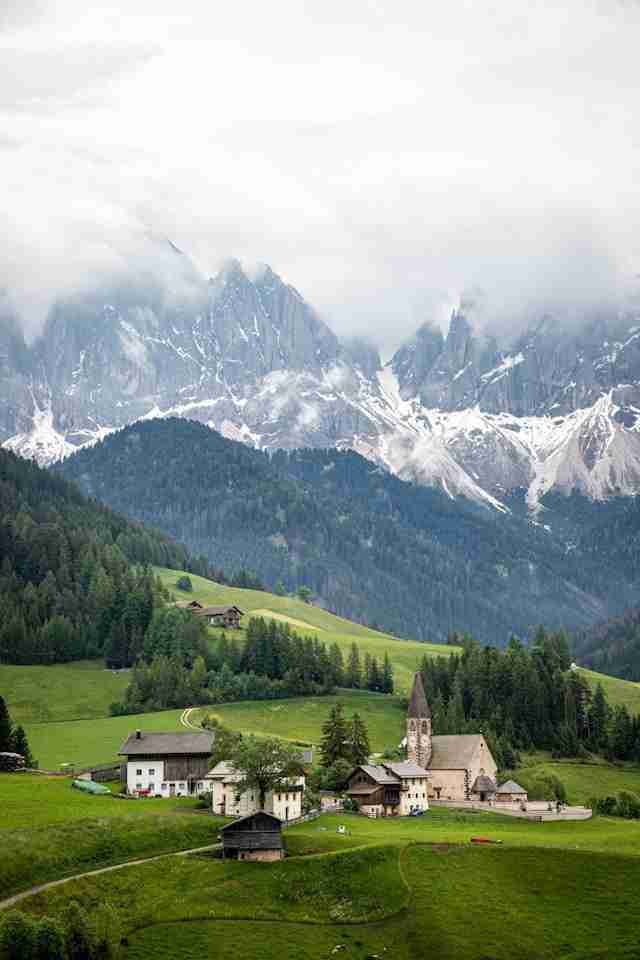
Saint Maddalena Church, nestled in the serene Val di Funes (Villnöss Valley) of South Tyrol, Italy, stands as one of the most visually compelling alpine subjects in Europe. Sitting at the foot of the towering Odle (Geisler) peaks, this small mountain church blends traditional architecture with a dramatic natural backdrop. The church's modest white walls and onion-domed bell tower are framed by lush meadows, winding farm roads, and jagged limestone cliffs, offering a sense of stillness that contrasts beautifully with the rugged verticality behind it. The surrounding fields, forests, and elevated trails allow for a wide range of compositions, making this a location that rewards both meticulous planning and spontaneous discovery. Whether you're chasing morning fog, golden hour glow, or snow-covered tranquility, Saint Maddalena is a place where the landscape does most of the talking.
Best Photography Opportunities
• Classic Elevated View from the Panorama Trail
: The most iconic vantage point of Saint Maddalena Church is found along the Panoramaweg trail that climbs gently above the village. From here, you can photograph the church in the lower part of the frame with the towering Odle peaks rising dramatically behind it. A mid-range zoom lens such as a 24 to 70 millimeter gives you the flexibility to adjust framing and foreground balance. This scene is particularly striking at sunset, when the fading light hits the Dolomites from the west and casts a golden-orange hue across the mountains. Framing the church among the soft curves of the surrounding pastures adds rhythm to the image and helps guide the viewer's eye from foreground to background.
• Morning Fog and Soft Light from the Lower Fields
: Early mornings in Val di Funes often bring low-lying fog that drifts across the valley, partially veiling the church and adding depth to the surrounding fields and trees. Shooting from one of the farm tracks or meadows below the village allows for closer compositions that include fence lines, grazing animals, or blooming wildflowers in spring and summer. A tripod and telephoto lens are useful here, especially when isolating the church as it emerges from the mist. Patience is key, as the fog shifts constantly and opens fleeting windows of light and contrast. These soft, ephemeral conditions often yield the most poetic images of the church.
• Autumn Color and Compressed Layers
: In early to mid-October, the deciduous trees across the valley explode into color, offering one of the best opportunities to photograph the church surrounded by warm gold, orange, and red tones. Shooting from a higher ridge or further back with a 70 to 200 millimeter lens compresses the foreground hills and background cliffs, making the composition feel tighter and more intimate. The church becomes a visual anchor amid a sea of texture and color. Light is often clearest in the late afternoon, when the valley receives the last direct sun before it drops behind the mountain ridge.
• Minimalist Winter Compositions
: In the colder months, Saint Maddalena and the entire valley take on a stark, quiet beauty. Snow blankets the meadows and trees, reducing the color palette to whites, grays, and the deep blues of shadowed peaks. Composing with a wide lens and plenty of negative space in the foreground or sky allows the church to stand out in isolation. The contrast between the human-made structure and the raw mountains becomes even more pronounced. Using exposure compensation to brighten the snow helps avoid gray, muddy tones and keeps the image crisp and clean.
• Night Photography and Moonlit Peaks
: On clear nights, the Dolomites light up under the stars or moon, offering strong opportunities for night photography that includes the church in the lower frame. From the Panoramaweg or higher above the village, you can set up a long exposure that includes the Milky Way or a glowing sky above the jagged ridgeline. A fast prime lens such as a 20 or 24 millimeter f/1.8 will perform well in low light, and a sturdy tripod is essential. The church is sometimes softly lit by village lights, adding warmth to the foreground without overpowering the scene.
Best Time to Visit
Saint Maddalena Church is photographable year-round, but each season brings distinct moods and visual characteristics. Spring arrives slowly in the mountains, with snow lingering into April and green meadows emerging in May. By early June, wildflowers are in bloom, and the fields around the church become vibrant and detailed. Sunrise light is soft and pastel, ideal for capturing fog and dew-covered grass, while sunset bathes the valley in warm, directional light that skims across the hills.
Summer is the most accessible and vibrant season, with long days and consistent weather. However, it's also the busiest. Shooting early in the morning or late in the evening is essential to avoid foot traffic and maintain a calm atmosphere in your compositions. Summer thunderstorms can also create dramatic skies, which work especially well with wide-angle foregrounds and long exposures.
Autumn is perhaps the most visually rewarding time to visit. Between late September and mid-October, the valley transforms with seasonal color while the peaks remain crisp and often dusted with early snow. The lower sun angle adds length to shadows and brings more shape to the rolling fields. Winter offers clean, quiet scenes and strong tonal contrast but requires more effort. Road access can be limited, and trails may be snow-covered, so checking local weather and trail reports in advance is crucial.
How to Get There
Saint Maddalena Church is located in the village of the same name, in Val di Funes, South Tyrol. The closest major town is Brixen (Bressanone), about 45 minutes away by car. From Brixen, take the SS12 and then follow signs for Villnöss and Santa Maddalena. The village is at the end of the main valley road and is well signposted. Free and paid parking areas are available just outside the village, depending on the time of year and the number of visitors.
Once in the village, the church is easily reached on foot within a few minutes. For the classic elevated view from the Panorama Trail, follow the path that begins just west of the village and winds uphill behind several guesthouses and small farms. The trail is clearly marked and accessible year-round, though icy conditions in winter may require crampons or poles. There is no fee to photograph the church from any public trail, but drone usage may be restricted, and flying is discouraged close to the village or during high visitor periods. Tripods are allowed without restriction, and early or late sessions usually offer the most freedom to work without interruption.
Recommended Photography Gear
Photographing Saint Maddalena and the surrounding valley requires a kit that balances wide landscapes, detail work, and changing mountain light. A full-frame DSLR or mirrorless camera with strong dynamic range will help you handle sunrise fog, high-contrast peaks, and evening color without losing detail. A 24 to 70 millimeter zoom is the most versatile lens for this location, capable of capturing both wide village views and tighter compositions of the church and fields.
To isolate the church or compress layers of the valley and mountains, a 70 to 200 millimeter lens is essential. This allows you to shoot from a distance while still creating intimate, tightly framed images. A wide-angle lens in the 16 to 35 millimeter range is useful for including foreground elements like grass, fences, or flowers, especially when shooting from the lower meadows or along farm paths.
A tripod is highly recommended, particularly for dawn and dusk shooting, as well as foggy conditions or long exposures during golden hour. A circular polarizer helps enhance color and reduce glare from grass and wet surfaces, while neutral density filters are useful for smoothing clouds or creating soft motion during changeable weather. Bring lens hoods to reduce flare, especially when shooting into backlight at sunrise or sunset. A microfiber cloth is also necessary, as dew and mist often collect on lenses in early morning sessions.
Weather in the Dolomites can change rapidly, so pack rain protection for your gear, dress in layers, and bring water and snacks if you plan to hike the trails around the village. Early mornings and late evenings are often chilly, even in summer, and shaded areas can remain cool well into the day.
Nearby Photography Locations
: Just down the road from Saint Maddalena, this small, picturesque chapel stands in an open meadow with the same Odle peaks behind it. It is one of the most photographed churches in South Tyrol, especially during golden hour or with morning mist hanging over the grass.
At the head of the valley, this alpine area offers trail access to the base of the Odle range. You'll find high mountain pastures, stream crossings, and dramatic views up into the cliffs. It's a good half-day outing and offers both wide landscapes and detailed nature photography.
: A scenic mountain pass about an hour's drive from the valley, this area provides dramatic foregrounds and views of the Sas de Putia (Peitlerkofel) massif. Sunrise and sunset both work well here, and the grassy highlands offer interesting textures and shadow play.
: Accessible via cable car from Ortisei, this high ridge offers one of the most famous panoramic views in the Dolomites. While not in Val di Funes, it's close enough for a day trip and provides expansive views, layered ridges, and jagged peaks perfect for wide-angle work.
• Villnöss Scenic Road
: The drive through the valley itself includes several pullouts and viewpoints that offer new perspectives on the surrounding farms, fields, and peaks. These roadside spots are excellent for spontaneous shooting, especially in changing light or dramatic weather.
Saint Maddalena Church is more than just a charming alpine chapel—it is a photographic anchor in a valley where every direction offers depth, texture, and mood. Whether you're working through a sunrise fog bank, capturing sunlit meadows in full bloom, or braving the cold for winter clarity, this quiet village rewards the photographer who returns again and again, always finding something new in the light and the land.
Comments
Loading comments…