
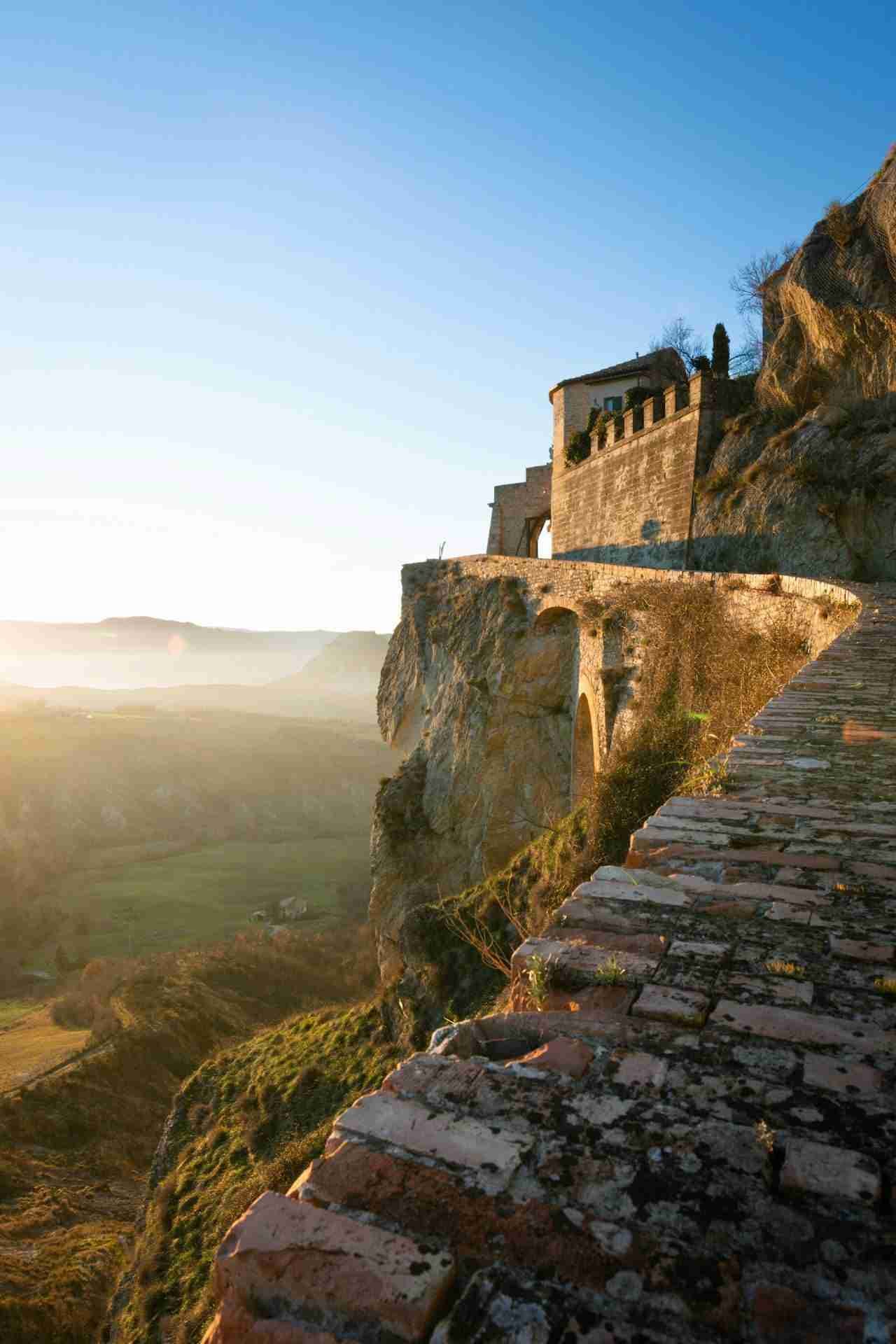
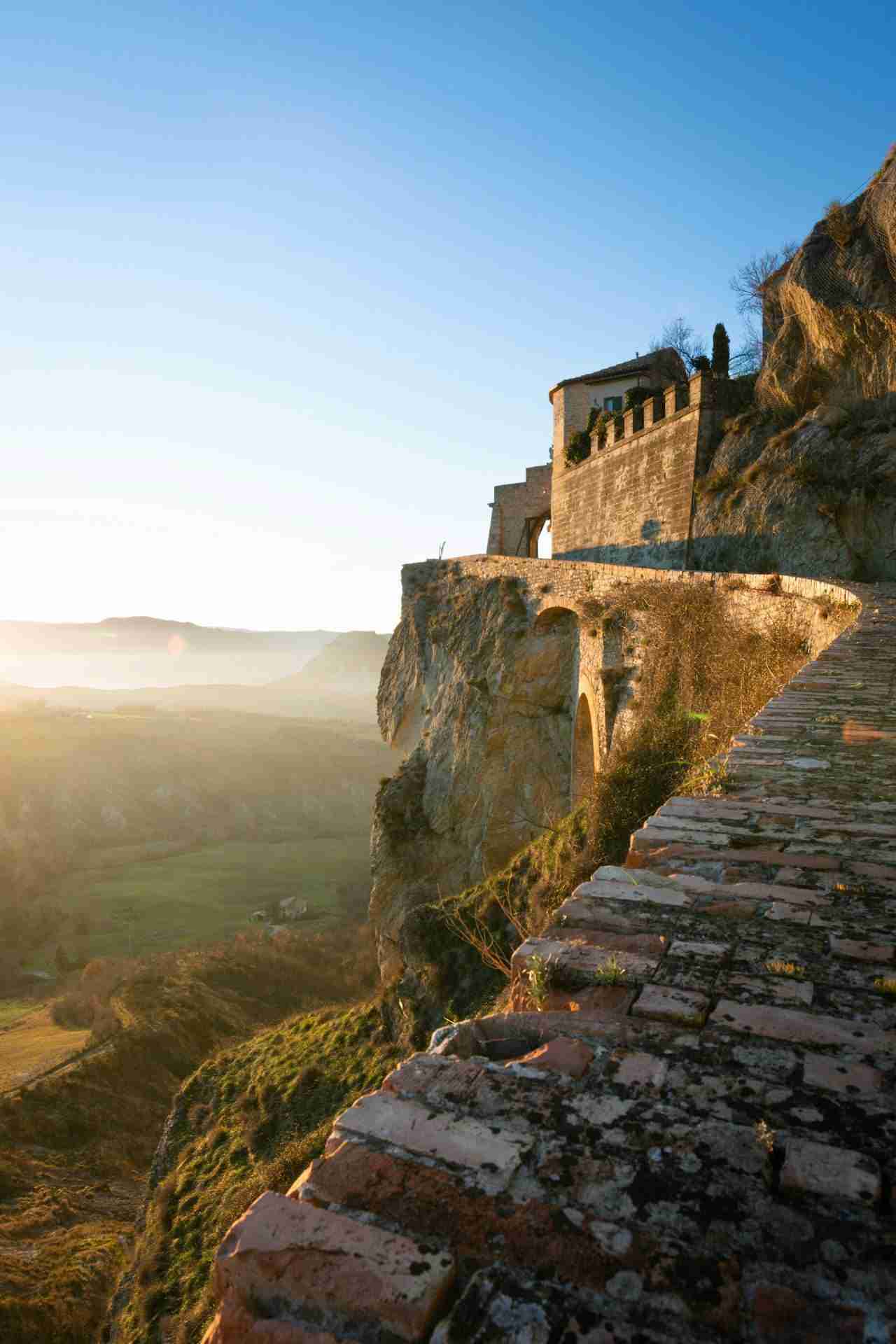
San Leo rises from the crags of northern Italy's Montefeltro region like a vision out of time. Perched high on a limestone outcrop in the Province of Rimini, this fortified hill town commands long views across Emilia-Romagna and into the soft folds of Le Marche. Its defining feature is the 15th-century fortress that seems to grow out of the rock itself, surrounded by sheer cliffs and cloaked in mist on many mornings. Yet San Leo is more than a single dramatic view. Its tightly woven streets, Romanesque churches, and golden stone all respond beautifully to natural light. For photographers, it is a place of both architectural precision and natural drama, offering opportunities for landscape, detail, and atmosphere in a compact, walkable setting.
Best Photography Opportunities
• Morning Fog from Below the Cliff
One of the most powerful compositions of San Leo is captured from the roads and footpaths in the valley below, where the town sits above the early morning fog. As the sun rises behind the ridge, it gradually reveals the fortress emerging from the mist, creating an image full of contrast, light layering, and scale. Use a telephoto lens from distant vantage points to flatten the scene and emphasize the verticality of the cliffs. Shooting from farther east provides the most balanced light, while views from the southeast are stronger in full sunrise conditions. A tripod and graduated filter help manage the exposure difference between the glowing mist and the dark rock.
• Castle Wall and Sky from the Fort Grounds
Once inside the fortress, the structure itself becomes a study in texture and geometry. The stone walls, narrow windows, and commanding views allow for strong graphic compositions with clean lines and deep perspective. A wide-angle lens is useful here, especially when shooting from corners or upper walkways, where the sky becomes a key compositional element. Wait for broken cloud or angled light to create shadow across the fortress surface, bringing out form and depth. These interior shots are strongest in the morning or just before sunset when the golden tones of the stone glow and catch soft shadows.
• View Back Toward Town from the Citadel Wall
From the higher ramparts of the fortress, you can shoot back toward the rest of San Leo. The town's church spires, terracotta rooftops, and stone alleys sit harmoniously along the cliff edge, backed by rolling hills and layered ridges. This view is ideal for sunset when warm side light rakes across the buildings and throws long shadows into the town's narrow spaces. A mid-range zoom allows you to adjust framing to either isolate architectural details or include the surrounding land. This perspective also works well for twilight shots when town lights begin to glow against the fading sky.
• Street-Level Detail and Historic Texture
Within the town itself, San Leo offers quiet, narrow lanes with stone walls, staircases, and arched doorways that shift character with each hour of light. Shoot early in the day to catch long shadows along the streets or return in the evening when warm artificial lighting starts to shape the stone. These compositions benefit from a handheld camera and a 35mm or 50mm lens that allows you to respond to changing light and explore quickly. Look for shadow patterns, doorways in half-light, and windows catching the last of the day's sun. Even in full daylight, the town's natural palette of beige, gray, and amber works beautifully in black and white.
• Wide Landscapes from the Approach Road
The winding roads that lead up to San Leo from the east offer multiple pullover spots where the entire rock outcrop can be framed against open sky and farmland. These sweeping views are best during late afternoon when the shadow of the cliff falls away from the camera and the golden tones of the fortress are highlighted. A wide landscape lens lets you include the valley foreground with its vineyards, cypress trees, or field patterns, providing natural leading lines into the frame. Weather plays a strong role here. Shooting on days with haze or light cloud creates softer transitions, while sharp post-storm air makes the town pop clearly against the hills behind.
Best Time to Visit
San Leo offers good light in all seasons, but the visual mood changes dramatically depending on time of year. Spring is one of the most dynamic seasons, with fresh greens in the surrounding fields and frequent low-lying fog in the mornings. This combination gives you both bright color and atmospheric layering, particularly from valley viewpoints looking up at the town. Afternoon light is clean and directional, often with strong clouds moving through, adding interest to wide shots.
Summer brings consistent golden light and long shooting windows. Early mornings offer the best chance of mist or haze, while late afternoon and early evening give you warm stone tones and excellent conditions for street-level shooting. The town sees more visitors in summer, but early or late in the day the streets remain quiet.
Autumn transforms the valleys below San Leo with warm earth tones and often returns the fog and morning mist that define the area's most iconic compositions. The cliffs catch golden light well into October, and the seasonal color enhances both landscape and architectural frames.
Winter is the quietest and most minimalist season. Leafless trees reveal more of the terrain and the town's shape stands out clearly against low sun. The fortress takes on a cold clarity under snow or frost, and skies are often dramatic. Access to higher paths may be limited in icy conditions, but the views from lower roads remain strong.
How to Get There
San Leo is located in the Province of Rimini, about forty-five minutes inland from the Adriatic coast. The most direct access is by car via SP22, a narrow mountain road that climbs into the Montefeltro hills. The road ends at a small public parking area outside the historic center. From there, the town is entirely pedestrian and can be explored on foot. The fortress is accessed via a short uphill walk, with a modest entry fee and regular opening hours.
Photographers should arrive early if planning to shoot fog from below or stay through sunset for golden light on the stone. Parking is free outside the historic core, but limited during peak hours. Tripods are permitted both in town and at the fortress, but care should be taken near the fortress edges, as high winds are common. Paths and overlooks can be slippery after rain, so good footwear is recommended. There are no trail permits or restrictions for outside viewpoints, but the best compositions often require exploring local footpaths or rural roads.
Recommended Photography Gear
For San Leo, a flexible landscape and architecture kit is ideal. A wide-angle lens around 16–35mm is perfect for interior fortress views, tight town alleys, and compositions with strong foreground elements like old stairs or arches. A standard 24–70mm zoom works well for general walk-around shooting, including the classic town view from the approach roads. A telephoto lens between 70–200mm or longer helps isolate town features or compress fog layers from distant viewpoints in the valley below.
A tripod is recommended for low-light compositions, long exposures, and blue hour cityscape shots. A circular polarizer is useful when shooting mid-day or in partly cloudy conditions to manage glare on the stone surfaces and deepen sky tones. A graduated ND filter helps when balancing bright sky against shaded cliffs or buildings. Pack extra batteries and memory cards if planning to shoot from early morning to sunset, as the lighting conditions change quickly and often.
Weather-sealed gear or a camera cover is a smart addition in winter or spring when mist and rain are likely. Comfortable walking shoes are important, as much of the shooting is done on cobbled streets or uneven terrain. A compact camera bag with easy access is helpful when navigating the town's narrow paths and tight fortress interiors.
Nearby Photography Locations
Set on another ridge not far from San Leo, Montebello Castle offers both strong architectural detail and wide views across the valley. Its silhouette is best photographed at sunset from distant ridgelines.
This hill town is quieter and less visited, but its irregular streets and stone walls catch beautiful side light, especially in autumn. The town's fortress is smaller but offers equally compelling lines.
Visible from San Leo on clear days, this independent republic offers dramatic cityscapes perched on cliff edges with panoramic views across the countryside. The fortress towers and switchback paths are ideal for architectural and landscape compositions.
Another strong fortress town nearby with a mix of medieval and Renaissance architecture. Its high terrace views over the Marecchia Valley make it perfect for sunrise or hazy atmospheric scenes.
Set farther into the hills, this small town offers tight winding streets, terraced viewpoints, and strong golden hour opportunities. Its less-touristed setting makes it ideal for quiet, slow photography sessions.
San Leo rewards photographers who pay attention to light, elevation, and weather. It is a place that feels both massive and intimate, where you can shoot sweeping views in the morning and quiet architectural studies in the afternoon. Its history and terrain make it more than just a hill town—it becomes a subject of changing color, light, and time.
Comments
Loading comments…