
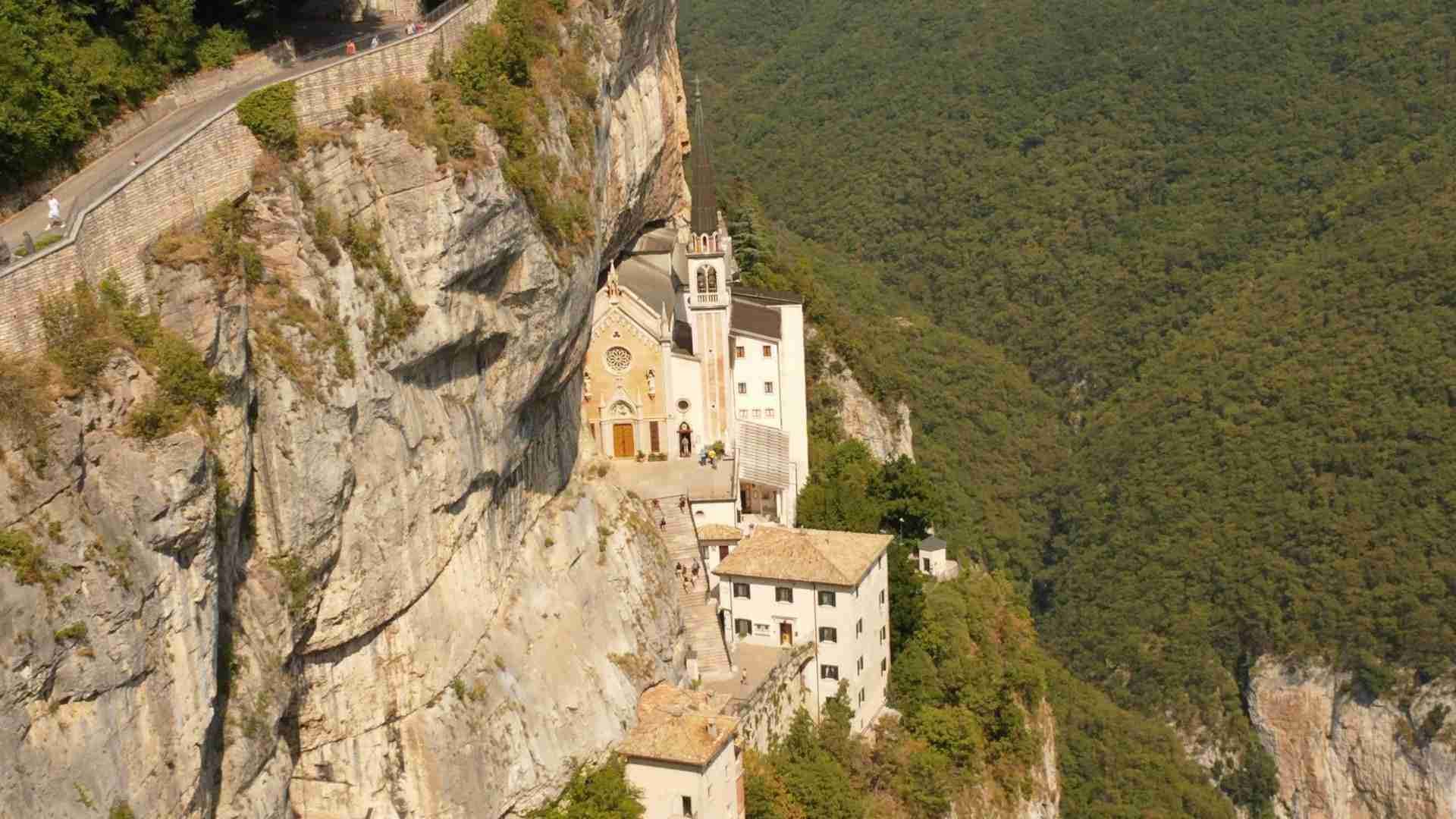
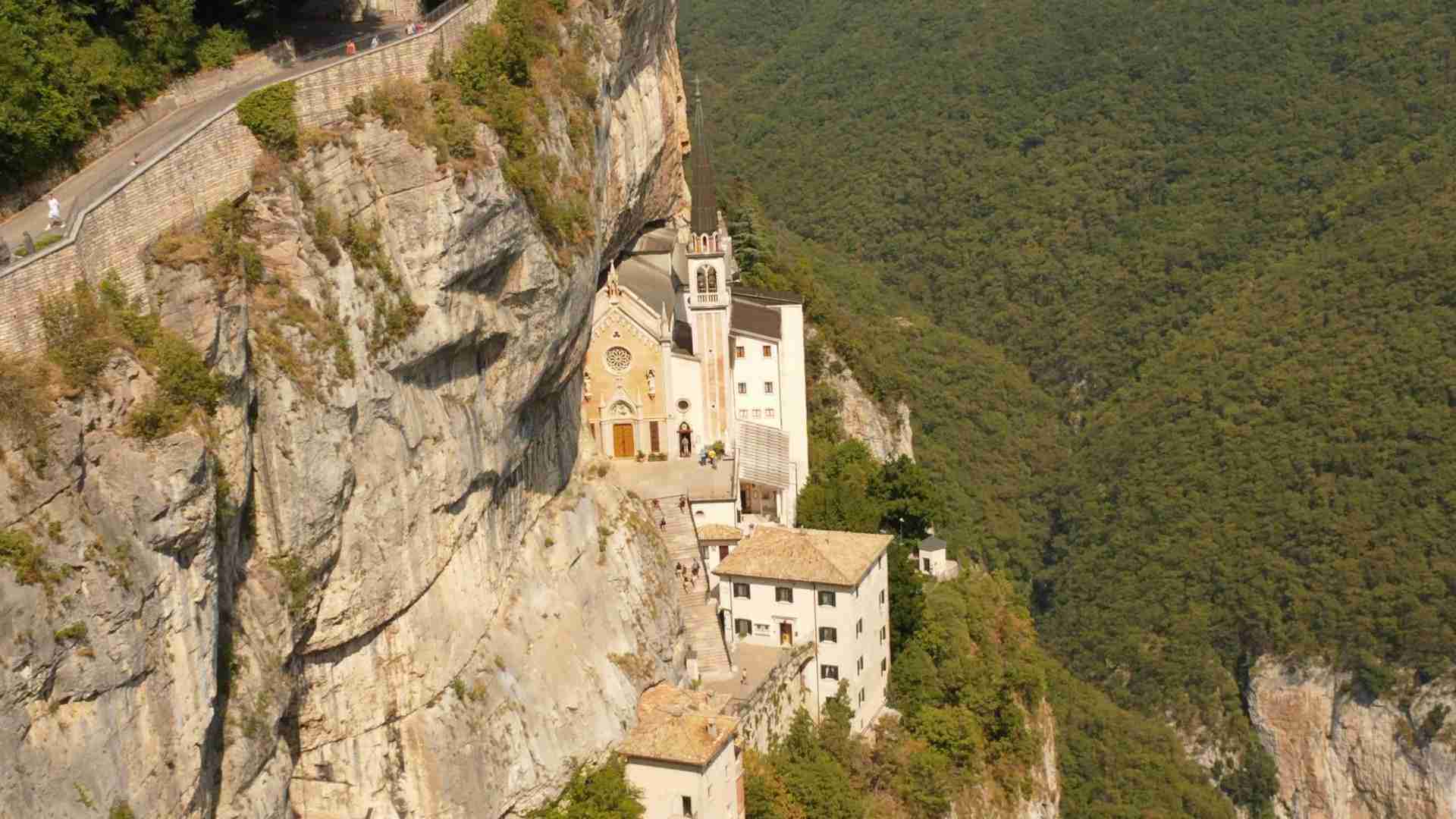
Clinging to a vertical limestone cliff high above the Adige Valley, Santuario Madonna della Corona is one of the most visually dramatic pilgrimage sites in Italy. Set into the rock face at an elevation of over 700 meters, the sanctuary appears to emerge from the stone itself, offering a rare blend of natural and spiritual architecture. For photographers, this cliffside church presents an extraordinary opportunity to capture stark contrasts between built form and mountainous terrain. From sweeping vistas to tight architectural details, the sanctuary and its surroundings offer a visual story shaped by elevation, devotion, and deep connection to the landscape. Whether approached from above or below, every vantage point offers a chance to explore scale, light, and human presence in a place of quiet intensity.
Best Photography Opportunities
• Cliffside View from the Upper Trail
Approaching the sanctuary from above on the walking path from Spiazzi offers a jaw-dropping view of the church tucked into the cliff. This vantage point is ideal for establishing shots that emphasize the sanctuary's integration into the rock wall. A standard zoom lens allows flexibility in composition, and early morning light from the east adds warmth to the stone while creating subtle contrast across the cliff face. Including hikers or railings in the frame helps express scale and elevation. A slight side angle reveals both the church façade and the dramatic vertical drop to the valley below.
• Façade and Staircase from the Courtyard
Once you arrive at the sanctuary itself, the narrow courtyard provides an excellent angle on the church's main façade, framed by steep rock walls. The white and rose-colored stone of the church contrasts sharply with the darker surrounding cliff. Shooting from a low angle with a wide lens helps exaggerate the vertical lines and symmetry of the church against the cliff. Light is often filtered and indirect in this spot, creating gentle shadows that bring out surface texture without harsh contrast. Compositions that include the descending staircase or pilgrims at rest capture the tone of the location without overwhelming the frame.
• Interior Detail and Rock Integration
Inside the sanctuary, parts of the church are built directly into the cliff, with exposed rock walls forming part of the structure. These features make for compelling close-ups and wide interior shots that emphasize the blending of natural and built environments. A fast lens and high ISO settings may be needed due to low light conditions, as tripods are generally not permitted inside. Soft afternoon light coming through stained glass adds warmth and atmosphere, while detail shots of statues, altars, and votive candles allow for a more intimate photographic approach.
• Valley Views and Framing with Archways
The terrace areas around the sanctuary offer expansive views down into the Adige Valley. These are best captured using a wide-angle lens during clear weather when haze is minimal. Framing the landscape through stone archways or between columns provides natural borders and adds structure to wide scenes. Late afternoon and golden hour bring out warm tones in both the stone and the surrounding forests. On clear days, including the far-off mountain ranges gives a sense of vastness and connection between the sanctuary and the larger Alpine landscape.
• The Scala Santa Pilgrim Path
The steep walking path leading from the valley below to the sanctuary, known as the Scala Santa, is lined with chapels and offers several opportunities for moody, uphill compositions. This section works best under soft morning light or in overcast conditions when the forest feels quiet and enclosed. A mid-range lens captures pilgrims ascending the trail or light filtering through trees onto the stone path. These photos work well as narrative elements within a larger photo set, showing the effort and devotion that define the sanctuary's purpose and history.
Best Time to Visit
Santuario Madonna della Corona can be visited in all seasons, but the most favorable photographic conditions are from late spring to early autumn. In May and June, the surrounding forest is lush, and visibility across the valley is excellent. Summer brings strong light and clear skies, though midday hours can produce harsh contrast on the cliff face. September and October offer warm late-day light, thinner crowds, and early signs of autumn color, especially in the hills above the sanctuary.
Morning is the best time for cliffside views and frontal shots of the church from the upper path, as the sun rises over the Adige Valley and casts light directly onto the sanctuary. Afternoon and golden hour work better for photographing the valley below and for capturing the warm hues of the cliff's stonework. Overcast days help control dynamic range in tighter scenes or interior shots. In winter, snow adds visual interest to the rock and rooftops, though access may be limited and trails can be icy.
How to Get There
Santuario Madonna della Corona is located in the town of Spiazzi, in the Province of Verona. By car, it is about a 45-minute drive from Verona via the SP8. Parking is available in Spiazzi, where visitors can begin a scenic walk down to the sanctuary. The paved walking trail from the parking area takes around 20 to 30 minutes and offers excellent photographic viewpoints along the way.
For a more immersive experience, photographers can also reach the sanctuary by hiking the Scala Santa trail, which begins in Brentino Belluno. This steep, forested path takes about 90 minutes and involves significant elevation gain. The route passes a series of chapels and shrines and is suitable for those with good physical fitness and appropriate footwear. Entry to the sanctuary is free, and photography is permitted throughout the grounds, though use of tripods inside the church may be restricted.
Recommended Photography Gear
A wide-angle lens is essential for capturing the sanctuary's placement within the cliff and for framing tight exterior spaces. A standard zoom lens is ideal for flexibility across viewpoints, from trailside scenes to architectural detail. A telephoto lens helps isolate sections of the cliff, frame distant valley views, or compress layers of forest and rock.
A tripod is useful for blue hour and low-light shots along the trail or for long exposures of the surrounding valley, though it may not be allowed inside the church. A polarizing filter helps manage glare from rock surfaces and deepens sky color in open compositions. A rain cover or weather-resistant bag is helpful, especially during misty or damp conditions along the forested paths. Comfortable shoes and a light camera pack are essential for hiking up or down to the site while staying agile and well-balanced.
Nearby Photography Locations
Located just to the west of the sanctuary, Monte Baldo offers panoramic views of Lake Garda and the surrounding Alps. Its summit is accessible via cable car and provides high-altitude compositions, especially during sunrise or when cloud inversions fill the valleys below.
• Lake Garda's Eastern Shore
The towns of Malcesine and Torri del Benaco are within driving distance and offer lakeside photography opportunities with historic architecture, harbor scenes, and reflective water. Early morning and sunset are best for capturing calm light and strong color.
• Brentino Belluno and the Adige Valley
This quiet valley town at the base of the Scala Santa trail features riverside scenery, rustic stone buildings, and viewpoints of the cliffs where the sanctuary sits above. It's a great place for wide compositions that show the vertical relationship between town and sanctuary.
A hilltop village known for its Romanesque church and vineyard views, San Giorgio is perfect for golden hour photography and layered compositions looking west toward Lake Garda and the distant mountains.
• Verona
Just under an hour away, Verona's historic center is filled with photographic opportunities, from Roman ruins and medieval alleys to rooftop views and riverside paths. It complements the natural and spiritual focus of the sanctuary with urban architectural scenes.
Santuario Madonna della Corona is a location that rewards patience and thoughtful framing. The physical effort of reaching the site adds meaning to the images you make there, while the interplay of cliff, architecture, and silence gives each photograph a sense of depth. Whether you are shooting dramatic landscapes or intimate architectural moments, the sanctuary offers a rich and reflective place to work.
Comments
Loading comments…