
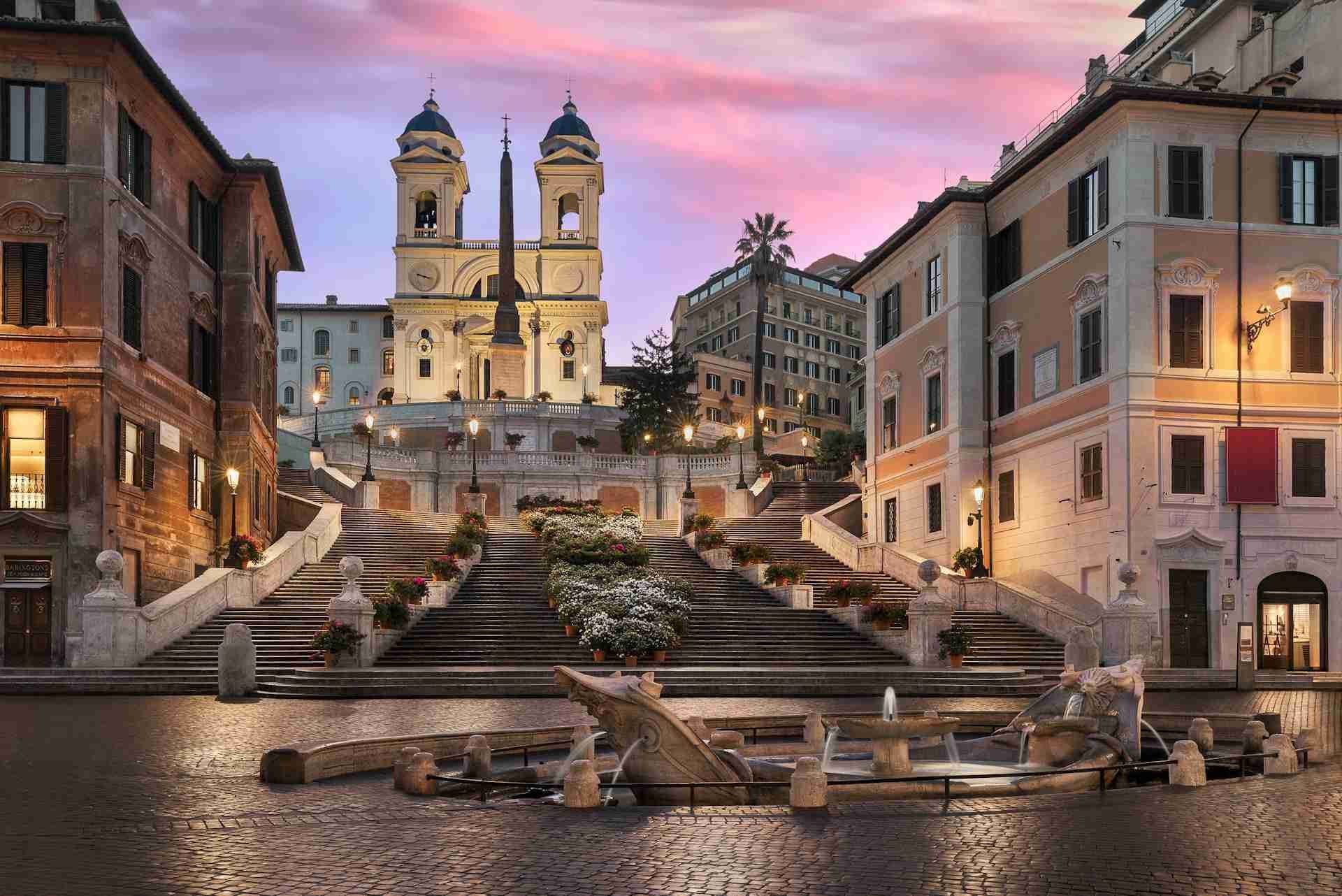
At the heart of Rome's historic center, the Trinità dei Monti staircase and Piazza di Spagna offer photographers a layered blend of classical architecture, changing light, and vibrant street life. Better known as the Spanish Steps, this sweeping staircase connects the church of Trinità dei Monti above with the piazza below, forming one of the most photogenic urban spaces in the city. Its symmetrical structure, warm travertine surfaces, and wide terraces create endless compositional opportunities, especially when worked with intention and at quieter times of day. While the area is a magnet for tourists, it reveals a completely different rhythm in the early morning and after sunset, when the crowds thin and the city's natural light softens. Framed by historic facades, cobbled streets, and ornate details, this location is as much about capturing mood and timing as it is about structure.
Best Photography Opportunities
• Early morning from the base of the Spanish Steps
is one of the most rewarding times to work this location. Before the piazza fills with foot traffic, the steps sit empty under soft directional light that pours in from the southeast. Positioning yourself near the Fontana della Barcaccia allows you to shoot upward toward the church with the entire staircase laid out symmetrically. Use a wide lens to include the surrounding buildings or frame tighter with a midrange zoom to isolate the steps and their geometry. This is also a good time to experiment with longer exposures using a neutral density filter, as early pedestrian movement adds motion without overwhelming the frame.
• Evening light from the top of the staircase
creates a very different atmosphere, with golden tones reflecting off the surrounding facades and the rooftops of Rome stretching into the distance. From the terrace in front of Trinità dei Monti, you can shoot southwest over the city as the light begins to fade. Bring a longer lens to compress the rooftops and distant domes, or stay wide to capture the subtle shift in sky color as the lights of the city begin to glow. This is also a good time to incorporate passing silhouettes or small groups of locals sitting along the upper steps, giving scale and narrative to the frame.
• Side compositions from Via di San Sebastianello or Via Gregoriana
allow you to photograph the steps from less common angles. These quieter alleys give you a more intimate perspective on the structure, revealing curves and lines that are lost in front-facing shots. Use this position to focus on details, such as light falling across the balustrades or patterns in the paving stones. Morning and late afternoon provide the best light here, as the angle creates soft highlights and gentle shadows along the stone. These compositions are particularly strong in black and white when texture and form are emphasized.
• Reflections in shop windows and fountains
offer unique ways to work the space creatively. By using a longer focal length and shallow depth of field, you can capture reflections of the church, the steps, or passing figures in the windows of nearby boutiques. These shots blend architecture and movement in subtle ways and can add a storytelling element to your work. Be patient and observe how pedestrians interact with the setting, especially in transitional light when shadows begin to stretch across the piazza.
• Street-level portraits and environmental frames
in Piazza di Spagna allow you to capture human interaction within this historic setting. Whether shooting candid street scenes or more structured environmental portraits, this location offers rich texture and visual interest at every angle. Focus on incorporating the steps or nearby facades in the background while using leading lines or repeated shapes to guide the eye. Late afternoon is best for these types of shots when the light is warm but not harsh, and the crowds begin to thin enough to isolate subjects.
Best Time to Visit
The Trinità dei Monti and Piazza di Spagna area is at its photographic best during the early morning and late evening, when natural light is most flattering and the crowds are manageable. Sunrise brings cool tones and side light that gradually warms as it climbs the stairway, creating gentle highlights along the travertine and soft shadows that add depth. This is the only time of day when the Spanish Steps are largely empty, allowing for clean compositions and long exposures without needing to remove people in post-processing.
Late afternoon into the blue hour is another productive window. The western light reflects warmly off the surrounding buildings, giving life to their textured facades and casting interesting shadows across the piazza. As the streetlights come on, the steps and fountains are lit from below, creating a mix of natural and artificial light that works well for moody cityscapes. Midday is the least favorable time for photography, especially during warmer months, when both harsh overhead light and large crowds make it difficult to shoot thoughtfully. Seasonal variation is limited in terms of foliage, but the angle of the sun and crowd behavior do shift, with quieter mornings more common during winter and late fall.
How to Get There
The Trinità dei Monti staircase and Piazza di Spagna are located in Rome's historic center, within walking distance of major landmarks such as the Trevi Fountain and Villa Borghese. The nearest metro stop is Spagna, located directly beneath the piazza and accessible via Line A. From there, you exit directly into the square, just steps away from the base of the staircase. Alternatively, the upper terrace in front of the church can be reached via a gentle climb from Piazza Mignanelli or by taking the elevators inside the nearby Villa Borghese metro entrance.
There are no fees or permits required to access the area or shoot in public spaces, although commercial filming or large scale setups may require special permissions from city authorities. For early morning photography, consider arriving by foot or staying at a nearby hotel to avoid metro delays and to ensure you reach the location while the light is still low. The area is open at all hours, though the lighting and atmosphere change dramatically depending on time of day and weather. Tripods can be used in early morning or off peak hours without drawing attention, but it is best to keep a low profile and be respectful of foot traffic once the day gets underway.
Recommended Photography Gear
Photographing Trinità dei Monti and Piazza di Spagna requires a nimble and versatile kit that allows you to work efficiently in an urban setting. A wide angle lens in the 16 to 35 millimeter range is essential for capturing the full sweep of the staircase, especially when working from the base of the piazza or along the upper terraces. Use this lens to include architectural symmetry or to emphasize the grand scale of the steps in contrast to human figures.
A midrange zoom such as a 24 to 70 millimeter lens is useful for more flexible framing, particularly when composing detail shots or working street level scenes that require quick adjustment. This lens also works well for isolating people within the space or capturing natural interactions between visitors and the architecture. For tighter compositions, a 70 to 200 millimeter lens will allow you to compress the buildings, isolate rooftop textures, or frame reflections and shadow patterns on the facades.
A compact tripod is helpful for low light shooting at dawn or during the blue hour, especially if you plan to use slower shutter speeds for motion blur or long exposures. In busy hours, hand-held shooting is often more practical, so a camera with good image stabilization can be beneficial. Bring a polarizer to manage glare on polished surfaces and water in the fountains, particularly in strong light. A small lens cloth is essential to manage dust or fingerprints when working near water features or reflective glass. Pack light and work mobile, as changing positions quickly is key to responding to the shifting light and dynamic environment.
Nearby Photography Locations
, located just above Trinità dei Monti, offers panoramic views across Rome and is especially rewarding during sunrise and sunset. The overlook faces west, with a clear view of St. Peter's Basilica on the horizon, and can be paired easily with a shoot at the Spanish Steps. Use a telephoto lens to isolate the domes and rooflines in warm directional light.
, adjacent to the church, provide a quiet, leafy contrast to the urban density of the piazza. The park features long pathways, fountains, and classical sculptures that work well for soft, painterly compositions in early morning or diffused light. It is also a good spot to shoot environmental portraits or experiment with depth and framing through tree cover.
, a short ten minute walk from Piazza di Spagna, delivers a completely different type of urban photography experience. The ornate baroque structure and flowing water provide endless motion and texture, particularly in the early morning before the crowds arrive. Long exposures are effective here to smooth the water and reveal architectural detail without distraction.
• Pantheon
, slightly farther west, is one of Rome's most photogenic classical structures. The way light enters through the oculus shifts throughout the day, creating powerful internal shadows and highlights. From outside, the columns and open piazza allow for wide scenes that balance human scale with architectural weight.
, a quiet side street just off the Spanish Steps, is filled with ivy-covered walls, artisan shops, and gentle curves. This street is perfect for more intimate scenes and lifestyle shooting, offering rich textures and a peaceful atmosphere. In soft light, the tones of the stone and greenery complement the warm palette of the larger piazzas.
Trinità dei Monti and Piazza di Spagna offer more than postcard angles. They reward careful timing, thoughtful composition, and a willingness to slow down in a place that most people rush through. Whether you're drawn to the structure of the steps, the way light moves across the rooftops, or the fleeting moments of human interaction, this part of Rome provides both structure and spontaneity for photographers who want to see past the surface.
Comments
Loading comments…