
![Neoclassical Light: Photographing the Temple of Canova, Possagno, Italy Standing on a hilltop in the Veneto foothills, the Temple of […]](https://storage.googleapis.com/pixeo-blog.firebasestorage.app/article-images/wp-import/featured-132149.jpg)
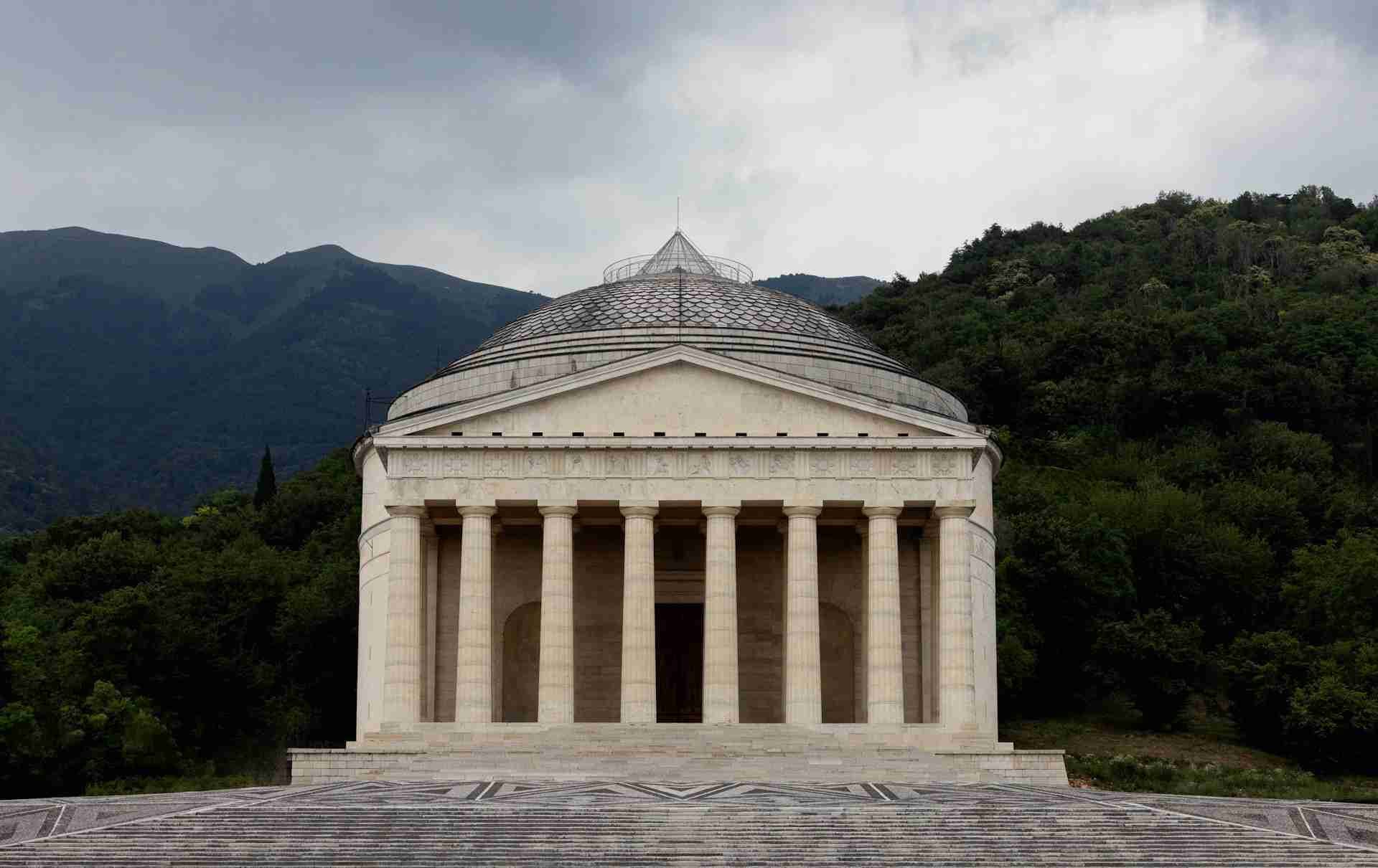
Standing on a hilltop in the Veneto foothills, the Temple of Canova (Tempio Canoviano) dominates the skyline of Possagno with its striking neoclassical symmetry. Designed by the great sculptor Antonio Canova himself and completed in 1830, the structure combines Greek and Roman architectural styles—its façade modeled after the Parthenon and its dome after the Pantheon. Surrounded by cypress groves and sweeping vistas of the Venetian Prealps, the temple is not only a monument to artistic legacy but also a rich visual subject that lends itself to architectural, landscape, and atmospheric photography. With its perfect geometry, elevated position, and ever-changing light, the Temple of Canova invites both reverent wide-angle compositions and contemplative detail work.
Best Photography Opportunities
• Frontal Elevation at Golden Hour
: From the base of the staircase looking directly at the temple's façade, you'll find the most classical composition—a symmetrical alignment emphasizing the colonnade and the grandeur of the pediment. In early morning or late afternoon, soft golden light rakes across the columns, revealing their fluted textures and casting dramatic shadows between them. Use a wide-angle lens to capture the full breadth of the structure while incorporating the expansive staircase as a leading line that draws the viewer's eye toward the center. Framing a centered, vertical composition from low on the steps emphasizes the building's grandeur and monumental scale.
• Oblique View from the Northeastern Slope
: For a more dynamic perspective, position yourself off-center to the northeast, allowing the structure's form to recede into space. This vantage point reveals the cylindrical base of the dome behind the portico and captures the interplay of columns, rooflines, and curvature in one frame. In the late afternoon, sunlight brushes the side of the temple, creating contrast between the lit and shaded sides—ideal for showcasing the building's depth and classical proportions. A 35mm or 50mm lens balances the foreground terrain with the temple's form without over-distorting vertical lines.
• Wide Landscape Context from the Valley Floor
: From the fields or walking trails below the temple hill, you can photograph the entire monument in its larger geographical context. This viewpoint is particularly effective during golden hour or under dramatic skies, when the temple appears to rise out of the landscape like an ancient relic. Including rows of cypress trees or cultivated vineyards in the foreground provides both scale and a visual narrative rooted in the Veneto countryside. Use a telephoto lens to compress the scene and bring the hills and temple closer together, especially when mist or haze adds depth between layers.
• Architectural Details and Sculptural Textures
: The temple's design is rich in carvings, inscriptions, and subtle surface variation. Close-up studies of column capitals, inscriptions along the entablature, or the bronze doors yield a rewarding array of photographic textures. These images are best captured in diffused light—overcast days or late in the evening—when harsh shadows are minimized and the tonal variation in the stone becomes more pronounced. A fast prime lens like a 50mm or 85mm can isolate details and produce shallow depth of field that softens the background while emphasizing the precision of the masonry.
• Evening Blue Hour with Dome Illumination
: As twilight descends and the sky shifts from cobalt to indigo, the temple's dome is often lit from within or from below, glowing subtly against the deepening sky. This is a powerful time for long-exposure work, especially from a distance where the full dome and colonnade are visible. Set your tripod low to include silhouetted foliage or the stone pathway as foreground elements that anchor the glowing structure in space. Using a small aperture (f/8 to f/11) will help keep both the architectural lines and foreground textures sharp throughout the frame.
Best Time to Visit
The Temple of Canova is photogenic throughout the year, but the lighting and seasonal context dramatically affect the quality of your images. Spring (April to June) brings blooming wildflowers, fresh green hillsides, and clear morning light that accentuates the building's limestone hues. Morning shoots are particularly effective during this season, as the temple faces east and catches the day's first rays.
Summer brings long days and deeper contrast, especially in late afternoon when the sun moves westward and side light brings out the relief of the columns. Summer skies, especially before thunderstorms, often fill with textured clouds that serve as dramatic backdrops for wide shots.
Autumn transforms the surrounding trees into a palette of ochre and bronze, which frame the building beautifully from lower angles. The lower sun angle in September and October creates prolonged golden hour light that flatters both the temple and its surrounding landscape.
Winter sees the fewest visitors and offers a chance to capture the temple in solitude, often dusted with snow. Bare trees provide clearer sightlines, and early sunsets allow for longer exposure experimentation at blue hour without waiting late into the evening.
Because of its hilltop location, weather conditions shift quickly. Early morning mist in the valley below can be photographed from the upper steps, creating a floating effect where the temple appears to hover above the clouds.
How to Get There
The Temple of Canova is located in Possagno, a small town in the province of Treviso, northern Italy. The town is accessible by car from Bassano del Grappa (about 20 minutes) or from Treviso (approximately 1 hour).
Once in Possagno, follow local signage to the "Tempio Canoviano." Parking is available at the base of the hill, with a short but steep pedestrian path leading up to the temple steps. The ascent offers several intermediate viewpoints that are worth photographing in their own right, particularly when framed through the cypress trees.
Access to the outside of the temple is free at all times. The interior may have limited opening hours and requires a small entry fee if you plan to photograph the rotunda and its collection of art and artifacts. Exterior photography is permitted year-round.
Recommended Photography Gear
A wide-angle lens (16–35mm) is essential for capturing the temple's full façade, staircase, and architectural symmetry. Use it to incorporate surrounding natural elements like trees or hills for context and scale.
A mid-range zoom (24–70mm) offers the flexibility to frame side elevations, architectural details, or layered compositions that combine human-made and natural elements. This is especially useful when shooting from angled perspectives.
A telephoto lens (70–200mm) is recommended for distant landscape-context shots from the valley, or for isolating the temple's dome against the background hills or sky. It also serves well for compressing layers of trees, fields, and structure.
A sturdy tripod is essential for dawn, dusk, and blue hour photography. Long exposures help smooth motion in passing clouds or bring out subtle illumination on the temple dome. A polarizing filter will help deepen sky tones and reduce reflective glare from the stone surfaces. A small step stool can also be useful to gain slightly elevated vantage points when working along the sides or at the base of the structure.
Nearby Photography Locations
: Located just downhill from the temple, this museum houses Canova's plaster casts and marble sculptures. Its classical interiors, skylit galleries, and curated lighting are ideal for fine-art detail work and intimate compositions of neoclassical forms.
: Roughly 30 minutes north, this monumental site atop Monte Grappa offers sweeping alpine views, dramatic light, and a solemn, structured architectural subject perfect for minimalistic wide shots.
• Asolo
: A hilltop town often referred to as the "Pearl of the Veneto," Asolo is a maze of stone alleys, terracotta roofs, and medieval towers. Excellent for architectural street photography and capturing the interplay of light and shadow in a historic setting.
A nearby Palladian villa surrounded by vineyards and formal gardens. Its symmetry, frescoed interiors, and harmonious architectural lines complement any session focused on classical Italian design.
: The rolling Prosecco hills offer sweeping vistas, orderly vineyard rows, and rustic structures nestled into the terrain. Best shot at sunrise or sunset for long shadows and rich textures that accentuate the topography.
The Temple of Canova invites more than a single shot—it offers a study in geometry, light, and reverence. Whether you're capturing its illuminated dome at dusk or isolating the ancient lines of its column flutes, this site rewards patient photographers who understand that timeless subjects demand thoughtful framing and shifting light.
Comments
Loading comments…