
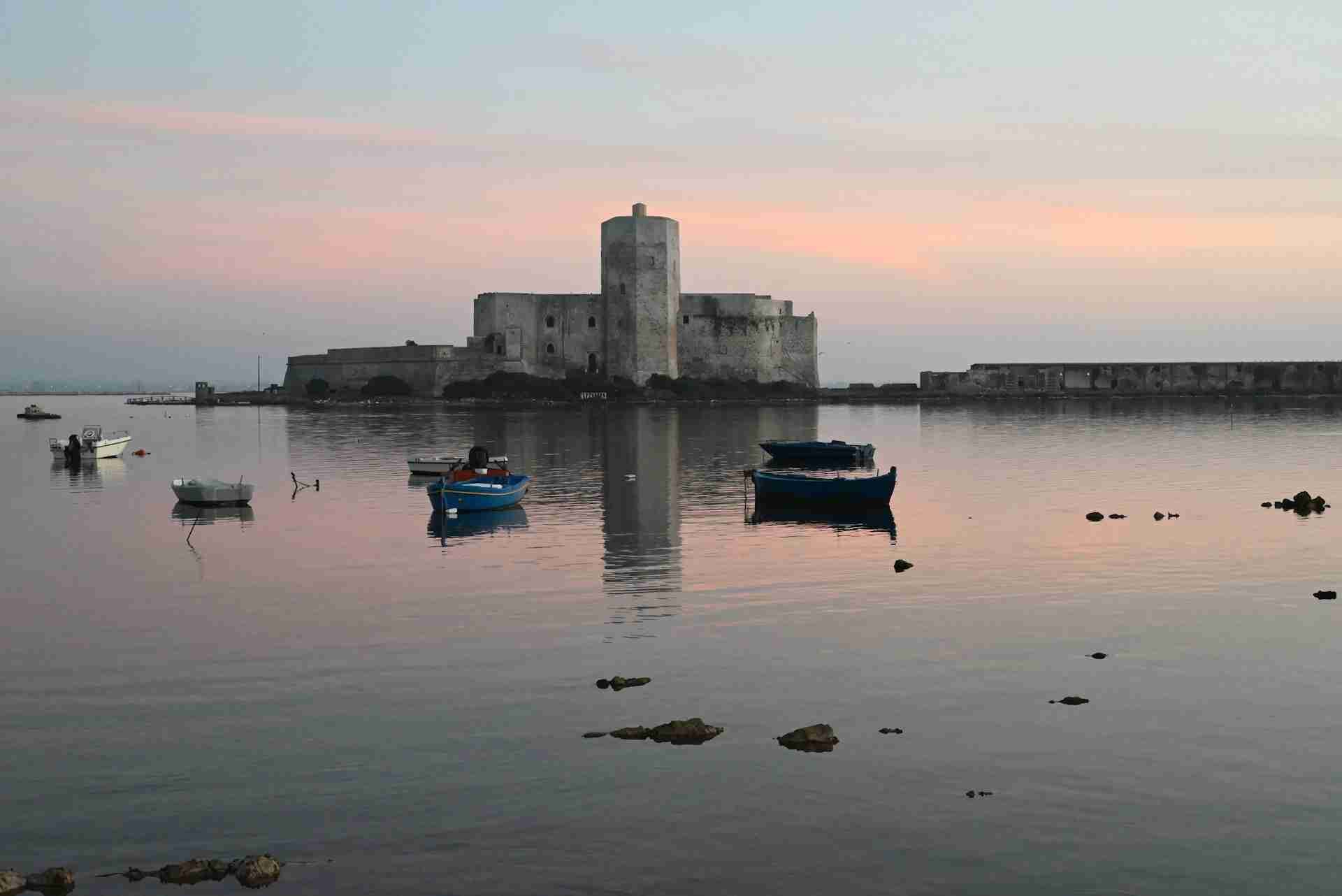
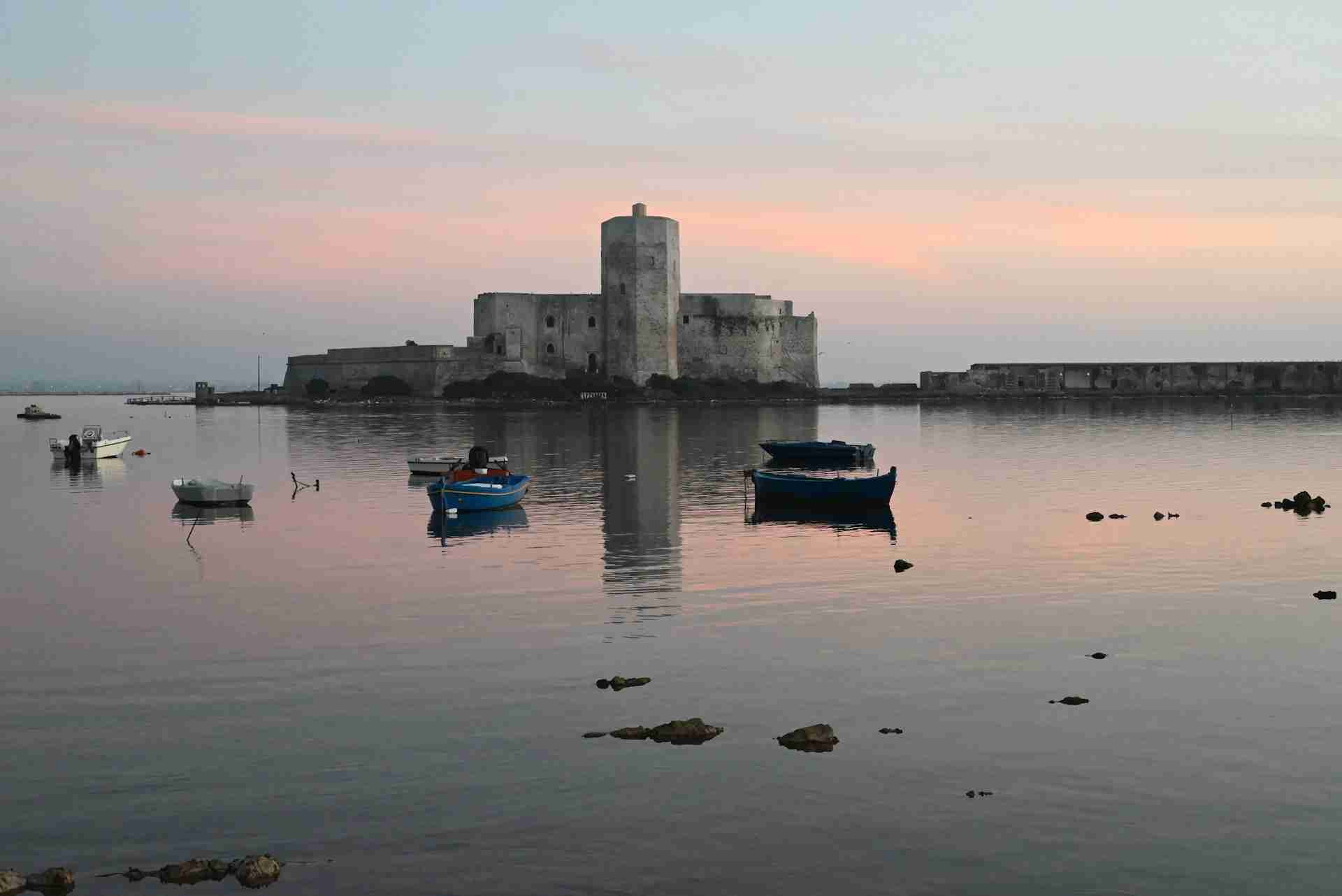
Torre Peliade, also known as the Castello di Mare, sits just offshore at the edge of Trapani's harbor, isolated by water and history. Once a defensive coastal tower and later a prison, this small medieval structure rises from its rocky base directly in the sea, surrounded by ever-changing light and weather. From the shoreline promenade or nearby piers, photographers can frame it against the horizon, storms rolling in from the west, or the pastel tones of a Sicilian sunset. The tower's raw stonework, aged by centuries of salt air and sea spray, contrasts beautifully with the smooth reflections of the surrounding water. Its scale and placement offer minimalist compositions that rely on clean geometry and controlled light, making it a rewarding subject for photographers who understand patience and simplicity.
Best Photography Opportunities
• Golden Hour from the Lungomare
The most reliable view is from the waterfront path along Trapani's Lungomare Dante Alighieri. From here, the tower is fully separated from the shoreline and framed by open water and sky. At sunset, warm light catches the western wall, turning the stone a soft orange-pink as the sea reflects subtle gradients of color. Compositions with leading lines from the sea wall or rocks in the foreground help add depth and scale. A mid-range zoom allows you to balance architectural detail with negative space.
• Storm Light and Dramatic Weather
On windy or unsettled days, the open sea creates dramatic backdrops as clouds move behind the tower. With long exposures, the motion of water and sky creates painterly effects that contrast with the solidity of the structure. Neutral density filters help extend exposure time and smooth wave patterns. These conditions often arrive with western winds, so late afternoon is typically best for catching the tower beneath layered light. The rougher weather also enhances texture on the stone, especially in close-ups.
• Minimalist Seascapes at Blue Hour
As light fades, the tower becomes a silhouette against a darkening sky. Blue hour works especially well here, softening the lines of the horizon and emphasizing color shifts in the water. Shooting from the shoreline or using breakwaters as foreground, you can isolate the tower as a graphic element. These compositions benefit from precise framing and subtle editing. A tripod is essential to manage longer exposures as the ambient light drops and reflections become smoother as wave action settles.
• Details from the Western Pier
For tighter framings or detail shots, the fishing pier west of the tower provides a closer vantage point. From here, you can capture the surface texture of the walls, partial reflections, or the architectural features that remain intact. These include small arched windows, stone joints, and surface erosion. A 70 to 200 millimeter lens is ideal for isolating these elements. Early morning light from the east grazes the walls gently and emphasizes the patina and natural wear of the masonry.
• Contextual Scenes with Boats and Harbor Life
Including small boats, seabirds, or elements of the working harbor introduces scale and context to your compositions. The surrounding waters are active with local fishermen and small craft, especially in the early hours. These moments add narrative without crowding the frame and can help balance static structure with human activity. Use a moderate aperture to keep both the tower and contextual elements in focus. Time your shots when the light is soft to avoid harsh reflections.
Best Time to Visit
The tower is accessible to photograph year-round, though the light and water conditions change noticeably by season. Spring and autumn offer the best balance with moderate temperatures, clean skies, and favorable golden hour light that lasts longer and comes in at a lower angle. Winds are more frequent in these shoulder seasons, which helps create dynamic skies and textured sea surfaces.
Summer brings calm water and pastel skies during the long evenings but also haze and more foot traffic along the shore. These conditions favor minimalist scenes with soft color, especially just after sunset. Winter offers moodier images with strong contrasts and storm fronts that often develop over the Tyrrhenian Sea. It is also the quietest season, which allows for uninterrupted tripod use and long exposures.
Golden hour is best from the late afternoon into early evening, as the sun sets over the sea directly behind or beside the tower depending on your angle. Blue hour extends the shooting window and works particularly well for long exposures. Morning sessions can work too, especially from the western pier, though the tower remains in shadow until later in the day.
How to Get There
Torre Peliade is located directly off the western point of Trapani, Sicily. The most common access point is the Lungomare Dante Alighieri, a long seafront promenade with ample space for setting up tripods and choosing a variety of angles. From the city center, it is about a 10 to 15 minute walk to reach the main waterfront vantage points. Parking is available nearby along the promenade and surrounding streets, though it can fill up in the late afternoon during peak seasons.
The western fishing pier offers a slightly closer view and is also walkable from the old town. Access is free of charge and there are no gates, permits, or restrictions on photography from public walkways. There is no access to the tower itself, as it remains offshore and closed to the public. Boats occasionally circle the tower for private tours but these are more suited to sightseeing than serious photography.
If shooting around sunrise or blue hour, bring a headlamp or flashlight as lighting along the water's edge is limited. The area is safe and frequently visited by locals, but early morning and late evening hours can be very quiet. Most compositions can be reached without stepping off pavement, but care should still be taken near wet rocks and slippery edges.
Recommended Photography Gear
A mid-range zoom lens such as a 24 to 70 millimeter covers most compositions from the promenade and pier, giving enough reach to isolate the tower or include foreground elements. A 70 to 200 millimeter lens is helpful for detail shots and compression across the water. Wide angles are less useful here unless you are including strong foreground structure like rocks or fishing gear.
A sturdy tripod is essential for blue hour, long exposure, or storm photography. Use a remote shutter release or internal timer to avoid camera shake. Circular polarizers can help with glare on the water and deepen sky color on clear days. Neutral density filters allow for motion blur in waves and cloud streaks during longer exposures.
Weatherproofing for both camera and bag is advised in windy or rainy conditions, especially during winter. A microfiber cloth or lens wipe is necessary to deal with sea spray, which can accumulate quickly. If moving between locations, a small rolling case or lightweight backpack is enough since most shooting positions are within a short walking radius.
Nearby Photography Locations
, located just a few hundred meters west, is another sea tower at the edge of the Trapani peninsula. It offers dramatic sunset views and compositions with strong geometric elements. From its base, you can also photograph back toward the city and the Castello di Mare in the distance.
features narrow streets, warm stone buildings, and traditional balconies. Early morning light brings out texture and shape, while late afternoon casts long shadows that emphasize the architecture's depth.
, just south of the city, are ideal for capturing layered reflections, working windmills, and birdlife, particularly at sunset. These historic salt flats offer strong linear compositions and pastel skies, especially during summer and autumn.
• Erice
, a medieval hill town above Trapani, provides wide views of the coast, the islands of the Egadi, and the surrounding countryside. The town itself is filled with cobbled streets, stone churches, and misty alleys that change dramatically with the weather.
, especially Levanzo and Favignana, are accessible by ferry and offer rocky coastlines, turquoise water, and cliffside trails. These islands provide excellent contrast to the more urban coastal shots of Trapani and are best visited in spring or early autumn when the air is clear.
Torre Peliade remains one of the simplest and most rewarding coastal structures to photograph in western Sicily. Its isolation, scale, and interaction with light and sea give photographers the raw elements needed to build quiet, powerful compositions with nothing more than a sidewalk and a little patience.
Comments
Loading comments…