
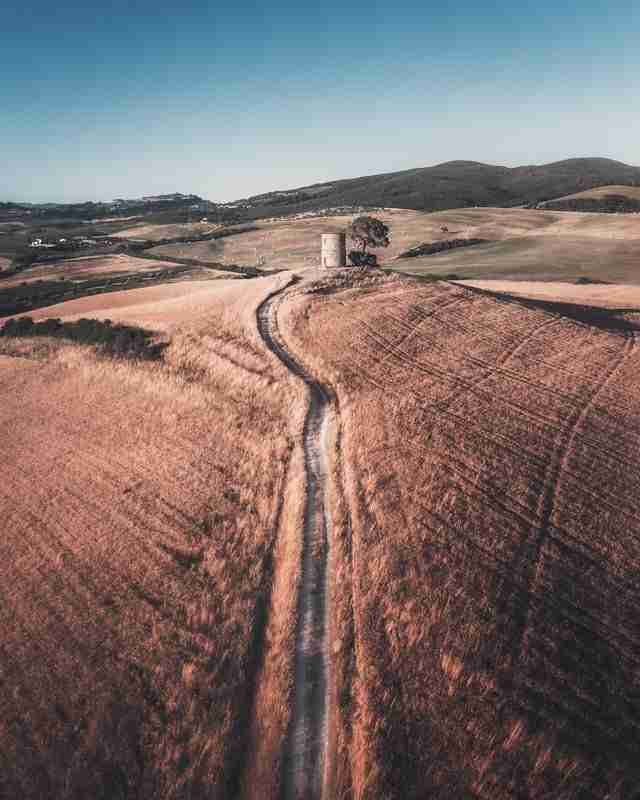
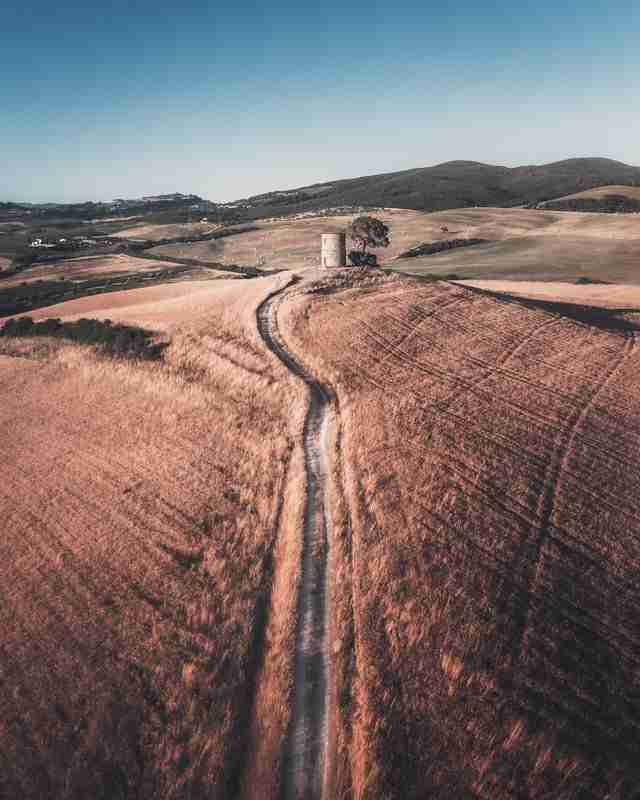
Nestled on the edge of the medieval village of Bibbona in Tuscany, the Vecchio Mulino di Bibbona—literally the "Old Mill of Bibbona"—is a rustic stone structure that seems pulled from a Renaissance painting. Surrounded by olive groves, pine woods, and winding rural lanes, the old mill exudes historic charm and quiet simplicity, characteristic of this lesser-trodden part of the Tuscan coast. Its weathered walls, red-tiled roof, and arched entrances evoke centuries of agricultural life, making it a deeply photogenic subject for those drawn to earthy textures, golden light, and the slow rhythms of rural Italy. Whether you're composing in early morning mist or the saturated warmth of late afternoon, this setting captures the soul of Tuscany without the tourist traffic.
Best Photography Opportunities
• The Mill's Stone Façade and Arched Entrances
: The western-facing façade of the Vecchio Mulino catches late-day light beautifully, with golden tones emphasizing the rough stone texture and architectural details. A 35mm or 50mm lens is ideal for capturing the building in context with its surroundings, while a longer focal length allows you to isolate key elements like the aged wooden doors, arched windows, and terracotta roofline. Be sure to explore angles from slightly below or the side, where light grazes the surface and deepens every crack and crevice in the ancient stone.
• Olive Trees and Agricultural Framing Elements
: Framing the mill with olive branches or dry stone walls adds both texture and authenticity to your composition. These elements ground the mill in its agricultural setting, with seasonal variation offering different moods—silvery foliage and ripening olives in summer, or bare gnarled branches casting long shadows in winter. Use a shallow depth of field to blur the foreground just enough to highlight the mill's shape while preserving its character in the distance.
• Morning Mist and Atmospheric Depth
: On cool spring or autumn mornings, mist can settle gently across the low-lying fields around Bibbona, softening contrast and wrapping the mill in ethereal light. This is the ideal time for wide-angle shots that include surrounding hills, cypress trees, or distant rooftops, giving a sense of place. For best results, arrive before sunrise and work quickly as the light changes—pastel skies and diffused sun will help emphasize the textures of stone and roof without harsh shadows.
• Detail Shots of Age and Craftsmanship
: The mill is a haven for textural detail: rusted iron hinges, lichen-streaked masonry, weathered wooden beams, and the occasional faded mural or signage etched into the wall. Use a macro lens or long lens for detail-oriented compositions that capture the intersection of craftsmanship and decay. These shots work beautifully in soft light or even flat midday conditions, when texture is the star of the frame rather than dynamic contrast.
• Twilight and Long Exposures
: The surrounding area has very little light pollution, allowing for moody blue-hour shots or even star photography if you're staying nearby. As the last natural light fades, the mill can be silhouetted against the western sky or lit softly with a handheld lantern or low-powered light source to highlight its shape. A tripod is essential here, as long exposures will allow you to control your lighting precisely and preserve color nuance in the fading sky.
Best Time to Visit
Spring and early autumn are the best seasons to photograph the Vecchio Mulino di Bibbona, offering the clearest air, dynamic skies, and the full range of Tuscan light. In April and May, wildflowers bloom along the field edges and the surrounding olive groves fill out with soft silver-green foliage. These months also bring occasional morning mist, ideal for depth and softness in landscapes.
Autumn—particularly from late September through October—is equally photogenic, with golden tones dominating the environment. The light is warm and low throughout the day, perfect for long shadows and golden-hour compositions, especially against the mill's sun-baked façade. Harvest activity in nearby fields or olive presses adds cultural richness to your visit and can lend narrative to your shots.
Summer brings stronger contrast and brighter skies, which can be difficult to manage mid-day but are excellent for crisp detail and rich blue backdrops during early morning or late evening. Winter visits offer a different aesthetic: fewer leaves, starker silhouettes, and an occasional dusting of frost on stone surfaces. While rare, light snow in the region transforms the landscape into a subdued monochrome study.
How to Get There
The Vecchio Mulino di Bibbona is located just outside the village of Bibbona, in the province of Livorno in Tuscany. Bibbona itself is a well-preserved medieval hill town, accessible by car via the SS1 coastal highway, with the nearest larger hubs being Cecina and Livorno to the north, or Grosseto to the south. From the main square in Bibbona, the old mill can be reached via a short walk or drive along local rural roads, often lined with cypress and stone walls.
There is no official signage marking the site as a tourist destination, so use satellite mapping and local references to guide you. Parking is typically available along the road shoulder, but space is limited and should be used respectfully to avoid blocking access or driveways. The site appears to be on semi-private or agricultural land—photograph only from public paths unless otherwise invited by locals or caretakers.
The area is best explored on foot. If you're staying in the village or nearby agriturismo lodgings, plan a golden hour walk out to the mill with camera in hand—light changes fast, and walking gives you time to scout angles and seasonal details along the way.
Recommended Gear and Shooting Tips
Pack light but versatile for photographing the Vecchio Mulino. A 24–70mm lens will give you flexibility to shoot the entire structure as well as environmental details. If you plan to explore surrounding lanes or take in wider landscape views, a 16–35mm wide-angle lens will help you frame the mill within its rolling Tuscan context. For fine details and textures, a 70–200mm zoom or macro-capable prime lens offers the reach and clarity needed to isolate character elements.
A tripod is invaluable for low light work—sunrise, twilight, and long exposure shooting all benefit from stable support. Since the site is quiet and natural, you can work slowly and without interruption, especially in the early morning or just before dusk. Use a circular polarizer during the day to reduce reflections and deepen skies, or a graduated ND filter for balancing exposures during sunrise and sunset sessions.
Footwear should be suitable for loose gravel and uneven terrain. The area is rural and subject to seasonal conditions, so bring water, a cloth to clean lenses if walking through dust or mist, and possibly a small flashlight if staying late for twilight work. Keep gear simple and your approach slow—this is a place best appreciated with patience and a sense of stillness.
Nearby Photography Locations
: Just a few minutes' walk uphill, the village of Bibbona offers cobbled lanes, archways, and centuries-old stone houses with colorful shutters and flowering balconies. It's an ideal contrast to the rustic mill below—quieter, more vertical, and filled with photogenic vignettes.
: A short drive away, the famous Viale dei Cipressi near Bolgheri is a straight road lined with towering cypress trees stretching over 4 kilometers—iconic and symmetrical, especially at sunset or in misty light. The rows create natural vanishing points that lend themselves to both minimalist and grand landscape compositions.
: This nearby protected area includes trails through Mediterranean scrubland, pine forest, and open clearings with expansive views across the coastal hills. Wildlife, forest light, and scenic overlooks make it ideal for those interested in naturalistic photography.
: Another picturesque hill town not far from Bibbona, Castagneto offers elevated views, tight medieval lanes, and vineyard-covered hills rolling out toward the sea. In late afternoon, the light here becomes saturated and warm—ideal for layered telephoto landscapes.
: For a complete contrast, the nearby coast features windswept dunes, weathered driftwood, and open sea vistas perfect for minimalist shoreline compositions. Sunset over the Tyrrhenian Sea adds a final note of golden light to a day of inland exploration.
The Vecchio Mulino di Bibbona may not be marked on the tourist trail, but that's precisely what makes it a gem. Anchored in history and surrounded by the quiet beauty of Tuscan countryside, it offers a perfect fusion of place, light, and texture for photographers willing to slow down, look closely, and let time speak through stone.
Comments
Loading comments…