
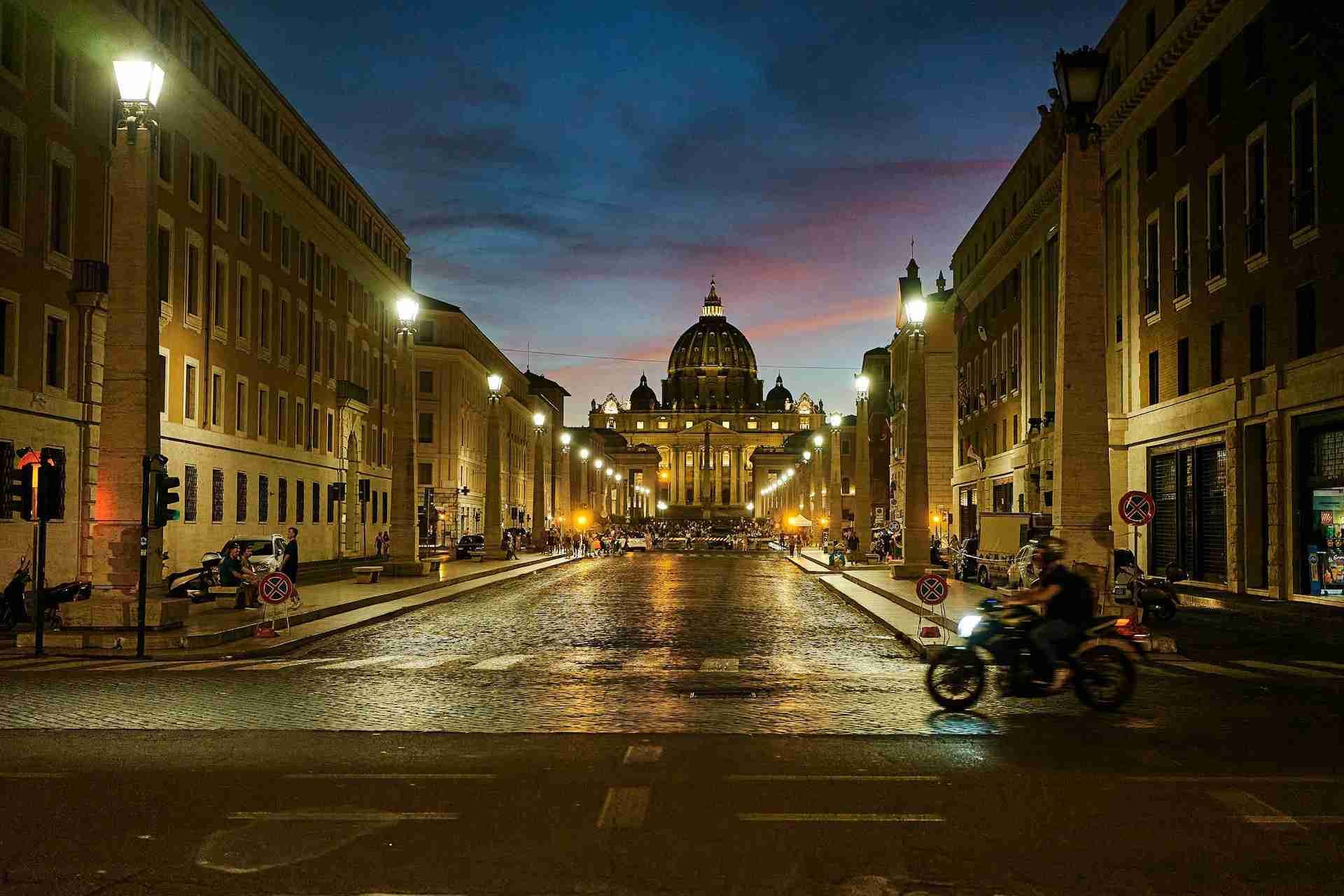
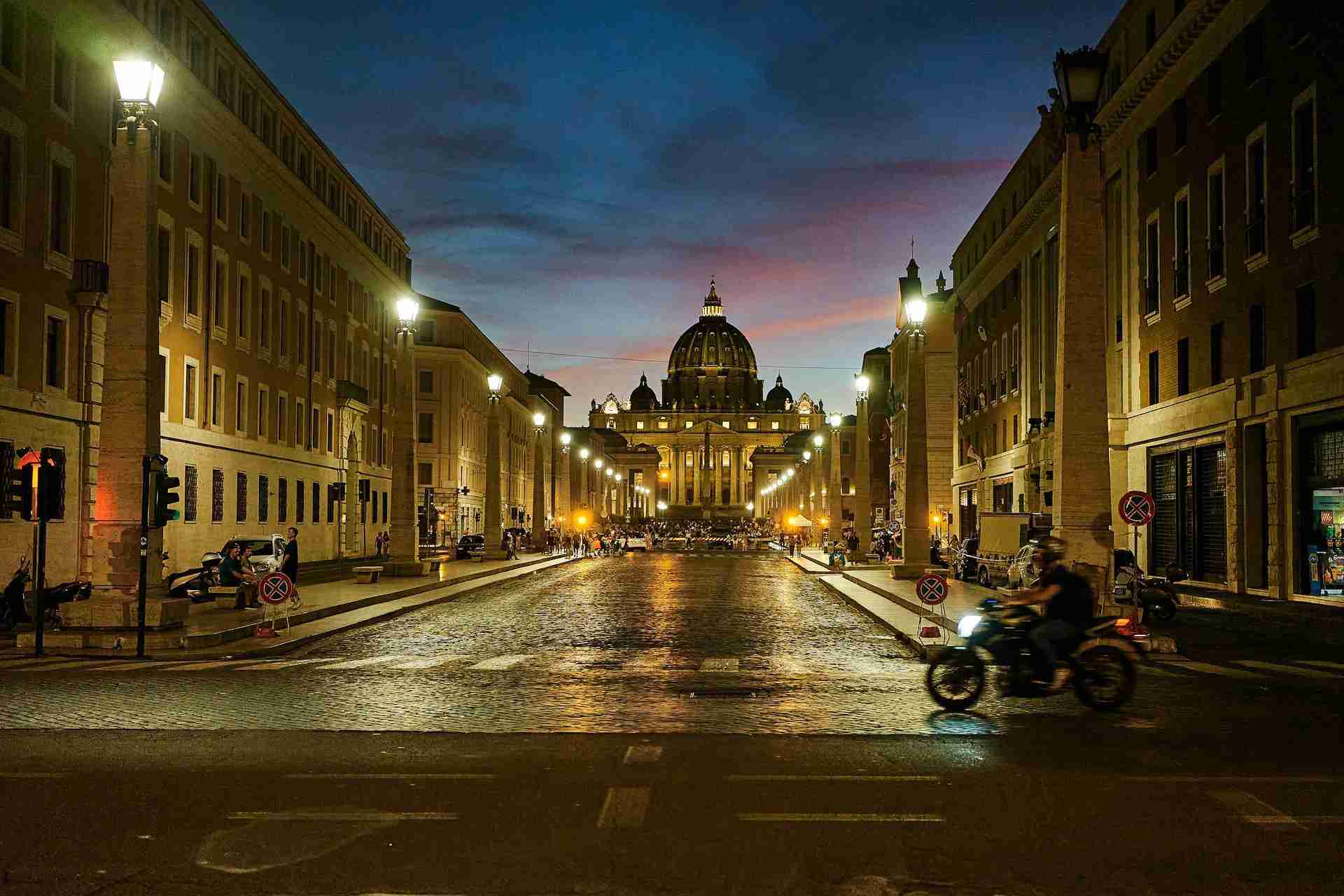
Stretching from the heart of Rome toward the Vatican, Via della Conciliazione is a grand, ceremonial boulevard that draws the eye—and the lens—directly to the dome of Basilica di San Pietro. This linear thoroughfare, constructed in the early 20th century, serves not only as a powerful architectural axis but also as a stage for spiritual and civic life in the Eternal City. Framed by elegant Renaissance and Baroque facades, the road culminates in the visual majesty of St. Peter's Basilica, one of the most iconic landmarks in the world. For photographers, this corridor offers a masterclass in symmetry, scale, and golden light, especially when capturing the early morning hush or the vibrant rhythms of Roman evenings. Whether you're working in wide-angle to emphasize grandeur or honing in on shadow and texture, this location is essential for any visual narrative of Rome.
Best Photography Opportunities
• Vanishing Point Compositions Along Via della Conciliazione
The boulevard's linear design creates a natural vanishing point that leads the viewer's eye directly to the dome of St. Peter's Basilica, making it a classic spot for framing bold architectural symmetry. From a central position mid-street, you can emphasize the strong perspective lines formed by the buildings and lamp posts on either side, guiding attention to the heart of the Vatican. A wide-angle lens exaggerates the depth and curvature of the composition, and shooting from a low angle adds even more drama by capturing the textures of the cobblestones in the foreground. This perspective becomes especially powerful in the early morning when the street is empty and the first golden light begins to illuminate the façade of the basilica, casting long, gentle shadows along the surrounding walls.
• Basilica di San Pietro at Sunset and Twilight
As daylight fades, the dome of St. Peter's becomes a beacon of warm tones and sculptural contrast. From the eastern entrance to the boulevard, the setting sun often backlights the basilica, while the ambient street lighting along Via della Conciliazione begins to glow. This juxtaposition of natural and artificial light makes sunset and twilight the most visually dynamic times for capturing the grandeur of the Vatican. Use a tripod to shoot long exposures that soften traffic movement and highlight the contrast between illuminated architectural elements and the darkening sky. The marble details on the dome and the façade take on a golden hue, while the entire structure appears to float gently above the gathering dusk. Twilight also invites experimentation with reflections in puddles or wet pavement, which can double the impact of your compositions.
• Colonnade and Foreground Activity in St. Peter's Square
Inside the piazza, Bernini's massive colonnades embrace visitors in a semi-circular sweep of white travertine columns that frame the approach to the basilica. These colonnades are not only architectural marvels but also compositional tools that lend rhythm and structure to wide-angle scenes. Including people within the curve—pilgrims praying, tourists pausing, clergy in motion—provides scale and adds a human narrative. In the afternoon, sunlight filters through the columns, casting sharp diagonal shadows that sculpt the space into segments of light and dark. With a mid-range zoom, you can isolate details like statues above the colonnade, water spray from the fountains, or the orderly chaos of the crowds. Early morning visits yield a quieter square, perfect for architectural studies without visual distraction, while midday captures the energy and interaction of the space at its peak.
• Shadow and Texture Studies of Architectural Detail
The facades along Via della Conciliazione and the surface of the basilica itself offer intricate carvings, inscriptions, and sculptural elements that respond beautifully to sidelight. A telephoto lens allows you to compress layers of relief work—everything from papal crests to angelic figures—into tight, graphic compositions. These elements are especially compelling in the golden hours when shadows become more pronounced, giving depth to otherwise flat surfaces. From street-level decorative cornices to the towering statues atop the basilica, every elevation presents details that reward close attention. Capture the play of light across columns, dome segments, and arched doorways. For more abstract compositions, shoot tight frames of textures: worn marble steps, oxidized bronze railings, or centuries-old inscriptions softened by time and weather.
• Reflections, Movement, and Atmospheric Street Life
The intersection of sacred space and urban life along Via della Conciliazione creates countless opportunities for storytelling through motion and ambient detail. After rainfall, puddles along the curb or in the uneven paving stones become perfect mirrors, doubling the impact of the dome and capturing movement in soft ripples. Wait for silhouettes—tourists with umbrellas, priests in cassocks, or cyclists in motion—to pass through the frame and create a narrative tension. Long exposures at night capture glowing light trails from passing cars and blurred figures moving toward the basilica, while still preserving the static serenity of the Vatican beyond. These compositions speak to the convergence of permanence and transience that defines life in Rome. Even during the day, street musicians, flower vendors, and local clergy add character to the frame. Shooting from a distance with a fast 85mm allows for candid captures while preserving the context and grandeur of the location.
Best Time to Visit
Via della Conciliazione and St. Peter's Basilica are photogenic at nearly every hour, but timing dramatically affects the quality and mood of your images. Early morning—particularly just after sunrise—is the most rewarding for clarity, soft light, and a peaceful, nearly empty boulevard. The pale gold stone of the basilica glows in morning light, and shadows cast by the colonnade offer structure without harsh contrast.
Midday offers the brightest conditions, useful for capturing the full details of the basilica and architectural surroundings, but be mindful of harsh highlights on white marble and deep shadows. A polarizing filter helps manage contrast and reduce glare from polished stone surfaces.
Golden hour is ideal for wide scenes that showcase the warm palette of the city, while blue hour and nighttime photography bring out the full impact of Rome's architectural lighting plan. During these periods, street lamps, window glows, and the basilica's illumination create a theatrical quality that complements long-exposure techniques.
Seasonally, winter and late autumn offer crisp skies and fewer crowds, enhancing access and control. In summer, morning visits are best to avoid the midday heat and high tourist traffic.
How to Get There
Via della Conciliazione runs directly west from Castel Sant'Angelo toward St. Peter's Basilica. The nearest metro stop is Ottaviano (Line A), about a 10-minute walk through the Vatican district. You can also reach the location easily on foot from central Rome—just follow the Tiber River past the Ponte Sant'Angelo for a dramatic approach to the site.
Taxi and ride-share services drop off near the Vatican perimeter, and there are multiple bus stops along Corso Vittorio Emanuele II and Via di Porta Cavalleggeri. The boulevard and square are pedestrian-friendly, with paved paths and open walking spaces throughout. Early morning photographers will find the streets quiet and accessible, while evening visits may require patience navigating foot traffic.
No photography permit is needed for personal work, and tripods are permitted outside the basilica. Inside St. Peter's, photography is allowed without flash, though tripods and large gear may be restricted. Be respectful of liturgical services or security zones, and always follow posted regulations.
Recommended Photography Gear
For this location, bring a range of lenses suited to architecture, detail, and low-light work. A wide-angle lens (16–35mm) is essential for vanishing point compositions down Via della Conciliazione and for full views of the basilica from the square. A standard zoom (24–70mm) is excellent for environmental portraits, colonnade shots, and flexible framing.
A fast prime (50mm or 85mm) excels at texture studies, detail work, and handheld dusk photography inside or around the basilica. A telephoto lens (70–200mm) helps compress architectural layers and isolate distant figures, statues, or decorative elements on the façade and colonnade.
A lightweight tripod is useful for twilight or nighttime exposures. A polarizing filter improves sky definition and marble detail during midday, and a lens hood helps control flare during golden hour. Pack extra memory cards and batteries for extended shooting sessions, especially if you plan to document both dawn and dusk light.
Nearby Photography Locations
Just east of Via della Conciliazione, Castel Sant'Angelo offers a fortress-like silhouette that dominates the Tiber River's western bank. Originally built as a mausoleum for Emperor Hadrian, the structure has served as a papal stronghold, prison, and museum, and today provides panoramic rooftop views over the Vatican and central Rome. Ponte Sant'Angelo, the pedestrian bridge leading to the castle, is adorned with ten angel sculptures by Bernini and his students, making it one of the most theatrical and photogenic pedestrian crossings in the city—especially dramatic at sunrise and sunset when the statues cast elongated shadows across the travertine balustrades.
Stepping inside the basilica reveals one of the most awe-inspiring interiors in all of Europe, where soaring marble columns, Renaissance domes, and golden light filtering through high windows create an atmosphere of monumental stillness. Michelangelo's Pietà, located just to the right of the entrance, offers an emotional focal point rich in sculptural detail and symbolic resonance. The vast nave, intricately inlaid floors, and Baroque altars make the interior a challenging but rewarding space for low-light photography, where a fast lens and steady hand are essential. Visitors should plan for patience, as crowds fluctuate and interior tripod use is not permitted.
Accessed only by guided tour, the Vatican Gardens offer a secluded perspective on Vatican City and rare viewpoints of St. Peter's Basilica from the rear. The gardens are meticulously maintained and include Renaissance fountains, grottos, and winding paths bordered by olive trees and ancient walls. Photographers granted access can explore angles not visible from the public square, making it ideal for more exclusive architectural studies or tranquil compositions that contrast with the busy streets just outside the Vatican walls.
About 15 minutes on foot from the Vatican, Piazza Navona is a masterpiece of Baroque urban design anchored by Bernini's Fontana dei Quattro Fiumi (Fountain of the Four Rivers). This expansive elliptical plaza is built on the footprint of an ancient Roman stadium and comes alive with street musicians, artists, and performers. The richly textured buildings and open-air cafés provide excellent material for candid, lifestyle, and architectural photography. Visit in early morning for clean compositions or after dark when the fountains are lit and the energy of the square shifts into a more cinematic register.
• Campo de' Fiori and Via Giulia
Southeast of Piazza Navona, Campo de' Fiori is one of Rome's liveliest market squares by day and a buzzing social hub by night. The morning produce and flower market makes for colorful street photography, while the statue of Giordano Bruno at its center anchors more somber, historic compositions. Just a block away, Via Giulia runs parallel to the Tiber and offers a quieter, more introspective walking path rich in Renaissance facades, ivy-covered walls, and ornate doorways. This long, straight street is ideal for golden-hour walks and architectural detail work that captures Rome's more intimate side.
Whether you're composing a symmetrical study of the dome from the center of Via della Conciliazione or capturing the quiet textures of St. Peter's Square at dawn, this location rewards photographers with an unmatched balance of form, history, and atmosphere. The interplay between sacred architecture and civic grandeur invites a patient, intentional approach to photography—one that embraces both the monumental and the fleeting. In the heart of Rome, where centuries speak through stone and light, this is a space that never presents the same image twice.
Comments
Loading comments…