
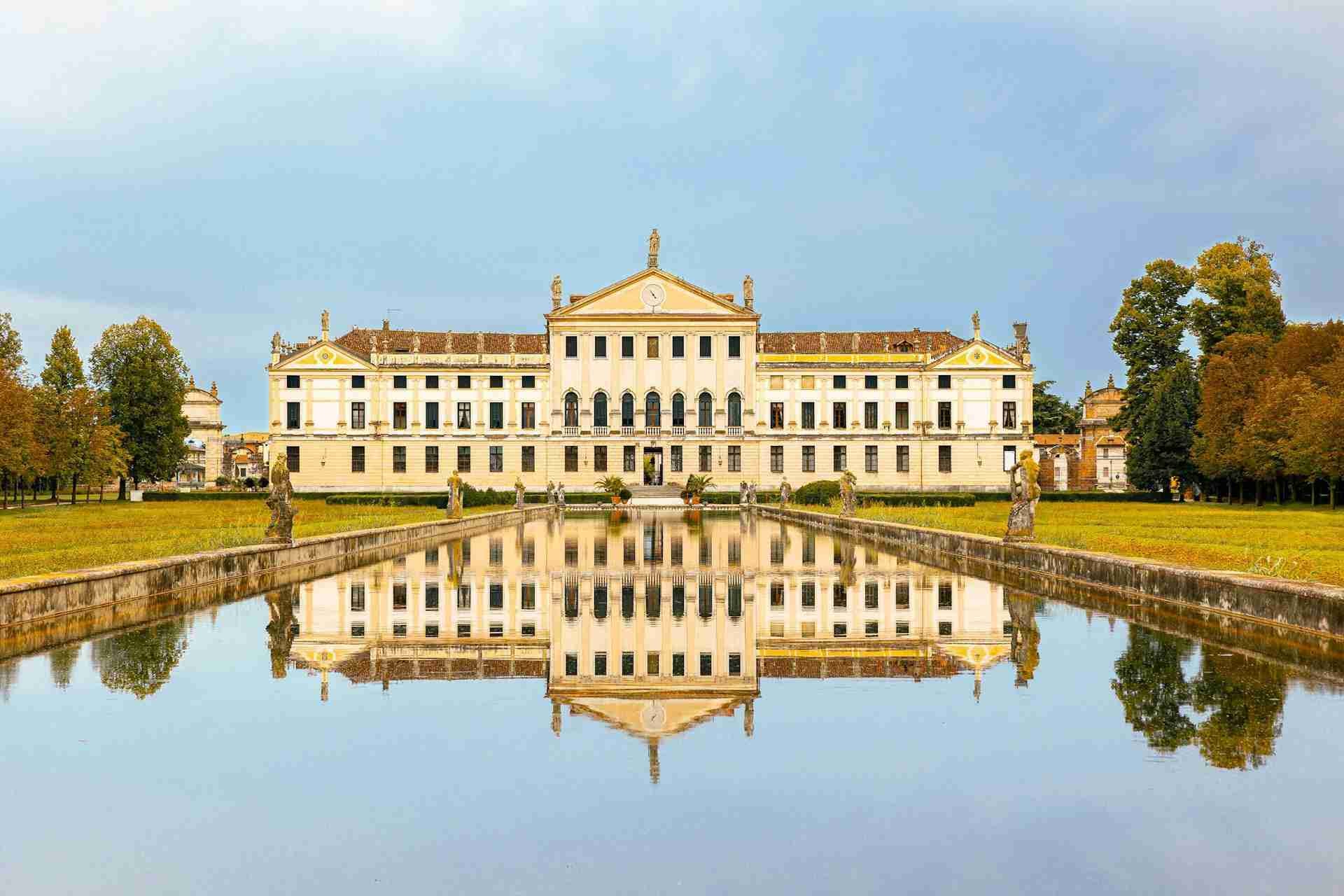
Villa Pisani Reflected in Still Water
Villa Pisani, also known as the Villa Nazionale, stands on the banks of the Brenta Canal in Stra, just outside Venice. Built in the early 18th century as a showpiece estate for one of Venice's most powerful families, the villa remains one of the finest examples of Venetian baroque architecture. Its massive central palace, extensive formal gardens, and reflecting pool offer rich material for photographers drawn to geometry, symmetry, and historical detail. The complex includes grand facades, tree-lined paths, intricate stonework, and shifting reflections across water features that remain calm and consistent throughout the day. Whether you focus on the structure itself, the mirrored compositions in the canal or basin, or the perspective lines of the gardens, Villa Pisani provides a full session's worth of strong frames in a compact, controlled setting.
Best Photography Opportunities
• Canal Reflections of the Central Palace
The most recognizable composition at Villa Pisani is taken from across the narrow canal that fronts the main building. From this position, you can photograph the entire facade reflected cleanly in still water, especially during early morning or late afternoon when light is soft. Use a wide-angle lens to include the palace, sky, and full reflection, or frame tighter to focus on architectural symmetry. A tripod helps maintain vertical alignment and balances exposure between the sky and structure. Consider bracketing if clouds or changing sun create contrast across the building. The canal's surface is often glassy, especially on windless mornings, making it one of the most consistent reflective surfaces in the region.
• Formal Garden Geometry and Tree Lines
The gardens behind the palace follow a strict geometric plan, with long alleys lined by clipped hedges and tall trees. These lines make ideal compositions for one-point perspective shots, especially during the golden hours when low light casts long shadows through the paths. Use these features to guide the viewer's eye toward a central subject, such as a sculpture or fountain, or shoot wide for a more open, symmetrical view. In the warmer months, green tones dominate and light bounces softly through the foliage. Visit in early spring or late autumn if you want cleaner paths and fewer visitors to manage in your frame.
• Architectural Details in Stone and Stucco
The villa's exterior includes fine carvings, baroque columns, and sculptural elements that benefit from close-up work. Use a mid-telephoto or prime lens to isolate these features against clean backgrounds. This technique is especially effective when shooting in overcast conditions, which eliminate harsh shadow edges and help bring out subtle textures in the stonework. Windows, archways, and decorative corners also provide natural frames for tighter architectural studies. These smaller details offer variety within your set and help break up the wide, structured scenes that dominate most of the site.
• Interior Light and Ceiling Frescoes
If you have access to photograph indoors, Villa Pisani's grand rooms feature large windows, tiled floors, and expansive ceiling frescoes, including works by Giovanni Battista Tiepolo. The natural light that enters through tall windows is often soft and directional, making it ideal for wide, environmental shots or more controlled interior studies. Interior photography may be restricted depending on the exhibition schedule, so check in advance and bring a fast lens capable of handling lower light without flash. A silent shutter mode helps reduce distraction if the space is shared with other visitors.
• Maze and Sculptural Garden Elements
Near the back of the property is a hedge maze, one of the oldest in Italy. From elevated viewpoints or central locations within the structure, you can frame tight, layered shots of repeating green patterns and lines. Statues placed throughout the garden offer additional compositional anchors. These images work well in diffused light, which evens out exposure and allows more control over highlight detail in the stone. A small step stool or elevated position helps give better perspective on the repeating patterns in the maze.
Best Time to Visit
Villa Pisani is best photographed in spring and autumn, when the air is clear, the light is low, and the gardens are well maintained. Spring offers soft morning fog along the canal and fresh greens throughout the tree lines and hedges. This time of year also brings early blooming flowers and fewer crowds, giving you space to work uninterrupted. Mornings are ideal for symmetrical reflection shots, while late afternoon light adds warmth and lengthens shadows in the rear gardens.
Summer light can be strong and direct, especially at midday, which makes managing exposure more difficult unless you are shooting indoors or focusing on close-up textures. Early morning visits during summer can still provide usable conditions, especially before tourist groups arrive. In autumn, the colors shift to warmer tones, especially in the tree lines and across the stone surfaces of the villa. The low angle of light creates more subtle highlights and extends the window for clean, usable frames. Winter access is more limited due to shorter hours and minimal foliage, but it can still be worthwhile for architectural shots with clean lines and softer skies.
Check local opening hours before planning your shoot, as the gardens and palace have seasonal schedules that may affect access. Weekdays are quieter than weekends and offer more space to set up carefully composed shots without interruption.
How to Get There
Villa Pisani is located in the town of Stra along the Riviera del Brenta, about twenty-five kilometers west of Venice. By car, take the A4 motorway and exit near Dolo or Padova Est, then follow signs toward Stra. Parking is available near the entrance, with a short walk through the canal-side path to reach the main gate. If arriving by public transportation, take a regional train to Padova or Mestre, then continue by bus to Stra. Buses run frequently and stop near the villa's entrance.
Entry to the gardens and museum is ticketed, though prices vary seasonally. Tripods are allowed outdoors in the gardens and along the canal but may be restricted inside the building. Always check posted rules on site and respect roped-off areas, especially around sculptures and fountains. Photography for personal use is generally permitted, but commercial shoots may require prior approval.
Recommended Photography Gear
A wide-angle lens is essential for capturing the full facade of the villa and its reflection across the canal. A 24 to 70 millimeter zoom or prime lens is useful for garden compositions and architectural details. If you are shooting indoors or in low light, a fast lens with a wide aperture will help you maintain sharpness without increasing ISO too far. A tripod is recommended for all reflection shots and low light interiors, though be prepared to handhold if indoor restrictions apply.
A circular polarizer is useful when managing reflections on water, particularly during bright daylight. Use it carefully to avoid over-darkening the reflection across the canal. A neutral density filter is helpful if you plan to work with longer exposures during high traffic periods, allowing you to blur visitors or soften movement across water features. A microfiber cloth is helpful for cleaning glass and lens elements, especially after shooting near fountains or damp mornings.
Wear comfortable shoes, as the gardens are large and offer several paths worth exploring. A lens cloth or small blower is useful for dealing with pollen and dust, especially in dry weather. Bring a compact kit if you plan to move frequently between indoor and outdoor areas, and use a camera bag that fits within size guidelines if you plan to carry gear into the museum itself.
Nearby Photography Locations
A few kilometers east along the Brenta Canal, this smaller Palladian villa offers clean architecture and a quiet, reflective setting that works well during golden hour. Its symmetry and canal-side position provide strong frames in early morning or late afternoon light.
Located in Mira, this well-preserved estate includes a richly decorated interior, elegant gardens, and a detailed facade. The site is compact and ideal for mid-length sessions focusing on color and light.
Roughly twenty minutes by car, this large elliptical square in Padua features a wide canal, sculptural ring, and classical symmetry. Sunrise and blue hour are best for soft light and cleaner reflections.
If continuing toward Venice, consider photographing less-visited northern lagoon areas such as Sant'Erasmo or Mazzorbo. These islands offer natural views, soft light, and a slower pace compared to central Venice.
This large and historic villa is less crowded than other Brenta locations and offers wide gardens, ornate facades, and long sightlines. Its reflective pool and garden symmetry make it well suited for structured compositions.
Villa Pisani offers a complete range of photographic opportunities in a single, walkable site. The mix of clean water reflections, strong architectural form, and precise garden design provides room to work with composition, timing, and structure. Whether you arrive early to catch the first light on stone or spend the afternoon following shadows through tree-lined paths, the villa delivers balanced, deliberate images that hold together through careful planning and simple elements.
Comments
Loading comments…