

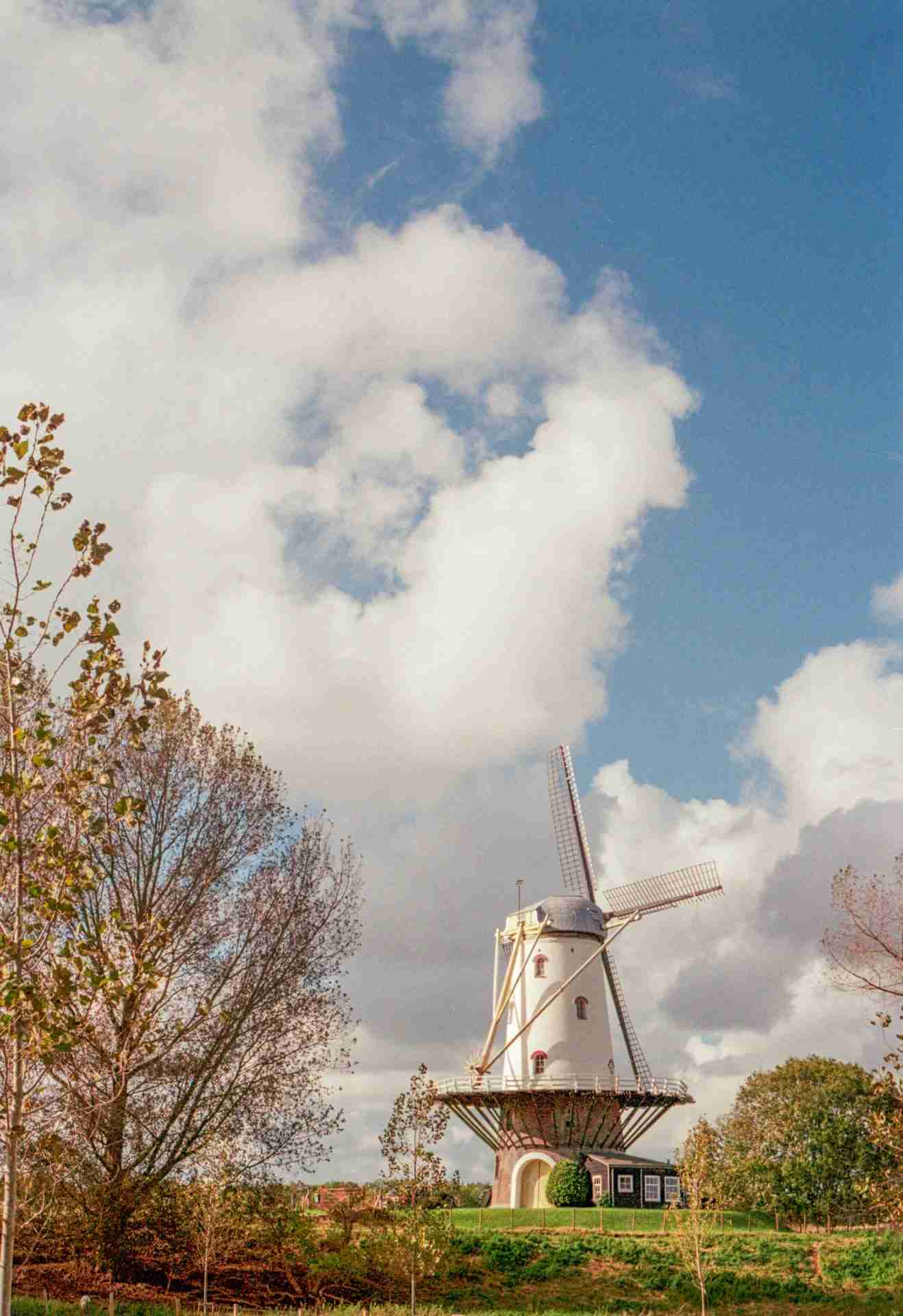
De Koe windmill in Veere is one of those locations where everything comes together in a compact, easy to work with setting. The windmill sits within the old town ramparts, surrounded by grassy embankments, curved paths, and open space that naturally shapes your compositions. It is not a place where you need to search for angles, you can simply walk a few minutes in any direction and find something different. The slight elevation changes from the ramparts help add depth, while the windmill remains a clear focal point throughout. It is especially well suited to photographers who like building layered images using foreground, midground, and background elements. If you take your time here, it is easy to come away with a varied set of shots from a relatively small area.
Best Photography Opportunities
• Windmill Framed by Paths
The paths around the ramparts are one of the strongest compositional tools at this location. You can use these lines to guide the viewer's eye directly toward the windmill, creating a natural flow through the image. By adjusting your position slightly, you can control how much of the path leads into the frame and where it directs attention. This works well with both wider and slightly tighter compositions depending on how much of the surrounding area you want to include. The gentle slope of the land adds a bit of depth without making things feel complicated. It is a simple setup, but one that consistently produces strong results.
• Layered Compositions with Embankments and Trees
The raised earthworks around the windmill give you the chance to build layered images quite easily. You can include grass in the foreground, the windmill in the midground, and trees or sky behind to complete the frame. Moving up or down the embankments changes how these layers interact, which makes it worth exploring different heights. Trees along the paths can also be used to partially frame the windmill without blocking it. This approach helps avoid flat compositions and adds a bit more structure to your shots. It is especially effective when the light adds some shape to the terrain.
• Clean Isolated Views of the Windmill
There are several positions where you can isolate the windmill against a simple background, keeping the composition clean and focused. This works well if you want to highlight the shape and structure of the building without too many distractions. By stepping back or shifting slightly, you can remove clutter and keep the frame minimal. The windmill's form stands out clearly, so it does not need much around it to be effective. This is a good option if the surrounding elements feel too busy or if you want a more straightforward shot. It is also a reliable approach in different lighting conditions.
• Foreground Interest with Grass and Path Edges
Using the edges of paths or patches of grass in the foreground can help anchor your composition and lead into the windmill. Getting slightly lower can make these elements more prominent and add depth to the scene. You can experiment with how much foreground you include, depending on whether you want a subtle or stronger effect. The texture of the grass and the shape of the path edges give you something to work with even when the light is flat. This technique is simple but makes a noticeable difference in how the image feels. It is worth trying a few variations to see what works best.
• Windmill with Surrounding Town Elements
From certain angles, you can include parts of Veere in the background, adding a bit more context to your image. Roof lines, trees, and small structures can help tell more of a story about the location without taking attention away from the windmill. Positioning yourself carefully lets you balance these elements so they support the composition rather than clutter it. This works well if you want something that feels more connected to the town rather than just the windmill on its own. It is a good way to add variety to your set of images. Taking time to walk around helps you find the cleanest combinations.
Best Time to Visit
Early morning is one of the best times to photograph De Koe, especially if you want softer light and fewer people around. The low angle of the light helps bring out subtle texture in the grass and adds shape to the windmill. It also makes it easier to work with shadows that add depth without being too strong. Late afternoon into early evening is another good option, with warmer tones giving the scene a slightly different feel.
Overcast conditions work well here too, especially if you are focusing on shape and composition rather than strong light. The softer light helps keep contrast under control and makes it easier to balance the different elements in the frame. Midday can be less interesting if the sun is strong, but you can still focus on cleaner compositions or use the embankments to manage the light. Wind can also play a role in how the scene feels, particularly with movement in the grass. Visiting at different times gives you a better sense of how the location changes.
How to Get There
De Koe windmill is located in the town of Veere in the Zeeland region of the Netherlands. The town is easily accessible by car, with parking available just outside the historic centre. From there, it is a short walk to reach the windmill and surrounding ramparts.
Veere can also be reached by bus from nearby towns such as Middelburg. Once you arrive, the area around the windmill is easy to navigate on foot, with clear paths and open access. There are no fees to walk around the ramparts or photograph the windmill from the outside. The terrain is flat to gently sloped, making it easy to carry gear and move between different viewpoints without much effort.
Recommended Photography Gear
A standard zoom lens works very well here, giving you the flexibility to shoot both wider scenes and tighter compositions without changing lenses. A wide lens can help emphasize the curves of the paths and the shape of the landscape, especially when you want to include more foreground. A short telephoto can be useful for isolating the windmill or compressing elements in the scene.
A tripod is optional but can be useful if you are shooting in lower light during early morning or evening. A polarizer can help manage glare on grass and deepen tones slightly, especially under brighter conditions. Since the location is compact and easy to walk, keeping your setup light makes it easier to move around and try different angles. You will likely be adjusting your position often, so flexibility matters more than carrying a lot of gear.
Nearby Photography Locations
The harbour area offers a different setting with boats, water, and historic buildings. It is a great place to work with leading lines from the docks and create layered compositions with the town in the background. Early morning or evening light works especially well here.
This historic building provides strong architectural detail and a very different subject compared to the windmill. The structure stands out clearly in the town square, making it easy to build clean compositions. It is a good spot for both wider shots and detail work.
A short drive away, Middelburg offers a larger historic setting with canals, streets, and traditional buildings. It gives you more variety and a slightly busier environment to work in. It is worth exploring if you want to expand beyond Veere.
This dam provides open views across the water and a more minimal landscape setting. It is a good place to work with horizon lines and simple compositions. The wide open space contrasts nicely with the more contained feel of Veere.
Not far from Veere, Domburg Beach offers a classic coastal setting with sand, sea, and open sky. It is a great option for sunset shooting and more relaxed compositions. The change in environment makes it a strong addition to your overall shoot.
Comments
Loading comments…