
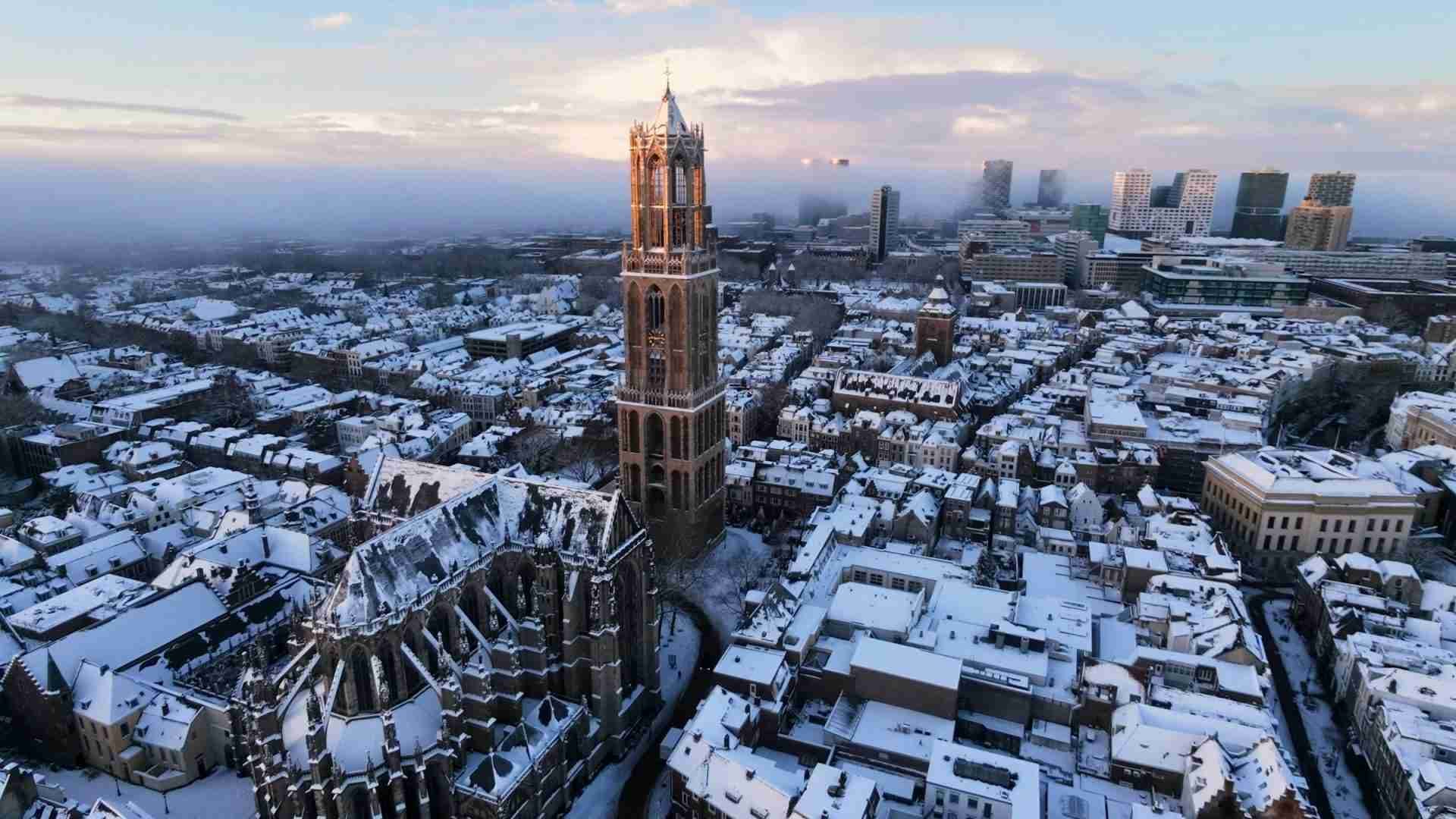
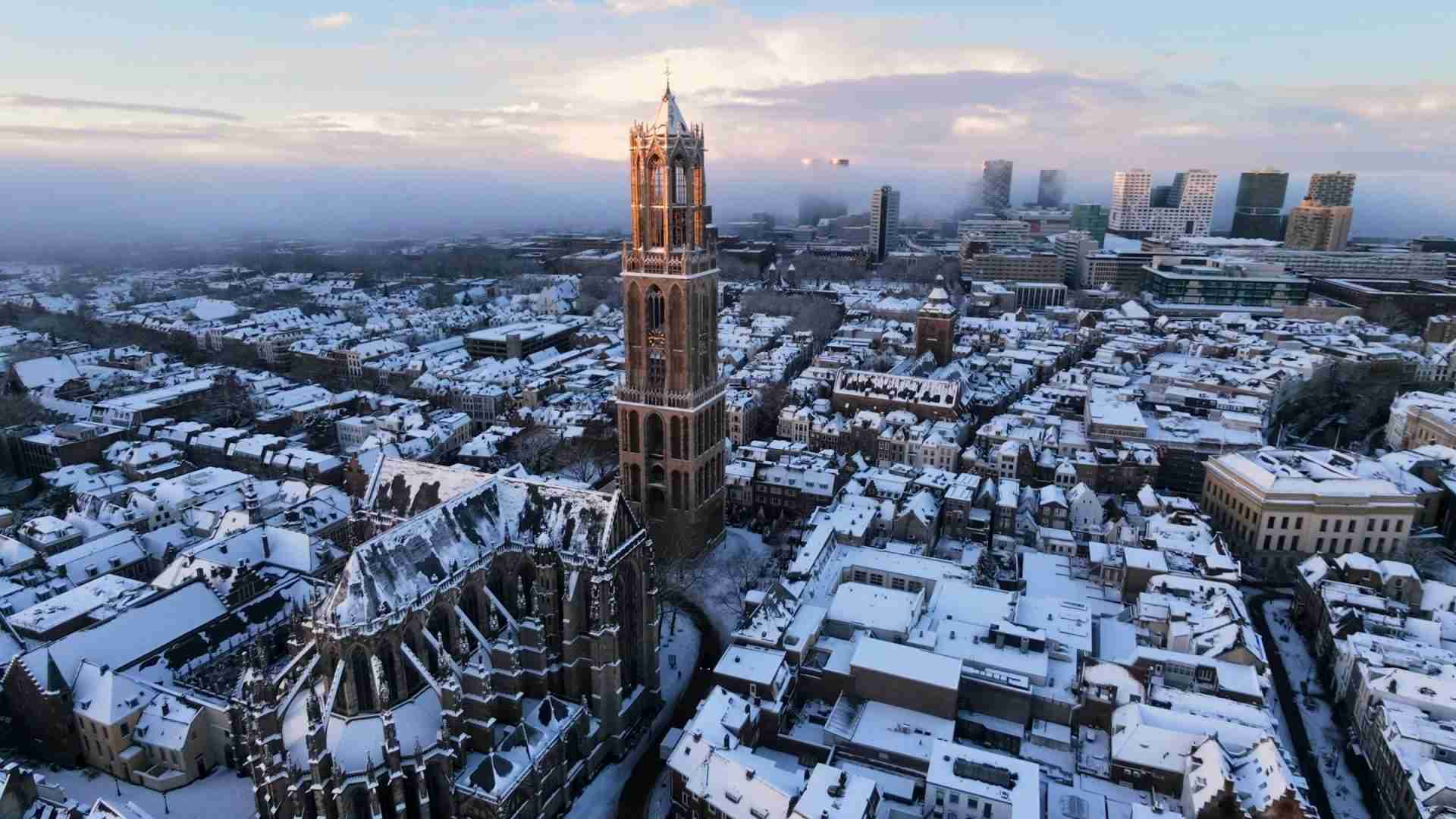
Domtoren rises high above the historic center of Utrecht and is the tallest church tower in the Netherlands. Completed in the 14th century, the tower once formed part of St. Martin's Cathedral, though the cathedral and tower were separated after a storm destroyed the connecting nave in the 1600s. Today the tower stands independently in the center of the city, surrounded by narrow streets, canals, and historic squares. The structure is unmistakable. Its layered Gothic arches, carved stone details, and massive height dominate the skyline from almost every direction. For photographers, Domtoren offers a wide range of possibilities. You can photograph it from tight medieval streets, across canals, or from open squares where the full height of the tower becomes visible. The variety of vantage points makes it one of the most rewarding architectural subjects in the Netherlands.
Best Photography Opportunities
• Rising Above Domplein –
Domplein is the square directly beneath the tower and one of the best places to photograph its full height. From this position, the tower climbs dramatically upward from the stone plaza, creating a strong vertical composition. A wide lens works well because it allows you to capture the full structure from base to spire while still including some of the surrounding buildings. Standing slightly back from the base of the tower helps prevent the perspective from becoming too distorted. Early morning is often the best time to shoot here because the square is quieter and the softer light reveals detail in the stonework. The open space also makes it easier to experiment with different angles without obstructions.
• Framing Through Narrow Streets –
Many streets around the historic center lead toward the tower, creating natural framing opportunities. Walking through streets such as Zadelstraat or nearby lanes allows you to photograph the tower rising between rows of traditional Dutch buildings. This perspective adds depth and context because the architecture of the city guides the viewer's eye toward the tower. A mid range lens works well here because it compresses the street slightly while keeping the tower prominent in the distance. Early morning light can illuminate the upper sections of the tower while the street below remains in softer shadow. These compositions feel grounded in the city rather than isolated from it.
• Canal View from Oudegracht –
Utrecht's canals provide another strong angle for photographing Domtoren. From certain bridges along the Oudegracht, the tower rises above canal houses and tree lined water edges. Including the canal in the foreground adds reflections and leading lines that draw the eye deeper into the scene. A moderate wide lens works well here, but a mid range zoom can also help refine the composition. Calm mornings are ideal if you want smoother reflections in the water. Boats and bicycles along the canal can add a sense of daily life to the scene without distracting from the tower.
• Drone and Aerial Views –
Aerial photography reveals just how dominant Domtoren is within Utrecht's historic center. From above, the tower rises far above the surrounding rooftops, making it the clear focal point of the entire city. Flying slightly above roof level allows you to show the tight network of canals, narrow streets, and historic buildings surrounding Domplein. A moderate focal length works well for keeping the tower prominent while still showing the pattern of the old city around it. Early morning is often the best time for aerial images because the streets are quieter and the light is softer across the rooftops. Always check local drone regulations before flying, as Dutch cities often have restrictions and controlled airspace that may require authorization.
• Blue Hour in Domplein –
Blue hour is one of the most effective times to photograph Domtoren. As the sky deepens in color, the tower is illuminated by warm lighting that highlights its architectural layers. From Domplein, the tower stands clearly against the darker sky while the surrounding buildings remain subtle. A tripod helps maintain sharpness as the light fades. Including some of the square in the foreground can add balance and scale to the composition. This is one of the best moments to capture the tower's dramatic presence in the center of Utrecht.
Best Time to Visit
Early morning is often the most productive time to photograph Domtoren. The historic center is quieter, making it easier to work along narrow streets and bridges without crowds. Morning light also brings out texture in the tower's stone and can illuminate the upper levels before the lower streets receive direct sunlight.
Late afternoon and evening provide another strong window. As the sun lowers, the warm light can add depth to the tower and surrounding buildings. Blue hour is especially rewarding in Domplein when the tower lighting becomes visible against the evening sky. Utrecht experiences frequent overcast conditions, but these can actually work well for architectural photography because they keep lighting consistent across the stone.
How to Get There
Domtoren is located in the historic center of Utrecht in the Netherlands. The tower stands in Domplein, a short walk from Utrecht Centraal, the city's main railway station. The walk from the station takes around fifteen minutes through the old town.
Because the surrounding streets are largely pedestrian friendly, the best way to reach the tower is on foot or by bicycle. Parking within the historic center is limited, though garages are available nearby. Visitors can also climb the tower through guided tours, which provide access to views across the city. Exterior photography around the square and surrounding streets is freely accessible.
Recommended Photography Gear
A wide lens is very useful when photographing Domtoren from close distances in Domplein or along narrow streets. A mid range zoom offers flexibility when framing the tower through city architecture or canals. A telephoto lens is valuable for isolating Gothic details high on the tower.
A tripod is recommended for blue hour photography and low light conditions. A polarizer can deepen the sky and reduce glare on canal water when shooting along Oudegracht. Because much of the photography happens while walking through the city, carrying a compact and versatile kit makes it easier to move between locations.
Nearby Photography Locations
runs through the heart of Utrecht and is lined with historic canal houses and unique wharf level walkways. The layered architecture creates strong urban compositions. Early morning and evening reflections along the water are especially photogenic.
is a massive early 20th century brick building that sits near Utrecht Centraal and is one of the largest brick structures in the Netherlands. Its long façade, corner towers, and rooftop UFO sculpture provide a completely different architectural subject from the Gothic tower.
designed by Gerrit Rietveld, this modernist house is one of the most famous examples of De Stijl architecture. The geometric forms and bold color accents create strong minimalist compositions. It provides an interesting contrast to the historic architecture of central Utrecht.
is a Renaissance era palace once intended as a residence for Pope Adrian VI. The stone façade and courtyard provide elegant architectural photography opportunities. The building sits only a short walk from Domplein.
offers open green space and modern landscape design within the city. The park provides wide views and relaxed urban scenes that contrast with the dense historic streets around Domtoren.
Comments
Loading comments…