
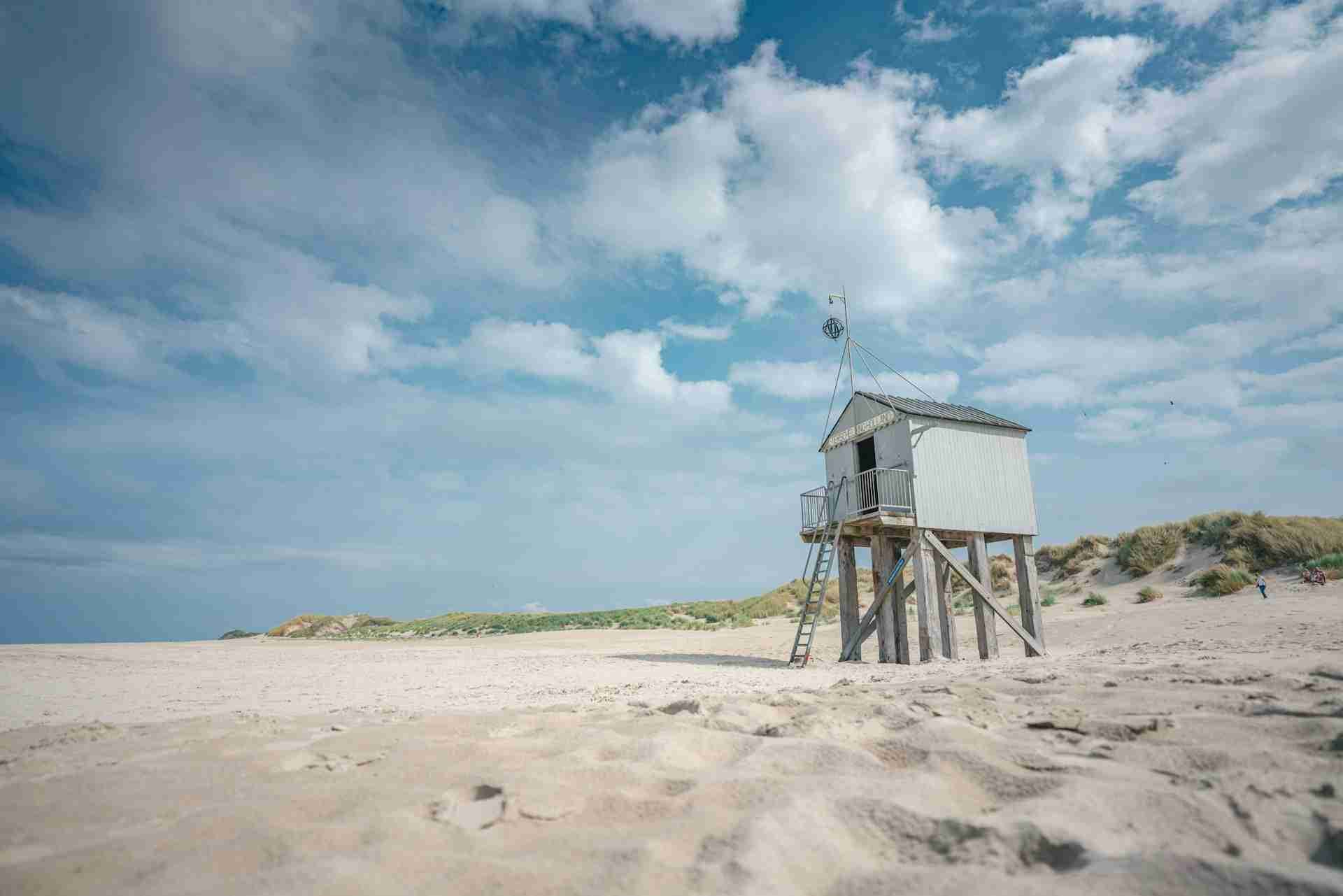
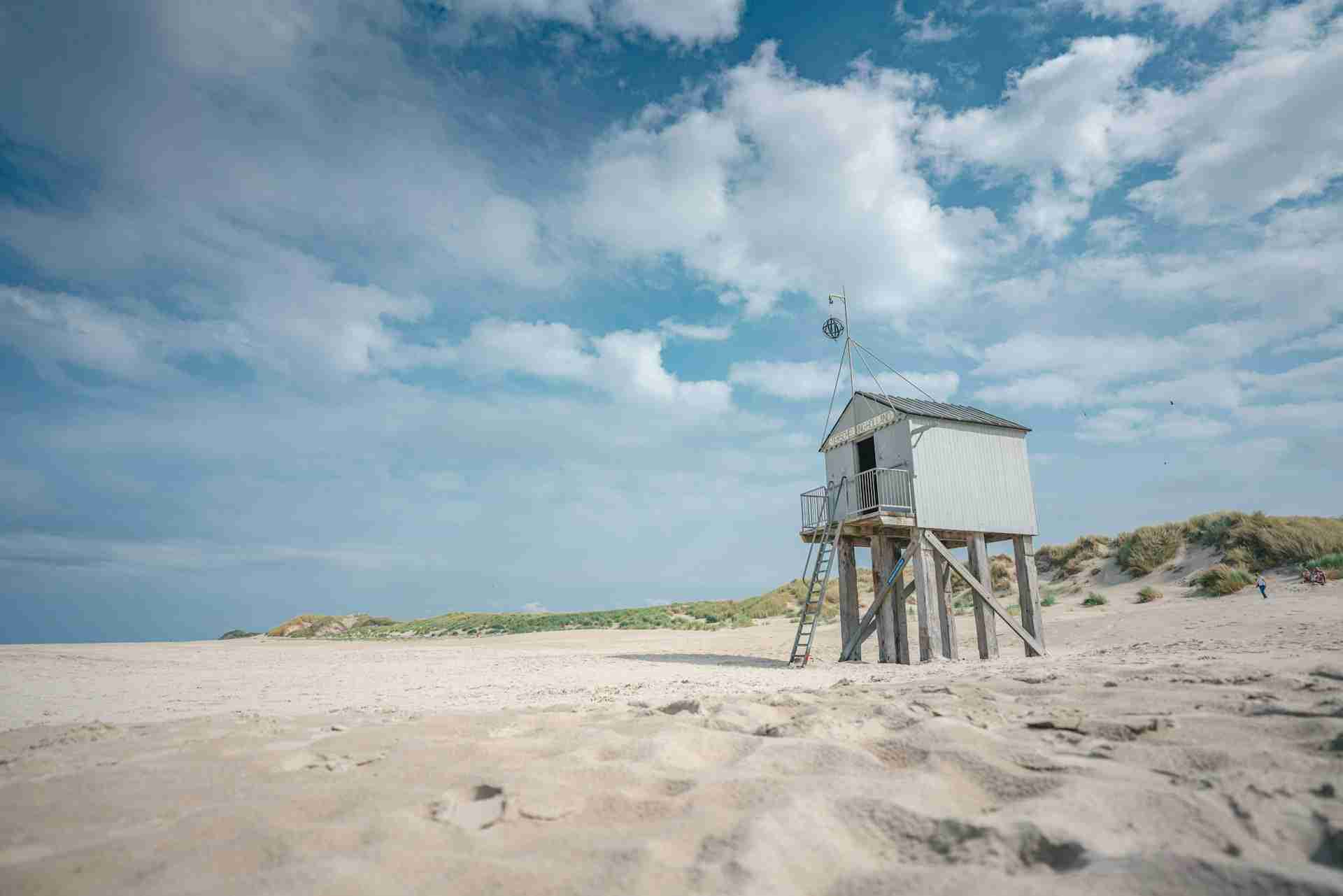
Standing alone on the northern coast of Terschelling, the Drenkelingenhuisje, meaning "drowning victims' hut," is a relic from a time when shipwrecks were frequent and rescue infrastructure was limited. This wooden shelter, perched on stilts above the sand, once offered refuge to survivors of North Sea disasters. Today, it serves as a haunting and beautiful subject for photographers drawn to minimalism, isolation, and natural rhythm. Facing the wide, uninterrupted horizon of the Wadden Sea and surrounded by endless beach and shifting dunes, the hut commands attention without overpowering the scene. It is a place of silence and exposure where composition is guided by light, weather, and patience rather than fixed features.
Best Photography Opportunities
• Minimalist Compositions on Open Sand
: The hut's structure is stark but well-balanced, allowing it to anchor images that emphasize space and negative area. With no nearby buildings or roads, the surrounding beach stretches unbroken in all directions, creating opportunities to isolate the hut in clean, simplified frames. Shooting from low angles helps compress the horizon and highlight the scale of the sky in relation to the building. Early morning light brings cooler tones and often introduces mist or soft cloud layers that diffuse the scene. In flatter midday light, black and white photography can turn this simplicity into strength by focusing on shape and contrast alone.
• Storm Light and Long Exposure Seascapes
: The Drenkelingenhuisje is most compelling when the weather is unsettled. Storm clouds rolling in over the sea create depth and movement in the sky, while shifting sands and wind patterns on the beach add texture to the foreground. Using neutral density filters and long exposures, photographers can transform the sky and water into soft gradients that contrast with the hard lines of the hut's stilts and frame. A wide-angle lens allows you to exaggerate the openness of the scene and draw the viewer's eye across the horizontal lines of surf and dune. Rain or sea mist can also cling to the structure, accentuating its weathered textures and its role as a sentinel against the elements.
• Human Scale and Narrative Contrast
: While often shot in isolation, the hut also lends itself well to environmental portraits or narrative compositions that include small human figures. Including a person walking toward or standing beside the hut helps communicate its original purpose as a place of refuge and gives a sense of scale to the wide landscape. This is especially effective in overcast or foggy conditions when the contrast between the fragile human presence and the vast openness of sea and sand becomes more emotionally charged. A mid-range lens keeps the scene grounded while allowing enough compression to frame human and hut together without visual clutter. The inclusion of human scale also reinforces the visual story of vulnerability in contrast to nature's scale and power.
• Astrophotography and Night Sky Work
: Located within the Boschplaat Dark Sky Park, the Drenkelingenhuisje is an ideal subject for night photography and astrophotography. The lack of light pollution on the eastern end of Terschelling allows for clean, star-filled skies with excellent visibility of the Milky Way on clear nights. The hut's silhouette stands out clearly against the stars and serves as a natural focal point for wide-angle compositions. Shooting during new moon phases ensures maximum sky clarity, and long exposures can bring out the soft light trails of stars over the sea. A fast wide-angle lens and a solid tripod are essential, along with a red-light headlamp for safe setup in complete darkness.
• Seasonal Shifts and Wind Patterns
: The hut does not move, but the landscape around it is constantly reshaped by wind, tide, and time. Dune grasses grow and fade, sand builds and disappears, and the textures underfoot change week by week. These subtle shifts are best captured by returning in different seasons, especially in early spring when new grasses emerge or in winter when frost or snow dusts the beach. Over time, photographers can build a visual archive of how the environment adapts and reforms around this fixed structure. Even on windless days, footprints, bird trails, or tide lines add temporary features that can give each image a sense of motion and time.
Best Time to Visit
The Drenkelingenhuisje can be visited year-round, but the most productive conditions for photography occur during transitional seasons when the light is more directional and the skies more dynamic. Spring and autumn offer lower sun angles, fewer visitors, and weather systems that create contrast and mood. In summer, the longer days allow for extended golden hour sessions, especially in the evening when the sun sets over the Wadden Sea and casts warm tones across the sand. Winter offers clean, cold light and the chance to photograph the hut under rare snow or with sea ice visible on the beach.
Low tide is the safest and most revealing time to approach the hut, as the surrounding sand is fully walkable and free of soft, saturated patches. Tidal charts for the Oosterend coastline should be consulted before heading out, as incoming tides can rise quickly and make parts of the beach difficult to cross. Early morning and late afternoon provide the best light for texture, while night photography should be timed for new moon periods and cloudless forecasts. For astrophotography, late summer through early autumn is ideal, when the Milky Way is high in the sky and conditions on the beach are dry and stable. Timing your visit around both low tide and clear skies will ensure the best results across both day and night sessions.
How to Get There
The Drenkelingenhuisje is located near the northern shoreline of Terschelling, close to the village of Oosterend on the island's eastern edge. From the ferry terminal at West-Terschelling, visitors can reach Oosterend by bike or local bus, with travel taking approximately thirty to forty minutes. From the village, the hut is accessible on foot or by bike along sandy trails and low dunes. Local maps or navigation apps will guide you toward the beach access point. Walking the final stretch along the shoreline requires timing with the tide, as the sand is widest and most stable during low water.
There is no public transportation to the exact location of the hut, and vehicles are not permitted on the beach, so visitors should be prepared for at least a one to two kilometer walk from the nearest road. There are no facilities, shelters, or shops near the site, so bring water, snacks, and weather-appropriate clothing. The location is part of a nature reserve, so remain on designated trails where possible and avoid disturbing dune ecosystems. There are no fees or permits required for photography, including night photography, but always check for seasonal access notices during protected bird nesting periods. Respect for the landscape and safety in changing conditions is essential.
Recommended Photography Gear
Photographing the Drenkelingenhuisje requires a lightweight but capable kit that can handle long exposures, night shooting, and the physical demands of hiking through sand and weather. A wide-angle lens, preferably in the 16 to 35 millimeter range, is essential for capturing the hut in context with its expansive surroundings. For tighter compositions or environmental portraits, a 24 to 70 millimeter mid-range zoom offers versatility without needing to change lenses in shifting conditions. A tripod is absolutely necessary for long exposure and night work and should have solid feet for sand or soft ground.
For night photography, a fast prime lens such as a 14 or 24 millimeter with a wide aperture is ideal for capturing stars with minimal noise. Bring a headlamp with a red light mode for setup and navigation in the dark, and extra batteries for long exposures or cold weather sessions. Neutral density filters are useful for smoothing waves or moving clouds during daylight long exposures, while a circular polarizer can help manage glare and deepen sky tones in brighter light. Protective covers or dry bags are recommended, especially if conditions are wet or windy. Waterproof hiking boots, windproof outer layers, and gloves make long sessions on the exposed beach far more comfortable.
Nearby Photography Locations
: East of the hut, this vast protected area features tidal flats, dune systems, and bird habitats that change with the seasons. Early morning fog and rich sunset tones make it ideal for landscape photography. Wildlife photographers will also find opportunities for long-lens work throughout the reserve.
• Kaapsduin near Midsland aan Zee
: This elevated dune ridge provides sweeping views over the North Sea, the island's interior, and the coastline leading to the Drenkelingenhuisje. The open terrain is ideal for panoramic shots and wide sky compositions, especially at sunset when the light washes across the rolling sand.
• Drenkelingenbegraafplaats
: Located further inland, this small historic site is somber but visually compelling, especially in overcast light. Its isolated headstones and coastal setting lend themselves to quiet, documentary-style work that complements a visit to the hut itself.
• Oosterend and the Dike Paths
: The village and its surrounding dikes offer clean, symmetrical compositions with strong leading lines. In the early morning, mist can cling to the fields and canals, creating soft light and layered compositions that contrast well with the raw beach scenes.
• Westpunt Terschelling and the Noordsvaarder
: On the opposite end of the island, this area features shipwreck remains, expansive dunes, and wide beach zones that are ideal for long exposure seascapes and abstract sand pattern photography. The light here differs slightly due to orientation, offering balance for a full island itinerary.
Photographing the Drenkelingenhuisje is not just about the structure itself. It is about the way it lives inside the land and sky around it. Whether captured in soft morning fog, under a star-filled sky, or against windswept dunes, the hut invites a slower, more deliberate pace. It rewards return visits, careful observation, and an openness to whatever light and weather are given on the day you arrive.
Comments
Loading comments…