
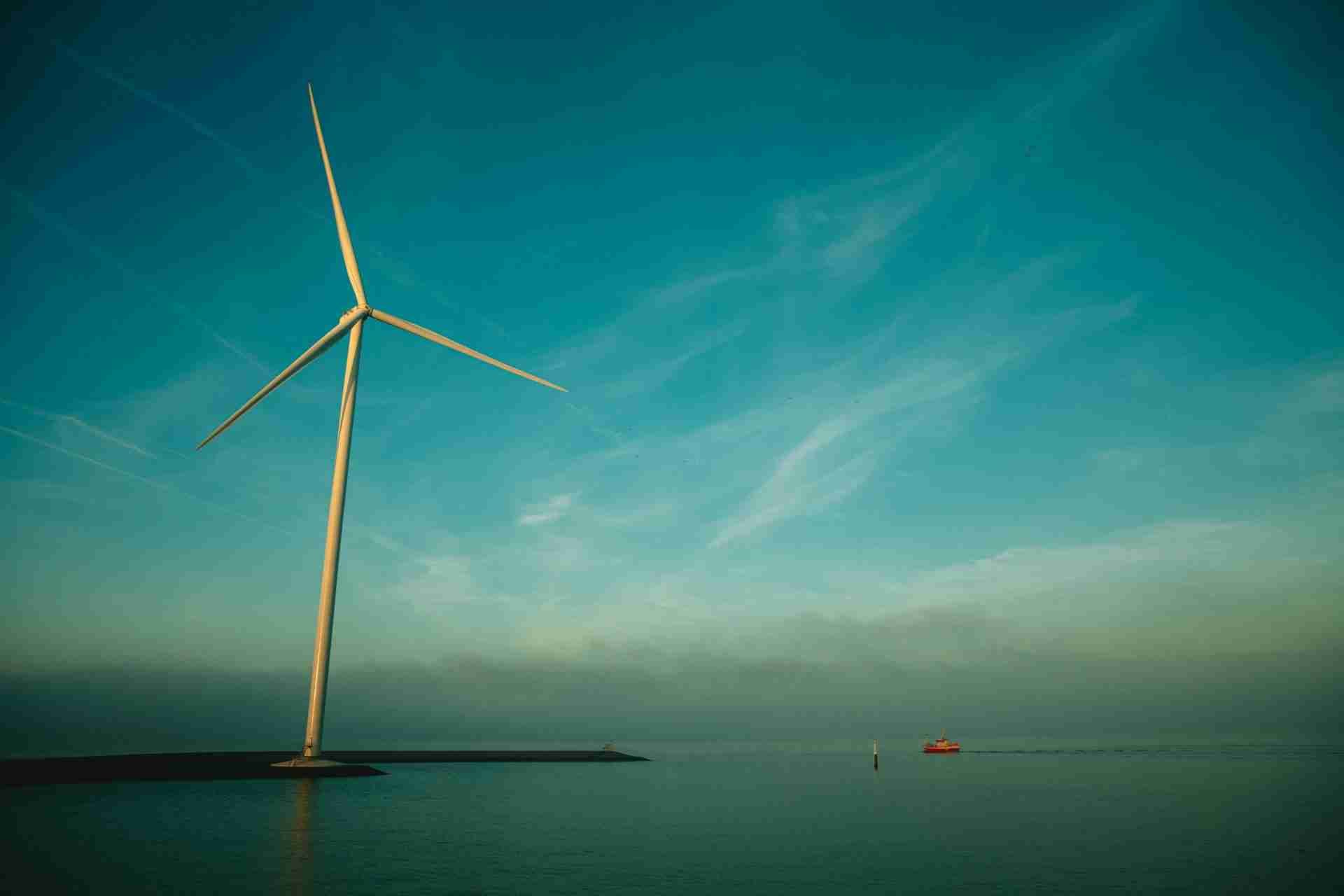
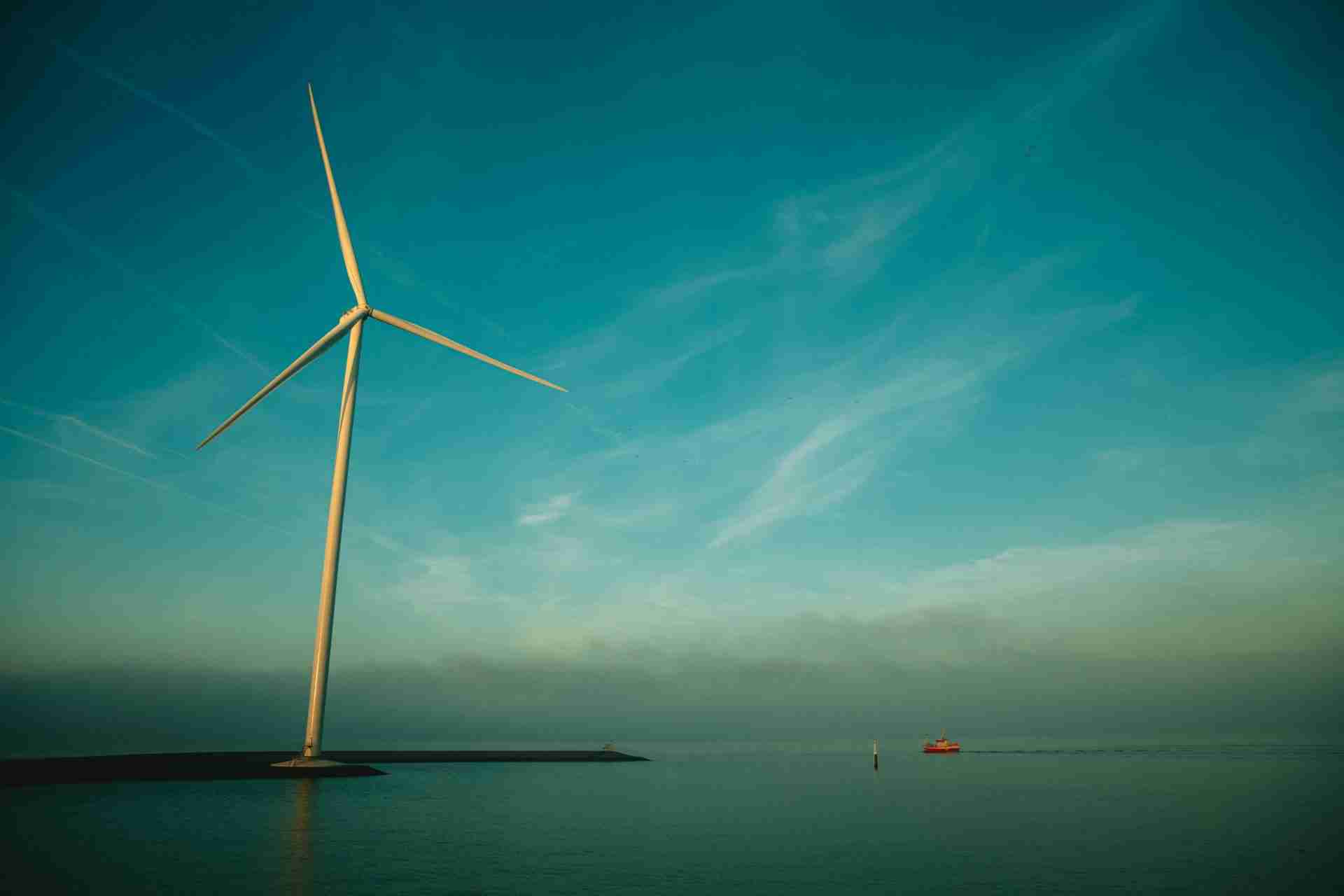
The Eemshaven Piers extend into the water as a pair of gently curving breakwaters, each capped with a single wind turbine that immediately draws the eye. The scene is defined by simplicity and scale, with long horizontal lines from the piers and sea balanced against the tall vertical presence of the turbines. The surrounding area reinforces this identity, as additional turbines rise from the harbor and nearby land, making it clear that this is a working energy landscape rather than a traditional coastal viewpoint. Photographing here is about understanding spacing and restraint. With open water, wide skies, and minimal foreground clutter, small compositional decisions carry a lot of weight. This is a place that rewards photographers who slow down and pay attention to alignment, light, and negative space.
Best Photography Opportunities
• Pier Curves and Soaring Turbine
One of the most distinctive aspects of Eemshaven Piers is how each wind turbine rises from the pier. From positions along the pier or slightly back from it, the turbine becomes a strong focal point without sitting dead center in the frame. Careful alignment allows you to use the pier as a leading line while still leaving breathing room beyond the structure. This setup rewards precise framing, as small shifts can dramatically change the sense of balance.
• Wide Compositions Showing Both Piers
From certain positions along the shoreline or slightly elevated ground, both piers can be included in a single frame. This approach emphasizes symmetry and spacing, with the turbines acting as repeating vertical markers. Wide lenses work well here, but attention is needed to keep the horizon level and avoid unnecessary distortion. These images are strongest when the water surface is calm and the sky has subtle texture rather than dramatic cloud formations. The goal is clarity and order rather than visual complexity.
• Side Angles Emphasizing Curve and Distance
Photographing the piers from an offset angle allows the curves to stretch across the frame, creating a sense of distance and movement. Longer focal lengths help compress space and keep the background simple. Side light can add gentle contrast to the pier surface and turbine structure without overwhelming the scene. This angle works well when you want the image to feel expansive but controlled.
• Turbines Against Open Sky
Isolating a single turbine against the open sky creates clean, minimal compositions that rely on shape and proportion. This approach works especially well when clouds are thin or evenly spread, adding texture without pulling attention away from the subject. Keeping surrounding elements out of the frame is key, as clutter quickly weakens the simplicity. These images benefit from careful exposure to preserve detail in both sky and structure. This is a strong option when conditions are calm and light is consistent.
• Scale With Passing Ships or Distant Activity
Occasionally, ships or service vessels move through the harbor, providing opportunities to introduce scale. Timing is critical, as these elements should support the turbine rather than compete with it. Using a longer focal length helps place the vessel precisely within the frame. This approach adds context and reinforces the industrial character of the area. It works best when movement is slow and predictable.
Best Time to Visit
Early morning is often the most productive time to photograph Eemshaven Piers. Wind tends to be lower, water calmer, and light softer, which supports clean compositions and subtle tonal transitions. Morning light also helps avoid glare on the water and keeps contrast manageable across wide scenes. Midday can be challenging due to harsher light and increased wind, which introduces choppier water and more visual noise. Late afternoon can work well when cloud cover softens the light, though conditions change quickly along the coast. Seasonal differences matter mainly for weather rather than color. Cooler months often bring clearer air and stronger skies, while summer can produce haze that flattens distant detail. Planning around wind forecasts is just as important as planning around light at this location.
How to Get There
Eemshaven is located in the northern Netherlands and is reached by road from nearby towns and cities in Groningen province. The piers are part of an active harbor area, with paved access routes leading close to the water. Parking is available nearby, followed by short walks along the piers or adjacent paths. There is no fee to access public areas around the piers, but some sections may be restricted depending on harbor activity. The surfaces are flat and open, making movement with camera gear straightforward. Weather exposure is significant, so checking conditions before arrival is important.
Recommended Photography Gear
A standard zoom lens is well suited to this location, allowing photographers to move between wide scenes and more focused compositions without changing lenses often. A longer focal length is useful for compressing space and isolating turbines against sky or water. A tripod is recommended, especially during early morning or overcast conditions when shutter speeds drop. Neutral density filters can be helpful if you want to smooth water texture under brighter light, though they are not required. Wind protection for your camera setup is important, as gusts can be strong along the piers. Dressing for exposure and bringing minimal gear helps maintain focus during longer sessions.
Nearby Photography Locations
Cranes, service buildings, and additional turbines provide a broader view of the working harbor environment. These areas work well for industrial context shots.
A short drive away, this area offers flatter shorelines and wide horizons that contrast with the structured geometry of the piers.
This smaller harbor provides a quieter setting with traditional coastal elements. It works well as a visual counterpoint to Eemshaven's scale.
• Wadden Sea Dikes
The dikes along the Wadden coast offer elevated viewpoints and long linear compositions. They are useful for minimal landscape work.
• Rural Groningen Landscapes
Open fields, canals, and distant turbines create simple, spacious scenes that extend the visual story beyond the harbor.
Comments
Loading comments…