
![Glass, Curves, and Clouds: Capturing Depot Boijmans Van Beuningen in Rotterdam An architectural marvel rising from the Museumpark in central […]](https://storage.googleapis.com/pixeo-blog.firebasestorage.app/article-images/wp-import/featured-130961.jpg)
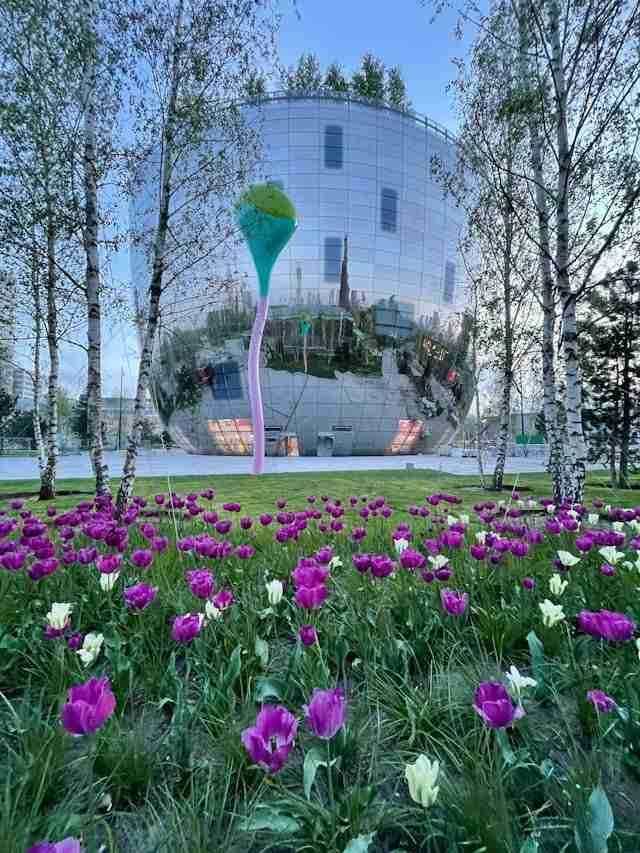
An architectural marvel rising from the Museumpark in central Rotterdam, Depot Boijmans Van Beuningen is unlike any museum storage facility in the world—and an extraordinary subject for architectural and urban photographers. This fully accessible, mirror-clad art depot reflects the city's skyline, green spaces, and ever-shifting weather, creating dynamic visual opportunities that change by the hour. With its striking round shape, seamless stainless-steel facade, and rooftop forest, the building is as much a canvas as it is a container. Whether you're shooting symmetry, reflections, textures, or the human scale against architectural scale, this location offers endless variation for photographers tuned into modern design and visual abstraction.
Rotterdam itself is a city that embraces the bold, and the depot exemplifies that philosophy in both concept and execution. Designed by MVRDV, this 39.5-meter-high structure challenges conventional perspectives and encourages creative approaches from every angle—offering a rewarding photographic experience whether you're capturing its gleaming exterior or venturing inside to shoot its industrial interior volumes and curated collection storage.
Best Photography Opportunities
• Mirror Facade Reflections
The most immediately striking feature of the depot is its fully mirrored exterior. The stainless steel panels curve around the entire building, capturing and distorting reflections of Rotterdam's skyline, the nearby Kunsthal, green treetops, and even pedestrians at its base. Wide-angle lenses (24mm or wider) are ideal for maximizing the curvature and pulling in surrounding reflections, while telephoto lenses can isolate surreal, almost painterly reflections across the surface. Golden hour and overcast skies each bring different moods—sunlight creates warm-toned distortions while cloudy days bring subtle gradients and drama to the facade.
• Symmetry and Geometry
The depot's circular shape and perfect vertical alignment provide a playground for composition. Shooting straight on from the paths around Museumpark allows for centered symmetry, particularly with a tilt-shift lens or when carefully correcting perspective in post. Shooting from the elevated grass berms or adjacent rooftops, like from Het Nieuwe Instituut, offers off-axis angles that highlight the relationship between the depot and the surrounding city. Interior staircases, corridors, and gallery spaces offer clean lines and visual rhythm for minimalist architectural studies.
• Rooftop Forest and Skyline Views
The rooftop of the depot is not only accessible, but photogenic in its own right. Trees rise from curated planters above the mirrored shell, contrasting starkly with the smooth metallic curvature below. From here, you also get panoramic views over the city of Rotterdam—framed by steel railings and the organic shapes of vegetation. Wide-angle panoramas, cityscape shots during blue hour, and environmental portraits with the skyline in the background are all options from this vantage point.
• Interior Light and Contrast
Inside, the building is a mixture of industrial utility and clean design. Polished concrete, glass-walled storage areas, and exposed infrastructure present opportunities for modern, high-contrast imagery. Use natural light streaming in through clerestories and the large central atrium to play with silhouettes, hard shadows, and layered compositions. Interiors are also excellent for shooting leading lines—from the curving staircases to the stacked shelving of archived artworks.
• Human Scale and Reflection Play
Because the mirrored facade interacts so directly with visitors, the human element becomes part of the visual language. Candid shots of passersby, silhouettes against the mirror, or posed portraits reflected into the curves create dynamic narratives within an otherwise abstract composition. Using a slightly elevated perspective, such as from a tripod or step stool, can help include more of the reflected environment and the subject within one frame. For photographers working with models or editorial content, this building provides a futuristic backdrop without requiring additional staging.
Best Time to Visit
The depot can be photographed beautifully at nearly any time of day, but each window of light brings a distinct character. Early morning and late afternoon (especially golden hour) provide the most flattering natural light for the mirrored facade, casting long shadows and warm tones across its surface. This is when reflections are richest in color and most dramatic in shape, with surrounding trees and buildings painted into its curves.
Blue hour and twilight are excellent for architectural shots with contrast between warm interior lighting and the cool steel skin, especially when capturing from across the Museumpark. Long exposures here can result in luminous, cinematic images with pedestrians and cyclists ghosting through your frame. On overcast or moody days, the building reflects the sky in abstract washes of gray and silver, enhancing its sculptural quality.
If you're photographing inside the depot, natural light is strongest mid-morning to early afternoon through the central atrium and gallery-level windows. For rooftop photography, aim for early or late daylight when the skyline is backlit or side-lit for depth and atmosphere.
How to Get There
Depot Boijmans Van Beuningen is located in the heart of Rotterdam's Museumpark, easily accessible on foot, by bike, or via public transit. If arriving by train, Rotterdam Centraal Station is about a 15-minute walk away. From there, follow signs to Museumpark or take tram line 7 and disembark at the Museumpark stop. For photographers bringing heavier gear, a rental bike or taxi can help reduce the walk.
Paid parking is available at the Museumpark garage directly beneath the area, with elevators leading to ground level within a short walk of the depot. Bicycle racks are located near the entrance for those arriving on two wheels. Once onsite, the grounds around the building are open and accessible without admission. Access to the rooftop garden and interior exhibition and storage areas requires a timed ticket, which can be reserved in advance online or purchased at the entrance. Tripods are not always permitted indoors without prior approval, so check with staff if you're planning a shoot inside.
Recommended Gear and Shooting Tips
For a location as visually complex as the depot, flexibility is essential. A wide-angle lens (16–35mm) is ideal for capturing the entire structure from close range and maximizing the reflective, sculptural quality of the mirrored walls. A standard zoom (24–70mm) gives you the range to isolate compositional details like curvature, symmetry, or reflections, while a longer telephoto (70–200mm) helps compress background elements into layered cityscapes from the rooftop or nearby buildings.
A circular polarizer is a key accessory here—it allows you to control the intensity of the reflections or cut through the glass to reveal interior structure. Use it subtly to avoid overcorrecting the mirror finish, as some distortion is part of the aesthetic appeal. A tripod is recommended for blue hour, twilight, or interior exposures, but keep a compact model on hand, as space indoors can be limited and rules may restrict bulky setups.
Because of the highly reflective environment, be mindful of your own position when shooting—you'll often appear in the frame unintentionally. Step back, change elevation, or shoot from an angle to avoid unwanted self-portraits unless you intend to include them.
Weather is part of the experience here. Cloudy days bring dramatic tonal shifts and soften reflections, while bright sun creates bold shadow play and high-contrast mirror effects. Lean into the changing light and use it as a tool to create variation, even when shooting the same composition over time.
Nearby Photography Locations
• Erasmus Bridge (Erasmusbrug)
This iconic cable-stayed bridge—often called "The Swan" for its graceful form—offers a sweeping line through the Rotterdam skyline. It's ideal for long exposures, night photography, and architectural abstracts. The bridge glows during twilight and reflects beautifully in the Nieuwe Maas below.
Just a short tram ride away, this massive horseshoe-shaped market hall is known for its colorful interior mural and expansive glass facade. Both the exterior and interior are photographically rich, blending architecture, people, and vivid design in one cohesive space.
Designed by Piet Blom, these bright yellow tilted cube residences offer geometric chaos in the best possible way. Shooting them from below, inside the open courtyard, or through their angular interiors makes for creative compositions full of repeating lines and bold shapes.
Right next door to the depot, this museum of architecture, design, and digital culture is worth photographing inside and out. Its minimal facade, rooftop access, and curated exhibits provide a calmer counterpoint to the depot's reflective spectacle.
For a mix of street photography and urban texture, this creative district is filled with cafes, murals, neon signage, and lively foot traffic. It offers a grittier visual contrast to the sleekness of Museumpark, and comes alive with ambient light during the evening hours.
Whether you're visiting as part of a broader architectural photography tour or making a dedicated trip to explore the depot, this location rewards patience, curiosity, and experimentation. It's a building that reflects not just its surroundings—but also the eye of the photographer.
Comments
Loading comments…