
Suspended at a 45-degree angle and perched like a cluster of futuristic treehouses, the Kijk-Kubus (or "Show Cube") Museum-House in Rotterdam offers one of the most visually disorienting and rewarding architectural photography subjects in the Netherlands. Designed by Dutch architect Piet Blom in the late 1970s, this bold experiment in urban residential living turns conventional geometry inside out. For photographers, it's a compact but complex site full of intersecting lines, dynamic diagonals, and saturated color—where every composition challenges perspective and forces a rethinking of balance and frame.
Unlike many architectural icons, the Kijk-Kubus is more than just a facade. This museum unit, one of the original Cube Houses, is open to the public and showcases the full three-level interior layout, giving photographers the rare chance to document both the external form and the spatial logic within. Whether you're working in wide-angle interiors, capturing the rhythm of the facades, or abstracting shadows and angles into minimalist compositions, the cube house is a playground for creative vision.
Best Photography Opportunities
• Exterior Cubes and Courtyard Geometry
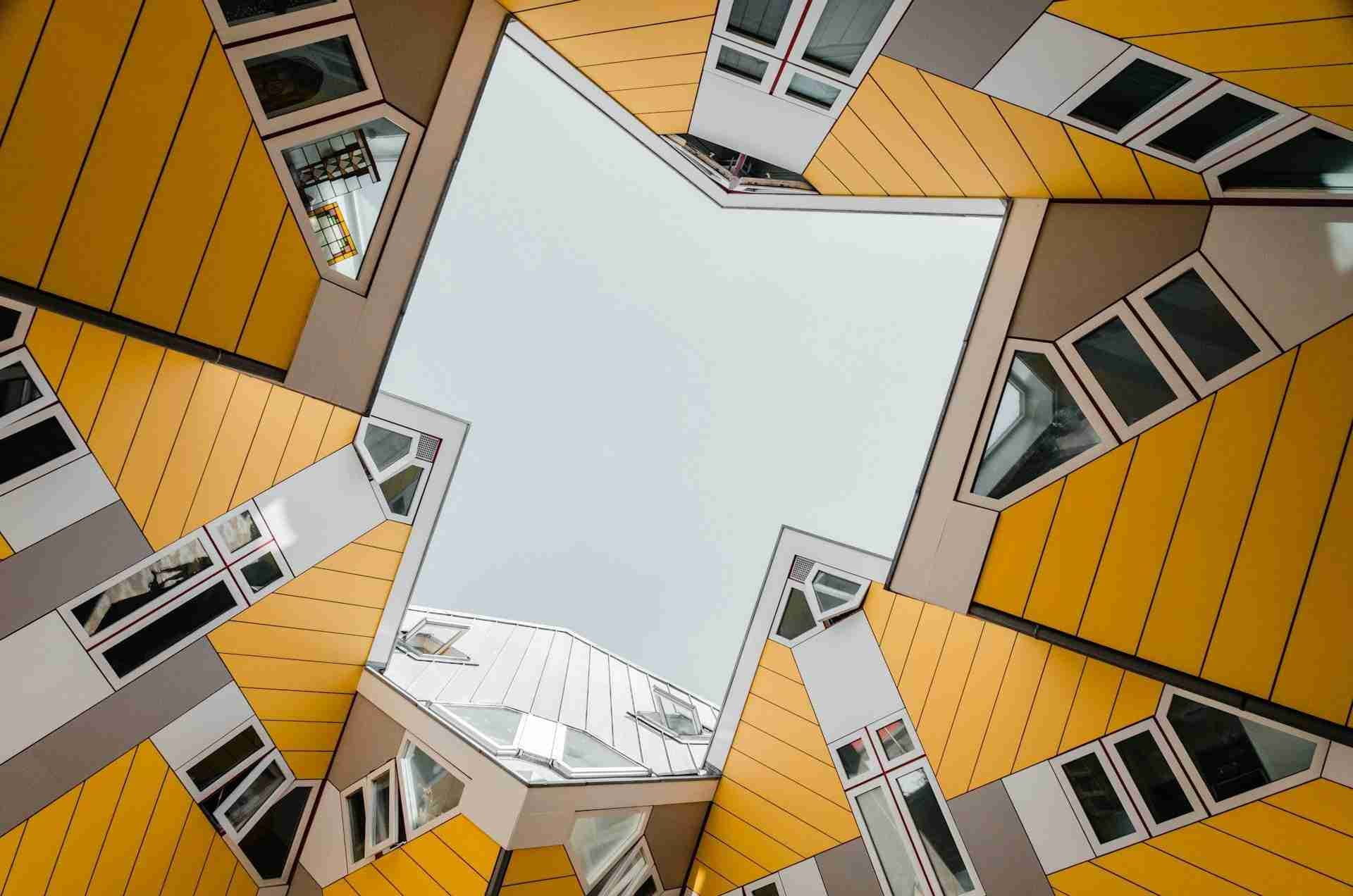
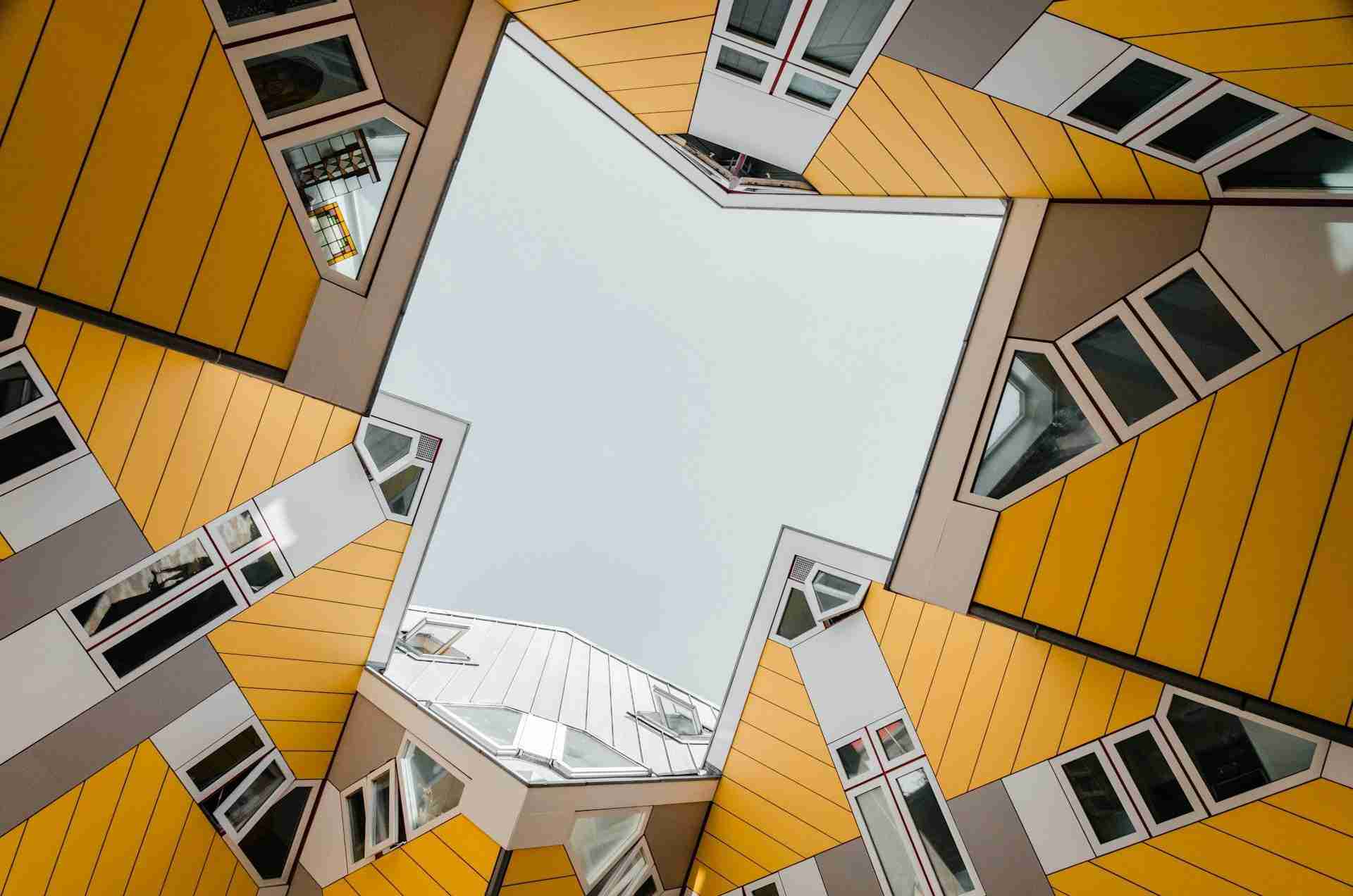
From the small plaza at the center of the Cube House cluster, you can shoot upward into a whirlwind of yellow walls, gray struts, and sky-filled gaps. This courtyard is ideal for playing with converging lines and distorted symmetry—particularly with an ultra-wide lens or a tilt-shift to correct the wild diagonals. Look for compositions that layer window reflections against bold, repeating panels. Visiting during different lighting conditions changes how shadows and angles read—bright sunlight emphasizes contrast, while overcast conditions flatten color and enhance form.
• Interior Spaces and Unusual Angles
Inside the Kijk-Kubus Museum-House, the interior layout follows the same angular logic, with walls that slope steeply inward and rooms that feel like they're unfolding into each other. Shooting wide is essential here—16mm to 24mm on a full-frame sensor will give you enough room to breathe in the tight space. Use corner angles to accentuate the distortion or lean into the asymmetry for surreal compositions. Early morning or late afternoon light streaming through the angular windows creates interesting patches of warmth on the slanted surfaces. Be ready to work with contrast, as some rooms are lit naturally while others rely on small interior fixtures.
• Repetitive Patterns and Abstract Details
Zooming in on specific elements of the Cube Houses—such as the hexagonal window frames, triangular staircases, or the sharp junctions of color—yields striking abstracts. These details often work well in black and white to emphasize contrast and shape. The repeating rhythm of the yellow panels against the gray concrete supports also lends itself to minimal, pattern-driven compositions. Position yourself low or off-center to exploit the forced perspective of these converging planes.
• People and Scale
Including visitors or residents in your frame offers visual context and emphasizes the unconventional size and orientation of the structures. A lone figure standing at the base of a tilted cube or framed within the diagonal geometry of a window can serve as a strong focal point, helping anchor the viewer amid the visual complexity. Street-style portraits here can take on an editorial feel, especially when shot with natural light bouncing off the colored walls.
• Night Photography and Blue Hour Scenes
The Cube Houses are softly lit in the evening, and the courtyard takes on a quiet, almost cinematic mood. The yellow panels glow warmly under ambient lighting, while the cool twilight sky contrasts beautifully with the architectural forms. Long exposures can capture trailing pedestrians, bike movement, or subtle color shifts in the reflective windows. Use a tripod and lower ISO to keep detail sharp and noise minimal, especially when working with the high contrast of artificial light.
Best Time to Visit
Photographically, the Cube Houses can be rewarding at almost any time of day, but timing affects how the lines and light behave. Early morning offers soft, angled sunlight that slips between the buildings, casting long shadows and producing warm glow through the unique window shapes. Midday brings harsher light that emphasizes bold contrast and saturation—ideal for high-impact color work. Late afternoon and golden hour are perfect for capturing dynamic shadows and light transitions on the angular surfaces.
The best interior lighting occurs when the sun is at an angle, either mid-morning or late afternoon. Light filters through the narrow windows, creating highlight patterns and visual depth in the tight spaces. For exterior work, overcast conditions reduce glare and balance out color, making the strong yellows and grays easier to photograph without blown highlights.
Crowds are minimal on weekday mornings and mid-afternoons. If you want clean shots of the courtyard or uninterrupted compositions from inside the museum house, visit during opening hours on a weekday. Weekends are busier, but offer more opportunity to photograph human interaction with the space.
How to Get There
The Kijk-Kubus Museum-House is located in the heart of Rotterdam, directly above the Blaak train and metro station. This central location makes it extremely easy to access from anywhere in the city or even from Amsterdam and The Hague. Trains from Rotterdam Centraal reach Blaak in under 10 minutes. Exiting the station puts you directly at the base of the Cube Houses.
If arriving by tram, lines 21 and 24 stop nearby. There's limited street parking, but the Markthal underground garage is only a short walk away and offers paid parking for visitors bringing more gear. The entrance to the Kijk-Kubus is well marked, and the surrounding area is pedestrian-friendly, making it easy to scout angles and shoot from multiple elevations.
Access to the museum-house itself requires an entry ticket, which can be purchased at the door or reserved in advance online. Entry allows you to explore the full interior layout and shoot inside the tilted cube, including all three levels. The courtyard and exterior of the Cube Houses are freely accessible at all hours, but interior photography is limited to the ticketed museum space. If you're planning to photograph inside with more than a basic setup, it's worth checking ahead for any restrictions related to tripods or commercial use.
Recommended Gear and Shooting Tips
Due to the tight interior spaces and complex exterior geometry, your kit should prioritize flexibility and spatial awareness. A wide-angle lens in the 14–24mm range is crucial for capturing full interior views, while a 24–70mm zoom works well for isolating patterns and shooting portraits with architectural context. Consider a fisheye lens if you're looking to lean into the surreal angles or create highly stylized compositions.
A small, lightweight tripod is helpful for low-light shots inside or for long exposures during twilight. That said, the museum interior can be tight and busy, so a flexible tabletop tripod or monopod may be more practical in certain areas. Check with staff before setting up—most handheld shooting is allowed, but tripods may require permission.
Rotterdam's weather shifts quickly, so carry a weather-sealed pack and microfiber cloths for wiping lenses, especially when shooting around the exterior during damp conditions. A polarizing filter isn't essential here but can help tame window reflections if shooting the glass from off-angles.
Keep an eye on your verticals—converging lines happen fast at the Cube Houses. Correcting in post is a good option, but try to frame with intention to retain as much natural distortion or symmetry as possible. Experiment with off-center compositions and diagonal frames to make the most of the architecture's unique perspective.
Nearby Photography Locations
Just steps from the Cube Houses, this arched glass-fronted market hall is famous for its massive interior mural and dynamic lighting. The reflective facade and curved structure make for great contrast with the Cube Houses' hard geometry, and its bustling interior offers vibrant street photography.
A few minutes' walk from the Cube Houses, the Old Harbor features moored historic ships, dockside cafes, and a blend of old and new architecture. It's a strong spot for golden hour and blue hour compositions, particularly when the water is calm enough for clean reflections.
Europe's first skyscraper, the Witte Huis offers elegant early 20th-century design and excellent contrast with Rotterdam's modernist and postmodern buildings. Its white facade pops against cloudy skies and stands out in wide cityscape shots from the Old Harbor.
This adjacent public library features exposed piping and glass walkways in a style reminiscent of the Pompidou Centre. Great for urban detail shots and capturing the eclectic architectural mix that defines this part of the city.
This apartment tower adjacent to the Cube Houses mimics the form of a sharpened pencil, creating yet another strong vertical to balance against the tilted cubes. Shoot it from ground level to highlight its angular contrast with the cubes and skyline behind.
If you're drawn to built environments that challenge your understanding of space, scale, and design, the Kijk-Kubus Museum-House will not disappoint. It's a compact but rich setting that rewards creative exploration from every direction.
Comments
Loading comments…