
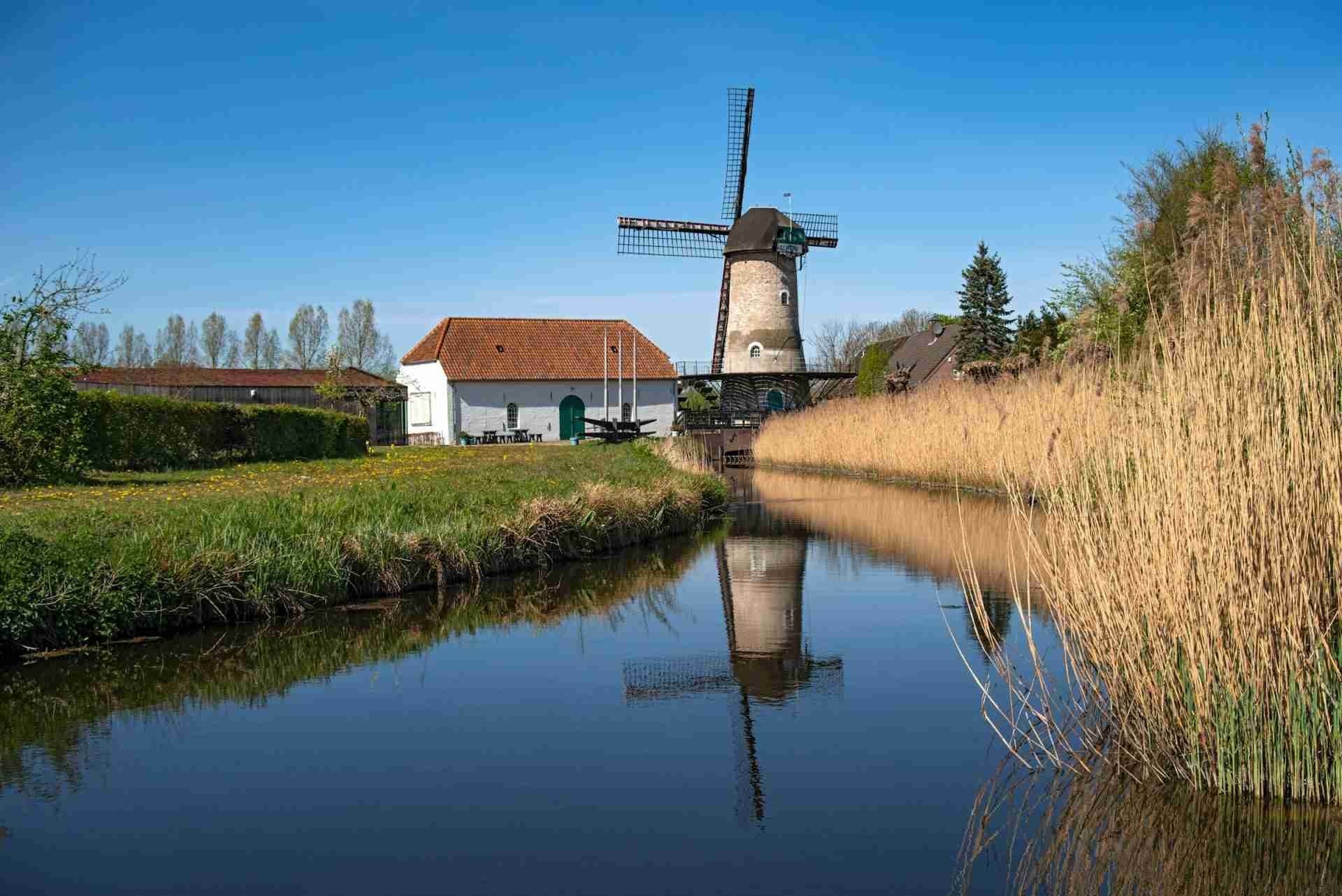
Kilsdonkse Molen in Heeswijk-Dinther is one of the few mills in the Netherlands that operates using both wind and water power. Set along the Aa River, the complex includes a traditional windmill connected to a water driven mill through a shared milling system. The setting feels open and rural, with flat fields, reeds, and slow moving water surrounding the structure. Unlike many Dutch windmills that stand alone in polder landscapes, Kilsdonk has movement and mechanical character built into its design. When both the sails and the water wheel are turning, it becomes a dynamic subject rather than a static monument. For photographers, it offers strong architectural lines combined with motion and reflection.
Best Photography Opportunities
• Mill and Water Channel From the Footbridge Area
The strongest and clearest view of the windmill comes from the small bridge and walking paths near the water channel that feeds the mill. From here, you can frame the tower, attached buildings, and flowing water in one balanced composition. The narrower channel creates natural leading lines that draw the eye toward the structure. A moderate focal length keeps proportions realistic while still tightening the scene slightly. When the sails and water wheel are turning, this angle allows you to show both systems working together. It's the most reliable position for a clean and complete view.
• Turning Sails and Water Wheel in Motion
When the mill is operating, motion becomes the key visual element. A slightly slower shutter speed will blur the sails enough to suggest movement without losing detail in the tower. The same applies to the water wheel as it rotates through the channel. Capturing both in motion highlights what makes Kilsdonk unique compared to other Dutch windmills. You'll want to check operating times in advance, since the mill does not run continuously. Timing your visit around demonstration hours makes a big difference.
• Low Angle From the Path Along the Channel
Walking along the edge of the water channel gives you opportunities to shoot from a lower position. This angle emphasizes the height of the sails and gives more presence to the structure. Including grasses or reeds in the foreground adds depth without blocking the view. A wide lens works well here, but careful leveling keeps vertical lines straight. This perspective feels grounded and makes the mill appear more substantial against the open sky.
• Detail Studies of Wood and Mechanism
Moving closer allows you to focus on beams, gears, and the thatched roof. These tighter compositions work best in soft light, especially on overcast days when shadow is controlled. A short telephoto lens helps isolate mechanical elements without distortion. Detail shots add variety and help tell the story of how the mill functions. They also work well if weather conditions are not ideal for wide scenes.
• Drone or Aerial Perspective Over the Complex
An aerial view shows how the mill sits between farmland, river, and channel. From above, the layout becomes much clearer, especially the relationship between windmill tower and water system. Flying slightly off to one side rather than directly overhead creates stronger depth and avoids a flat look. Calm wind conditions are important, especially when photographing rotating sails. As always, check local regulations before flying near heritage sites.
Best Time to Visit
Early morning is often the most reliable time for softer light and fewer visitors. The flat farmland around the mill benefits from angled light that adds depth and subtle shadow to the structure. Morning conditions also increase the chance of still water in the channel, which can provide gentle reflections.
Late afternoon works well when the sun lowers enough to add warmth to wood and thatch. Midday light can feel harsh on bright days, especially when shooting toward the sky. Overcast conditions are actually very usable here, particularly for detail shots and mechanical studies. Seasonal differences are subtle, but autumn can add muted tones to surrounding fields, while spring brings fresh green contrast.
How to Get There
Kilsdonk Mill is located in Heeswijk-Dinther in North Brabant. It is easily reached by car, with parking available near the mill complex. The surrounding area is flat and well connected by cycling routes, making it accessible by bike as well.
The exterior grounds are generally accessible without charge, but entry into the mill for tours or demonstrations may require a ticket. Operating hours vary, so checking the current schedule is important if you want to photograph the sails and water wheel in motion. The terrain is flat and easy to navigate, which makes carrying standard camera gear comfortable.
Recommended Photography Gear
A standard zoom lens will cover most compositions, from full structure views to tighter framing of mechanical details. A wide lens works well for low angle channel shots. A short telephoto is useful for isolating textures and compressing the mill against sky.
A tripod is helpful if you plan to use slower shutter speeds to blur sail movement or water motion. A polarizer can reduce glare on the channel and deepen sky tones, though removing it may improve reflections depending on angle. Because access is easy and flat, carrying a moderately complete kit is manageable without difficulty.
Nearby Photography Locations
A well preserved medieval castle surrounded by water and landscaped grounds. It offers strong architectural compositions and reflection opportunities within a short drive.
• 's-Hertogenbosch
A historic city known for canals and brick architecture. It provides urban contrast to the rural mill setting.
A nearby nature reserve with open heathland and wooded trails. It expands landscape options beyond built heritage subjects.
• Zuid-Willemsvaart
A regional canal offering linear waterway compositions and classic Dutch rural scenery.
• Aa River
The broader river area provides additional countryside views and quieter water scenes beyond the mill complex.
Comments
Loading comments…